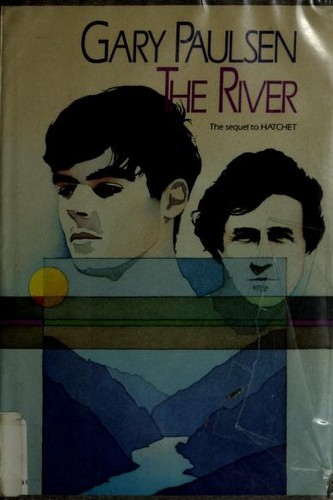
The River
by Gary Paulsen
★ Top 25 book of 1991 · #17 on Best Books of 1991
After surviving alone in the wild for fifty-four days, fifteen-year-old Brian has been deeply changed by the ordeal. Scientists now ask him to face a similar experience so they can study the psychology of survival.
Best for: Teen readers who like wilderness survival stories and tests of endurance
The River is #17 on BookWard's Best Books of 1991, out of 23 1991 books that cleared our data bar.
What The River is about
Brian Robeson, the boy who survived alone in the Canadian wilderness in Hatchet, is asked to do it again. This time the government hires him to live in the woods so the military can learn his survival methods. A government psychologist, Derek Holtzer, goes with him, and Brian insists they leave behind all supplies except a knife and an emergency radio.
Then lightning strikes the camp. Derek is knocked into a coma and the radio is destroyed, leaving Brian responsible for both of them. His only hope is a raft and a 100-mile trip downriver to Brannock's Trading Post, with rapids, exhaustion and an unfamiliar landscape in his way.
This second book in the Hatchet series is spare and fast-moving, and it will suit young readers who like stories about resourcefulness, self-reliance and staying calm when everything goes wrong.
The River on the Best Books of 1991
The River came out in 1991. Of the 23 books first published in 1991 that met BookWard's data bar, it ranks #17 on our Best Books of 1991 list.
Why it made the list: 183 readers have shelved it on Open Library. The list ranks each year’s books on how many readers have picked them up, how highly readers rate them, and how many are reading them right now.
Nearby on the 1991 list
- The Girlfriend Robert Lawrence Stine, #15
- The Gift of Loving Patricia Wilson, #16
- Sojourn R. A. Salvatore, #18
- Maus II Art Spiegelman, #19
See all Best Books of 1991 Best books by year
More years: Best Books of 1990 Best Books of 1992.
The numbers behind it
- Readers: 146 want to read it, 11 are reading it now and 26 have read it, according to Open Library.
| Signal | This book (0 to 100) | Weight |
|---|---|---|
| Reach | 35 | 55% |
| Reader love | 30 | 25% |
| Being read right now | 57 | 20% |
Questions about The River
When was The River published?
The River by Gary Paulsen was first published in 1991.
Was The River one of the best books of 1991?
The River is #17 on BookWard's Best Books of 1991, out of 23 1991 books that cleared our data bar. 183 readers have shelved it on Open Library.
Why is The River on the Best Books of 1991 list?
183 readers have shelved it on Open Library.
More of the best books of 1991
- Outlander Diana Gabaldon, #1
- Needful Things Stephen King, #2
- American Psycho Bret Easton Ellis, #3
- Shiloh Phyllis Reynolds Naylor, #4
- The Firm John Grisham, #5
- Reaper Man Terry Pratchett, #6
See the full Best Books of 1991, the Top 100, or new books on Rising.
How we know
This page uses public data: Open Library reader counts and ratings, and Wikipedia page views for recent years. The description is paraphrased from real source text. Rankings reflect reading interest, not quality or sales, and can be affected by data gaps. Lists update monthly.
Suits readers from roughly upper elementary through early teens who enjoy survival adventures, and it reads easily.
Depends on the edition you pick.
A short, tense survival sequel that stays on the water. 51% taste match
 BookWard’s take
A short, tense survival sequel that stays on the water
The River sends Brian Robeson back into the Canadian wilderness, this time with a government psychologist and a plan to study how he survives. Then lightning strikes, and the book turns into a single urgent problem: get an unconscious man a hundred miles downriver. That focus keeps the pace high and the middle sustained, since the clock never stops. Internal logic is strong, because every setback comes from the terrain and the stakes are simple. The cast is tiny and the focus is outer action, with Brian's interior world doing the quiet work beside it. Familiar tropes show up, a lone boy against nature, but the plain, physical prose keeps them honest. It is a short read that trades originality for momentum.
A short young adult novel with a single through-line, which matches BookWard's love of tight books.
Once the lightning strikes, the book becomes a race downriver, close to the quick tempo BookWard enjoys.
As a sequel to Hatchet, it revisits an established premise, so it lands on the familiar side of BookWard's taste.
Plain, direct sentences keep the focus on the action, somewhat plainer than BookWard's mid-range preference.
The urgent mission drives events more than inner change, leaning plot-driven against BookWard's character-minded lean.
Brian's resourcefulness and Derek's survival point toward hope, close to BookWard's optimistic side.
The story moves in a straight line from setup to rescue, more conventional than BookWard's slight lean toward experiment.
The mood is earnest and tense throughout, far more serious than BookWard's lightly humorous lean.
A man in a coma and a long, dangerous journey add real stakes without being grim, gentler than BookWard's midpoint.
Fear, determination and relief carry real feeling, sitting close to BookWard's moderately intense level.
See all 50 dialsEvery position, side by side with this book
Where it lines up
- PaceBookWard 8 · book 8
- EndingBookWard 8 · book 8
- Story or ideasBookWard 3 · book 3
Where it pulls apart
- Familiar tropesBookWard 10 · book 4
- OpeningBookWard 10 · book 6
- OriginalityBookWard 9 · book 4
A short young adult novel with a single through-line, which matches BookWard's love of tight books.
It starts with a reluctant return to the wild rather than a jolt, so the grip builds a little more slowly than BookWard likes.
A boy alone against nature is well-worn ground, so it leans on familiar survival tropes more than BookWard prefers.
Each crisis follows from the terrain, the lightning and Brian's choice to strip the supplies, which suits BookWard's appetite for airtight cause and effect.
Once the lightning strikes, the book becomes a race downriver, close to the quick tempo BookWard enjoys.
As a sequel to Hatchet, it revisits an established premise, so it lands on the familiar side of BookWard's taste.
Brian is drawn through his choices and changed outlook, though the focus on action keeps him less layered than BookWard wants.
The journey ends with Derek saved and a thank-you gift, a clean resolution BookWard appreciates.
Warmth is present, especially in the ending's gift, but it sits a bit more openly than BookWard's restrained preference.
The lightning strike and coma are sudden, yet they drive the plot rather than exist for effect, which BookWard respects.
Paulsen frames the survival details as drawn from his own experience, but this is a novel, so rigor is not its aim.
Paulsen's spare, physical style is recognizable, though it is less strikingly distinct than BookWard's top picks.
This is a story first, with the survival psychology idea serving the plot, which is where BookWard likes to land.
Events are shown through Brian's actions and decisions rather than lectured, in line with BookWard's taste.
With the clock ticking from the strike onward, the book rarely loses tension, which BookWard values.
Plain, direct sentences keep the focus on the action, somewhat plainer than BookWard's mid-range preference.
The urgent mission drives events more than inner change, leaning plot-driven against BookWard's character-minded lean.
Brian's resourcefulness and Derek's survival point toward hope, close to BookWard's optimistic side.
The story moves in a straight line from setup to rescue, more conventional than BookWard's slight lean toward experiment.
The mood is earnest and tense throughout, far more serious than BookWard's lightly humorous lean.
Short sentences and a simple through-line make it an easy read, easier than BookWard's moderate preference.
The story stays with Brian, a single viewpoint, while BookWard leans toward several.
Events run in order from the return to the trading post, simpler than BookWard's shifting-time taste.
Everything is grounded in believable wilderness survival, a touch more realistic than BookWard's middle ground.
Essentially Brian and Derek carry the book, a very small cast next to BookWard's mid-sized preference.
One boy, one man and one river keep this intimate, tighter than BookWard's mid-range scale.
The raft, rapids and rescue push this toward outer action over reflection, a little beyond BookWard's balance.
Much of the book is Brian alone with the river, so talk is light compared to BookWard's lean toward dialogue.
There is no romantic thread, which sits comfortably at BookWard's modest romance setting.
The remote Canadian wilderness feels unfamiliar to most readers, matching BookWard's taste for unfamiliar settings.
Published in 1991 and set in its own time, it reads as past more than BookWard's present-day lean.
The survival struggle against nature stays compelling across decades, close to BookWard's timeless preference.
The story follows Brian plainly and straightforwardly, far more reliable than BookWard's unreliable lean.
Brian's choices and the stakes are clear, so the ethics are less ambiguous than BookWard's taste for gray.
River, rain and forest are sketched with enough physical detail to feel real, a bit richer than BookWard's middle setting.
It is the second Hatchet book and part of a series, firmly on the series end of BookWard's mid-range preference.
The lightning strike is the key reversal, but the book is otherwise direct, giving fewer surprises than BookWard's lean.
It is more a gripping, accessible adventure than a demanding read, softer than BookWard's challenge-leaning taste.
A man in a coma and a long, dangerous journey add real stakes without being grim, gentler than BookWard's midpoint.
Fear, determination and relief carry real feeling, sitting close to BookWard's moderately intense level.
There is almost no humor, so it leans dry compared to BookWard's mid-range taste.
Danger comes from nature and injury rather than fighting, giving less violence than BookWard's midpoint.
There is no sexual content at all, below BookWard's mid-range setting.
The government project is just a premise, with no political argument, below BookWard's mid-level.
The language is simple and direct throughout, plainer than BookWard's mid-range preference.
Narration stays close to Brian's experience with little editorializing, more neutral than BookWard's lean.
Rooted in one boy's journey with little reflection on the future, it looks back more than BookWard's forward lean.
Brian's competence and willingness to save a life give it an idealistic bent, matching BookWard's worldview.
Review written by BookWard, dial version 1, November 2026.
Who is The River right for?
Suits readers from roughly upper elementary through early teens who enjoy survival adventures, and it reads easily. Sensitive moments include a man in a coma and sustained physical danger, though nothing graphic.
Short sentences and a simple through-line make it an easy read, easier than BookWard's moderate preference.
A man in a coma and a long, dangerous journey add real stakes without being grim, gentler than BookWard's midpoint.
Fear, determination and relief carry real feeling, sitting close to BookWard's moderately intense level.
Danger comes from nature and injury rather than fighting, giving less violence than BookWard's midpoint.
Book CompanionThe River: ideas, characters, themes
A teenager who has survived the wild once is asked to do it again, and when disaster strikes, his hard-won instincts become the only chance to save another person.
- A reluctant return. Brian agrees to go back into the Canadian wilderness so the government can study how he survives, though he is not eager to.
- Stripping the supplies. Brian insists on leaving behind everything but a knife and an emergency radio, believing real survival means not having comfort within reach.
- The lightning strike. Lightning hits the camp, knocking Derek into a coma and destroying the radio, turning an experiment into an emergency.
- A hundred miles downriver. Knowing Derek cannot last, Brian builds a raft to reach Brannock's Trading Post, the nearest inhabited point, far downstream.
- Rescue and a gift. They reach the trading post and Derek survives, and afterward he buys Brian a canoe named The Raft as thanks.
Characters
Brian Robeson
Protagonist
A boy who survived 54 days alone in the Canadian wilderness the summer before and is changed by that experience.
Derek Holtzer
Government psychologist
The psychologist who accompanies Brian to study his survival methods, and whom Brian must then save.
Themes
Staying alive depends on skill, resourcefulness and willingness to adapt to what nature throws at you.
Brian takes on the duty of saving another person's life when no one else can.
The river and weather follow their own rules, and Brian must work with them rather than against them.
Brian's choice to drop supplies shows his belief that real survival comes from within.
The experience of the first survival has changed Brian and shapes how he faces this one.
Discussion questions
- Why does Brian insist on giving up the emergency supplies, and was that wise?
- How does Brian's earlier experience change the way he faces this crisis?
- What does Derek's coma force Brian to realize about his own responsibility?
- How does the journey downriver test Brian differently from his first survival?
- Why might the author present survival as both a skill and a mindset?
Personalize your Book Companion
This is the general edition. In BookWard, the Companion is written for you: your reading profile, your notes, and spoiler-safe to the page you are on.
Buy, listen or borrow The River
Each link opens a search for this book on that store, in a new tab.
Read on a device
Borrow
Reviews and community
If you liked The River
A boy, a hatchet, and the wilderness that teaches him
My side of the mountainJean Craighead GeorgeA boy, a hollow tree, and a falcon: survival done simply
The Boxcar ChildrenGertrude Chandler WarnerFour orphans, a boxcar, and a home they build themselves
The Incredible JourneySheila BurnfordThree pets, 300 miles of Canadian wilderness, and no way but forward
Find your own best books
Add what you have read, rate it, and BookWard will recommend what to read next.
Free to start. No credit card needed.