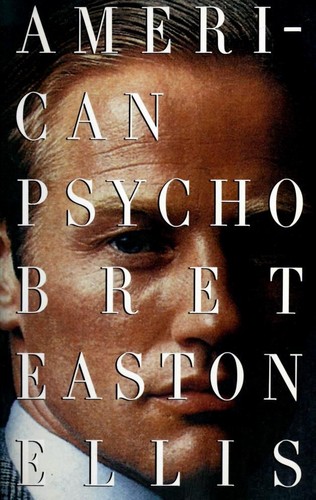
American Psycho
by Bret Easton Ellis
★ Top 5 book of 1991 · #3 on Best Books of 1991
Patrick Bateman, a Manhattan investment banker who is also a serial killer, narrates this notorious novel in his own voice. It has split opinion, with some places selling it shrink-wrapped while critics and academics praise its transgressive, postmodern edge.
Best for: Mature readers drawn to provocative, controversial fiction that divides critics
American Psycho is #3 on BookWard's Best Books of 1991, out of 23 1991 books that cleared our data bar.
What American Psycho is about
It is 1989 in Manhattan, and the Wall Street boom is at full volume. Patrick Bateman is a wealthy investment banker in his mid-20s, engaged to Evelyn in a relationship with no real feeling in it. He narrates in the present tense, and his world is made of labels, restaurant reservations and business cards. Between scenes he stops to give his opinions on 1980s pop music. As the book goes on, contradictions and mistaken identities make you wonder how far his account can be trusted, and the people around him seem unable to hear what he is telling them. Ellis writes a cold, satirical portrait of vanity and emptiness. It is also very violent, and it has been censored in several countries, so it is for readers who can handle disturbing material.
American Psycho on the Best Books of 1991
American Psycho came out in 1991. Of the 23 books first published in 1991 that met BookWard's data bar, it ranks #3 on our Best Books of 1991 list.
Why it made the list: 2,039 readers have shelved it on Open Library; readers rate it 3.8 out of 5 (104 ratings); 91 are reading it right now. The list ranks each year’s books on how many readers have picked them up, how highly readers rate them, and how many are reading them right now.
It earns Being read right now.
Nearby on the 1991 list
- Outlander Diana Gabaldon, #1
- Needful Things Stephen King, #2
- Shiloh Phyllis Reynolds Naylor, #4
- The Firm John Grisham, #5
See all Best Books of 1991 Best books by year
More years: Best Books of 1990 Best Books of 1992.
The numbers behind it
- Readers: 1,817 want to read it, 91 are reading it now and 131 have read it, according to Open Library.
- Ratings: 3.8 out of 5 from 104 Open Library ratings.
| Signal | This book (0 to 100) | Weight |
|---|---|---|
| Reach | 100 | 55% |
| Reader love | 22 | 25% |
| Being read right now | 100 | 20% |
Questions about American Psycho
When was American Psycho published?
American Psycho by Bret Easton Ellis was first published in 1991.
Was American Psycho one of the best books of 1991?
American Psycho is #3 on BookWard's Best Books of 1991, out of 23 1991 books that cleared our data bar. 2,039 readers have shelved it on Open Library; readers rate it 3.8 out of 5 (104 ratings); 91 are reading it right now.
Why is American Psycho on the Best Books of 1991 list?
2,039 readers have shelved it on Open Library; readers rate it 3.8 out of 5 (104 ratings); 91 are reading it right now.
More of the best books of 1991
- Outlander Diana Gabaldon, #1
- Needful Things Stephen King, #2
- Shiloh Phyllis Reynolds Naylor, #4
- The Firm John Grisham, #5
- Reaper Man Terry Pratchett, #6
- Chrysanthemum Kevin Henkes, #7
See the full Best Books of 1991, the Top 100, or new books on Rising.
How we know
This page uses public data: Open Library reader counts and ratings, and Wikipedia page views for recent years. The description is paraphrased from real source text. Rankings reflect reading interest, not quality or sales, and can be affected by data gaps. Lists update monthly.
Suited to mature adult readers.
Depends on the edition you pick.
A chilling satire of 1980s excess told in a deadpan first-person voice. 46% taste match
 BookWard’s take
A chilling satire of 1980s excess told in a deadpan first-person voice
Bret Easton Ellis puts you inside Patrick Bateman's head: a wealthy Manhattan investment banker whose polished surface hides a serial killer. The voice is the book's great achievement, flat and obsessive, cataloguing suits, business cards and restaurant reservations in the same tone it brings to its violence. It is unmistakable. Bateman is also deeply unreliable as a narrator, with mistaken identities and contradictions that keep the reader off balance. The opening hooks at once, though the repetition is deliberate and can wear. Shock is the sharpest question here: the violence is extreme and the ending refuses to resolve. I tend to value darkness that feels earned and endings that tie things up, so this is a book to admire more than to enjoy.
A substantial novel that leans on deliberate repetition, which runs against BookWard's taste for tight and short.
Daily routines and nightclub scenes dominate between murders, so momentum is steady rather than fast.
A killer narrated as a consumerist satire felt new when published and remains distinctive, which BookWard prizes.
The sentences are deliberately plain and list-like, with brand names doing the decorating.
Bateman's psyche and routines carry the book more than any conventional plot.
The outlook is empty and bleak, with no redemption offered.
Present-tense stream of consciousness broken by chapters critiquing pop music is mildly experimental.
Dark satire and absurd etiquette debates give it a sharp, deadpan comic edge beneath the horror.
It involves serial murder, torture and cannibalism, placing it at the extreme end.
Bateman's affect is flat and hollow, so feeling is deliberately muted.
See all 50 dialsEvery position, side by side with this book
Where it lines up
- OriginalityBookWard 9 · book 9
- Authorial voiceBookWard 9 · book 10
- ExpositionBookWard 2 · book 3
Where it pulls apart
- Internal logicBookWard 10 · book 3
- LengthBookWard 1 · book 6
- EndingBookWard 8 · book 2
A substantial novel that leans on deliberate repetition, which runs against BookWard's taste for tight and short.
The deadpan first-person voice and Manhattan setting draw you in immediately, which BookWard rewards.
The yuppie satire and killer premise are distinctive in execution, avoiding the usual thriller beats, which BookWard values.
Contradictions and mistaken identities leave events deliberately unstable, at odds with BookWard's wish for airtight logic.
Daily routines and nightclub scenes dominate between murders, so momentum is steady rather than fast.
A killer narrated as a consumerist satire felt new when published and remains distinctive, which BookWard prizes.
Bateman is a vivid surface with little behind it, which is the point, though it limits depth.
The book withholds clear resolution and leaves its central question open, which cuts against BookWard's preference for closure.
There is no sentimentality anywhere; the tone is cold and clinical, which suits BookWard's taste for restraint.
The graphic violence is central and notorious, and it often reads as provocation, which BookWard distrusts.
This is fiction, so the rigor dial does not apply.
Bateman's flat, obsessive narration is unmistakable and the book's defining strength, a big plus for BookWard.
The satire of consumer culture drives the book more than plot, which sits on the idea-led side.
Ideas arrive through Bateman's behavior and observations rather than being explained outright, which BookWard likes.
The repetitive catalogues can drag between the murders, though the escalation keeps tension alive.
The sentences are deliberately plain and list-like, with brand names doing the decorating.
Bateman's psyche and routines carry the book more than any conventional plot.
The outlook is empty and bleak, with no redemption offered.
Present-tense stream of consciousness broken by chapters critiquing pop music is mildly experimental.
Dark satire and absurd etiquette debates give it a sharp, deadpan comic edge beneath the horror.
The prose is easy to follow, but the repetition and content make it hard going.
Everything comes through Bateman alone, so there is a single viewpoint.
Events unfold in a largely linear run of days and nights.
It is set in a recognizable Manhattan, though the ambiguity blurs what actually happens.
A circle of colleagues and acquaintances recurs, many of them deliberately interchangeable.
The story stays close to one man's days, nights and apartment, so it is intimate in scope.
The book is dominated by Bateman's thoughts, obsessions and observations rather than outward action.
Restaurant and nightclub conversations are frequent, with characters trading shallow chatter.
His loveless engagement to Evelyn is background texture, not a driving thread.
The 1989 Wall Street elite of Manhattan will be unfamiliar territory for most readers.
It is set firmly in 1989, rather than in the present day.
Its target of status and consumption still resonates, and the book remains widely discussed.
Contradictions and mistaken identities make Bateman one of fiction's most unreliable narrators.
There is no moral guidance offered, only ambiguity about what is real and what it means.
Detailed accounts of clothing, grooming and dining fill the pages with specific, rich description.
This is fiction, so the nonfiction style dial does not apply.
This is fiction, so the perspective dial does not apply.
It reads as a standalone novel.
Ambiguity and shifting identities unsettle more than they deliver conventional twists.
The content and refusal of comfort make it among the more challenging mainstream novels.
It involves serial murder, torture and cannibalism, placing it at the extreme end.
Bateman's affect is flat and hollow, so feeling is deliberately muted.
The humor is bone dry, played straight, with absurdity delivered in a deadpan tone.
Graphic torture and mutilation are extensive and have led to censorship in several countries.
Sexual violence and explicit scenes appear repeatedly and are central to its notoriety.
It targets greed and class, but as satire rather than overt political argument.
The language is plain and accessible, with few barriers beyond brand-name density.
Bateman's narration is full of his own judgments about fashion, music and people.
The book looks back at a particular era, with little sense of what comes next.
Its worldview is deeply cynical about wealth, status and human empathy.
Review written by BookWard, dial version 1, November 2026.
Who is American Psycho right for?
Suited to mature adult readers. It contains extreme graphic violence, torture and sexual brutality, and has been censored or restricted in several countries.
The prose is easy to follow, but the repetition and content make it hard going.
It involves serial murder, torture and cannibalism, placing it at the extreme end.
Bateman's affect is flat and hollow, so feeling is deliberately muted.
Graphic torture and mutilation are extensive and have led to censorship in several countries.
Book CompanionAmerican Psycho: ideas, characters, themes
A wealthy banker's empty, brand-obsessed life is mirrored by violence, asking what lies beneath a flawless surface.
- A flat, obsessive voice. Patrick Bateman narrates in present tense, cataloguing clothes and grooming with the same tone he uses for atrocities.
- 1989 Wall Street. The setting is Manhattan's yuppie world, where nightclubs, drugs and status define every conversation.
- Mistaken identities. Characters are constantly confused for one another, undermining what the reader can trust.
- Music interludes. Bateman occasionally breaks off to address the reader and critique 1980s pop artists.
- Escalating violence. His killings grow more sadistic, and his hold on sanity weakens as the book goes on.
Characters
Patrick Bateman
Narrator
A wealthy, narcissistic, vain investment banker living a double life as a serial killer.
Evelyn
Fiancée
A fellow yuppie whose engagement to Bateman is loveless.
Paul Owen
Colleague
A fellow banker whom Bateman kills, then uses his apartment as a place for further murders.
Themes
Status and brands replace any real inner life.
People are interchangeable and constantly mistaken for one another.
The reader cannot be sure what actually happens.
Surface polish hides emptiness and a lack of empathy.
Brutality is presented flatly, forcing the reader to question their response.
Discussion questions
- Is Bateman's narration reliable, and does the answer change how you read the book?
- Why does Ellis describe clothes and grooming with the same tone as murder?
- What is the effect of the chapters critiquing pop music?
- Does the extreme violence serve the satire or overwhelm it?
- How does the ending leave you feeling about what was real?
Personalize your Book Companion
This is the general edition. In BookWard, the Companion is written for you: your reading profile, your notes, and spoiler-safe to the page you are on.
Buy, listen or borrow American Psycho
Each link opens a search for this book on that store, in a new tab.
Read on a device
Borrow
Reviews and community
If you liked American Psycho
A strange Kent tideline, and an object that won't hold still
The Virgin SuicidesJeffrey EugenidesA haunting chorus of boys circles five sisters they never knew
Fight ClubChuck PalahniukA short, savage satire that earns its reputation for bite
My Secret LifeWalterA Victorian man's explicit, unrepentant memoir of a lifetime of appetite
Find your own best books
Add what you have read, rate it, and BookWard will recommend what to read next.
Free to start. No credit card needed.