Updated November 2, 2026 · reading data through October 2026
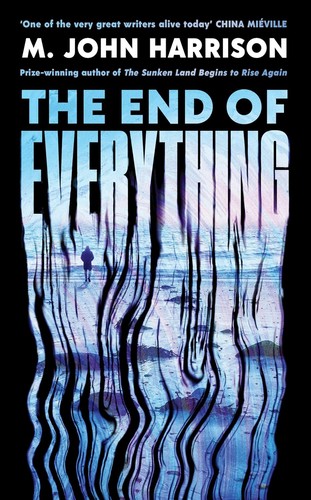
The End of Everything
by M. John Harrison
Phillip Tennent makes his living at the tideline, collecting artefacts that wash up from the Channel. Years after a crisis whose exact nature remains obscure, government barely functions and the seas are changing.
Best for: Readers who like strange, atmospheric speculative fiction.
The End of Everything is #26 on BookWard's Rising chart for November 2026: the hottest new books published in the past two years.
What The End of Everything is about
Phillip Tennent earns his living gathering odd artefacts that wash ashore from the Channel. Some years ago a crisis remade the world, though no one can say quite what it was. Government barely works, the seas teem with unfamiliar creatures, and a whole continent has gone missing.
One day Phillip hauls in something he cannot hold on to: a creature that never stops changing. He must carry it inland before it undoes everything he believes he understands. M. John Harrison's novel is billed by its publisher as a slyly satirical and unsettling adventure set after the collapse. It suits readers who like their strange fiction uncertain, wry and happy to leave questions open.
Why The End of Everything is on the Rising chart
Its Wikipedia page had 6,552 views last month, up 38% on the two months before. The Rising score blends six public signals, each scored from 0 to 100 against the other new books and weighted as shown.
| Signal | This book | Weight |
|---|---|---|
| Reader pace | 12 | 28% |
| Buzz | 57 | 24% |
| Growth | 51 | 18% |
| Being read right now | 43 | 12% |
| Reader love | 41 | 10% |
| Newness | 100 | 8% |
Rising Wikipedia attention is up 25% or more on the two months before.
The numbers behind it
- Wikipedia: 6,552 page views last month, against an average of 4,741 in the two months before (up 38%). Read the article.
- Open Library readers: 1 want to read, 0 reading now, 0 have read it.
The End of Everything on the Rising chart: history
| Month | Rank | Score |
|---|---|---|
| November 2026 | #26 | 44 |
| October 2026 | #24 | 52 |
Questions about The End of Everything
Is The End of Everything a new book?
Yes. The End of Everything by M. John Harrison was first published in 2026, and BookWard's Rising chart only includes books published in the past two years.
Why is The End of Everything on the Rising chart?
Its Wikipedia page had 6,552 views last month, up 38% on the two months before.
More new books readers are finding
- Exit Party Emily St. John Mandel
Prefer proven favorites? See the Top 100, or all Rising books.
How we know
This page uses public data: Open Library reader counts and ratings, and Wikipedia page views. The description is paraphrased from real source text (Open Library or Wikipedia). A book is on the Rising chart only if it was published in 2025 or 2026 and its readers are active and its interest is not falling. Rankings reflect reading interest, not quality or sales. Read the full methodology.
Best suited to adult readers who enjoy literary, unsettling fiction.
Depends on the edition you pick.
A strange Kent tideline, and an object that won't hold still. 62% taste match
 BookWard’s take
A strange Kent tideline, and an object that won't hold still
M. John Harrison sends Phillip Tennent along the Kent shoreline, collecting what the Channel throws up years after a crisis nobody can fully name. Then he pulls out something he cannot keep. The premise delivers its hook quickly, and it arrives in the slyly satirical, unsettling manner Harrison is known for. Expect real originality and an unmistakable voice, and a book that favours the odd over the well-worn. Whether it holds together as a puzzle is the open question, since a novel about the limits of human understanding may deliberately loosen its own logic, which sits uneasily with a taste for the airtight. It also asks more of the reader than most, so settle in for the effort. A shifting, uncanny adventure rather than a tidy one.
The inland journey gives it forward motion, though Harrison's unsettling manner keeps it from racing.
A tideline collector, a vanished continent and a creature that keeps changing make for a distinctly unfamiliar setup.
Harrison is a stylist, so the prose leans literary and precise rather than plain.
The journey inland supplies plot, while Phillip's shaken certainties give the character a real share.
A mislaid continent, failing government and a feeling of ending push this toward the bleak side.
The central object is told straight, yet a book this slippery may bend form a little.
The satire brings a dry edge, but the book stays mostly unsettling rather than comic.
The end-of-the-world mood is heavy, but the tone leans eerie more than brutal.
Satire and distance keep the feeling cool and held back rather than overwhelming.
See all 50 dialsEvery position, side by side with this book
Where it lines up
- OriginalityBookWard 9 · book 9
- ExpositionBookWard 2 · book 2
- Familiar tropesBookWard 10 · book 9
Where it pulls apart
- Internal logicBookWard 10 · book 5
- Story or ideasBookWard 3 · book 7
- OpeningBookWard 10 · book 8
A man fishes a shape-shifting artefact from the sea and must carry it inland, so the story starts moving at once.
Mislaid continents and a changing creature avoid the usual post-apocalypse furniture, which BookWard rewards.
A book about the limits of understanding keeps its rules deliberately obscure, short of the airtight logic BookWard prefers.
The inland journey gives it forward motion, though Harrison's unsettling manner keeps it from racing.
A tideline collector, a vanished continent and a creature that keeps changing make for a distinctly unfamiliar setup.
Satire and unease keep sentimentality out, which sits well with BookWard's taste for restraint.
The strangeness unsettles through atmosphere and idea rather than gore, so the darkness feels earned.
Harrison's slyly satirical, unsettling manner is unmistakable, and distinctive voice is what BookWard values most here.
The unknowable crisis and the limits of understanding put ideas close to the centre, more than BookWard usually likes.
The crisis stays obscure by design, so the book shows its world in scene instead of explaining it.
A single journey with an urgent object should keep tension steady, though a meandering stretch is possible.
Harrison is a stylist, so the prose leans literary and precise rather than plain.
The journey inland supplies plot, while Phillip's shaken certainties give the character a real share.
A mislaid continent, failing government and a feeling of ending push this toward the bleak side.
The central object is told straight, yet a book this slippery may bend form a little.
The satire brings a dry edge, but the book stays mostly unsettling rather than comic.
Obscure causes and an elusive subject ask more of the reader than BookWard's comfortable middle.
New sea creatures, a lost continent and a changing artefact push well past the grounded.
The world has ended, but the story stays close to one man and one object.
A physical journey with an object balances against Phillip's unsettled inner picture of the world.
A changed Channel coast, new creatures and a mislaid continent make for a deeply unfamiliar setting.
Harrison's themes of incomprehension and collapse should outlast the moment, though the satire is current.
A broken world with no clear causes rarely offers neat moral lines, and BookWard enjoys that murk.
Tideline objects, strange sea life and altered coastline invite vivid, detailed rendering.
The blurb describes a self-contained adventure with no sign of a series.
A changing creature promises surprises, though the unsettling mood matters more than plot turns.
Meant to unsettle and test the limits of understanding, it is unmistakably a challenging read.
The end-of-the-world mood is heavy, but the tone leans eerie more than brutal.
Satire and distance keep the feeling cool and held back rather than overwhelming.
The satirical streak runs dry and sly rather than broad.
A barely functioning government and a satirical lens give politics a noticeable presence without taking over.
Satire implies a point of view, but the telling stays oblique rather than preachy.
A feeling of ending and satirical bite tilt the worldview toward the cynical.
Review written by BookWard, dial version 1, November 2026.
Who is The End of Everything right for?
Best suited to adult readers who enjoy literary, unsettling fiction. The tone is bleak and strange, with an end-of-the-world mood that may weigh on some readers.
Obscure causes and an elusive subject ask more of the reader than BookWard's comfortable middle.
The end-of-the-world mood is heavy, but the tone leans eerie more than brutal.
Satire and distance keep the feeling cool and held back rather than overwhelming.
Book CompanionThe End of Everything: ideas, characters, themes
Phillip Tennent collects artefacts at the Kent tideline, and a shape-shifting object he cannot keep forces him inland, past everything he thinks he knows.
- The tideline job. Phillip makes his living collecting artefacts that wash up from the Channel, which sets the book's gently scavenging mood.
- A crisis without a name. The crisis changed everything years ago, but its exact nature stays obscure to the people living through it.
- A changed sea. The seas now hold new creatures, and an entire continent has been mislaid.
- The object that changes. Phillip fishes out a creature that keeps changing and that he cannot keep.
- The journey inland. He must carry it inland before it destroys everything he thinks he knows.
Characters
Phillip Tennent
Tideline collector
He earns his living gathering what the Channel throws up, and he is the one who pulls out the changing creature.
Themes
The book keeps pressing on how little its people can grasp about what has happened to them.
Life carries on in a world where government barely works and everything feels like an ending.
The disaster is looked at with a sly, mocking eye rather than plain solemnity.
Things like the shifting creature resist being named, owned or explained.
Discussion questions
- Why might a story keep the exact nature of its crisis obscure?
- What does it mean that Phillip's work is collecting what the sea gives up?
- How does satire change the feel of a post-apocalyptic setting?
- What makes an object impossible to keep, and why does it matter here?
- Does a changing creature work better as a symbol or as a character?
Personalize your Book Companion
This is the general edition. In BookWard, the Companion is written for you: your reading profile, your notes, and spoiler-safe to the page you are on.
Buy, listen or borrow The End of Everything
Each link opens a search for this book on that store, in a new tab.
Read on a device
Borrow
Reviews and community
If you liked The End of Everything
Twelve Argentine horror stories where the ordinary city turns monstrous
Las cosas que perdimos en el fuegoMariana EnríquezTwelve Argentine horror stories where the monsters are social realities
The King in YellowRobert W. ChambersA slim 1895 horror collection built around a play that ruins its readers
The HoundingXenobe PurvisA village turns on four odd sisters, told through five voices
Find new books before everyone else
Add what you have read, rate it, and BookWard will recommend what to read next.
Free to start. No credit card needed.