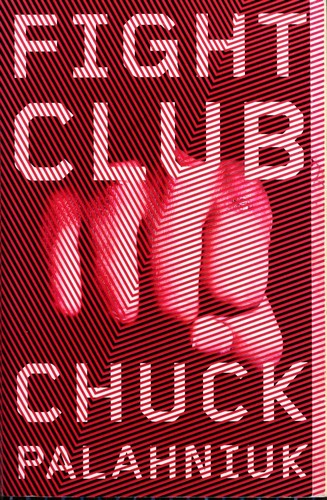
Fight Club
by Chuck Palahniuk
★ Top 5 book of 1996 · #4 on Best Books of 1996
A sleepless, estranged narrator quits his dull job and falls under the spell of Tyler Durden, a charismatic extremist. Together they start secret basement boxing matches in this satirical debut that probes the darkness of modern life.
Best for: Readers who enjoy dark satire and edgy, unconventional storytelling about modern life
Fight Club is #4 on BookWard's Best Books of 1996, out of 39 1996 books that cleared our data bar.
What Fight Club is about
An unnamed narrator spends his days as a product recall specialist for a car company and his nights unable to sleep. A doctor tells him to visit a testicular cancer support group to see what real suffering looks like. The strategy works, until a fellow faker named Marla Singer turns up and spoils it for him.
Then he meets Tyler Durden, a charismatic stranger who offers a very different cure. After the narrator's condominium is destroyed, he moves in with Tyler, and the two start a bare-knuckle fight club with strict rules. What begins as a way to feel alive grows into something larger and darker, aimed at modern consumer life itself. Chuck Palahniuk's first published novel is a satire about masculinity, identity and the emptiness of owning things. It is dark, edgy and deliberately provocative, and it suits readers who like their humor sharp and unsettling.
Fight Club on the Best Books of 1996
Fight Club came out in 1996. Of the 39 books first published in 1996 that met BookWard's data bar, it ranks #4 on our Best Books of 1996 list.
Why it made the list: 877 readers have shelved it on Open Library; readers rate it 4 out of 5 (137 ratings); 31 are reading it right now. The list ranks each year’s books on how many readers have picked them up, how highly readers rate them, and how many are reading them right now.
Nearby on the 1996 list
- The Green Mile Stephen King, #2
- Forbidden Knowledge Roger Shattuck, #3
- Push Sapphire, #5
- Neverwhere Neil Gaiman, #6
See all Best Books of 1996 Best books by year
More years: Best Books of 1995 Best Books of 1997.
The numbers behind it
- Readers: 660 want to read it, 31 are reading it now and 186 have read it, according to Open Library.
- Ratings: 4 out of 5 from 137 Open Library ratings.
| Signal | This book (0 to 100) | Weight |
|---|---|---|
| Reach | 90 | 55% |
| Reader love | 54 | 25% |
| Being read right now | 90 | 20% |
Questions about Fight Club
When was Fight Club published?
Fight Club by Chuck Palahniuk was first published in 1996.
Was Fight Club one of the best books of 1996?
Fight Club is #4 on BookWard's Best Books of 1996, out of 39 1996 books that cleared our data bar. 877 readers have shelved it on Open Library; readers rate it 4 out of 5 (137 ratings); 31 are reading it right now.
Why is Fight Club on the Best Books of 1996 list?
877 readers have shelved it on Open Library; readers rate it 4 out of 5 (137 ratings); 31 are reading it right now.
More of the best books of 1996
- A Game of Thrones George R. R. Martin, #1
- The Green Mile Stephen King, #2
- Forbidden Knowledge Roger Shattuck, #3
- Push Sapphire, #5
- Neverwhere Neil Gaiman, #6
- Infinite Jest David Foster Wallace, #7
See the full Best Books of 1996, the Top 100, or new books on Rising.
How we know
This page uses public data: Open Library reader counts and ratings, and Wikipedia page views for recent years. The description is paraphrased from real source text. Rankings reflect reading interest, not quality or sales, and can be affected by data gaps. Lists update monthly.
Best suited to mature teens and adults.
Depends on the edition you pick.
A short, savage satire that earns its reputation for bite. 69% taste match
 BookWard’s take
A short, savage satire that earns its reputation for bite
Fight Club opens on an insomniac narrator who finds relief by crashing support groups, and the premise alone hooks hard. The book is short and fast, which suits BookWard's love of tight length and pace. Its voice is the real draw: clipped, repetitive, deadpan, instantly its own. On originality and voice it scores high for a debut from 1996, and the humor runs black and dry. Where it parts ways with BookWard is restraint. The violence and nihilism are front and center, and the book is idea-led where BookWard prefers story. The internal logic is built around a deliberate puzzle, and the ending pays that off. A sharp, uncomfortable read that rewards anyone who likes satire with teeth.
A short novel that wastes little, which is exactly where BookWard likes to be.
Short chapters and a restless, clipped style keep it moving fast, just above BookWard's own setting.
A secret fighting club as radical therapy was strikingly new in 1996, and it still reads that way.
Spare, clipped and plainspoken, with repeated phrases for rhythm instead of ornament.
Plot and psychology are tangled together, with the narrator's mind driving the events.
It is a bleak, nihilistic view of modern life with little consolation, darker than BookWard's hopeful lean.
Looping, fragmentary and self-referential, a bit more adventurous than BookWard's conventional-leaning taste.
The satire is genuinely funny in a grim, deadpan way, close to BookWard's appetite for humor.
Violence, self-destruction and nihilism sit at the heart of it.
Numbness and rage are expressed more by tone than by open feeling.
See all 50 dialsEvery position, side by side with this book
Where it lines up
- OpeningBookWard 10 · book 10
- OriginalityBookWard 9 · book 9
- Sagging middleBookWard 8 · book 8
Where it pulls apart
- Internal logicBookWard 10 · book 7
- Story or ideasBookWard 3 · book 7
- Shock for effectBookWard 9 · book 6
A short novel that wastes little, which is exactly where BookWard likes to be.
The insomnia and fake support groups grab you from the first pages, matching BookWard's taste for an instant hook.
Its satire of consumer life and its fight-club premise feel fresh rather than borrowed, close to BookWard's preference.
The story runs on a deliberate puzzle that holds together on its own terms, though less airtight than BookWard demands.
Short chapters and a restless, clipped style keep it moving fast, just above BookWard's own setting.
A secret fighting club as radical therapy was strikingly new in 1996, and it still reads that way.
The narrator is drawn in sharp, memorable detail, but the supporting cast works closer to ideas than people.
It resolves its central mystery with a firm payoff, close to BookWard's preference for a resolved ending.
Cold, ironic and unsentimental throughout, in line with BookWard's taste for restraint.
The darkness mostly serves the satire, though some of it is clearly meant to provoke.
Not applicable to a novel.
The flat, repetitive, aphoristic narration is unmistakable and the book's greatest strength, matching BookWard's love of distinct voices.
The ideas about masculinity and consumerism drive the book more than the plot does, more idea-led than BookWard usually likes.
Tyler and the narrator often state their philosophy outright, which sits further toward explanation than BookWard prefers.
Short and propulsive, it keeps its energy from start to finish, in line with BookWard.
Spare, clipped and plainspoken, with repeated phrases for rhythm instead of ornament.
Plot and psychology are tangled together, with the narrator's mind driving the events.
It is a bleak, nihilistic view of modern life with little consolation, darker than BookWard's hopeful lean.
Looping, fragmentary and self-referential, a bit more adventurous than BookWard's conventional-leaning taste.
The satire is genuinely funny in a grim, deadpan way, close to BookWard's appetite for humor.
Easy to read in style, though the ideas and structure take some work.
Told entirely from one narrator's perspective.
The narrator loops back and tells events out of order, so time shifts more than in a straight line.
Set in a recognizable modern world, with the strangeness coming from psychology instead of fantasy.
A handful of central figures carry the book, with fighters filling the edges.
Intimate in focus, even as the club's ambitions grow beyond it.
Balances the narrator's inner state with physical fights and sabotage.
Punchy exchanges carry a lot of the book without dominating it.
Marla's presence matters to the story, but romance is not the point.
The underground fight and support group scenes are unfamiliar territory for most readers.
Rooted in the 1990s but still feels aimed at the present.
Its critique of consumer culture and male drift has outlasted its moment, so it holds up.
The narrator's reliability is the central question of the book.
It refuses to tell you who to side with, leaving moral judgment open.
Lean on scenery, using sharp detail only where it serves the point.
A standalone novel.
Built around a major reveal and several smaller surprises.
Provocative and uncomfortable, it is meant to unsettle more than soothe.
Violence, self-destruction and nihilism sit at the heart of it.
Numbness and rage are expressed more by tone than by open feeling.
The humor is dry and deadpan rather than broad.
Bare-knuckle fighting and escalating destruction appear throughout.
Some sexual content and frank talk, but not the focus.
Its anti-consumerist, anti-corporate stance is central to the book.
Plain, direct language with no heavy dialect.
The narration is fiercely opinionated and full of manifesto-like pronouncements.
Angry at the present, it looks toward collapse more than renewal.
Deeply cynical about modern life and its comforts.
Review written by BookWard, dial version 1, November 2026.
Who is Fight Club right for?
Best suited to mature teens and adults. It contains frequent graphic violence, dark themes of self-destruction, and frank sexual language.
Easy to read in style, though the ideas and structure take some work.
Violence, self-destruction and nihilism sit at the heart of it.
Numbness and rage are expressed more by tone than by open feeling.
Bare-knuckle fighting and escalating destruction appear throughout.
Book CompanionFight Club: ideas, characters, themes
An unnamed man numbed by consumer life finds a violent kind of release through an underground fighting club.
- The insomnia. The narrator's sleeplessness sets the story in motion and shapes how he sees everything.
- The support groups. He attends groups for illnesses he does not have, because other people's suffering lets him cry and finally sleep.
- Marla Singer. Another visitor faking her way into the groups, she exposes him as a fraud and disrupts his relief.
- Tyler Durden. A mysterious man who asks the narrator to hit him as hard as he can, starting something bigger.
- The fight club. Bare-knuckle matches run by a strict set of rules become a kind of radical therapy for the men who join.
Characters
The narrator
Unnamed protagonist
A product recall specialist for a car company whose insomnia leads him into support groups and then into Tyler's orbit.
Tyler Durden
Charismatic catalyst
A strange, magnetic man the narrator meets by chance, who becomes his housemate and partner in founding the club.
Marla Singer
Fellow impostor
A disturbed woman who also visits support groups under false pretenses and unsettles the narrator's routine.
Themes
The way buying and owning things can hollow out a person's sense of self.
What it means to feel like a man when ordinary life offers no outlet for it.
How a person's sense of who they are can split or be performed.
The idea that suffering and violence make life feel real.
The pull of tearing down a system you feel trapped inside.
Discussion questions
- Why does the narrator find relief in other people's suffering?
- What does the fight club offer that ordinary life does not?
- How far should we trust the narrator, and why does it matter?
- Is the book critiquing Tyler's philosophy or endorsing it?
- Why has this satire kept its hold on readers decades later?
Personalize your Book Companion
This is the general edition. In BookWard, the Companion is written for you: your reading profile, your notes, and spoiler-safe to the page you are on.
Buy, listen or borrow Fight Club
Each link opens a search for this book on that store, in a new tab.
Read on a device
Borrow
Reviews and community
If you liked Fight Club
A cold-case thriller where a child survivor must question her memory
A Man of the PeopleChinua AchebeAchebe's short, sharp satire of Nigerian politics and a corrupt charmer
Bat EaterKylie Lee BakerA Chinatown crime scene cleaner, a murdered sister, and hungry ghosts
Sharp ObjectsGillian FlynnA journalist goes home to Wind Gap and her own wounds
Find your own best books
Add what you have read, rate it, and BookWard will recommend what to read next.
Free to start. No credit card needed.