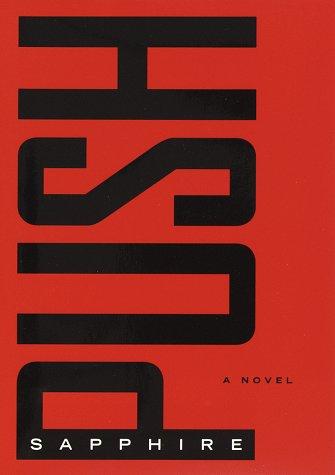
Push
by Sapphire
★ Top 5 book of 1996 · #5 on Best Books of 1996
Precious Jones is a sixteen-year-old Harlem girl who cannot read and has been ignored by everyone around her. When a determined teacher enters her life, she learns to write about her experience and claim it as her own.
Best for: Readers ready for a hard-hitting story of education, survival and finding a voice
Push is #5 on BookWard's Best Books of 1996, out of 39 1996 books that cleared our data bar.
What Push is about
Harlem, 1987. Claireece Precious Jones is sixteen, cannot read or write, and is pregnant for the second time. She lives with a mother who abuses her, and the father of her child is her own father. Few people in her life have ever expected anything of her.
Then she is placed in a small alternative school, where a teacher named Ms. Blu Rain asks the students to keep daily journals. Precious starts putting words on the page, and the writing slowly changes: her spelling and grammar improve, and she finds poetry. Books by Black women writers, The Color Purple among them, show her that her own story can be told. Sapphire's debut novel is raw and often hard to read, but it follows a girl finding her voice, and it is hopeful in the end. It was later filmed as Precious.
Push on the Best Books of 1996
Push came out in 1996. Of the 39 books first published in 1996 that met BookWard's data bar, it ranks #5 on our Best Books of 1996 list.
Why it made the list: 1,099 readers have shelved it on Open Library; readers rate it 3.9 out of 5 (19 ratings); 42 are reading it right now. The list ranks each year’s books on how many readers have picked them up, how highly readers rate them, and how many are reading them right now.
It earns Being read right now.
Nearby on the 1996 list
- Forbidden Knowledge Roger Shattuck, #3
- Fight Club Chuck Palahniuk, #4
- Neverwhere Neil Gaiman, #6
- Infinite Jest David Foster Wallace, #7
See all Best Books of 1996 Best books by year
More years: Best Books of 1995 Best Books of 1997.
The numbers behind it
- Readers: 1,021 want to read it, 42 are reading it now and 36 have read it, according to Open Library.
- Ratings: 3.9 out of 5 from 19 Open Library ratings.
| Signal | This book (0 to 100) | Weight |
|---|---|---|
| Reach | 95 | 55% |
| Reader love | 38 | 25% |
| Being read right now | 92 | 20% |
Questions about Push
When was Push published?
Push by Sapphire was first published in 1996.
Was Push one of the best books of 1996?
Push is #5 on BookWard's Best Books of 1996, out of 39 1996 books that cleared our data bar. 1,099 readers have shelved it on Open Library; readers rate it 3.9 out of 5 (19 ratings); 42 are reading it right now.
Why is Push on the Best Books of 1996 list?
1,099 readers have shelved it on Open Library; readers rate it 3.9 out of 5 (19 ratings); 42 are reading it right now.
More of the best books of 1996
- A Game of Thrones George R. R. Martin, #1
- The Green Mile Stephen King, #2
- Forbidden Knowledge Roger Shattuck, #3
- Fight Club Chuck Palahniuk, #4
- Neverwhere Neil Gaiman, #6
- Infinite Jest David Foster Wallace, #7
See the full Best Books of 1996, the Top 100, or new books on Rising.
How we know
This page uses public data: Open Library reader counts and ratings, and Wikipedia page views for recent years. The description is paraphrased from real source text. Rankings reflect reading interest, not quality or sales, and can be affected by data gaps. Lists update monthly.
Suited to mature teens and adults who are ready for frank depictions of rape, incest, and abuse.
Depends on the edition you pick.
A short, unflinching novel narrated in Precious's own broken, blazing voice.. 67% taste match
 BookWard’s take
A short, unflinching novel narrated in Precious's own broken, blazing voice.
Push tells the story of Claireece Precious Jones, a sixteen-year-old in 1987 Harlem who cannot read, until a teacher at an alternative school hands her a pencil and a journal. The voice is the book's great achievement: the narration is Precious's own, with spelling and syntax that bend as her literacy grows. It is short, which makes it easy to finish in a sitting or two, and it hooks you at once. The darkness is real, but the book earns it rather than using it for shock. Character depth is the point, since Precious is drawn from the inside. The book is demanding emotionally rather than structurally, and it ends on hard-won agency, not a tidy bow. Class anthology pages close the book.
A slim debut novel that says what it has to say without padding, which suits BookWard's love of tight books.
Short scenes and journal-like entries keep things moving, though the subject matter makes it feel weighty rather than brisk.
A narrator whose spelling and grammar evolve with her learning was a bold choice, and BookWard rewards that kind of risk.
The language is deliberately raw and unadorned, shaped to Precious's voice rather than polished for show.
What matters is Precious's change as a person and a writer, far more than any plot machinery.
It stays unsparing but ends on Precious claiming language and a measure of self-possession, a hard-earned opening toward hope.
Journal-style narration, shifting language, and the appended class anthology make the form a little unconventional, a touch beyond BookWard's norm.
Humor is nearly absent, since the book is serious in its purpose, which sits further from BookWard's lighter side.
Rape, abuse, and neglect sit at the center, so this is among the darkest content a novel can carry.
The feeling runs high throughout, yet the narration stays direct rather than melodramatic.
See all 50 dialsEvery position, side by side with this book
Where it lines up
- OriginalityBookWard 9 · book 9
- SentimentBookWard 8 · book 8
- Story or ideasBookWard 3 · book 3
Where it pulls apart
- Familiar tropesBookWard 10 · book 8
- Internal logicBookWard 10 · book 8
- ToneBookWard 7 · book 2
A slim debut novel that says what it has to say without padding, which suits BookWard's love of tight books.
It opens inside Precious's life and voice immediately, with no warm-up, which is exactly how BookWard likes to begin.
It avoids the inspirational-teacher template by staying inside Precious's own mind, close to BookWard's taste for fresh handling of familiar setups.
Events follow cleanly from Precious's circumstances and her growing literacy, so the cause and effect holds together tightly.
Short scenes and journal-like entries keep things moving, though the subject matter makes it feel weighty rather than brisk.
A narrator whose spelling and grammar evolve with her learning was a bold choice, and BookWard rewards that kind of risk.
Precious is rendered from the inside with total conviction, matching the depth BookWard looks for in a protagonist.
It closes on real forward movement for Precious without pretending her troubles are all solved, slightly more open than BookWard's usual preference.
The prose refuses to soften or sweeten, so the book earns its feeling instead of reaching for it.
The brutality comes from Precious's actual life and serves the story, though the subject matter is relentlessly harsh.
This is a novel, so the nonfiction rigor dial does not apply.
Precious's narration is unmistakable and could belong to no other book, the quality BookWard prizes most.
Story leads here, with Precious's life driving everything, though the book carries strong ideas about literacy and voice.
Information arrives through Precious's own experience and her classroom lessons, never through authorial explanation, as BookWard prefers.
The book is short enough and focused enough that its energy holds from the first page to the class anthology.
The language is deliberately raw and unadorned, shaped to Precious's voice rather than polished for show.
What matters is Precious's change as a person and a writer, far more than any plot machinery.
It stays unsparing but ends on Precious claiming language and a measure of self-possession, a hard-earned opening toward hope.
Journal-style narration, shifting language, and the appended class anthology make the form a little unconventional, a touch beyond BookWard's norm.
Humor is nearly absent, since the book is serious in its purpose, which sits further from BookWard's lighter side.
The prose is accessible, but the content and the phonetic spelling ask real emotional and sometimes reading effort.
Precious narrates almost entirely alone, with classmates' voices surfacing mainly in the closing anthology.
The story moves forward in time through Precious's school year and its aftermath, with only memories interrupting.
This is a fully grounded novel set in real Harlem in 1987.
The core circle is small: Precious, her family, her teacher, and a handful of classmates.
The focus is one young woman's life in a few rooms and streets, intimate to the bone.
Almost everything is filtered through Precious's thoughts and her struggle to put them into words.
Speech is present but the book leans more on narration and journal entries than on conversation.
Romance plays essentially no part; the book's relationships are about family, abuse, and mentorship.
Many readers will find Precious's Harlem and her school world unfamiliar, and the book makes them feel it from inside.
It is set in 1987, so it sits in the recent past rather than the present day.
Its subject of literacy as survival and self-definition has kept it relevant long after 1996.
Precious tells her own story honestly and without evasion, so the narration is firmly reliable.
The book is clear about who harms whom and who helps, with little moral fog.
Detail is stripped back to what Precious notices and needs, sparse next to richly described novels.
This is fiction, so the nonfiction style dial does not apply.
As a novel narrated in first person, the perspective dial for nonfiction does not apply.
Push stands entirely alone as a single novel.
It unfolds through revelation of Precious's circumstances rather than plot twists.
This is a confronting, uncomfortable read that asks readers to stay with what it shows.
Rape, abuse, and neglect sit at the center, so this is among the darkest content a novel can carry.
The feeling runs high throughout, yet the narration stays direct rather than melodramatic.
There is no real comic register to place, so the humor dial does not apply.
Physical and sexual violence are described plainly and recur, making this heavy on the page.
Sexual abuse is depicted explicitly and is central to the story, so readers should be prepared.
Race, poverty, and the systems that fail Precious are woven through, close to the foreground without turning into argument.
The spelling and syntax track Precious's literacy and Black vernacular speech, which takes some adjustment.
Precious's voice is forceful and full of her own judgments, so the narration is anything but neutral.
The book looks at what is and what could be, mostly present-tense survival with a turn toward the future.
It stays clear-eyed about cruelty but believes in education and writing as ways to save a life.
Review written by BookWard, dial version 1, November 2026.
Who is Push right for?
Suited to mature teens and adults who are ready for frank depictions of rape, incest, and abuse. It deals directly with sexual and physical violence, so readers who find that material hard should approach with care.
The prose is accessible, but the content and the phonetic spelling ask real emotional and sometimes reading effort.
Rape, abuse, and neglect sit at the center, so this is among the darkest content a novel can carry.
The feeling runs high throughout, yet the narration stays direct rather than melodramatic.
Physical and sexual violence are described plainly and recur, making this heavy on the page.
Book CompanionPush: ideas, characters, themes
Learning to read and write gives Precious a language to claim her own story and her worth.
- Invisible to the system. Precious has slipped past the people and institutions who should have noticed what was happening to her.
- A new school. After her pregnancy is discovered, she is steered toward an alternative school and a teacher named Ms. Blu Rain.
- Writing every day. Ms. Rain has her students keep journals, and Precious's growing skill shows in her own narration.
- Other women, other stories. Her classmates come from troubled backgrounds too, and their writing is gathered in a class book.
- Books that speak to her. The work of writers such as Alice Walker, Audre Lorde, and Langston Hughes gives Precious models, with The Color Purple moving her most.
Characters
Claireece Precious Jones
Narrator and protagonist
A sixteen-year-old in Harlem who begins the book unable to read.
Mary
Precious's mother
Her abusive mother, who pushes her toward welfare rather than school.
Ms. Blu Rain
Teacher
The teacher at the alternative school who gets her students writing every day.
Carl
Precious's father
The man who raped her and fathered her children.
Themes
Reading and writing become the tools Precious uses to understand and reclaim her life.
Who gets to tell a story, and in what language, is central to the book.
The novel faces violence in the home and the damage it leaves behind.
Institutions overlook young women like Precious until someone chooses to see them.
Classmates and a teacher offer the support her family does not.
Discussion questions
- How does Precious's changing spelling and grammar shape the way you read her story?
- What does Ms. Rain do differently from the adults who failed Precious before?
- Why might the author end with the class anthology of life stories?
- How does the book handle violence on the page, and did that choice work for you?
- What does the novel suggest about the gap between being cared for and being seen?
Personalize your Book Companion
This is the general edition. In BookWard, the Companion is written for you: your reading profile, your notes, and spoiler-safe to the page you are on.
Buy, listen or borrow Push
Each link opens a search for this book on that store, in a new tab.
Read on a device
Borrow
Reviews and community
If you liked Push
A formerly enslaved mother tells her own story, plainly and with force
Stone Butch BluesLeslie FeinbergA butch life told from inside, written as a call to action
Black BoyRichard WrightA hungry boy in the Jim Crow South, told without flinching
A Long Way GoneIshmael BeahA child soldier's memoir, told plainly and painfully
Find your own best books
Add what you have read, rate it, and BookWard will recommend what to read next.
Free to start. No credit card needed.