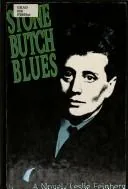
Stone Butch Blues
by Leslie Feinberg · 1993
Best suited to adult and mature teen readers interested in LGBT history and identity.
440 pages, about 7 to 10.5 hours.
A butch life told from inside, written as a call to action. 57% taste match
The story
Stone Butch Blues is a novel by Leslie Feinberg, first published in 1993 and classed as historical fiction. It follows Jess Goldberg, a stone butch lesbian, through the second half of the twentieth century, with the story rooted in New York and in the lives of butch and femme people in America during the 1970s. Though invented, the narrative draws on Feinberg's own experiences, and the author has described the book as a personal call to action.
The novel works through coming out, gender identity, and the world of butch and femme relationships, and it touches on lesbian and transgender experience across several decades. It has also been read as LGBT historical fiction and as a work with the texture of memoir. The text opens in the form of a letter, with a narrator lying on a bed and missing the person she addresses.
The book has won recognition from both the Lambda Literary Awards and the Stonewall Book Awards. It runs to a median length of about 440 pages and has appeared in 41 editions. Readers looking for fiction about lesbian and transgender lives in postwar and 1970s America, told from inside one person's experience, will find that here.
Liebe Theresa, ich liege auf dem Bett und vermisse Dich.
Themes
gayComing out (Sexual orientation)lgbtTranssexualsLesbianstransgenderButch and femme (Lesbianism)LGBT memoir
- Want to read 260
- Reading now 20
- Read 54
Most people shelving it are saving it for later.
Of 334 readers who put it on a shelf, 78% want to read it, 6% are reading it now, 16% have finished it and 0% stopped before the end.
By the numbers
- The median edition runs 440 pages. Counting about 275 words a page and an adult reading pace of 250 words a minute, that is about 8.1 hours of reading.
- Open Library tracks 41 editions from 21 publishers, the earliest dated 1993 and the latest 2026, across 9 languages.
- On reader demand it ranks in the top 2% of the modern books in our catalog (15,152 of them).
- Libraries shelve it under Dewey [Fic] and Library of Congress class PS-3556.00000000.E427 1993.
 BookWard’s take
A butch life told from inside, written as a call to action
Stone Butch Blues follows Jess Goldberg, a stone butch lesbian, through the second half of the twentieth century, and it opens as a letter from a narrator lying on a bed, missing the person she addresses. It's a quiet hook, but a pulling one. The characterization runs deep, because everything is told from inside one person's experience. The politics are front and center: Feinberg called the book her call to action, and the story is built around that purpose. The voice is distinctive, personal, and unmistakably its own. Expect a long, serious book of 440 pages, drawn partly from the author's own life, with the weight of memoir behind invented events. It rewards readers who want fiction with conviction rather than polish.
At 440 pages it is a substantial read, longer than BookWard's taste for tight books, though the personal stakes carry it.
It moves through a whole life, so some stretches are steady and reflective, a touch slower than BookWard prefers.
Its stone butch perspective and the world of butch and femme life were rare in fiction when it appeared in 1993.
The language is direct and plainspoken, closer to BookWard's middle than to the ornate end.
The book is driven by who Jess is and becomes, which fits BookWard's character-led leaning.
It holds real pain alongside moments of endurance and connection, landing somewhere between bleak and hopeful.
A letter-form opening aside, the telling is largely a conventional life story in sequence.
The tone is serious, with warmth but little comedy.
It engages with violence, discrimination and loss without flinching, though it is not gratuitous.
Feeling runs high throughout, in grief, tenderness and anger.
See all 50 dialsEvery position, side by side with this book
Where it lines up
- Authorial voiceBookWard 9 · book 9
- OriginalityBookWard 9 · book 8
- Character depthBookWard 8 · book 9
Where it pulls apart
- LengthBookWard 1 · book 7
- OpeningBookWard 10 · book 6
- Internal logicBookWard 10 · book 7
At 440 pages it is a substantial read, longer than BookWard's taste for tight books, though the personal stakes carry it.
The letter-form opening, a narrator on a bed missing someone, draws you in through intimacy rather than incident.
Feinberg writes a lived, specific life instead of leaning on stock coming-out story beats, which BookWard values.
The story follows a coherent life across decades, with events following from character and circumstance.
It moves through a whole life, so some stretches are steady and reflective, a touch slower than BookWard prefers.
Its stone butch perspective and the world of butch and femme life were rare in fiction when it appeared in 1993.
Jess Goldberg is drawn from the inside across decades, exactly the deep characterization BookWard looks for.
The ending offers a measure of settlement without tying every thread, a little looser than BookWard likes.
The book is openly emotional and heartfelt, though grounded in specifics rather than sweetness.
Hardship and darkness come from the realities of the era and the character's life, not from effect for its own sake.
Not applicable, since this is a novel rather than a work of nonfiction argument.
The first-person voice is intimate and distinctive, shaped by the author's own experience.
It is firmly a story about a person, though a political purpose runs beneath it.
Ideas arrive through scene and lived moments rather than lectures, matching BookWard's taste for showing.
A life-spanning structure risks some unevenness, but the personal stakes keep the momentum mostly sustained.
The language is direct and plainspoken, closer to BookWard's middle than to the ornate end.
The book is driven by who Jess is and becomes, which fits BookWard's character-led leaning.
It holds real pain alongside moments of endurance and connection, landing somewhere between bleak and hopeful.
A letter-form opening aside, the telling is largely a conventional life story in sequence.
The tone is serious, with warmth but little comedy.
The language is accessible, though the subject matter and emotional weight ask for some endurance.
The story stays with Jess, a single narrator throughout, rather than shifting between voices.
It spans several decades of one life, which involves some movement across time and memory.
Entirely grounded in real places and social conditions of postwar America.
Relationships and communities matter, but the focus stays tight on one central life.
This is an intimate account of one person, though set against sweeping social change.
It lives largely in Jess's thoughts and feelings, which suits BookWard's interest in interior life.
Conversations carry a good share of the book, balancing reflection with scene.
Relationships are important to Jess's story but sit alongside identity and survival as themes.
The butch and femme culture of mid-century America may be unfamiliar to many readers, which adds interest.
It is set in the past, the second half of the twentieth century, though its concerns remain current.
Its recognition from the Lambda Literary Awards and Stonewall Book Awards points to lasting standing.
Jess tells her own story plainly and sincerely, a reliable guide to her experience.
The book is clear about who is wronged, while leaving individual choices complex.
Places and moments are rendered with moderate detail in service of feeling.
Told in the first person and rooted in the author's own life, it is as personal as fiction gets.
A standalone novel with no sequel needed.
The book unfolds as a life rather than a plot of reversals, so surprises are few.
It confronts prejudice and hardship directly and asks readers to sit with them.
It engages with violence, discrimination and loss without flinching, though it is not gratuitous.
Feeling runs high throughout, in grief, tenderness and anger.
Humor is rare and dry when it appears.
Violence against the characters is present on the page and shapes the story's stakes.
Intimacy and desire are part of the story, treated frankly but as part of character.
Feinberg called it her call to action, and political purpose is central to the book.
The language is plain and readable, with period speech but no heavy dialect.
The narration carries conviction and a clear point of view rather than neutrality.
It looks back across a life while pointing toward change still to come.
Hardship is faced clearly, yet the book holds on to a belief in solidarity and change.
Review written by BookWard, dial version 1, November 2026.
Who is Stone Butch Blues right for?
Best suited to adult and mature teen readers interested in LGBT history and identity. It deals with prejudice, violence and intimacy, so some content may be difficult.
The language is accessible, though the subject matter and emotional weight ask for some endurance.
It engages with violence, discrimination and loss without flinching, though it is not gratuitous.
Feeling runs high throughout, in grief, tenderness and anger.
Violence against the characters is present on the page and shapes the story's stakes.
Book CompanionStone Butch Blues: ideas, characters, themes
A butch lesbian's life across the second half of the twentieth century, drawn from the author's own experience and written as a call to action.
- A letter opening. The novel begins in the form of a letter, with a narrator lying on a bed and missing the person she addresses.
- One life across decades. The story follows Jess Goldberg through the second half of the twentieth century.
- Rooted in New York. The narrative is anchored in New York and in the lives of butch and femme people in America.
- Fiction with autobiographical roots. Though invented, the book takes inspiration from Feinberg's own life.
- Recognized by its community. It has won recognition from both the Lambda Literary Awards and the Stonewall Book Awards.
Characters
Jess Goldberg
Narrator and protagonist
A stone butch lesbian whose life across the late twentieth century forms the heart of the book.
Themes
The long work of understanding and claiming who you are.
The risks and consequences of living openly.
The culture, relationships and community built within it.
How gender is lived, expressed and policed.
The author's intent that the story move readers to care and act.
Discussion questions
- Why might Feinberg have chosen to open the novel as a letter?
- How does knowing the book draws on the author's own life change how you read it?
- What does the novel suggest about community and survival?
- How does the book balance personal story and political purpose?
- What aspects of the 1970s setting feel distant, and which feel current?
Personalize your Book Companion
This is the general edition. In BookWard, the Companion is written for you: your reading profile, your notes, and spoiler-safe to the page you are on.
Buy, listen or borrow Stone Butch Blues
Each link opens a search for this book on that store, in a new tab.
Read on a device
Borrow
Reviews and community
If you liked Stone Butch Blues
A tender, furious love story told by a pregnant Harlem teenager
Black BoyRichard WrightA hungry boy in the Jim Crow South, told without flinching
The Color of WaterJames McBrideA son's memoir, and his mother's own voice breaking through it
John of JohnDouglas StuartA returning son, a stern father, and a croft full of secrets
Sources: Open Library.
Track Stone Butch Blues and find your next favorite
Add it to your shelf, rate what you have read, and BookWard will recommend what fits you.
Free to start. No credit card needed.