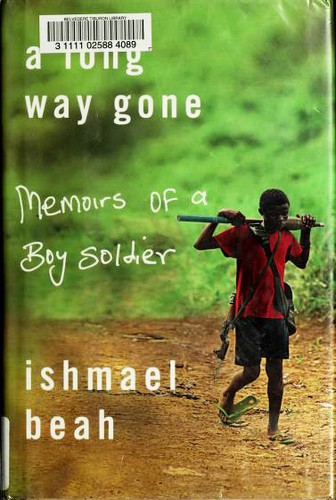
A Long Way Gone
by Ishmael Beah
★ Top 10 book of 2007 · #10 on Best Books of 2007
Ishmael Beah recounts fleeing his village at twelve during Sierra Leone's civil war and being forced into an army unit as a child soldier. He describes his rescue by UNICEF, his rehabilitation, and his adoption by his uncle.
Best for: Readers seeking a harrowing, true survival account of war and recovery
A Long Way Gone is #10 on BookWard's Best Books of 2007, out of 53 2007 books that cleared our data bar.
What A Long Way Gone is about
Ishmael Beah was twelve when rebel fighters attacked his village in Sierra Leone and he ran, beginning a long stretch of wandering through a country at war. This 2007 memoir follows what happened next: how he was drawn into a government army unit, handed weapons and drugs, and by thirteen had seen and taken part in terrible violence. Beah writes plainly about how a child can be reshaped by war until he hardly recognizes himself.
The account does not stop at the fighting. It also covers the slow work of being pulled out of it, through a UNICEF rehabilitation program and the eventual home he found with an uncle. Readers interested in modern conflict, young people in crisis, or how recovery begins will find it sobering and humane. Note that some journalists and historians have questioned whether parts of the timeline match recorded events.
A Long Way Gone on the Best Books of 2007
A Long Way Gone came out in 2007. Of the 53 books first published in 2007 that met BookWard's data bar, it ranks #10 on our Best Books of 2007 list.
Why it made the list: 516 readers have shelved it on Open Library; readers rate it 4.1 out of 5 (37 ratings); 31 are reading it right now. The list ranks each year’s books on how many readers have picked them up, how highly readers rate them, and how many are reading them right now.
Nearby on the 2007 list
- The Well of Ascension Brandon Sanderson, #8
- Marked P. C. Cast, #9
- There Is a Bird on Your Head! Mo Willems, #11
- City of Bones Cassandra Clare, #12
See all Best Books of 2007 Best books by year
More years: Best Books of 2006 Best Books of 2008.
The numbers behind it
- Readers: 435 want to read it, 31 are reading it now and 50 have read it, according to Open Library.
- Ratings: 4.1 out of 5 from 37 Open Library ratings.
| Signal | This book (0 to 100) | Weight |
|---|---|---|
| Reach | 81 | 55% |
| Reader love | 55 | 25% |
| Being read right now | 81 | 20% |
Questions about A Long Way Gone
When was A Long Way Gone published?
A Long Way Gone by Ishmael Beah was first published in 2007.
Was A Long Way Gone one of the best books of 2007?
A Long Way Gone is #10 on BookWard's Best Books of 2007, out of 53 2007 books that cleared our data bar. 516 readers have shelved it on Open Library; readers rate it 4.1 out of 5 (37 ratings); 31 are reading it right now.
Why is A Long Way Gone on the Best Books of 2007 list?
516 readers have shelved it on Open Library; readers rate it 4.1 out of 5 (37 ratings); 31 are reading it right now.
More of the best books of 2007
- Dog Days Jeff Kinney, #1
- A Thousand Splendid Suns Khaled Hosseini, #2
- Harry Potter and the Deathly Hallows J. K. Rowling, #3
- The Titan's Curse Rick Riordan, #4
- The Name of the Wind Patrick Rothfuss, #5
- Rodrick Rules Jeff Kinney, #6
See the full Best Books of 2007, the Top 100, or new books on Rising.
How we know
This page uses public data: Open Library reader counts and ratings, and Wikipedia page views for recent years. The description is paraphrased from real source text. Rankings reflect reading interest, not quality or sales, and can be affected by data gaps. Lists update monthly.
It has appeared on young-adult lists, but suits mature teens and adults.
Depends on the edition you pick.
A child soldier's memoir, told plainly and painfully. 62% taste match
 BookWard’s take
A child soldier's memoir, told plainly and painfully
Ishmael Beah's memoir follows him from a twelve-year-old fleeing his village to a boy soldier in Sierra Leone's civil war, then to rescue and rehabilitation. It is personal and story-led, and it earns its darkness: the violence is the subject, not a device. The prose is plain and direct, which keeps the pace brisk and lets the emotion land without sentimentality. The voice is distinctive, narrow and unflinching. The setting will be unfamiliar to many readers, and the book is a demanding read. Its rigor is mixed, since it is a firsthand account and parts of it have been questioned by some news outlets and historians. Read it as testimony, not as a historian's ledger.
A compact memoir that covers a few harrowing years without padding, which suits BookWard's taste for the tight.
The narrative moves quickly through displacement, war and recovery, close to BookWard's preference for momentum.
A first-person view from inside a child-soldier unit is rare and specific, which BookWard rates highly.
The language is spare and plain, a little plainer than BookWard's middle setting.
Though events drive it, the lasting interest is what happens to the narrator inside, so it leans toward character.
Rescue and adoption bring some light, but the mood stays heavy, a touch below BookWard's hopeful lean.
A chronological memoir with conventional shape, near BookWard's slightly conventional position.
Almost no humor appears, which is right for the subject.
Among the darker subjects possible: war, drugs and children committing violence.
The restraint of the telling makes the feeling hit harder, so the intensity is high.
See all 50 dialsEvery position, side by side with this book
Where it lines up
- SentimentBookWard 8 · book 8
- PaceBookWard 8 · book 7
- OriginalityBookWard 9 · book 8
Where it pulls apart
- Rigor (nonfiction)BookWard 9 · book 4
- Internal logicBookWard 10 · book 7
- LengthBookWard 1 · book 3
A compact memoir that covers a few harrowing years without padding, which suits BookWard's taste for the tight.
The flight from his village starts the story in danger almost at once, close to BookWard's appetite for a hook.
A firsthand account of an unusual life avoids the stock beats of fiction, which BookWard prizes.
The events follow a clear chain from attack to flight to recruitment to rescue, though some details have been questioned.
The narrative moves quickly through displacement, war and recovery, close to BookWard's preference for momentum.
A first-person view from inside a child-soldier unit is rare and specific, which BookWard rates highly.
Beah draws his own change from innocent child to hardened fighter with real interiority, in line with BookWard's taste.
The rescue and adoption give the story a clear arc, though recovery is shown as unfinished.
The telling is flat and unsentimental, letting events carry the weight, which BookWard values.
The violence is the substance of the story rather than decoration, so the darkness is earned.
It is a personal account, and some outlets and historians have disputed parts of its historical detail, below BookWard's high bar.
The plain, haunted first-person voice is unmistakably Beah's, a strength for BookWard.
This is story first: a life told in sequence, far on the narrative side of BookWard's lean.
Events are shown through scene and memory, not lectured, matching BookWard's preference.
The momentum holds from the first flight through recovery with little slack.
The language is spare and plain, a little plainer than BookWard's middle setting.
Though events drive it, the lasting interest is what happens to the narrator inside, so it leans toward character.
Rescue and adoption bring some light, but the mood stays heavy, a touch below BookWard's hopeful lean.
A chronological memoir with conventional shape, near BookWard's slightly conventional position.
Almost no humor appears, which is right for the subject.
The writing is accessible, but the subject matter makes it hard going emotionally.
One narrator carries the whole account.
The story moves mostly forward, with some memory woven in.
Entirely grounded in real events.
The focus stays on Beah and the few people close to him, a small cast.
The war is vast, but the lens is one boy's experience, so it reads as intimate.
It balances action with the narrator's inner change, leaning a little toward external events.
Scenes include conversation, but narration carries most of the load.
Romance is not a factor in this story.
A civil-war Sierra Leone will be unfamiliar to most readers, which BookWard enjoys.
Set in the 1990s, recent history but not present day.
A firsthand account of children in war stays relevant well beyond its 2007 publication.
A sincere memoirist telling his own story, with no sign of a deliberately unreliable voice.
The book treats a child forced into violence with real moral complexity, not a simple verdict.
Detail serves the events without lingering on scenery.
It reads like a story, not an analysis.
The perspective is wholly personal, firsthand and close.
A standalone memoir.
Events turn sharply, but it is a life story, not a puzzle of reveals.
It confronts violence and loss head-on and offers no easy comfort.
Among the darker subjects possible: war, drugs and children committing violence.
The restraint of the telling makes the feeling hit harder, so the intensity is high.
Humor is nearly absent.
Violence is central and unavoidable on the page.
Sexual content is not a feature of the book.
War is the backdrop, but the focus is the human experience, not political argument.
The language is plain and easy to follow.
The narration sticks mostly to recounting what happened.
It looks back on a past ordeal and its aftermath.
It is neither cynical nor idealistic, but it leaves room for recovery.
Review written by BookWard, dial version 1, November 2026.
Who is A Long Way Gone right for?
It has appeared on young-adult lists, but suits mature teens and adults. It contains graphic violence, drug use and the killing of and by children.
The writing is accessible, but the subject matter makes it hard going emotionally.
Among the darker subjects possible: war, drugs and children committing violence.
The restraint of the telling makes the feeling hit harder, so the intensity is high.
Violence is central and unavoidable on the page.
Book CompanionA Long Way Gone: ideas, characters, themes
A boy swept into war loses his childhood to violence, then slowly finds a way back through rescue, rehabilitation and family.
- A village lost. At twelve, Beah flees his village after it is attacked by rebels of the RUF, and he wanders a country at war.
- Recruitment. He is taken into a unit of the Sierra Leone Armed Forces, where he is brainwashed and made to use guns and drugs.
- Years of violence. By thirteen he has committed and witnessed many acts of violence, and the book charts his transformation.
- Rescue. Three years later UNICEF removes him from the unit and places him in a rehabilitation program.
- Return to life. The program helps him find his uncle, who eventually adopts him, and he begins telling his story in the United States.
Characters
Ishmael Beah
Narrator and author
The boy at the center, shown moving from innocent child to soldier and then toward recovery.
His uncle
Adoptive family
Found through the rehabilitation program, he eventually adopts Beah.
UNICEF
Rescuer
The organization that removes Beah from the army unit and places him in rehabilitation.
Themes
How war strips a child of the ordinary world and reshapes who he is.
What a person does, and becomes, to stay alive in extreme conditions.
The slow, uncertain work of rebuilding a self after trauma.
The act and burden of telling a hard story, including questions of accuracy.
How belonging and kinship can anchor a person after unmaking.
Discussion questions
- How does the plain style of the writing change the way the violence lands?
- What does the book suggest about the line between victim and perpetrator?
- How much does it matter that some historians question parts of the account?
- What role do rescue and rehabilitation play in the story's ending?
- Why might Beah have chosen to tell this story publicly?
Personalize your Book Companion
This is the general edition. In BookWard, the Companion is written for you: your reading profile, your notes, and spoiler-safe to the page you are on.
Buy, listen or borrow A Long Way Gone
Each link opens a search for this book on that store, in a new tab.
Read on a device
Borrow
Reviews and community
If you liked A Long Way Gone
A Burundian childhood breaks apart as history reaches the street
Śmierć MiastaWładysław SzpilmanA pianist's plain, restrained record of Warsaw's destruction and his survival
Twelve years a slaveSolomon NorthupOne free man's kidnapping and twelve years in bondage, told plainly
Im Westen nichts NeuesErich Maria RemarqueA short, unsparing war novel that still lands hard
Find your own best books
Add what you have read, rate it, and BookWard will recommend what to read next.
Free to start. No credit card needed.