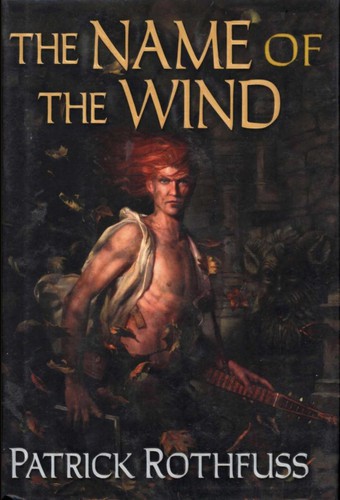
The Name of the Wind
by Patrick Rothfuss
★ Top 5 book of 2007 · #5 on Best Books of 2007
Kvothe, a young man destined to become a notorious magician, tells his own story, from a childhood among traveling players to life as a street orphan and entry into a dangerous school of magic. It explores how a hero can become trapped by his own legend.
Best for: Epic fantasy lovers who enjoy a first-person tale of magic and myth
The Name of the Wind is #5 on BookWard's Best Books of 2007, out of 53 2007 books that cleared our data bar.
What The Name of the Wind is about
In the town of Newarre, the Waystone Inn is run by a quiet innkeeper named Kote and his assistant Bast. Kote is not who he seems. He is really Kvothe, a famous swordsman, magician and musician, rumoured to have killed a king. When a scribe called Chronicler arrives, Kvothe agrees to tell his true story over three days.
That story begins in his childhood with the Edema Ruh, a troupe of travelling performers, where the scholar Abenthy teaches him sympathy, a kind of magic. After watching Abenthy call the wind, Kvothe vows to learn its name. His father is meanwhile gathering tales of the mythical Chandrian for a ballad. Later chapters follow Kvothe as a near-feral orphan in a dangerous city and then as a student at a school of magic. Set on the continent of Temerant, where magic follows clear rules, this debut fantasy is lyrical and immersive, with a melancholy edge. It is about storytelling, and about the gap between legend and truth.
The Name of the Wind on the Best Books of 2007
The Name of the Wind came out in 2007. Of the 53 books first published in 2007 that met BookWard's data bar, it ranks #5 on our Best Books of 2007 list.
Why it made the list: 1,691 readers have shelved it on Open Library; readers rate it 4.3 out of 5 (259 ratings); 79 are reading it right now. The list ranks each year’s books on how many readers have picked them up, how highly readers rate them, and how many are reading them right now.
It earns Reader favorite.
Nearby on the 2007 list
- Harry Potter and the Deathly Hallows J. K. Rowling, #3
- The Titan's Curse Rick Riordan, #4
- Rodrick Rules Jeff Kinney, #6
- Call Me by Your Name André Aciman, #7
See all Best Books of 2007 Best books by year
More years: Best Books of 2006 Best Books of 2008.
The numbers behind it
- Readers: 1,262 want to read it, 79 are reading it now and 350 have read it, according to Open Library.
- Ratings: 4.3 out of 5 from 259 Open Library ratings.
| Signal | This book (0 to 100) | Weight |
|---|---|---|
| Reach | 92 | 55% |
| Reader love | 91 | 25% |
| Being read right now | 89 | 20% |
Questions about The Name of the Wind
When was The Name of the Wind published?
The Name of the Wind by Patrick Rothfuss was first published in 2007.
Was The Name of the Wind one of the best books of 2007?
The Name of the Wind is #5 on BookWard's Best Books of 2007, out of 53 2007 books that cleared our data bar. 1,691 readers have shelved it on Open Library; readers rate it 4.3 out of 5 (259 ratings); 79 are reading it right now.
Why is The Name of the Wind on the Best Books of 2007 list?
1,691 readers have shelved it on Open Library; readers rate it 4.3 out of 5 (259 ratings); 79 are reading it right now.
More of the best books of 2007
- Dog Days Jeff Kinney, #1
- A Thousand Splendid Suns Khaled Hosseini, #2
- Harry Potter and the Deathly Hallows J. K. Rowling, #3
- The Titan's Curse Rick Riordan, #4
- Rodrick Rules Jeff Kinney, #6
- Call Me by Your Name André Aciman, #7
See the full Best Books of 2007, the Top 100, or new books on Rising.
How we know
This page uses public data: Open Library reader counts and ratings, and Wikipedia page views for recent years. The description is paraphrased from real source text. Rankings reflect reading interest, not quality or sales, and can be affected by data gaps. Lists update monthly.
Suited to adult and older teen readers comfortable with a long fantasy.
Depends on the edition you pick.
A frame-narrated fantasy that trades pace for voice and craft. 49% taste match
 BookWard’s take
A frame-narrated fantasy that trades pace for voice and craft
This is the opening day of a hero telling his own story, and it is a book of voice first. Kvothe narrates his life from a troupe of traveling players through a feral stretch as an orphan to the doors of a school of magic, and the telling matters as much as the events. The magic is the real draw: it follows defined rules, so it feels earned rather than convenient. The tropes are a more mixed matter, since a gifted orphan at a magic school is well-worn ground, though the legend-versus-truth frame freshens it. The book feels original in how it handles that frame, and the voice is unmistakable. Where I part ways with it is length: this is long and unhurried, and the pace is slower than I would like. It is also the first of an unfinished trilogy, so the ending is open rather than resolved.
A big, unhurried fantasy debut that takes its time with one man's early life; BookWard prefers tighter books, so this is a stretch for us.
The telling is leisurely and detailed, slower than BookWard's preference for brisk momentum.
The legend-versus-truth frame and the rule-bound magic feel fresh, though the core setup is conventional fantasy.
The writing is lyrical and polished, richer than BookWard's usual middle ground.
Kvothe's growth and the question of who he really is drive the book more than any single plot engine.
There is real hardship but also wonder and talent winning through, leaving the tone balanced.
A frame story in the present wraps a long autobiographical telling, more layered than a straight narrative.
Wit appears in Kvothe's voice and banter, but the book is mainly earnest and serious.
Orphanhood, hardship, and the threat of the Chandrian add real shadow without making it grim throughout.
Loss, ambition, and wonder are felt strongly through Kvothe's voice.
See all 50 dialsEvery position, side by side with this book
Where it lines up
- Character depthBookWard 8 · book 8
- Authorial voiceBookWard 9 · book 9
- Story or ideasBookWard 3 · book 3
Where it pulls apart
- LengthBookWard 1 · book 9
- Familiar tropesBookWard 10 · book 4
- OpeningBookWard 10 · book 6
A big, unhurried fantasy debut that takes its time with one man's early life; BookWard prefers tighter books, so this is a stretch for us.
It opens with an old storyteller and a legend about the Name of the Wind, which draws you in more gently than at once.
A gifted orphan entering a school of magic is familiar ground, though the frame about a legend's truth gives it some freshness.
Magic obeys a well-defined set of rules and principles, which suits BookWard's taste for airtight systems.
The telling is leisurely and detailed, slower than BookWard's preference for brisk momentum.
The legend-versus-truth frame and the rule-bound magic feel fresh, though the core setup is conventional fantasy.
Kvothe tells his own story, so his formation from player's child to orphan to student is drawn closely, matching BookWard's taste.
As the first book of an ongoing trilogy, it sets up a story rather than closing one, so resolution is partial.
It has a romantic streak about legend and music but not heavy sentimentality; it sits near the middle.
Dark episodes in Kvothe's youth serve the story and are not there purely for effect.
Nonfiction rigor does not apply to this novel.
Kvothe's first-person narration is the book's signature strength, distinctive and confident, as BookWard likes.
This is firmly story-led, built around one life told in full rather than an argument or idea.
Much is delivered through Kvothe's telling and framing, though plenty still plays out in scene.
A long middle devoted to school life and everyday struggle can feel less driven than the opening promise.
The writing is lyrical and polished, richer than BookWard's usual middle ground.
Kvothe's growth and the question of who he really is drive the book more than any single plot engine.
There is real hardship but also wonder and talent winning through, leaving the tone balanced.
A frame story in the present wraps a long autobiographical telling, more layered than a straight narrative.
Wit appears in Kvothe's voice and banter, but the book is mainly earnest and serious.
Accessible to read, but its length and layered telling ask for some commitment.
It is told through Kvothe, with the frame adding only a light second layer.
A present-day frame at the inn alternates with the long retelling of Kvothe's past.
A secondary world with rule-bound magic, a Fae realm, and legendary creatures makes it clearly fantastical.
A moderate cast of teachers, fellow students, and troupe members fills out a life story.
Kvothe's own life drives the telling, though the world and its legends give it wider reach.
Inner life and outward adventure share the stage, with Kvothe's reflections close to center.
Conversations and storytelling carry a fair share of the book without dominating it.
Romance is present in Kvothe's life but is not the book's engine.
The continent of Temerant, with its nations, Fae realm, and university, is an invented and unfamiliar setting.
A secondary world with a medieval feel, far from the present day.
Classic fantasy structure and a strong voice give it lasting appeal beyond its moment.
Kvothe tells his own legend, so how much to trust him is part of the book's question.
Heroes, legends, and the truth behind them are treated with some nuance rather than clean good and evil.
Places, music, and magic are described with generous, sensory detail.
It is the first book of an ongoing trilogy, followed by The Wise Man's Fear.
Mysteries about Kvothe and the Chandrian add intrigue, but this is not a twist-driven book.
It is an immersive, comfortable read that asks little of the reader beyond time.
Orphanhood, hardship, and the threat of the Chandrian add real shadow without making it grim throughout.
Loss, ambition, and wonder are felt strongly through Kvothe's voice.
Humor leans dry and witty rather than broad.
There is violence tied to legend and danger, but it is not the focus.
Romantic and sexual content is minor and not explicit in emphasis.
Power and institutions appear in the background, not as the book's concern.
The language is readable, with invented names and terms but no dense dialect.
Kvothe narrates in his own opinionated, self-aware voice.
The book looks back, as an older man recounts his past.
Wonder and talent coexist with hardship, so the worldview sits near the middle.
Review written by BookWard, dial version 1, November 2026.
Who is The Name of the Wind right for?
Suited to adult and older teen readers comfortable with a long fantasy. It includes hardship, danger, and some violence, so younger readers may want to wait.
Accessible to read, but its length and layered telling ask for some commitment.
Orphanhood, hardship, and the threat of the Chandrian add real shadow without making it grim throughout.
Loss, ambition, and wonder are felt strongly through Kvothe's voice.
There is violence tied to legend and danger, but it is not the focus.
Book CompanionThe Name of the Wind: ideas, characters, themes
An innkeeper who is secretly the legendary Kvothe begins telling the true story behind the myth of the man who earned the title Kingkiller.
- A legend retold. Kvothe narrates his own life, setting the man against the rumors that have grown around him.
- Magic with rules. Magic in Temerant follows a well-defined set of principles, taught as a discipline at a university.
- A frame story. The tale is told through an old storyteller's voice and Kvothe's narration, linking past and present.
- The Chandrian. Feared beings whose arrival is said to turn flames blue, often dismissed as mythical bogeymen.
- First of a trilogy. This is Day One of The Kingkiller Chronicle, followed by The Wise Man's Fear.
Characters
Kvothe
Narrator and protagonist
A renowned sword fighter, magician, and musician, rumored to have killed a king.
Kote
Innkeeper
The quiet manager of the Waystone Inn in Newarre, who is revealed to be Kvothe.
Bast
Kote's assistant
Works alongside Kote at the Waystone Inn.
Themes
How a person's story grows apart from the person.
The power attached to knowing the true name of things.
How telling your own tale shapes who you become.
Gifts tested by loss and poverty.
Characters doubt the magic and monsters others swear by.
Discussion questions
- How does hearing the story from Kvothe himself change how you trust it?
- Does the rule-bound magic make the world feel more real to you?
- What is gained and lost by telling a life through a frame story?
- Are the legends about Kvothe more or less interesting than the man?
- How does knowing this is an unfinished trilogy affect your reading?
Personalize your Book Companion
This is the general edition. In BookWard, the Companion is written for you: your reading profile, your notes, and spoiler-safe to the page you are on.
Buy, listen or borrow The Name of the Wind
Each link opens a search for this book on that store, in a new tab.
Read on a device
Borrow
Reviews and community
If you liked The Name of the Wind
A sprawling, voice-rich fantasy middle volume that rewards patience over speed
The Crystal CaveMary StewartMerlin's boyhood told with historical weight and quiet magic
The Vampire LestatAnne RiceA rock-star vampire tells his own story, grandly and unapologetically
The Raven ScholarAntonia HodgsonA murder mystery inside a succession contest, narrated with a wink
Find your own best books
Add what you have read, rate it, and BookWard will recommend what to read next.
Free to start. No credit card needed.