Best suited to adult and mature teen readers who enjoy gothic fiction.
606 pages, about 9.5 to 14 hours.
A rock-star vampire tells his own story, grandly and unapologetically. 50% taste match
The story
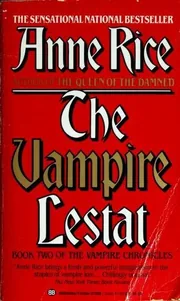
Anne Rice's The Vampire Lestat is a gothic horror novel first published in 1986 and the second book in her Vampire Chronicles, coming after Interview with the Vampire. It is told in the first person by Lestat de Lioncourt, a vampire and a member of the French nobility, who begins his account by announcing who he is. The earlier book was narrated by Louis de Pointe du Lac, and the two novels give accounts of some events that do not fully agree with each other.
The story moves across France, with roots in the Auvergne and scenes in Paris, and reaches toward Egypt and the Mediterranean. It also arrives in San Francisco in 1984. Among the figures who appear are Gabrielle de Lioncourt, Akasha, Marius de Romanus, Nicolas de Lenfrent, Louis and Armand. Readers who enjoy vampire fiction, romance with a dark edge, and Lestat as a literary character will find all of these here.
I am the Vampire Lestat.
Characters
Lestat de LioncourtGabrielle de LioncourtAkashaMarius de RomanusNicolas de LenfrentLouis de Pointe du Lac
Setting
AuvergneFranceParisEgyptMediterranean
Period
1984
Themes
nobilityvampire novelsVampiresRomanceLiteratura norte-americanahorror talesLestat (Personaje literario)Novela
- Want to read 463
- Reading now 29
- Read 100
Most people shelving it are saving it for later.
Of 592 readers who put it on a shelf, 78% want to read it, 5% are reading it now, 17% have finished it and 0% stopped before the end.
By the numbers
- The median edition runs 606 pages. Counting about 275 words a page and an adult reading pace of 250 words a minute, that is about 11 hours of reading.
- Open Library tracks 53 editions from 30 publishers, the earliest dated 1986 and the latest 2021, across 6 languages.
- On reader demand it ranks in the top 1% of the modern books in our catalog (15,152 of them).
- Libraries shelve it under Dewey 813.54 and Library of Congress class PS-3568.00000000.I2/.
 BookWard’s take
A rock-star vampire tells his own story, grandly and unapologetically
Lestat opens his account by announcing exactly who he is, and that confidence carries a 606-page book. His first-person swagger is the draw, and the voice is unmistakable. The book also feels fresh, because it turns the narrator of Interview with the Vampire on his head and lets two accounts of events disagree. The reading is rich without being hard going: the prose is full and the description lavish, but the hook is immediate. The scale is the cost. It runs long, and a book this expansive, moving from the Auvergne to Paris and on toward Egypt, asks for patience in places. The familiar vampire trappings are here, yet they feel remade rather than recycled. A good pick if you want voice over restraint.
At 606 pages it is a long, sprawling book, well past BookWard's preference for tight and short.
The account moves through eras and countries at a steady clip but pauses often for reflection and atmosphere.
Handing the story to Lestat and contradicting the earlier narrator was a bold reframing of the vampire novel.
Rich, ornate gothic prose with a theatrical edge sits above BookWard's plainer preference.
The pull is Lestat himself, his history and his appetites, more than any mechanical plot.
Immortality here carries more longing and loss than comfort, though Lestat's vitality keeps it from gloom.
Told as one narrator's account that ranges across centuries rather than in a conventional straight line.
Lestat has wit and vanity, but the book is serious about its gothic subject.
Gothic horror with vampire violence and morally dark themes, but also sensuous and flamboyant.
Lestat's grief, longing and appetite give the book a high emotional charge.
See all 50 dialsEvery position, side by side with this book
Where it lines up
- Character depthBookWard 8 · book 8
- OriginalityBookWard 9 · book 8
- Authorial voiceBookWard 9 · book 10
Where it pulls apart
- LengthBookWard 1 · book 8
- Internal logicBookWard 10 · book 6
- Familiar tropesBookWard 10 · book 7
At 606 pages it is a long, sprawling book, well past BookWard's preference for tight and short.
Lestat opens by announcing who he is, a voice-driven start that grabs quickly and suits BookWard's taste.
Vampires and gothic nobility are well-worn ground, though told from Lestat's own angle they feel fresher than the tropes suggest.
Its mythology is built on its own terms, and the two Chronicles books disagree on some events by design.
The account moves through eras and countries at a steady clip but pauses often for reflection and atmosphere.
Handing the story to Lestat and contradicting the earlier narrator was a bold reframing of the vampire novel.
Lestat is drawn at length and from the inside, and Gabrielle, Marius and Nicolas give him real counterweights.
As the second book of a series it resolves its own arc while leaving doors open for what follows.
Lestat is theatrical and openly emotional, so the book leans toward feeling rather than restraint.
The dark material belongs to the gothic world and serves the story more than it exists to shock.
This is a novel, so rigor does not apply.
Lestat's first-person swagger is unmistakable and carries the whole book, a clear match for BookWard.
The story and its characters lead, with ideas about immortality arriving through the narrative.
Lestat tells his history directly and at length, so much is explained rather than shown in scene.
A book this long and wide-ranging has stretches of backstory where momentum loosens.
Rich, ornate gothic prose with a theatrical edge sits above BookWard's plainer preference.
The pull is Lestat himself, his history and his appetites, more than any mechanical plot.
Immortality here carries more longing and loss than comfort, though Lestat's vitality keeps it from gloom.
Told as one narrator's account that ranges across centuries rather than in a conventional straight line.
Lestat has wit and vanity, but the book is serious about its gothic subject.
The prose is lush and the scope wide, but the voice keeps it readable and inviting.
It is one narrator's account, though other characters' histories surface within it.
Lestat's story reaches back through earlier centuries and arrives in 1984, so time shifts often.
Vampires and ancient, otherworldly figures make this firmly fantastical rather than grounded.
Gabrielle, Akasha, Marius, Nicolas, Louis and Armand give it a sizeable, memorable cast.
It runs from the Auvergne and Paris to Egypt and the Mediterranean, an expansive canvas.
Lestat's thoughts and self-regard dominate, and the book lives in his head.
Conversation matters, but long stretches of narration and recollection carry more than dialogue does.
Dark romance and obsession run through the story, though it is not purely a love story.
A gothic vampire world of old France and ancient mysteries is unfamiliar territory for most readers.
Much of it unfolds in past centuries, with only a late arrival in 1984.
It has stayed a defining vampire novel and its voice has not dated.
Lestat is vain and self-mythologizing, and the book openly contradicts Louis's earlier account.
Lestat is charming and monstrous at once, so right and wrong stay ambiguous.
Settings, costume and atmosphere are rendered in lush, sensuous detail.
This is the second Vampire Chronicles book and leans on its predecessor.
Revelations about its mythology and history land along the way, though the voice matters more than the surprises.
Moral ambiguity and a seductive monster ask more of the reader than a comforting read would.
Gothic horror with vampire violence and morally dark themes, but also sensuous and flamboyant.
Lestat's grief, longing and appetite give the book a high emotional charge.
Lestat's humor is wry, vain and theatrical rather than broad.
Vampire attacks and feeding are part of the world, handled with gothic flair.
Sensuality and erotic undertones run through the vampire mythology.
Aristocratic France is the backdrop, but politics is not the point.
The language is ornate and period-flavored but not dense or hard to follow.
Lestat is loud, vain and opinionated, so the narration is strongly his.
The book is steeped in the past, in memory and old centuries, rather than looking ahead.
Lestat is a romantic and a seeker, but the world he moves through is predatory and weary.
Review written by BookWard, dial version 1, November 2026.
Who is The Vampire Lestat right for?
Best suited to adult and mature teen readers who enjoy gothic fiction. It contains vampire violence, dark themes and sensual and sexual content.
The prose is lush and the scope wide, but the voice keeps it readable and inviting.
Gothic horror with vampire violence and morally dark themes, but also sensuous and flamboyant.
Lestat's grief, longing and appetite give the book a high emotional charge.
Vampire attacks and feeding are part of the world, handled with gothic flair.
Book CompanionThe Vampire Lestat: ideas, characters, themes
Lestat de Lioncourt, a vampire and French nobleman, tells his own story in his own words, answering the earlier account in Interview with the Vampire.
- A new narrator. The book hands the telling to Lestat, where Interview with the Vampire was narrated by Louis.
- Competing accounts. Some events here differ from the earlier novel, leaving readers to decide which version to trust.
- An opening declaration. Lestat begins by announcing who he is, setting a bold, self-assured tone.
- A wide geography. The story ranges from the Auvergne and Paris toward Egypt and the Mediterranean.
- Brought to the present. The narrative reaches San Francisco in 1984, tying old history to a modern setting.
Characters
Lestat de Lioncourt
Narrator and protagonist
A vampire and member of the French nobility who tells his own story.
Gabrielle de Lioncourt
Figure from Lestat's life
A member of the Lioncourt family who appears in his account.
Marius de Romanus
Figure in the vampire world
One of the figures who appears in Lestat's history.
Louis de Pointe du Lac
Narrator of the earlier book
The narrator of Interview with the Vampire, whose account this novel answers.
Themes
Lestat defines himself through his own voice and story.
What it means to live across centuries, with its pleasures and costs.
Two narrators disagree, so truth depends on who is telling it.
Longing, appetite and obsession drive the gothic mood.
Old France and aristocratic roots shape the world Lestat comes from.
Discussion questions
- Why might Anne Rice give Lestat the narration after Louis told the first book?
- Which version of events do you trust, Louis's or Lestat's, and why?
- How does Lestat's opening announcement shape your impression of him?
- Does the move from old France to 1984 San Francisco work for you?
- Is Lestat a hero, a monster, or both?
Personalize your Book Companion
This is the general edition. In BookWard, the Companion is written for you: your reading profile, your notes, and spoiler-safe to the page you are on.
Buy, listen or borrow The Vampire Lestat
Each link opens a search for this book on that store, in a new tab.
Read on a device
Borrow
Reviews and community
If you liked The Vampire Lestat
A long, lush Mayfair sequel where the supernatural gets a body
The Queen of the DamnedAnne RiceAnne Rice's sprawling vampire myth, braided from three storylines
The Wise Man’s FearPatrick RothfussA sprawling, voice-rich fantasy middle volume that rewards patience over speed
The Witching HourAnne RiceA vast, hypnotic New Orleans witch saga that rewards patience
Sources: Open Library.
Track The Vampire Lestat and find your next favorite
Add it to your shelf, rate what you have read, and BookWard will recommend what fits you.
Free to start. No credit card needed.