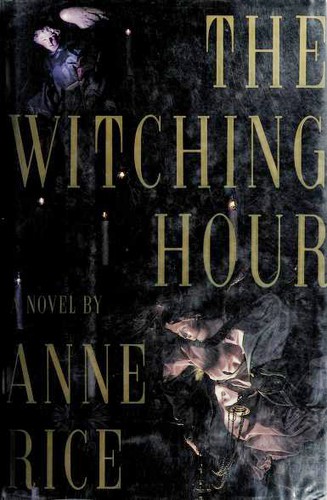
The Witching Hour
by Anne Rice
★ Top 5 book of 1990 · #4 on Best Books of 1990
The first Mayfair Witches novel follows a New Orleans family of witches bound to a mysterious spirit named Lasher. Neurosurgeon Rowan and the man she rescues, Michael, are drawn into centuries of the family's history.
Best for: Readers who enjoy supernatural family sagas with witches and deep history
The Witching Hour is #4 on BookWard's Best Books of 1990, out of 39 1990 books that cleared our data bar.
What The Witching Hour is about
Anne Rice opens the Mayfair Witches series with a family whose witches have lived in New Orleans for generations. In each generation, one Mayfair is chosen to receive the powers of a spirit called Lasher, who gives gifts and protection and who the family sees in many ways: guardian, god, lover, even the face of death. His current witch, Deirdre, lies catatonic after psychological shock treatments.
Her daughter Rowan was taken from the family long ago and grew up to be a neurosurgeon, with a gift for healing cells and a private fear that she has caused several deaths. When she rescues a man named Michael from drowning, he wakes with extraordinary powers that draw him toward New Orleans, and toward her. Dark, lush and atmospheric, the novel explores inheritance, obsession and the pull between good and evil. It is a good fit for readers who like Gothic storytelling with a deep family history.
The Witching Hour on the Best Books of 1990
The Witching Hour came out in 1990. Of the 39 books first published in 1990 that met BookWard's data bar, it ranks #4 on our Best Books of 1990 list.
Why it made the list: 617 readers have shelved it on Open Library; readers rate it 4.3 out of 5 (29 ratings); 22 are reading it right now. The list ranks each year’s books on how many readers have picked them up, how highly readers rate them, and how many are reading them right now.
Nearby on the 1990 list
- Jurassic Park Michael Crichton, #2
- The Eye of the World Robert Jordan, #3
- Flow Mihaly Csikszentmihalyi, #5
- The Things They Carried Tim O'Brien, #6
See all Best Books of 1990 Best books by year
More years: Best Books of 1991.
The numbers behind it
- Readers: 551 want to read it, 22 are reading it now and 44 have read it, according to Open Library.
- Ratings: 4.3 out of 5 from 29 Open Library ratings.
| Signal | This book (0 to 100) | Weight |
|---|---|---|
| Reach | 90 | 55% |
| Reader love | 90 | 25% |
| Being read right now | 77 | 20% |
Questions about The Witching Hour
When was The Witching Hour published?
The Witching Hour by Anne Rice was first published in 1990.
Was The Witching Hour one of the best books of 1990?
The Witching Hour is #4 on BookWard's Best Books of 1990, out of 39 1990 books that cleared our data bar. 617 readers have shelved it on Open Library; readers rate it 4.3 out of 5 (29 ratings); 22 are reading it right now.
Why is The Witching Hour on the Best Books of 1990 list?
617 readers have shelved it on Open Library; readers rate it 4.3 out of 5 (29 ratings); 22 are reading it right now.
More of the best books of 1990
- Good Omens Terry Pratchett, #1
- Jurassic Park Michael Crichton, #2
- The Eye of the World Robert Jordan, #3
- Flow Mihaly Csikszentmihalyi, #5
- The Things They Carried Tim O'Brien, #6
- Little Girl Lost Drew Barrymore, #7
See the full Best Books of 1990, the Top 100, or new books on Rising.
How we know
This page uses public data: Open Library reader counts and ratings, and Wikipedia page views for recent years. The description is paraphrased from real source text. Rankings reflect reading interest, not quality or sales, and can be affected by data gaps. Lists update monthly.
Suits adult readers who enjoy long, atmospheric gothic fiction.
Depends on the edition you pick.
A vast, hypnotic New Orleans witch saga that rewards patience. 45% taste match
 BookWard’s take
A vast, hypnotic New Orleans witch saga that rewards patience
Anne Rice builds the Mayfair family across generations and three continents, then ties them to Rowan, a neurosurgeon with a healing gift she fears, and Michael, who survives drowning and is pulled toward her. This is one of the most sprawling books you will pick up, and anyone who prefers a tight, compact read should know that going in. The opening is also a slow burn: the family history takes its time, and readers who want to be grabbed at once may find the early going patient work. Where it pays off is in its originality and its characters. The Mayfair line and the spirit Lasher feel unlike standard witch fiction, and the women are drawn with real weight. Expect the viewpoint to shift and the story to move between centuries. The pace is steady and immersive rather than fast. Best taken as a long, atmospheric commitment.
This is a very long, sprawling family epic, the opposite of BookWard's preference for short and tight.
The telling is immersive and unhurried, slower than BookWard's taste for momentum.
A multigenerational New Orleans witch dynasty tied to one spirit feels fresh and personal, which BookWard values.
The language is rich, ornate and sensuous, more decorated than BookWard's middle ground.
People and their bloodlines carry it more than a ticking plot does, which suits BookWard.
It leans toward doom and haunting rather than comfort, darker than BookWard's mild optimism.
It braids present-day pursuit with centuries of family history, more layered than conventional.
A serious, brooding gothic book with little room for comedy.
Spirit possession, death and a catatonic woman's fate give it a notable dark edge.
Dread, desire and grief run strong through the family story.
See all 50 dialsEvery position, side by side with this book
Where it lines up
- Character depthBookWard 8 · book 8
- Authorial voiceBookWard 9 · book 9
- Story or ideasBookWard 3 · book 3
Where it pulls apart
- LengthBookWard 1 · book 10
- OpeningBookWard 10 · book 5
- Internal logicBookWard 10 · book 6
This is a very long, sprawling family epic, the opposite of BookWard's preference for short and tight.
The saga unfolds gradually through family history rather than a jolt on page one, softer than BookWard likes.
Witches and haunting spirits are familiar territory, though the Mayfair family and Lasher give them a distinct shape.
The family's powers and the rules around Lasher mostly hold together, with some looseness BookWard would notice.
The telling is immersive and unhurried, slower than BookWard's taste for momentum.
A multigenerational New Orleans witch dynasty tied to one spirit feels fresh and personal, which BookWard values.
The Mayfair women across generations, and Rowan's guarded gifts, are drawn with real depth, matching BookWard's taste.
This opens a series, so it resolves its main thread while leaving the larger story running.
It runs hot and gothic, with feeling on the surface rather than held back.
The darkness is woven into the family's history and the spirit's hold over it, serving the story.
Not applicable to a work of fiction.
Rice's lush, unmistakable style is instantly recognizable, a clear match for BookWard's love of distinct voice.
It is firmly story-led, driven by family, secrets and the pull between Rowan and Michael.
A good deal of history is laid out directly as Michael researches the family, more explained than BookWard prefers.
A book this long has stretches where the pull loosens, though the family drama keeps drawing you back.
The language is rich, ornate and sensuous, more decorated than BookWard's middle ground.
People and their bloodlines carry it more than a ticking plot does, which suits BookWard.
It leans toward doom and haunting rather than comfort, darker than BookWard's mild optimism.
It braids present-day pursuit with centuries of family history, more layered than conventional.
A serious, brooding gothic book with little room for comedy.
Length and density ask for commitment, though the prose pulls you along.
It moves between Rowan, Michael and the long line of Mayfair witches, a wide spread BookWard likes.
The story shifts between the present and hundreds of years of family history.
Witchcraft, a spirit called Lasher and healing powers put it firmly in the supernatural.
Generations of Mayfairs plus Rowan, Michael and connected figures make a very large cast.
It spans hundreds of years and three continents, well beyond intimate.
Inner life, desire and dread drive it more than outward action.
Conversation shares the page with heavy narration and history, a balanced mix.
The bond between Rowan and Michael is a strong thread within a larger family saga.
The Mayfair world of New Orleans old families and witchcraft is rich and unfamiliar to most readers.
Published in 1990 and rooted in deep history, it reads as a past-leaning gothic.
Its gothic atmosphere and family mythology have outlasted its moment.
The narration is trustworthy as it guides you through the family story.
Lasher as protector, lover or death, and Rowan's gift to heal or kill, keep good and evil blurred.
New Orleans, the Mayfair house and the family's past are described in dense, vivid detail.
Not applicable to a work of fiction.
Not applicable to a work of fiction.
It is the first in the Mayfair Witches series.
Family secrets and Lasher's true nature offer reveals, though the pace of surprise is measured.
Its length, darkness and unsettling themes make it more demanding than a comfort read.
Spirit possession, death and a catatonic woman's fate give it a notable dark edge.
Dread, desire and grief run strong through the family story.
There is little humor here, and what appears is dry.
Death and its menace are part of the story, but not relentless on the page.
Lasher is described as a sexual being, and desire is a recurring force in the book.
It is concerned with family and the supernatural, not political themes.
The prose is dense and ornate but not hard to follow, with New Orleans color rather than heavy dialect.
Rice mostly lets the story speak rather than preaching a viewpoint.
The weight of family history pulls it backward, toward lineage and inheritance.
A dark, fate-laden outlook rather than an idealistic one.
Review written by BookWard, dial version 1, November 2026.
Who is The Witching Hour right for?
Suits adult readers who enjoy long, atmospheric gothic fiction. It includes sexual content, death and a catatonic character shaped by harmful treatment, so it is not for younger readers.
Length and density ask for commitment, though the prose pulls you along.
Spirit possession, death and a catatonic woman's fate give it a notable dark edge.
Dread, desire and grief run strong through the family story.
Death and its menace are part of the story, but not relentless on the page.
Book CompanionThe Witching Hour: ideas, characters, themes
A neurosurgeon with a feared healing gift is drawn back into a New Orleans witch dynasty bound to a spirit called Lasher.
- The Mayfair family. A closely bound New Orleans family of witches in which each death passes knowledge on to the others.
- Lasher. A spirit who gives gifts and protection to one witch per generation, known as protector, god-like figure, sexual being and image of death.
- Rowan's gift. Rowan is a neurosurgeon who can heal cells and sees the intent behind people's facades, yet fears she has caused deaths.
- Michael's pull. After Rowan rescues him from drowning, Michael develops powers that draw him toward her and toward New Orleans.
- Centuries of history. Michael learns the story of generations of Mayfair witches spread across hundreds of years and three continents.
Characters
Rowan Mayfair
Neurosurgeon and Mayfair witch
Deirdre's daughter, raised away from the family, with a gift for healing and for seeing intent.
Michael
Man drawn to New Orleans
Rescued by Rowan from drowning, he gains extraordinary powers and seeks her out.
Deirdre
Lasher's current witch
Rowan's mother, who lies catatonic after psychological shock treatments.
Lasher
The spirit tied to the family
A being who gifts and protects the witches, understood by the family in many conflicting ways.
Themes
What passes between generations, whether power, knowledge or burden.
Gifts that heal can also harm, and protection can become possession.
Longing, sexual and otherwise, as a force that binds people to something larger.
The pull of a tight, secretive clan on those who try to escape it.
Whether Lasher and the witches' gifts are protective or corrupting.
Discussion questions
- Is Lasher best understood as a protector, a lover or a threat?
- How does Rowan's fear of her own healing gift shape her choices?
- Why does the family's history take such a large share of the story?
- What draws Michael toward New Orleans and toward Rowan?
- Does the book want us to sympathize with the Mayfair witches or fear them?
Personalize your Book Companion
This is the general edition. In BookWard, the Companion is written for you: your reading profile, your notes, and spoiler-safe to the page you are on.
Buy, listen or borrow The Witching Hour
Each link opens a search for this book on that store, in a new tab.
Read on a device
Borrow
Reviews and community
If you liked The Witching Hour
A long, lush Mayfair sequel where the supernatural gets a body
The Queen of the DamnedAnne RiceAnne Rice's sprawling vampire myth, braided from three storylines
The Vampire LestatAnne RiceA rock-star vampire tells his own story, grandly and unapologetically
Drums of AutumnDiana GabaldonA vast, romantic time-travel saga that sends Brianna after her parents
Find your own best books
Add what you have read, rate it, and BookWard will recommend what to read next.
Free to start. No credit card needed.