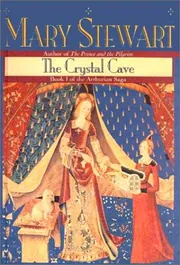
The Crystal Cave
by Mary Stewart, Mary Stwart · 1970
Suits adult readers and confident older teens who enjoy historical fantasy and Arthurian tales.
480 pages, about 7.5 to 11 hours.
Merlin's boyhood told with historical weight and quiet magic. 55% taste match
The story
The Crystal Cave is a historical fantasy novel by Mary Stewart, first published in 1970. It opens a quintet of novels that retell the Arthurian legend, and The Hollow Hills comes next in the sequence. The story is told in the first person by Merlin, who looks back on his life as an elderly man.
The book follows Merlin from boyhood, when he is known as Myridden Emrys, through his early years in fifth century Britain after the Roman departure. Raised as the illegitimate son of a Welsh princess, he grows up in a divided land and is troubled by visions. His path leads him into the circles of kings, including Vortigern and Uther Pendragon, and toward the events surrounding the birth of Arthur. The novel treats Merlin as a man with unusual gifts and asks how he came by his reputation as a wizard, and what the crystal cave means to him. It suits readers of Arthurian romance and historical fantasy set among the Britons.
I am an old man now, but then I was already past my prime when Arthur was crowned King.
Characters
Arthur KingMerlin
Themes
Kings and rulersAdaptationsMerlin (Legendary character)Arthurian romancesFantasyWizardsBritonsLegends
- Want to read 108
- Reading now 11
- Read 26
Most people shelving it are saving it for later.
Of 145 readers who put it on a shelf, 74% want to read it, 8% are reading it now, 18% have finished it and 0% stopped before the end.
By the numbers
- The median edition runs 480 pages. Counting about 275 words a page and an adult reading pace of 250 words a minute, that is about 8.8 hours of reading.
- Open Library tracks 37 editions from 28 publishers, the earliest dated 1970 and the latest 2015, across 5 languages.
- On reader demand it ranks in the top 9% of the classic books in our catalog (8,749 of them).
- Libraries shelve it under Dewey 823.914 and Library of Congress class PZ-0004.00000000.S852 Cr3.
 BookWard’s take
Merlin's boyhood told with historical weight and quiet magic
Mary Stewart's 1970 novel opens a quintet by letting Merlin narrate his own life, starting from a boy of six in a divided fifth century Britain. That choice gives it a distinctive voice and a character-driven spine, and the interior life of its narrator is where the book is strongest. It also avoids the usual pitfalls of the genre: Stewart treats Merlin as a gifted man rather than a stage sorcerer, which keeps the fantasy grounded and keeps it from leaning on familiar tropes. Where the book asks for some patience is its size. At 480 pages and the first of five books, it is far from tight, and the opening builds gradually rather than hooking at once. The pace is steady rather than fast. Expect rich description and a commitment to the full series, but a confident, restrained telling.
At 480 pages and the opening of a quintet, it runs long, well away from BookWard's taste for tight books.
The telling moves at a measured, reflective pace rather than racing, slower than BookWard likes.
The legend is familiar, yet making Merlin a human narrator with a believable origin gives it a distinct angle.
Stewart's prose is polished and descriptive, more ornate than plain without becoming dense.
The story is shaped by Merlin's development and gifts, with the political events seen through him.
Britain is fractured after Rome leaves, but Merlin's rise and destiny carry a thread of purpose.
The structure is a conventional life story, told as a retrospective from old age.
A serious, atmospheric retelling with little comic relief.
Warfare and succession struggles bring a darker edge, balanced by the quieter story of a gifted boy.
Feeling is present but held in check by Merlin's composed, reflective voice.
See all 50 dialsEvery position, side by side with this book
Where it lines up
- Character depthBookWard 8 · book 8
- Authorial voiceBookWard 9 · book 9
- Story or ideasBookWard 3 · book 3
Where it pulls apart
- LengthBookWard 1 · book 7
- OpeningBookWard 10 · book 5
- Familiar tropesBookWard 10 · book 7
At 480 pages and the opening of a quintet, it runs long, well away from BookWard's taste for tight books.
It opens on a six-year-old's memory of his uncle coming home, a calm start that builds rather than grabbing at once.
Arthurian material is well worn, but treating Merlin as a gifted mortal rather than a sorcerer keeps it fresher than most.
Magic here is tied to Merlin's visions and unusual gifts, which keeps the fantasy tethered to a believable world.
The telling moves at a measured, reflective pace rather than racing, slower than BookWard likes.
The legend is familiar, yet making Merlin a human narrator with a believable origin gives it a distinct angle.
Merlin narrates his own growth from illegitimate boy to adviser of kings, so the character is drawn from the inside.
As the first of five books, it points onward to The Hollow Hills rather than closing every thread.
An elderly Merlin looking back brings some tenderness, though the telling stays fairly composed.
Darkness comes from the unrest of the age and Merlin's visions, not from shock for its own sake.
Merlin's first-person recollection gives the book a strong, unified voice that carries it throughout.
This is a story-led novel following one life through court and kingdom, not a book of arguments.
Much is delivered through Merlin's retrospective narration, which explains events as readily as it dramatizes them.
A long book, but Merlin's rise keeps building through to the events around Arthur's birth.
Stewart's prose is polished and descriptive, more ornate than plain without becoming dense.
The story is shaped by Merlin's development and gifts, with the political events seen through him.
Britain is fractured after Rome leaves, but Merlin's rise and destiny carry a thread of purpose.
The structure is a conventional life story, told as a retrospective from old age.
A serious, atmospheric retelling with little comic relief.
The prose is accessible, though its length and historical setting ask for some patience.
Merlin tells everything in the first person, so the book holds a single viewpoint.
Merlin looks back from age, but the story itself proceeds chronologically from childhood.
Visions and prophecy are present, yet the world is framed as historical Britain, balancing the two.
Kings, nobles and Merlin's family populate a sizable court, though Merlin stays central.
The story spans kingdoms and succession, yet stays anchored in one man's life.
Merlin's visions and self-understanding drive much of the narrative from inside his head.
Conversation shares the page with narration and description, without dominating either.
The focus is on Merlin's destiny and politics, with romance in the background.
Fifth century Britain after the Roman withdrawal is distant and unfamiliar territory for most readers.
Set in the fifth century and published in 1970, it is firmly a story of the past.
Arthurian legend has lasting pull, and this retelling kept its place as the start of a quintet.
Merlin recounts his own life, so we see through one memory, but he is not set up to deceive.
Kings, power and prophecy involve compromise, giving the book some shades of grey.
The landscape, courts and visions of early Britain are rendered in generous detail.
It opens a five-novel Arthurian sequence, with The Hollow Hills following directly.
The legend is familiar, so the story offers few shocks, though some turns reshape the plot.
It is an absorbing, fairly traditional read rather than a deliberately difficult one.
Warfare and succession struggles bring a darker edge, balanced by the quieter story of a gifted boy.
Feeling is present but held in check by Merlin's composed, reflective voice.
Humor is sparse and understated.
Wars and royal intrigue bring violence, though this is not the book's main focus.
Questions of parentage and birth matter to the plot, but the content is not explicit.
The contest for kingship and the fallout from Rome's departure put power struggles in the background throughout.
The language is readable and fairly plain, with some period names to learn.
Merlin's own perspective colors events, making the narration personal rather than neutral.
It looks back at a distant past, even as the story anticipates Arthur's coming.
There is a sense of destiny and purpose, balanced by the harsh politics of the age.
Review written by BookWard, dial version 1, November 2026.
Who is The Crystal Cave right for?
Suits adult readers and confident older teens who enjoy historical fantasy and Arthurian tales. It touches on illegitimacy, war and royal intrigue, handled without graphic detail.
The prose is accessible, though its length and historical setting ask for some patience.
Warfare and succession struggles bring a darker edge, balanced by the quieter story of a gifted boy.
Feeling is present but held in check by Merlin's composed, reflective voice.
Wars and royal intrigue bring violence, though this is not the book's main focus.
Book CompanionThe Crystal Cave: ideas, characters, themes
Merlin recalls his boyhood and rise in fifth century Britain, asking how a man with unusual gifts came to be feared as a wizard.
- A retrospective narrator. Merlin tells his story as an elderly man looking back on his life.
- An uncertain parentage. He grows up as the illegitimate son of a Welsh princess who will not name his father.
- A divided land. Britain is unsettled after the Roman withdrawal, setting the scene for rival kings.
- Visions and gifts. Merlin is haunted by portents and unusual abilities from childhood.
- A path toward Arthur. His journey leads through Vortigern and Uther Pendragon toward the events surrounding Arthur's birth.
Characters
Merlin (Myridden Emrys)
narrator and protagonist
The illegitimate boy who grows into the famed figure, telling his own story.
Vortigern
High King
A ruler Merlin comes before in the course of his rise.
Uther Pendragon
future king
A crowned figure in Merlin's path toward the birth of Arthur.
Camlach
uncle
The relative whose homecoming opens the story when Merlin is six.
Themes
Whether a life is shaped by fate or by choice.
Growing up without knowing one's father and finding a place in the world.
How kings rise, rule and depend on those with unusual gifts.
The gap between the feared wizard of myth and the man behind it.
Looking back on a life and shaping it into a story.
Discussion questions
- Does Merlin as a human with unusual gifts feel more convincing than a traditional sorcerer?
- How does telling the story as an older man looking back change what we trust?
- What does the troubled state of Britain after Rome add to the story?
- How much does Merlin's uncertain parentage shape who he becomes?
- Does the slower build reward patience, or would you want it quicker?
Personalize your Book Companion
This is the general edition. In BookWard, the Companion is written for you: your reading profile, your notes, and spoiler-safe to the page you are on.
Buy, listen or borrow The Crystal Cave
Each link opens a search for this book on that store, in a new tab.
Read on a device
Borrow
Reviews and community
If you liked The Crystal Cave
A royal bastard learns the quiet trade of killing
The Name of the WindPatrick RothfussA frame-narrated fantasy that trades pace for voice and craft
The Wise Man’s FearPatrick RothfussA sprawling, voice-rich fantasy middle volume that rewards patience over speed
Wolf HallHilary MantelCromwell's rise, told close and cool, in present tense
Sources: Open Library.
Track The Crystal Cave and find your next favorite
Add it to your shelf, rate what you have read, and BookWard will recommend what fits you.
Free to start. No credit card needed.