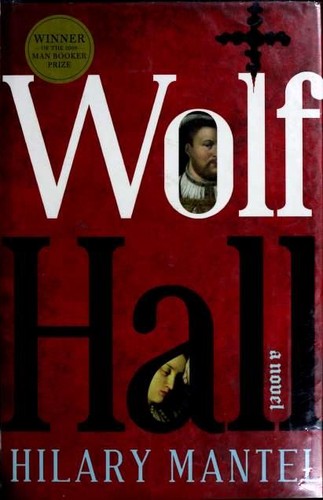
Wolf Hall
by Hilary Mantel
★ Top 25 book of 2009 · #14 on Best Books of 2009
Covering 1500 to 1535, this historical novel offers a sympathetic fictionalised portrait of Thomas Cromwell as he climbs to power in Henry VIII's court. It launched a trilogy and earned major literary prizes.
Best for: Readers who love Tudor court drama and richly told historical fiction
Wolf Hall is #14 on BookWard's Best Books of 2009, out of 42 2009 books that cleared our data bar.
What Wolf Hall is about
Thomas Cromwell begins as a teenager who runs from his abusive father and tries his luck as a soldier in France. By 1527 he has become a lawyer, a husband and father of three, and the right-hand man of Cardinal Wolsey. Then personal loss strikes: the sweating sickness takes his wife and two daughters, and his sister-in-law Johane comes to keep his house.
When Wolsey falls from favour for failing to secure Henry VIII's annulment from Catherine of Aragon, Cromwell vows vengeance on those behind it and finds a place on the King's council. He goes on to advise Anne Boleyn and help prepare her path to the crown. Running from 1500 to 1535, this Booker Prize winner is a sympathetic fictionalised biography of Thomas Cromwell's rapid rise to power in the court of Henry VIII. It is the first of a trilogy.
Wolf Hall on the Best Books of 2009
Wolf Hall came out in 2009. Of the 42 books first published in 2009 that met BookWard's data bar, it ranks #14 on our Best Books of 2009 list.
Why it made the list: 397 readers have shelved it on Open Library; readers rate it 4 out of 5 (38 ratings). The list ranks each year’s books on how many readers have picked them up, how highly readers rate them, and how many are reading them right now.
Nearby on the 2009 list
- Emotional Intelligence 2.0 Travis Bradberry, #12
- The Forty Rules of Love Elif Şafak, #13
- The Boy Who Harnessed the Wind William Kamkwamba, #15
- The 50Th Law Robert Greene, #16
See all Best Books of 2009 Best books by year
More years: Best Books of 2008 Best Books of 2010.
The numbers behind it
- Readers: 329 want to read it, 13 are reading it now and 55 have read it, according to Open Library.
- Ratings: 4 out of 5 from 38 Open Library ratings.
| Signal | This book (0 to 100) | Weight |
|---|---|---|
| Reach | 69 | 55% |
| Reader love | 60 | 25% |
| Being read right now | 55 | 20% |
Questions about Wolf Hall
When was Wolf Hall published?
Wolf Hall by Hilary Mantel was first published in 2009.
Was Wolf Hall one of the best books of 2009?
Wolf Hall is #14 on BookWard's Best Books of 2009, out of 42 2009 books that cleared our data bar. 397 readers have shelved it on Open Library; readers rate it 4 out of 5 (38 ratings).
Why is Wolf Hall on the Best Books of 2009 list?
397 readers have shelved it on Open Library; readers rate it 4 out of 5 (38 ratings).
More of the best books of 2009
- The Last Olympian Rick Riordan, #1
- Catching Fire Suzanne Collins, #2
- The Maze Runner James Dashner, #3
- The Help Kathryn Stockett, #4
- Dork Diaries Rachel Renée Russell, #5
- I Will Teach You to Be Rich Ramit Sethi, #6
See the full Best Books of 2009, the Top 100, or new books on Rising.
How we know
This page uses public data: Open Library reader counts and ratings, and Wikipedia page views for recent years. The description is paraphrased from real source text. Rankings reflect reading interest, not quality or sales, and can be affected by data gaps. Lists update monthly.
Best for adult and mature teen readers who enjoy dense historical fiction.
Depends on the edition you pick.
Cromwell's rise, told close and cool, in present tense. 57% taste match
 BookWard’s take
Cromwell's rise, told close and cool, in present tense
Wolf Hall follows Thomas Cromwell from a brutal boyhood to the center of Henry VIII's court, and it does so with a voice nobody else has: close, wry, present tense, hard to confuse with any other historical novel. On voice, originality and character depth it sits at or above BookWard's own high marks. It is also long and demanding, so it lands far from BookWard's love of tight books on length, and the prose is more ornate than BookWard prefers. The opening does not hook at once; it asks for patience, then pays it back. Familiar Tudor history, rare execution. If a big, intelligent, character-led book appeals, this is the standard to measure others against.
A substantial historical novel that takes its time over decades of court life, far from BookWard's preference for tight and short.
Rich in scene and negotiation, it moves at a deliberate, unhurried pace, slower than BookWard likes.
The present-tense, tight-focus take on a figure usually cast as villain is genuinely distinctive, close to BookWard's own high mark.
Stylish and layered, more ornate than BookWard's plainer leaning, but never purple.
Cromwell's mind and ambitions drive events more than any plot machinery, in line with BookWard.
Rise and loss sit side by side, but the overall tone is guarded and dark, more bleak than hopeful.
Present tense and tight single focus give it quiet formal edge without being experimental for its own sake.
Dry wit runs through Cromwell's observations, though the book stays essentially serious.
Deaths, cruelty and political menace are present, but handled with composure.
Feeling is held in check but runs deep, especially around loss and loyalty.
See all 50 dialsEvery position, side by side with this book
Where it lines up
- OriginalityBookWard 9 · book 9
- SentimentBookWard 8 · book 8
- Internal logicBookWard 10 · book 9
Where it pulls apart
- LengthBookWard 1 · book 9
- OpeningBookWard 10 · book 4
- PaceBookWard 8 · book 4
A substantial historical novel that takes its time over decades of court life, far from BookWard's preference for tight and short.
It opens in a violent boyhood scene but then settles into a slow, patient build; BookWard wants a harder hook.
Tudor court drama is well-worn ground, yet Mantel's angle on Cromwell as protagonist feels fresh, so it mostly dodges the usual tropes.
Court maneuvering, alliances and cause and effect hold together tightly, which matches BookWard's love of airtight logic.
Rich in scene and negotiation, it moves at a deliberate, unhurried pace, slower than BookWard likes.
The present-tense, tight-focus take on a figure usually cast as villain is genuinely distinctive, close to BookWard's own high mark.
Cromwell is drawn with deep interiority and contradiction, which BookWard rates highly.
It closes on a firm historical endpoint, though the story clearly continues into a sequel, so resolution is partial.
Grief and loyalty are handled coolly and without syrup, in line with BookWard's taste for restraint.
Darkness comes from the real brutality of the era and the characters' choices, not from effect for its own sake.
It is fiction, but built on the documented historical record with evident research behind its detail.
The voice is unmistakable and sharply individual, one of its great strengths, matching BookWard's high regard for distinct authors.
It leans toward story and character, though power and politics run through every scene.
Information comes mostly through scene and talk rather than explanation, close to BookWard's preference.
Mostly sustained by the interest of its schemes, though a long middle stretch can feel dense.
Stylish and layered, more ornate than BookWard's plainer leaning, but never purple.
Cromwell's mind and ambitions drive events more than any plot machinery, in line with BookWard.
Rise and loss sit side by side, but the overall tone is guarded and dark, more bleak than hopeful.
Present tense and tight single focus give it quiet formal edge without being experimental for its own sake.
Dry wit runs through Cromwell's observations, though the book stays essentially serious.
Dense with names and politics, it asks for real concentration, more than BookWard's middle ground.
The narration stays tied to Cromwell throughout, a single viewpoint.
The story moves forward from 1500 to 1535 with only light backward glances to his past.
Fully grounded in recorded history and everyday Tudor life.
A very large court of nobles, clergy and family members populates the story.
Moves from one man's household to the fate of the English crown and church, so it is broad in reach.
Told from within Cromwell's head, with much more thinking and calculating than physical action.
Conversation and negotiation carry much of the story, so talk is heavy.
Marriage and attraction appear at the edges, but power, not romance, is the center.
A distant Tudor world of court rituals and religious conflict, though anchored in familiar historical names.
Set in the early sixteenth century, firmly in the past.
A prize-winning modern classic with the feel of a work that will keep being read.
A close third person tied to Cromwell's view, mostly trustworthy, though it filters events through his judgment.
Cromwell and his rivals are shown as complicated, and righteousness is never simple.
Textures of clothing, rooms and weather are richly rendered.
A novel, so story-driven rather than analytical.
Told intimately from inside one man's mind, not detached.
The first book in a trilogy, with the sequel Bring Up the Bodies following.
Readers of history know where it heads, so surprises come from how, not what.
It asks readers to hold complicated politics in mind and sit with a morally ambiguous hero.
Deaths, cruelty and political menace are present, but handled with composure.
Feeling is held in check but runs deep, especially around loss and loyalty.
The humor is dry and understated rather than broad.
The era's brutality and executions are acknowledged, though mostly rendered with restraint.
Intrigue and desire appear occasionally, but the book is not explicit or focused on it.
Church, crown and succession drive the entire plot, so politics are front and center.
The language is dense with period names and titles, though the sentences themselves are clear.
The narration has a strong slant, filtered through Cromwell's sharp and sympathetic eye.
Rooted in a past age, though its concerns about power still echo.
Pragmatism and realpolitik rule, so the tone leans cynical.
Review written by BookWard, dial version 1, November 2026.
Who is Wolf Hall right for?
Best for adult and mature teen readers who enjoy dense historical fiction. It includes bereavement, family cruelty and the political violence of the Tudor era.
Dense with names and politics, it asks for real concentration, more than BookWard's middle ground.
Deaths, cruelty and political menace are present, but handled with composure.
Feeling is held in check but runs deep, especially around loss and loyalty.
The era's brutality and executions are acknowledged, though mostly rendered with restraint.
Book CompanionWolf Hall: ideas, characters, themes
Thomas Cromwell, a blacksmith's son, climbs to the heart of Henry VIII's court through intelligence, loyalty and nerve.
- A runaway boyhood. The story opens in 1500 with Cromwell fleeing an abusive father and seeking his fortune as a soldier in France.
- Wolsey's man. By 1527 Cromwell is a respected lawyer and the right hand of Cardinal Wolsey, known for his deal-making.
- Personal loss. His wife and two daughters die of the sweating sickness, and his sister-in-law Johane comes to keep house.
- The Cardinal's fall. When Wolsey fails to secure the king's annulment, Cromwell tries to protect him as his fortunes collapse.
- Rising in the king's favor. Cromwell gains the favor of Henry and Anne Boleyn, and is sworn into the king's council.
Characters
Thomas Cromwell
Protagonist
A self-made lawyer and fixer who rises from humble origins to the king's inner circle.
Cardinal Wolsey
Cromwell's patron
Powerful churchman whose failure to arrange the king's annulment brings about his downfall.
Henry VIII
King of England
The monarch whose desire to end his marriage sets the story's events in motion.
Anne Boleyn
The king's mistress
Henry's chosen partner, whose rising influence Cromwell must handle carefully.
Mary Boleyn
Anne's elder sister
A recent widow whom Cromwell meets and is intrigued by.
Themes
How a man of no rank climbs through skill and calculation.
Cromwell's devotion to Wolsey and how it shapes his choices.
The private loss of his family running beneath his public rise.
How religion and royal desire become tangled in matters of state.
A commoner navigating a world ruled by birth and title.
Discussion questions
- Why might the author choose present tense to tell this story?
- Is Cromwell a sympathetic figure, and does the book want us to trust him?
- How does Cromwell's early life shape the way he handles power?
- What does the book suggest about loyalty when a patron falls?
- Does knowing how history unfolds make the story more or less tense?
Personalize your Book Companion
This is the general edition. In BookWard, the Companion is written for you: your reading profile, your notes, and spoiler-safe to the page you are on.
Buy, listen or borrow Wolf Hall
Each link opens a search for this book on that store, in a new tab.
Read on a device
Borrow
Reviews and community
If you liked Wolf Hall
Merlin's boyhood told with historical weight and quiet magic
Arrow of GodChinua AchebeA proud priest and a changing world, told without a false note
Assassin's ApprenticeRobin HobbA royal bastard learns the quiet trade of killing
Le rouge et le noirStendhalA provincial climber's ambition, studied with cold clarity across 518 pages
Find your own best books
Add what you have read, rate it, and BookWard will recommend what to read next.
Free to start. No credit card needed.