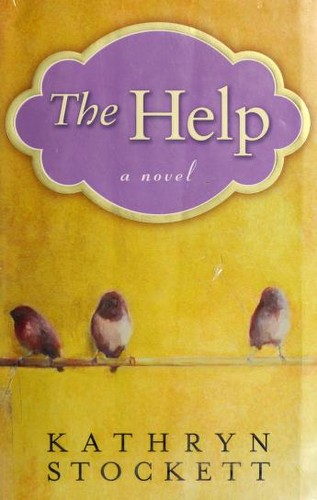
The Help
by Kathryn Stockett
★ Top 5 book of 2009 · #4 on Best Books of 2009
In 1962 Mississippi, a young graduate and two maids, Aibileen and Minny, form an unlikely alliance for a secret project. Told in distinct voices, it follows women who risk much to cross the lines defining their town.
Best for: Readers who enjoy multiple narrators and stories of women defying social boundaries
The Help is #4 on BookWard's Best Books of 2009, out of 42 2009 books that cleared our data bar.
What The Help is about
Jackson, Mississippi, in the early 1960s is the setting, and three women take turns telling the story. Aibileen Clark is a maid who tends the Leefolts' toddler, Mae Mobley, and who lost her own son, Treelore, in a job accident. Minny Jackson, her friend, has been fired from nineteen jobs for saying exactly what she thinks. Eugenia 'Skeeter' Phelan, raised in a wealthy family that owns the Longleaf plantation, comes home from Ole Miss hoping to become a writer and finds that Constantine, the maid who raised her, has vanished without explanation.
That silence pushes Skeeter toward an idea: a book that tells the truth about what it means to be a Black maid in Mississippi. Getting Aibileen and Minny to speak is not simple, and the risk falls on all of them. Stockett writes with warmth about friendship across racial lines, the cost of speaking out, and the quiet labor that holds a household together. It will appeal to readers who like emotional, character-led historical fiction.
The Help on the Best Books of 2009
The Help came out in 2009. Of the 42 books first published in 2009 that met BookWard's data bar, it ranks #4 on our Best Books of 2009 list.
Why it made the list: 1,126 readers have shelved it on Open Library; readers rate it 4.3 out of 5 (117 ratings); 54 are reading it right now. The list ranks each year’s books on how many readers have picked them up, how highly readers rate them, and how many are reading them right now.
It earns Reader favorite.
Nearby on the 2009 list
- Catching Fire Suzanne Collins, #2
- The Maze Runner James Dashner, #3
- Dork Diaries Rachel Renée Russell, #5
- I Will Teach You to Be Rich Ramit Sethi, #6
See all Best Books of 2009 Best books by year
More years: Best Books of 2008 Best Books of 2010.
The numbers behind it
- Readers: 884 want to read it, 54 are reading it now and 188 have read it, according to Open Library.
- Ratings: 4.3 out of 5 from 117 Open Library ratings.
| Signal | This book (0 to 100) | Weight |
|---|---|---|
| Reach | 90 | 55% |
| Reader love | 93 | 25% |
| Being read right now | 86 | 20% |
Questions about The Help
When was The Help published?
The Help by Kathryn Stockett was first published in 2009.
Was The Help one of the best books of 2009?
The Help is #4 on BookWard's Best Books of 2009, out of 42 2009 books that cleared our data bar. 1,126 readers have shelved it on Open Library; readers rate it 4.3 out of 5 (117 ratings); 54 are reading it right now.
Why is The Help on the Best Books of 2009 list?
1,126 readers have shelved it on Open Library; readers rate it 4.3 out of 5 (117 ratings); 54 are reading it right now.
More of the best books of 2009
- The Last Olympian Rick Riordan, #1
- Catching Fire Suzanne Collins, #2
- The Maze Runner James Dashner, #3
- Dork Diaries Rachel Renée Russell, #5
- I Will Teach You to Be Rich Ramit Sethi, #6
- The 4-Hour Workweek Timothy Ferriss, #7
See the full Best Books of 2009, the Top 100, or new books on Rising.
How we know
This page uses public data: Open Library reader counts and ratings, and Wikipedia page views for recent years. The description is paraphrased from real source text. Rankings reflect reading interest, not quality or sales, and can be affected by data gaps. Lists update monthly.
Suits older teens and adults looking for an accessible historical novel.
Depends on the edition you pick.
Three Mississippi women, 1962, and one risky project. 58% taste match
 BookWard’s take
Three Mississippi women, 1962, and one risky project
The Help follows Aibileen, Minny and Skeeter in early 1960s Jackson, and it earns its pull through voice. Three first-person narrators give it real variety. The opening hooks quickly, with Constantine's disappearance and Aibileen's grief setting the stakes at once. It is driven more by character than by plot, and the characters have genuine depth even where the familiar types are visible: the sassy maid, the plucky aspiring writer. The ending resolves cleanly, which suits this reader fine. The sentiment runs warmer than I would like, and the moral lines are drawn more firmly than the subject might allow. Still, it moves briskly and rarely sags. If you want accessible historical fiction with strong narrators, it delivers.
A full-length novel with three narrators, longer than BookWard's taste for tight books.
Short alternating chapters keep it moving, near BookWard's quick preference.
The setting and subject are well-trodden, so the book feels familiar despite its fresh voices.
The language is plain and conversational, which suits BookWard's middling preference.
Events matter, but the book's energy comes from its narrators' inner lives, in line with BookWard.
It ends on resilience and small victories, a little more hopeful than BookWard's usual.
A conventional rotation of narrators with a clear arc, a bit less experimental than BookWard.
Minny's sharp tongue brings real humor to a serious subject, close to BookWard's taste.
Grief, injustice and threat are present but handled with care, near BookWard's middle.
The grief and anger are felt strongly, close to BookWard's intensity.
See all 50 dialsEvery position, side by side with this book
Where it lines up
- EndingBookWard 8 · book 8
- Story or ideasBookWard 3 · book 3
- PaceBookWard 8 · book 7
Where it pulls apart
- Familiar tropesBookWard 10 · book 4
- LengthBookWard 1 · book 6
- SentimentBookWard 8 · book 3
A full-length novel with three narrators, longer than BookWard's taste for tight books.
Constantine's disappearance and Aibileen's loss give it a strong opening pull, close to what BookWard wants.
Stock figures like the sassy maid and the brave young writer lean on familiar types, short of BookWard's bar.
The events follow plausibly from the social setting and its risks, though the plan comes together conveniently.
Short alternating chapters keep it moving, near BookWard's quick preference.
The setting and subject are well-trodden, so the book feels familiar despite its fresh voices.
Aibileen, Minny and Skeeter each have distinct histories and wants, close to BookWard's liking for deeply drawn people.
The central storyline reaches a clear resolution, which matches what BookWard values.
It leans warm and emotionally pointed, more sentimental than BookWard's restrained taste.
Darker moments serve the story's themes, though some feel built to provoke a reaction.
Separate first-person voices give each narrator a recognizable sound, matching BookWard's taste for distinctiveness.
This is story-led, built on characters and events rather than argument, as BookWard prefers.
Social context mostly arrives through scenes and voice, with some explaining, close to BookWard's preference.
The narrators keep the middle moving, with few lulls, roughly in line with BookWard.
The language is plain and conversational, which suits BookWard's middling preference.
Events matter, but the book's energy comes from its narrators' inner lives, in line with BookWard.
It ends on resilience and small victories, a little more hopeful than BookWard's usual.
A conventional rotation of narrators with a clear arc, a bit less experimental than BookWard.
Minny's sharp tongue brings real humor to a serious subject, close to BookWard's taste.
It reads easily and welcomes casual readers, lighter than BookWard's more demanding side.
Three narrators is a moderate spread, short of the many voices BookWard enjoys.
The story runs forward in order through its single period, more linear than BookWard.
Fully grounded in historical Mississippi, more realistic than BookWard's mix.
A handful of central women and their circles keep the cast manageable, near BookWard's taste.
It stays with households and a few lives, intimate though the issues are large.
The book balances what the women feel with what they do, matching BookWard.
Conversation carries much of the story and character, heavy like BookWard's preference.
Romantic threads exist but sit behind the friendships and the project, near BookWard.
1960s Jackson is a specific, less familiar setting for many readers, close to BookWard's taste.
Set in 1962 and written in 2009, it looks to the past, far from BookWard's present-day lean.
Its subject keeps it relevant, though its treatment feels tied to its time, a bit under BookWard.
The narrators speak plainly and sincerely, far more reliable than BookWard's taste.
Right and wrong are drawn clearly, less ambiguous than BookWard likes.
Domestic detail and setting are present but not lavish, near BookWard.
A standalone novel, matching BookWard's lean toward self-contained books.
Revelations arrive along the way but the shape is largely predictable, below BookWard's taste.
It confronts racism but in an accessible, comforting register, softer than BookWard's challenge.
Grief, injustice and threat are present but handled with care, near BookWard's middle.
The grief and anger are felt strongly, close to BookWard's intensity.
Humor ranges from dry asides to broader comic turns, near BookWard.
Menace and cruelty appear, but little graphic violence, a touch under BookWard.
Sexual content is minimal, lower than BookWard's middle position.
Civil rights and racial hierarchy sit at the story's core, more political than BookWard's middle.
Dialect voices add texture without being hard to read, near BookWard's middle.
The narrators openly judge their world, in line with BookWard's slight lean.
It looks back at a past era while hoping for change, near BookWard's middle.
It believes ordinary acts of courage can matter, in line with BookWard's idealistic lean.
Review written by BookWard, dial version 1, November 2026.
Who is The Help right for?
Suits older teens and adults looking for an accessible historical novel. It deals with racism, grief and the threat of retaliation, and includes period language and attitudes.
It reads easily and welcomes casual readers, lighter than BookWard's more demanding side.
Grief, injustice and threat are present but handled with care, near BookWard's middle.
The grief and anger are felt strongly, close to BookWard's intensity.
Menace and cruelty appear, but little graphic violence, a touch under BookWard.
Book CompanionThe Help: ideas, characters, themes
In 1962 Jackson, Mississippi, a young white woman and two Black maids secretly collaborate on a project that risks their safety and livelihoods.
- Three narrators. The story alternates among Aibileen, Minny and Skeeter, each in first person.
- A missing maid. Skeeter's search for answers about Constantine drives her curiosity and her growing doubts.
- Grief at work. Aibileen's loss of her son shapes how she tends the child in her care.
- A sharp tongue. Minny's outspokenness has cost her many jobs, and it shapes her new position.
- Lines to cross. The women feel hemmed in by the rules of their town and time, and decide to push against them.
Characters
Aibileen Clark
Maid and narrator
A wise, steady woman caring for the Leefolt child while carrying the loss of her own son.
Minny Jackson
Maid and narrator
Aibileen's outspoken best friend, a great cook who has been fired from many jobs.
Skeeter Phelan
Aspiring writer and narrator
A young white woman home from college who wants to write and wonders what happened to Constantine.
Constantine
Skeeter's former maid
The woman who raised Skeeter and whose disappearance sets Skeeter's questions in motion.
Hilly Holbrook
Society figure
The daughter of Minny's former employer, tied to the social world the women navigate.
Themes
How racial hierarchy structures everyday life and work in the Jim Crow South.
Who gets to tell a story and whose account is heard.
The risks ordinary people take to challenge unjust rules.
Bonds that form despite the divisions their society enforces.
How loss shapes the way people love and look after others.
Discussion questions
- Why does each of the three narrators need her own voice, and what would be lost with only one?
- How does Skeeter's position as a white narrator affect how the story is told?
- What does Constantine's disappearance reveal about Skeeter's world?
- Where does the novel offer comfort, and does that comfort feel earned?
- How do humor and anger work together in Minny's scenes?
Personalize your Book Companion
This is the general edition. In BookWard, the Companion is written for you: your reading profile, your notes, and spoiler-safe to the page you are on.
Buy, listen or borrow The Help
Each link opens a search for this book on that store, in a new tab.
Read on a device
Borrow
Reviews and community
If you liked The Help
A young lawyer, a crooked insurer, and a case worth winning
The Prince and the PauperMark TwainTwain's classic swap story: a prince and a pauper trade places
The Briar ClubKate QuinnFive women, one boardinghouse, and Washington's Red Scare closing in
To Kill a MockingbirdHarper LeeWarm, funny and morally clear: a classic that earns its reputation
Find your own best books
Add what you have read, rate it, and BookWard will recommend what to read next.
Free to start. No credit card needed.