Updated November 2, 2026 · reading data through October 2026
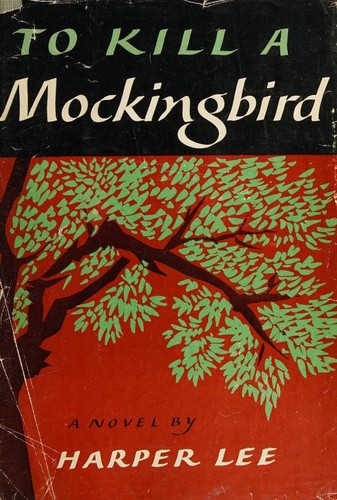
To Kill a Mockingbird
by Harper Lee
A girl in 1930s Alabama watches her father defend a Black man falsely accused of a crime. A humane, enduring novel about justice and empathy. Read the full description
Best for: Readers of any age new to American classics
To Kill a Mockingbird is #33 on BookWard's Top 100 books for November 2026, with a BookWard Score of 71 out of 100. It slipped 6 places from #27 last month.
BookWard review of To Kill a Mockingbird
4 of 5 stars 4.1 out of 5, from 282 reader ratings
BookWard rates To Kill a Mockingbird 4.1 out of 5. That is the average of 282 reader ratings on Open Library (4.15), adjusted toward the typical book so that a small number of ratings cannot inflate it. Beyond the rating, it is #33 on BookWard's Top 100 books; 5,600 readers want to read it, 428 are reading it right now and 484 have finished it. Its adjusted rating is higher than 62% of the books on the Top 100.
How this rating works
BookWard’s rating is calculated, not hand-scored. We take the average rating readers have given the book on Open Library and adjust it toward the typical book: adjusted = (n × average + 25 × 3.8) ÷ (n + 25), where n is the number of ratings. A book needs at least 50 ratings to be rated. The rating reflects how readers received the book, not whether it is right for you. Your own ratings on your shelf are private and are not part of this number.
To Kill a Mockingbird: reading interest over the past 12 months
Sources: Open Library’s public reading-log and ratings data (dump of 2026-10-31), Wikipedia page views and Wikidata. Monthly counts are exact; they show relative interest among readers of these public sources, not total readership.
Ranked against the other books on this list, To Kill a Mockingbird’s reading interest has run from #19 to #39 over these 12 months. Interest rank blends shelf adds, Wikipedia page views and rating activity, each compared with the other 99 books that month.
Shelf adds by month
To Kill a Mockingbird was added to Open Library readers’ shelves 755 times in the past 12 months, peaking in October 2026 with 111 (76% above its monthly average of 63). Over the latest three months (Aug 2026 to Oct 2026) shelf adds were up 42% on the three months before. 85% of the adds were “want to read”, 5% “currently reading” and 10% “already read”.
Want to read Currently reading Already read
Wikipedia page views
Its Wikipedia article was viewed 1,068,630 times in the past 12 months, peaking in February 2026 with 116,554 views. The latest three months were down 7% on the three before.
Source: Wikimedia monthly page views for the article To Kill a Mockingbird.
Awards and honours listed on Wikidata: Pulitzer Prize for Fiction.
What the data says about To Kill a Mockingbird
- Moderate swings. Monthly shelf adds averaged 63 with some ups and downs.
- Busiest and quietest months. October 2026 was its busiest month (111 adds), about 2.8 times its quietest, August 2026 (39).
- Attention and shelf adds move independently. Its Wikipedia views and its shelf adds did not rise and fall together over these 12 months (correlation -0.10).
- Against its genre. It had 34% fewer shelf adds than the average Classics book on this list.
- Share of the list. It accounts for 0.7% of all shelf adds recorded for the Top 100 over these 12 months, #44 of 100.
- Its age. First published in 1960 (66 years ago), it is older than 81% of the books on the list.
Each finding is computed from the public data above and shown only when the numbers support it.
To Kill a Mockingbird on the Top 100: rank history
| Month | Rank | Score |
|---|---|---|
| November 2026 | #33 | 71 |
| October 2026 | #27 | 73 |
| September 2026 | #26 | 74 |
Is To Kill a Mockingbird rising or falling?
Cooling It ranks lower this week than over the past year, so interest is softening from its recent level.
On Open Library, To Kill a Mockingbird ranks #68 this week, #74 this month, and #53 over the past year. A longer bar means a higher position. Comparing the three windows shows whether readers are arriving faster than the book's long-term pace. Readings as of 2026-11-02.
Why To Kill a Mockingbird made the Top 100
To Kill a Mockingbird made the list mainly on momentum (+25.7 points) and being read right now (+20.8 points). Its smallest contribution is rising (+0). The BookWard Score blends five public signals, each scored from 0 to 100 and weighted as shown.
The reading-now, rating and rank signals come from Open Library’s public data, not from BookWard’s own readers. The score measures reading interest, not quality or sales. How the score works.
Open Library reader stats for To Kill a Mockingbird
Source: Open Library public reading logs, as of 2026-11-02. BookWard’s own monthly snapshots are added to the picture, and anonymous BookWard reader data will be layered in as the community grows.
More readers have To Kill a Mockingbird open right now than 71% of the other books on this list. These counts come from one public source, so they show relative interest rather than total readership.
Where it sits among Classics books
It is #5 of the 8 Classics books on this month’s list.
About To Kill a Mockingbird
What it’s about
Maycomb, Alabama, in the 1930s is seen through the eyes of Scout Finch, a young girl growing up with her older brother Jem and their widowed father Atticus, a lawyer. Calpurnia, the family cook, helps keep the household running. The children spend their summers with their friend Dill and are both fascinated and frightened by their reclusive neighbor, Boo Radley, who may be the one leaving small gifts in a tree outside his house.
The story widens when Atticus agrees to defend Tom Robinson, a black man accused of raping a young white woman, Mayella Ewell. The case tests the town's prejudices, and Scout and Jem begin to see how adults treat one another unjustly. Harper Lee drew on her own family, neighbors and an event near her hometown of Monroeville. Warm and nostalgic yet morally serious, the novel explores racial injustice, empathy, moral courage and the loss of childhood innocence. It won the Pulitzer Prize a year after its release.
At a glance
- First published
- 1960-07-11
- Genre
- Classics
- Also described as
- Bildungsroman, Southern Gothic, social fiction
- Length
- about 320 pages (the median across its editions)
- Original language
- English
- Languages
- editions in 14 languages listed on Open Library
- Editions
- 214 on Open Library
- Setting
- Alabama, Southern United States
- Characters listed
- Jean Louise Finch, Jeremy Finch, Dill, Arthur Radley, Judge Taylor
- Awards and honours
- Pulitzer Prize for Fiction
From Open Library and Wikidata public records. Missing rows mean the records do not list that fact.
Themes
- Racial injustice
- Moral courage
- Childhood in the American South
What reading it is like
Warm, observant narration through a child's eyes that turns serious.
At about 320 pages it is a longer read: roughly 6 hours at an average reading pace (about 250 words a minute, 300 words a page). Audiobook and edition lengths vary.
Good to know
Contains racial slurs and depictions of racism and a rape accusation. Widely taught and sometimes debated.
The premise
Scout Finch grows up in 1930s Alabama, watching her father, lawyer Atticus Finch, defend a Black man falsely accused of a crime. The story is told through her curious, childlike eyes.
What you’ll get
- A humane story about justice
- Memorable characters
- Accessible, moving prose
You might skip it if you dislike heavy themes of racism.
Pairs well with: The Outsiders · The Kite Runner
Keep exploring the chart
Also on the chart at #32 and #34
Questions about To Kill a Mockingbird
What rank is To Kill a Mockingbird on the Top 100 books?
To Kill a Mockingbird is #33 on BookWard's Top 100 books for November 2026, with a BookWard Score of 71 out of 100. It slipped 6 places from #27 last month.
Is To Kill a Mockingbird rising or falling?
Cooling. It ranks lower this week than over the past year, so interest is softening from its recent level. On Open Library, To Kill a Mockingbird ranks #68 this week, #74 this month, and #53 over the past year.
Why is To Kill a Mockingbird on the Top 100?
To Kill a Mockingbird made the list mainly on momentum (+25.7 points) and being read right now (+20.8 points). Its smallest contribution is rising (+0).
How many people are reading To Kill a Mockingbird right now?
Open Library's reading logs show 428 readers currently reading To Kill a Mockingbird, 5,600 who want to read it and 484 who have logged it as read (as of 2026-11-02). These are counts from one public source, not all readers.
How much interest has To Kill a Mockingbird had over the past year?
755 Open Library shelf adds in the past 12 months (peak October 2026, 111); latest three months up 42% on the prior three; 1,068,630 Wikipedia views in the past 12 months (down 7% over the latest three months). Figures come from Open Library and Wikipedia public data.
Who is To Kill a Mockingbird best for?
Readers of any age new to American classics.
Ask a question about To Kill a Mockingbird
Ask about this book's chart history, reading interest, or who it is for. Answers come from this page's data and can be wrong.
Answers are AI-written from BookWard’s own help content and can be wrong. Please do not share personal information: questions and answers may be saved and, if they are useful, shown on this site without your name.
How we know
This page is built from public data: Open Library’s dated reading-log and ratings dumps, Wikipedia page views, Wikidata, and BookWard’s own monthly Top 100 snapshots. The interest rank blends shelf adds (45%), Wikipedia page views (30%), rating activity (10%) and, for months where a snapshot exists, BookWard’s own score (15%), each as a percentile among the Top 100 books. Every month shown is real data; nothing is estimated. Rankings reflect reading interest, not quality or sales, and can be affected by data gaps. Last updated November 2026. Read the full methodology.
It suits teens and adults and is widely read in middle and high schools.
320 pages, about 5 to 7.5 hours.
Warm, funny and morally clear: a classic that earns its reputation. 56% taste match
 BookWard’s take
Warm, funny and morally clear: a classic that earns its reputation
Harper Lee tells a serious story through six-year-old Scout Finch's eyes, and the result is a book that manages real warmth and humor without softening its subject. The characters are among its great strengths: Atticus, Calpurnia, Jem and Scout are drawn with care, and Maycomb feels like a place with a past. Scout's narration is the real draw, distinctive from the first pages and impossible to mistake for anyone else's. This is a character-driven novel rather than a twisty one, and the pace is unhurried, a slow summer rhythm that builds toward the trial of Tom Robinson. It is also warmer than I usually like my fiction, and the moral picture is strikingly clear, with little ambiguity about who is right. Still, the craft holds up, and the childhood scenes with Dill and the Radley house give the book its charm.
At 320 pages it is moderate in size, neither tight nor sprawling, though it reads shorter than it is.
The first half drifts along with summer games and neighborhood mystery, which is slower than BookWard likes.
A child's eye on a trial was fresh in 1960 and still feels distinct, though its influence has made it feel familiar.
The sentences are clear and conversational, with a gentle lyricism but no show-off ornament.
The book is built on its characters and their relationships, with the case giving it structure.
It faces injustice squarely yet holds on to decency, compassion and the possibility of change.
It runs as a conventional retrospective narrative over three years in order.
Despite its subject, the book is renowned for warmth and humor, mostly from the children.
Rape, prejudice and mob feeling are central, though the tone stays humane.
The trial and the children's loss of innocence land with real force.
See all 50 dialsEvery position, side by side with this book
Where it lines up
- EndingBookWard 8 · book 8
- Character depthBookWard 8 · book 9
- Shock for effectBookWard 9 · book 8
Where it pulls apart
- Familiar tropesBookWard 10 · book 4
- OpeningBookWard 10 · book 6
- LengthBookWard 1 · book 4
At 320 pages it is moderate in size, neither tight nor sprawling, though it reads shorter than it is.
It opens gently with childhood and a family's history rather than a jolt, so the pull builds gradually.
Its moral hero and small-town setting are familiar shapes now, largely because so many later books borrowed them.
Events follow cleanly from character and place, and the town's attitudes explain what happens in it.
The first half drifts along with summer games and neighborhood mystery, which is slower than BookWard likes.
A child's eye on a trial was fresh in 1960 and still feels distinct, though its influence has made it feel familiar.
Scout, Jem, Atticus and Calpurnia are drawn with warmth and nuance, which BookWard rewards.
The main threads close with clear resolution, including the long-running mystery of the Radley house.
It is openly affectionate and leans warm, a little more tender than BookWard's restrained taste.
The darkness comes from the injustice at the story's center and feels earned rather than used for effect.
Scout's recollecting voice, wry and observant, is the book's signature and unmistakable.
Story comes first here, with its themes carried by people and events rather than argued outright.
Ideas arrive through scenes and the children's questions, though Atticus does explain his convictions at times.
The middle runs a little loose with its neighborhood episodes, but the trial pulls it together.
The sentences are clear and conversational, with a gentle lyricism but no show-off ornament.
The book is built on its characters and their relationships, with the case giving it structure.
It faces injustice squarely yet holds on to decency, compassion and the possibility of change.
It runs as a conventional retrospective narrative over three years in order.
Despite its subject, the book is renowned for warmth and humor, mostly from the children.
The reading is accessible, which is why schools use it so widely.
Everything is filtered through Scout's single perspective.
The story moves forward chronologically across 1933 to 1935.
It is firmly grounded in a real Depression-era Alabama setting, with only a Gothic shadow around the Radley house.
Maycomb brings a sizable town of neighbors and officials, though the core group stays small.
The story stays in one small town and one family, even as its themes reach wide.
It balances Scout's reflections with events in the street, house and courtroom.
Conversation drives many scenes, especially the courtroom and the talks between Atticus and his children.
Romance is not part of the story's concerns.
Mid-1930s Alabama is well mapped by now, though it is unfamiliar to many modern readers.
It is set in the 1930s and was published in 1960.
Its enduring place in classrooms and on readers' lists shows a story that has outlasted its moment.
Scout recounts events honestly, with a child's view that adds understanding rather than distortion.
Right and wrong are drawn plainly, with Atticus as a moral touchstone for many readers.
Maycomb's heat, streets and houses are vividly sketched without slowing the story.
It stands alone as a complete novel.
Its surprises are modest and woven into the story, not the main attraction.
It asks readers to look hard at racial injustice, which keeps it from being merely comforting.
Rape, prejudice and mob feeling are central, though the tone stays humane.
The trial and the children's loss of innocence land with real force.
The humor is observational and gentle, closer to dry than broad.
Violence is present and threatening, but it is kept largely at the edges.
The accusation at the story's heart is handled without graphic content.
Racial injustice is the central subject, though it is told through people rather than polemic.
Southern speech appears in dialogue and the language is approachable, but some period terms are harsh.
Scout's view carries clear moral weight, so the narration is not neutral.
It looks back at a childhood and an era from a later vantage.
Atticus embodies integrity and belief in fairness, which gives the book an idealistic core.
Review written by BookWard, dial version 1, November 2026.
Who is To Kill a Mockingbird right for?
It suits teens and adults and is widely read in middle and high schools. It deals with rape and racial injustice and uses racial epithets, which is why it is often challenged in classrooms.
The reading is accessible, which is why schools use it so widely.
Rape, prejudice and mob feeling are central, though the tone stays humane.
The trial and the children's loss of innocence land with real force.
Violence is present and threatening, but it is kept largely at the edges.
Book CompanionTo Kill a Mockingbird: ideas, characters, themes
A girl in 1930s Alabama watches her father defend a black man accused of rape and learns how prejudice shapes a community.
- A child's view. Scout narrates, so the town's adult attitudes are seen with a child's honesty and confusion.
- The Radley mystery. The children's fascination with Boo Radley runs alongside the larger story and gives the book its Gothic edge.
- Atticus takes the case. Judge Taylor appoints Atticus to defend Tom Robinson, and many in Maycomb disapprove.
- The cost to the children. Jem and Scout are taunted for their father's choice, and Scout is tempted to fight for his honor.
- Home and neighbors. Calpurnia, Dill and the neighbors fill out a community that is both warm and flawed.
Characters
Scout Finch
Narrator
Jean Louise Finch, six years old at the start, recounts the story with humor and sharp observation.
Jem Finch
Scout's older brother
He guides and sometimes bullies his sister, and he feels the weight of events keenly.
Atticus Finch
Their father, a lawyer
A widowed middle-aged lawyer who has become a model of integrity for many readers.
Dill
Summer friend
Charles Baker Harris visits Maycomb each summer and feeds the children's imagination about Boo Radley.
Boo Radley
Reclusive neighbor
Arthur Radley is feared and fascinating, and he leaves small gifts for the children.
Themes
How prejudice shapes a town's treatment of a man on trial.
The children's coming-of-age as they see adult hypocrisy.
Doing what is right even when you know you will be criticized.
Understanding people by trying to see things from their side.
The social expectations that limit people in the Deep South.
Discussion questions
- Why might Lee tell this story through a child instead of an adult?
- What does Atticus teach his children about courage, and how does he show it?
- How do the Boo Radley scenes connect to the trial plot?
- Is Atticus a believable hero, or too idealized?
- Why do you think the book is both widely taught and often challenged?
Personalize your Book Companion
This is the general edition. In BookWard, the Companion is written for you: your reading profile, your notes, and spoiler-safe to the page you are on.
Buy, listen or borrow To Kill a Mockingbird
Each link opens a search for this book on that store, in a new tab.
Read on a device
Borrow
Reviews and community
If you liked To Kill a Mockingbird
Three Mississippi women, 1962, and one risky project
A tree grows in BrooklynBetty SmithA tender, unsentimental portrait of poverty and girlhood in Williamsburg
MarshaTourmalineA full-color biography of Marsha P. Johnson, by Tourmaline
One Flew Over the Cuckoo's NestKen KeseyA ward, a rebel, and a narrator you cannot take at face value
Track To Kill a Mockingbird and find your next favorite
Add it to your shelf, rate what you have read, and BookWard will recommend what fits you.
Free to start. No credit card needed.