Updated November 2, 2026 · reading data through October 2026
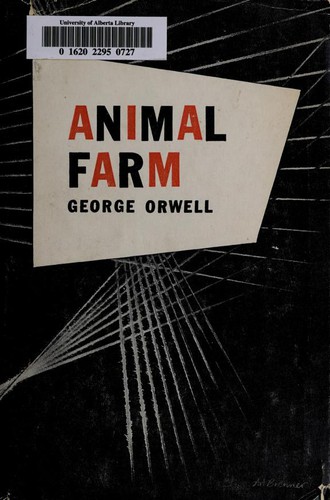
Animal Farm
by George Orwell
Top 25
Farm animals overthrow their owner and build a society that slowly betrays its own ideals. A short fable about power that is sharper than its length suggests. Read the full description
Best for: Students and anyone curious about politics
Animal Farm is #20 on BookWard's Top 100 books for November 2026, with a BookWard Score of 77 out of 100. It slipped 4 places from #16 last month.
BookWard review of Animal Farm
4 of 5 stars 4.2 out of 5, from 608 reader ratings
BookWard rates Animal Farm 4.2 out of 5. That is the average of 608 reader ratings on Open Library (4.17), adjusted toward the typical book so that a small number of ratings cannot inflate it. Beyond the rating, it is #20 on BookWard's Top 100 books; 4,024 readers want to read it, 364 are reading it right now and 1,153 have finished it. Its adjusted rating is higher than 70% of the books on the Top 100.
How this rating works
BookWard’s rating is calculated, not hand-scored. We take the average rating readers have given the book on Open Library and adjust it toward the typical book: adjusted = (n × average + 25 × 3.8) ÷ (n + 25), where n is the number of ratings. A book needs at least 50 ratings to be rated. The rating reflects how readers received the book, not whether it is right for you. Your own ratings on your shelf are private and are not part of this number.
Animal Farm: reading interest over the past 12 months
Sources: Open Library’s public reading-log and ratings data (dump of 2026-10-31), Wikipedia page views and Wikidata. Monthly counts are exact; they show relative interest among readers of these public sources, not total readership.
Ranked against the other books on this list, Animal Farm’s reading interest has run from #6 to #30 over these 12 months. Interest rank blends shelf adds, Wikipedia page views and rating activity, each compared with the other 99 books that month.
Shelf adds by month
Animal Farm was added to Open Library readers’ shelves 1,115 times in the past 12 months, peaking in October 2026 with 183 (97% above its monthly average of 93). Over the latest three months (Aug 2026 to Oct 2026) shelf adds were up 68% on the three months before. 72% of the adds were “want to read”, 9% “currently reading” and 19% “already read”.
Want to read Currently reading Already read
Wikipedia page views
Its Wikipedia article was viewed 1,417,495 times in the past 12 months, peaking in December 2025 with 219,059 views. The latest three months were down 37% on the three before.
Source: Wikimedia monthly page views for the article Animal Farm.
Awards and honours listed on Wikidata: Modern Library 100 Best Novels, Prometheus Award - Hall of Fame, NPR Top 100 Science Fiction and Fantasy Books, Retro Hugo Award for Best Novella.
What the data says about Animal Farm
- Moderate swings. Monthly shelf adds averaged 93 with some ups and downs.
- Busiest and quietest months. October 2026 was its busiest month (183 adds), about 4.0 times its quietest, December 2025 (46).
- A book people finish. Only 72% of its shelf adds are “want to read”, against 86% across the Top 100, so more of its activity comes from readers logging books they have read or are reading.
- Attention and shelf adds move independently. Its Wikipedia views and its shelf adds did not rise and fall together over these 12 months (correlation -0.46).
- Share of the list. It accounts for 1.1% of all shelf adds recorded for the Top 100 over these 12 months, #27 of 100.
- Its age. First published in 1945 (81 years ago), it is older than 87% of the books on the list.
Each finding is computed from the public data above and shown only when the numbers support it.
Animal Farm on the Top 100: rank history
| Month | Rank | Score |
|---|---|---|
| November 2026 | #20 | 77 |
| October 2026 | #16 | 78 |
| September 2026 | #14 | 79 |
Is Animal Farm rising or falling?
Cooling It ranks lower this week than over the past year, so interest is softening from its recent level.
On Open Library, Animal Farm ranks #38 this week, #29 this month, and #30 over the past year. A longer bar means a higher position. Comparing the three windows shows whether readers are arriving faster than the book's long-term pace. Readings as of 2026-11-02.
Why Animal Farm made the Top 100
Animal Farm made the list mainly on momentum (+30.1 points) and being read right now (+19.6 points). Its smallest contribution is rising (+0). The BookWard Score blends five public signals, each scored from 0 to 100 and weighted as shown.
The reading-now, rating and rank signals come from Open Library’s public data, not from BookWard’s own readers. The score measures reading interest, not quality or sales. How the score works.
Open Library reader stats for Animal Farm
Source: Open Library public reading logs, as of 2026-11-02. BookWard’s own monthly snapshots are added to the picture, and anonymous BookWard reader data will be layered in as the community grows.
More readers have Animal Farm open right now than 59% of the other books on this list. These counts come from one public source, so they show relative interest rather than total readership.
Where it sits among Classics books
It is #3 of the 8 Classics books on this month’s list.
About Animal Farm
What it’s about
Mr. Jones runs Manor Farm badly, drinking too much and neglecting the animals who work for him. When Old Major, a respected boar, tells them they could live without humans and teaches them a song about it, the idea takes hold. Soon the young boars Snowball and Napoleon lead a revolt, the farmer is driven out, and the place is renamed Animal Farm. The animals agree on Seven Commandments, the most important being that all animals are equal.
What follows is a short, sharp fable about what happens to a good idea once power starts to gather in a few hands. A rivalry over a windmill, a skilled talker named Squealer who explains away every change, and the pigs' slow drift toward human habits all show how a cause can be bent out of shape. Orwell described it as a satirical tale against Stalin, and it draws on the Russian Revolution and the years after. It suits anyone curious about politics, language and propaganda, and it reads quickly.
At a glance
- First published
- 1945-08-17
- Genre
- Classics
- Also described as
- roman à clef, satirical fiction, fable
- Length
- about 128 pages (the median across its editions)
- Original language
- English
- Languages
- editions in 31 languages listed on Open Library
- Editions
- 657 on Open Library
- Setting
- England, Manor Farm
- Awards and honours
- Modern Library 100 Best Novels, Prometheus Award - Hall of Fame, NPR Top 100 Science Fiction and Fantasy Books, Retro Hugo Award for Best Novella
From Open Library and Wikidata public records. Missing rows mean the records do not list that fact.
Themes
- How revolutions get corrupted
- Propaganda
- Power
What reading it is like
A short, deceptively simple fable that reads in an afternoon.
At about 128 pages it is a short read: roughly 3 hours at an average reading pace (about 250 words a minute, 300 words a page). Audiobook and edition lengths vary.
Good to know
A satire of the Soviet Union, published in 1945. It is short and often taught in schools.
The premise
Farm animals overthrow their careless owner and set up a society where all are equal, until the pigs start to rule. Orwell's fable is a compact story about how revolutions can go wrong.
What you’ll get
- A short, easy read
- A clear lesson about power
- Good for discussion
You might skip it if you want realistic characters over allegory.
More by George Orwell on the Top 100: Nineteen Eighty-Four
Pairs well with: Nineteen Eighty-Four
Keep exploring the chart
Also on the chart at #19 and #21
Questions about Animal Farm
What rank is Animal Farm on the Top 100 books?
Animal Farm is #20 on BookWard's Top 100 books for November 2026, with a BookWard Score of 77 out of 100. It slipped 4 places from #16 last month.
Is Animal Farm rising or falling?
Cooling. It ranks lower this week than over the past year, so interest is softening from its recent level. On Open Library, Animal Farm ranks #38 this week, #29 this month, and #30 over the past year.
Why is Animal Farm on the Top 100?
Animal Farm made the list mainly on momentum (+30.1 points) and being read right now (+19.6 points). Its smallest contribution is rising (+0).
How many people are reading Animal Farm right now?
Open Library's reading logs show 364 readers currently reading Animal Farm, 4,024 who want to read it and 1,153 who have logged it as read (as of 2026-11-02). These are counts from one public source, not all readers.
How much interest has Animal Farm had over the past year?
1,115 Open Library shelf adds in the past 12 months (peak October 2026, 183); latest three months up 68% on the prior three; 1,417,495 Wikipedia views in the past 12 months (down 37% over the latest three months). Figures come from Open Library and Wikipedia public data.
Who is Animal Farm best for?
Students and anyone curious about politics.
Ask a question about Animal Farm
Ask about this book's chart history, reading interest, or who it is for. Answers come from this page's data and can be wrong.
Answers are AI-written from BookWard’s own help content and can be wrong. Please do not share personal information: questions and answers may be saved and, if they are useful, shown on this site without your name.
How we know
This page is built from public data: Open Library’s dated reading-log and ratings dumps, Wikipedia page views, Wikidata, and BookWard’s own monthly Top 100 snapshots. The interest rank blends shelf adds (45%), Wikipedia page views (30%), rating activity (10%) and, for months where a snapshot exists, BookWard’s own score (15%), each as a percentile among the Top 100 books. Every month shown is real data; nothing is estimated. Rankings reflect reading interest, not quality or sales, and can be affected by data gaps. Last updated November 2026. Read the full methodology.
It suits teens and adults, and its short length and plain style make it a common school text.
128 pages, about 2 to 3 hours.
A 128-page fable that says more than most epics. 55% taste match
 BookWard’s take
A 128-page fable that says more than most epics
Animal Farm is short enough to finish in an afternoon, and it uses every page. The setup is simple: the animals of Manor Farm drive out their drunken master and try to build a fairer world. Orwell's logic is airtight, each shift of power following from the last with a grim, believable momentum. On length, it is about as tight as a book gets, with no sagging middle and no wasted scene. It is idea-led more than story-led, since the fable form exists to carry a political argument, and that argument is explained outright at moments where a novel might have shown it. The tone is restrained and dry rather than sentimental, which is why the darkness lands as earned. A rare book that is both a classroom staple and still sharp.
At 128 pages it is as compact as a classic gets, which matches BookWard's love of tight books exactly.
Events move briskly from rebellion to consolidation of power, with little lingering, close to BookWard's quick pace.
A Soviet allegory told through farm animals was a bold move, though the fable form itself is well worn.
Orwell writes in clear, plain sentences with almost no ornament, a little plainer than BookWard's middle ground.
The book is driven by the arc of the revolution and its corruption, not by anyone's inner life, which leans away from BookWard's character focus.
The revolution's ideals are betrayed and the farm ends up much as it began, so the outlook is bleak.
The structure is a straightforward chronological fable, more conventional than BookWard's mild appetite for formal play.
The satire has a dry bite, but the overall mood is serious and sobering.
The cruelty and cynicism are real but handled with restraint rather than graphic excess.
Certain moments land hard, but the tone stays controlled rather than overwhelming.
See all 50 dialsEvery position, side by side with this book
Where it lines up
- LengthBookWard 1 · book 1
- PaceBookWard 8 · book 8
- EndingBookWard 8 · book 8
Where it pulls apart
- Familiar tropesBookWard 10 · book 6
- Story or ideasBookWard 3 · book 9
- Character depthBookWard 8 · book 3
At 128 pages it is as compact as a classic gets, which matches BookWard's love of tight books exactly.
The meeting that sparks the revolt arrives almost immediately, though the opening is more setup than jolt; BookWard wants a harder grab.
The beast fable is an old form, but Orwell turns it to pointed political use, so it only partly escapes the familiar.
Each betrayal follows cleanly from the one before, so the farm's slide into dictatorship feels inevitable and fully worked out, just as BookWard prefers.
Events move briskly from rebellion to consolidation of power, with little lingering, close to BookWard's quick pace.
A Soviet allegory told through farm animals was a bold move, though the fable form itself is well worn.
The animals are deliberately drawn as types standing for political figures, which is the opposite of BookWard's taste for deeply drawn people.
The final image closes the story with grim clarity rather than leaving things open, which suits BookWard.
Orwell keeps his tone dry and unsentimental even when animals suffer, which BookWard admires.
The darkness grows out of the political logic instead of being added for effect, so it feels earned.
It is fiction, but its allegory tracks real history closely enough to carry real argumentative weight.
Orwell's plain, ironic fable voice is instantly recognisable and unlike a generic political novel.
The story exists to carry a political argument about how revolutions are betrayed, far more idea-led than BookWard usually likes.
The allegory's meaning is often stated outright through speeches and slogans, which sits above BookWard's preference for showing.
At this length there is no room to sag, and the tension of the takeover builds steadily to the end.
Orwell writes in clear, plain sentences with almost no ornament, a little plainer than BookWard's middle ground.
The book is driven by the arc of the revolution and its corruption, not by anyone's inner life, which leans away from BookWard's character focus.
The revolution's ideals are betrayed and the farm ends up much as it began, so the outlook is bleak.
The structure is a straightforward chronological fable, more conventional than BookWard's mild appetite for formal play.
The satire has a dry bite, but the overall mood is serious and sobering.
The prose is simple and the book is short, so it reads easily even though its ideas run deep.
The narration observes the whole farm and dips into several animals' experiences, so it sits above single but below truly many viewpoints.
Events unfold in order across the years after the rebellion, with no jumping around.
Talking, scheming farm animals make this clearly fantastical, though the world otherwise looks like a normal English farm.
A handful of named animals stand out against a farm full of others, a modest cast overall.
The action stays on one farm, though it stands in for an entire nation, so it feels intimate on the surface and epic underneath.
Most of the book follows what the animals do and what is decided in public, rather than private thought.
Speeches, slogans and meetings carry a lot of the story, but narration still does most of the work.
There is no romance in the story; politics and power fill the stage.
A rural English farm is a familiar setting, even with talking animals in charge.
Written in 1945 about earlier Soviet history, it is rooted in the past, even if its lessons stay current.
Its portrait of power corrupting ideals has stayed relevant for generations and is a school staple.
The narrator reports events plainly and straight, with no deception about what happens.
Orwell's sympathies are clear, though the book leaves readers to judge how far the animals share the blame.
Description is spare and functional, serving the fable instead of building atmosphere.
It is a self-contained novella with no sequels.
The betrayals are alarming but follow a path readers can see coming, so surprises are few.
It asks readers to face how easily good causes are corrupted, which is uncomfortable but not punishing.
The cruelty and cynicism are real but handled with restraint rather than graphic excess.
Certain moments land hard, but the tone stays controlled rather than overwhelming.
Orwell's irony is dry and pointed, never broad or slapstick.
There are battles and executions, but they are described briefly rather than lingered over.
The book contains no sexual content.
It is a direct satire of Stalinism and revolution, so politics is the whole point.
The language is plain and easy to follow throughout.
The narrator rarely comments, yet the satire makes Orwell's view unmistakable.
Its warning is aimed at the future, but its subject is a revolution that had already happened.
The book shows idealism being exploited and defeated, a deeply cynical view of power.
Review written by BookWard, dial version 1, November 2026.
Who is Animal Farm right for?
It suits teens and adults, and its short length and plain style make it a common school text. It includes scenes of violence, executions and cruelty to animals, handled briefly.
The prose is simple and the book is short, so it reads easily even though its ideas run deep.
The cruelty and cynicism are real but handled with restraint rather than graphic excess.
Certain moments land hard, but the tone stays controlled rather than overwhelming.
There are battles and executions, but they are described briefly rather than lingered over.
Book CompanionAnimal Farm: ideas, characters, themes
A farm revolution meant to make all animals equal is taken over by its pigs and ends up as oppressive as the order it replaced.
- The rebellion. Inspired by Old Major's teachings, the animals drive out Mr. Jones and rename the property Animal Farm.
- The Seven Commandments. The rules of Animalism are painted on the barn, with the central principle that all animals are equal.
- The pigs take charge. The pigs elevate themselves into leadership and set aside special food for their supposed health.
- Snowball versus Napoleon. Their dispute over the windmill ends with Napoleon's dogs chasing Snowball away and Napoleon taking supreme command.
- Control through words. Squealer's skilled speeches justify the pigs' growing privilege and reshape what the animals believe.
Characters
Old Major
The inspiring boar
His speech and the song Beasts of England spark the revolution, though he dies before it happens.
Napoleon
The power-seeking boar
He builds control quietly, training the puppies apart and eventually ruling the farm.
Snowball
The idealistic boar
He teaches the animals to read and write and champions the windmill before being driven out.
Squealer
The persuasive spokesman
A small, skilled orator who explains and defends Napoleon's decisions to the other animals.
Mr. Jones
The neglectful farmer
His drunkenness and mistreatment of the animals set the revolt in motion.
Themes
How those who lead a cause for the many end up serving themselves.
How slogans and rewritten rules can control what people believe.
How a movement for equality can recreate the oppression it fought.
The gap between the principle that all are equal and who actually benefits.
How people who cannot read or remember the past are easier to rule.
Discussion questions
- Why does Orwell choose animals to tell a story about human politics?
- How do the pigs justify their special privileges, and why do the others accept it?
- What role does Squealer play in keeping Napoleon in power?
- Could the revolution have gone differently if Snowball had won the argument over the windmill?
- Why does a story about 1940s politics still feel relevant today?
Personalize your Book Companion
This is the general edition. In BookWard, the Companion is written for you: your reading profile, your notes, and spoiler-safe to the page you are on.
Buy, listen or borrow Animal Farm
Each link opens a search for this book on that store, in a new tab.
Read on a device
Borrow
Reviews and community
If you liked Animal Farm
A quiet-voiced catastrophe where the walking plants are the lesser danger
FablesJean de La FontaineShort verse tales with sharp wit and a moral edge
The river betweenNgũgĩ wa ThiongʼoTwo ridges, two faiths, and one young man holding the line
The Word for World is ForestUrsula K. Le GuinA short, furious novel about a forest world under occupation
Track Animal Farm and find your next favorite
Add it to your shelf, rate what you have read, and BookWard will recommend what fits you.
Free to start. No credit card needed.