Updated November 2, 2026 · reading data through October 2026
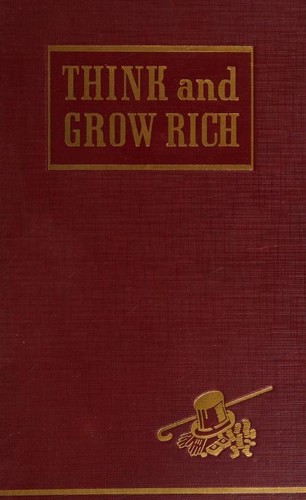
Think and Grow Rich
by Napoleon Hill
Top 25
A 1930s classic about goals, persistence, and the mindset of people who built wealth. Its mindset lessons remain influential even where its claims feel dated. Read the full description
Best for: Readers interested in the roots of self-improvement
Think and Grow Rich is #21 on BookWard's Top 100 books for November 2026, with a BookWard Score of 76 out of 100. It held its position from last month.
BookWard review of Think and Grow Rich
4 of 5 stars 4.0 out of 5, from 614 reader ratings
BookWard rates Think and Grow Rich 4.0 out of 5. That is the average of 614 reader ratings on Open Library (3.98), adjusted toward the typical book so that a small number of ratings cannot inflate it. Beyond the rating, it is #21 on BookWard's Top 100 books; 16,175 readers want to read it, 1,810 are reading it right now and 597 have finished it.
How this rating works
BookWard’s rating is calculated, not hand-scored. We take the average rating readers have given the book on Open Library and adjust it toward the typical book: adjusted = (n × average + 25 × 3.8) ÷ (n + 25), where n is the number of ratings. A book needs at least 50 ratings to be rated. The rating reflects how readers received the book, not whether it is right for you. Your own ratings on your shelf are private and are not part of this number.
Think and Grow Rich: reading interest over the past 12 months
Sources: Open Library’s public reading-log and ratings data (dump of 2026-10-31), Wikipedia page views and Wikidata. Monthly counts are exact; they show relative interest among readers of these public sources, not total readership.
Ranked against the other books on this list, Think and Grow Rich’s reading interest has run from #14 to #35 over these 12 months. Interest rank blends shelf adds, Wikipedia page views and rating activity, each compared with the other 99 books that month.
Shelf adds by month
Think and Grow Rich was added to Open Library readers’ shelves 2,141 times in the past 12 months, peaking in October 2026 with 404 (126% above its monthly average of 178). Over the latest three months (Aug 2026 to Oct 2026) shelf adds were up 53% on the three months before. 86% of the adds were “want to read”, 11% “currently reading” and 3% “already read”.
Want to read Currently reading Already read
Wikipedia page views
Its Wikipedia article was viewed 182,483 times in the past 12 months, peaking in September 2026 with 38,678 views. The latest three months were up 98% on the three before.
Source: Wikimedia monthly page views for the article Think and Grow Rich.
What the data says about Think and Grow Rich
- Moderate swings. Monthly shelf adds averaged 178 with some ups and downs.
- Busiest and quietest months. October 2026 was its busiest month (404 adds), about 4.0 times its quietest, August 2026 (102).
- Attention and shelf adds move independently. Its Wikipedia views and its shelf adds did not rise and fall together over these 12 months (correlation -0.13).
- Share of the list. It accounts for 2.1% of all shelf adds recorded for the Top 100 over these 12 months, #7 of 100.
- Its age. First published in 1937 (89 years ago), it is older than 91% of the books on the list.
Each finding is computed from the public data above and shown only when the numbers support it.
Think and Grow Rich on the Top 100: rank history
| Month | Rank | Score |
|---|---|---|
| November 2026 | #21 | 76 |
| October 2026 | #21 | 77 |
| September 2026 | #22 | 77 |
Is Think and Grow Rich rising or falling?
Holding steady Its weekly, monthly and yearly ranks are close together, so interest is steady rather than spiking.
On Open Library, Think and Grow Rich ranks #7 this week, #7 this month, and #7 over the past year. A longer bar means a higher position. Comparing the three windows shows whether readers are arriving faster than the book's long-term pace. Readings as of 2026-11-02.
Why Think and Grow Rich made the Top 100
Think and Grow Rich made the list mainly on momentum (+33.3 points) and being read right now (+23.4 points). Its smallest contribution is rising (+0). The BookWard Score blends five public signals, each scored from 0 to 100 and weighted as shown.
The reading-now, rating and rank signals come from Open Library’s public data, not from BookWard’s own readers. The score measures reading interest, not quality or sales. How the score works.
Open Library reader stats for Think and Grow Rich
Source: Open Library public reading logs, as of 2026-11-02. BookWard’s own monthly snapshots are added to the picture, and anonymous BookWard reader data will be layered in as the community grows.
More readers have Think and Grow Rich open right now than 94% of the other books on this list. These counts come from one public source, so they show relative interest rather than total readership.
Where it sits among Self-help books
It is #6 of the 14 Self-help books on this month’s list.
About Think and Grow Rich
What it’s about
Napoleon Hill, with Rosa Lee Beeland, set out in 1937 to turn what he called more than twenty years of study into a practical method for building wealth. He looked at people who had made personal fortunes, drew some sixteen laws from their habits, and boiled them down into a Philosophy of Achievement. The result is thirteen steps, among them desire, faith, autosuggestion, persistence, the Master Mind, imagination and organized planning, along with chapters on the subconscious, the sixth sense and the six ghosts of fear. The central claim is that anyone can reach success by following these principles.
The tone is earnest and instructive, closer to a coach's lesson plan than a scholar's argument. Hill claimed the idea was suggested by Andrew Carnegie, though historians doubt that. Readers who want a motivational framework for setting goals and sticking with them will find one here, and those curious about where modern self-improvement writing began will find an early, influential example.
At a glance
- First published
- 1937
- Genre
- Self-help
- Also described as
- non-fiction
- Length
- about 257 pages (the median across its editions)
- Original language
- English
- Languages
- editions in 12 languages listed on Open Library
- Editions
- 309 on Open Library
From Open Library and Wikidata public records. Missing rows mean the records do not list that fact.
Themes
- Desire and persistence
- Mindset
- Organized planning
What reading it is like
Motivational and formula-driven, in a 1930s voice.
At about 257 pages it is a medium-length read: roughly 5 hours at an average reading pace (about 250 words a minute, 300 words a page). Audiobook and edition lengths vary.
Good to know
An early success-literature classic. Its claims are anecdotal, and some of its advice leans mystical.
The premise
Napoleon Hill's 1937 classic distills interviews with successful people into thirteen principles, emphasizing desire, persistence, and mindset.
What you’ll get
- A landmark of the success-literature genre
- Motivating stories
- Ideas about goals and persistence
You might skip it if you want evidence-based advice; many claims are anecdotal.
Pairs well with: The Power of Your Subconscious Mind · The 7 Habits of Highly Effective People
Keep exploring the chart
Also on the chart at #20 and #22
More Self-help on the Top 100
Questions about Think and Grow Rich
What rank is Think and Grow Rich on the Top 100 books?
Think and Grow Rich is #21 on BookWard's Top 100 books for November 2026, with a BookWard Score of 76 out of 100. It held its position from last month.
Is Think and Grow Rich rising or falling?
Holding steady. Its weekly, monthly and yearly ranks are close together, so interest is steady rather than spiking. On Open Library, Think and Grow Rich ranks #7 this week, #7 this month, and #7 over the past year.
Why is Think and Grow Rich on the Top 100?
Think and Grow Rich made the list mainly on momentum (+33.3 points) and being read right now (+23.4 points). Its smallest contribution is rising (+0).
How many people are reading Think and Grow Rich right now?
Open Library's reading logs show 1,810 readers currently reading Think and Grow Rich, 16,175 who want to read it and 597 who have logged it as read (as of 2026-11-02). These are counts from one public source, not all readers.
How much interest has Think and Grow Rich had over the past year?
2,141 Open Library shelf adds in the past 12 months (peak October 2026, 404); latest three months up 53% on the prior three; 182,483 Wikipedia views in the past 12 months (up 98% over the latest three months). Figures come from Open Library and Wikipedia public data.
Who is Think and Grow Rich best for?
Readers interested in the roots of self-improvement.
Ask a question about Think and Grow Rich
Ask about this book's chart history, reading interest, or who it is for. Answers come from this page's data and can be wrong.
Answers are AI-written from BookWard’s own help content and can be wrong. Please do not share personal information: questions and answers may be saved and, if they are useful, shown on this site without your name.
How we know
This page is built from public data: Open Library’s dated reading-log and ratings dumps, Wikipedia page views, Wikidata, and BookWard’s own monthly Top 100 snapshots. The interest rank blends shelf adds (45%), Wikipedia page views (30%), rating activity (10%) and, for months where a snapshot exists, BookWard’s own score (15%), each as a percentile among the Top 100 books. Every month shown is real data; nothing is estimated. Rankings reflect reading interest, not quality or sales, and can be affected by data gaps. Last updated November 2026. Read the full methodology.
Suits adults and older teens curious about motivation, business or the history of self-help.
257 pages, about 4 to 6 hours.
A 1937 success manual: 13 principles, big promises, thin proof. 30% taste match
 BookWard’s take
A 1937 success manual: 13 principles, big promises, thin proof
Think and Grow Rich is idea-led from the first page, laying out Hill's 13 steps to riches in a plain, explaining voice. It tells you what it means rather than dramatizing it, which will frustrate anyone who wants to be shown through scene and story. On rigor it leans anecdotal. Hill claims twenty years of study, and historians doubt that claim, so the case rests on assertion and example more than on evidence. Originality is mixed. The book helped shape the personal development genre, though its core advice of desire, faith, planning and persistence is now very familiar. The author's voice is confident and unmistakable, for better and worse. At 257 pages it is short, but it repeats itself, so it falls short for a reader who wants tight, airtight reasoning. Read it as a historical artifact and a motivational text, not as proof.
At 257 pages it is compact for its ambitions, though repetition makes it feel longer than a tight book should.
The steps move at a steady, unhurried rate, with plenty of restating along the way.
It helped define the personal development genre, yet its ideas now read as familiar rather than fresh.
The prose is plain, direct and instructional, with little ornament.
Its entire message is that anyone can achieve wealth through the right mindset, so it is strongly hopeful.
A conventional chapter-per-principle layout keeps it simple and orderly.
It is earnest and humorless, a serious sales pitch for self-belief.
The tone is upbeat and gentle throughout.
It aims to stir ambition and conviction, but stays measured in feeling.
See all 50 dialsEvery position, side by side with this book
Where it lines up
- EndingBookWard 8 · book 6
- Authorial voiceBookWard 9 · book 7
- LengthBookWard 1 · book 4
Where it pulls apart
- Familiar tropesBookWard 10 · book 3
- Internal logicBookWard 10 · book 3
- ExpositionBookWard 2 · book 10
At 257 pages it is compact for its ambitions, though repetition makes it feel longer than a tight book should.
It opens by promising a path to wealth, which draws readers in, but without the urgency BookWard prizes.
Its advice on desire, faith and persistence has become stock self-help, so it leans on familiar ground BookWard avoids.
The principles are asserted more than argued, and the link from mindset to riches is not made airtight.
The steps move at a steady, unhurried rate, with plenty of restating along the way.
It helped define the personal development genre, yet its ideas now read as familiar rather than fresh.
It is a principles book, so people appear as examples, not as deeply drawn figures.
It closes on its list of principles and a call to act, which feels resolved enough.
Its tone is earnest and inspirational, closer to the sentimental end than BookWard likes.
The claim of twenty years of study is doubted by historians, and the book leans on anecdote over evidence.
Hill's confident, preacher-like tone is recognizable, which BookWard values even when the content is thin.
This is idea-led all the way, a philosophy of achievement with no story driving it.
Everything is explained outright, which sits at the opposite pole from BookWard's preference for showing in scene.
The 13 steps give it a steady frame, but the middle repeats itself more than it builds.
The prose is plain, direct and instructional, with little ornament.
Its entire message is that anyone can achieve wealth through the right mindset, so it is strongly hopeful.
A conventional chapter-per-principle layout keeps it simple and orderly.
It is earnest and humorless, a serious sales pitch for self-belief.
The writing is easy to follow and asks little of the reader.
Hill speaks throughout in one authoritative voice.
It moves forward principle by principle, with only brief detours into past examples.
It is grounded in business and personal life, though autosuggestion and subconscious talk drift toward the mystical.
Figures like Andrew Carnegie appear mainly as authority, so the cast stays small.
The scale is personal, aimed at the reader's own goals and fortune.
It centers on inner mindset, belief and desire as the engine of outer success.
It is exposition-driven, with almost no scenes of conversation.
Romance is not a theme beyond the odd chapter on sexual energy.
The setting is the familiar world of business and ambition.
Published in 1937, it belongs to the Depression-era past.
Its success ideas have stayed in print and in conversation for generations, though its methods feel dated.
Hill presents himself as a straightforward authority, with no unreliable framing.
The book takes a clear stance that persistence and belief lead to success, with little room for nuance.
Description is sparse, serving the argument and not the scenery.
It mixes anecdote with instruction, but the weight sits on telling readers what to do.
Hill speaks directly to the reader and draws on his own claimed experience, so it feels personal.
It stands alone, though it condenses material from Hill's earlier work.
There are no plot surprises, only a steady unfolding of principles.
It reassures more than it challenges, telling readers what they want to hear.
The tone is upbeat and gentle throughout.
It aims to stir ambition and conviction, but stays measured in feeling.
There is essentially no violence.
One chapter on sexual transmutation touches the subject, but only in a theoretical way.
Politics is mostly absent, though the book rests on a free-enterprise view of success.
The language is plain, with period phrasing the main hurdle.
Hill's views are front and center, and the whole book is advocacy.
It points the reader toward future goals and wealth yet to come.
Its belief that desire and faith can produce riches is relentlessly idealistic.
Review written by BookWard, dial version 1, November 2026.
Who is Think and Grow Rich right for?
Suits adults and older teens curious about motivation, business or the history of self-help. One chapter discusses sexual energy in a theoretical way, and its success-through-mindset message can feel dismissive of real hardship.
The writing is easy to follow and asks little of the reader.
The tone is upbeat and gentle throughout.
It aims to stir ambition and conviction, but stays measured in feeling.
There is essentially no violence.
Book CompanionThink and Grow Rich: ideas, characters, themes
Hill argues that anyone can achieve wealth by following a set of mental principles, starting with burning desire and unwavering faith.
- Desire comes first. Hill's opening step is a strong, specific desire for a goal, treated as the seed of everything that follows.
- Faith and autosuggestion. Positive self-talk and unwavering belief are meant to fix your goals in the mind and build confidence.
- Knowledge and planning. Specialized knowledge, imagination and an organized plan of action turn desire into something workable.
- Decision and persistence. Making a firm decision and sticking to it through setbacks is presented as the dividing line between success and failure.
- The Master Mind. Surrounding yourself with like-minded, supportive people is offered as a way to multiply your own effort.
Characters
Napoleon Hill
Author and guide
He presents himself as the distiller of decades of study into successful people.
Andrew Carnegie
Claimed inspiration
Hill says the business magnate suggested the project, a claim historians doubt.
Themes
The belief that thoughts and attitude shape outcomes in money and life.
Staying committed to a goal through obstacles and setbacks.
Wanting something specific enough to organize your life around it.
How the book helped define a genre of advice promising personal transformation.
Money as the measurable proof of applying the principles.
Discussion questions
- Which of the 13 steps feels most useful today, and which feels most dated?
- How much should we trust a book whose central research claims historians doubt?
- Does focusing on mindset overlook luck, privilege and circumstance?
- Where does confidence end and wishful thinking begin?
- Why has this book stayed popular for decades despite its weak evidence?
Personalize your Book Companion
This is the general edition. In BookWard, the Companion is written for you: your reading profile, your notes, and spoiler-safe to the page you are on.
Buy, listen or borrow Think and Grow Rich
Each link opens a search for this book on that store, in a new tab.
Read on a device
Borrow
Reviews and community
If you liked Think and Grow Rich
Peale's faith-based playbook for swapping worry for confidence
Ageless Body, Timeless MindDeepak ChopraChopra's case that aging bends to belief, argued with conviction
The think and grow rich action packNapoleon HillNapoleon Hill's success gospel, packaged for doing rather than just reading
How to live 365 days a yearJohn A. SchindlerA 1950s doctor's plain-spoken guide to wellbeing across the whole year
Track Think and Grow Rich and find your next favorite
Add it to your shelf, rate what you have read, and BookWard will recommend what fits you.
Free to start. No credit card needed.