Updated November 2, 2026 · reading data through October 2026
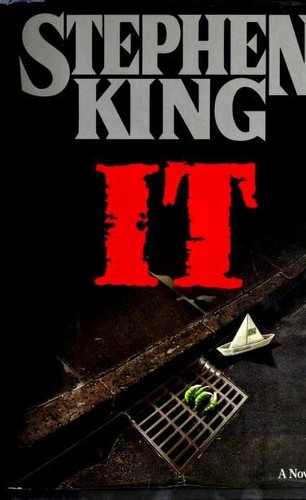
It
by Stephen King
Top 25Interest peak #1
A group of childhood friends reunite to face the shape-shifting evil that terrorized their town. Long, atmospheric, and Stephen King at his most ambitious. Read the full description
Best for: Horror readers with time to spare
It is #19 on BookWard's Top 100 books for November 2026, with a BookWard Score of 77 out of 100. It climbed 6 places from #25 last month.
BookWard review of It
4 of 5 stars 4.1 out of 5, from 496 reader ratings
BookWard rates It 4.1 out of 5. That is the average of 496 reader ratings on Open Library (4.09), adjusted toward the typical book so that a small number of ratings cannot inflate it. Beyond the rating, it is #19 on BookWard's Top 100 books; 10,809 readers want to read it, 676 are reading it right now and 624 have finished it. Its adjusted rating is higher than 53% of the books on the Top 100.
How this rating works
BookWard’s rating is calculated, not hand-scored. We take the average rating readers have given the book on Open Library and adjust it toward the typical book: adjusted = (n × average + 25 × 3.8) ÷ (n + 25), where n is the number of ratings. A book needs at least 50 ratings to be rated. The rating reflects how readers received the book, not whether it is right for you. Your own ratings on your shelf are private and are not part of this number.
It: reading interest over the past 12 months
Sources: Open Library’s public reading-log and ratings data (dump of 2026-10-31), Wikipedia page views and Wikidata. Monthly counts are exact; they show relative interest among readers of these public sources, not total readership.
Ranked against the other books on this list, It’s reading interest has run from #1 to #61 over these 12 months. Interest rank blends shelf adds, Wikipedia page views and rating activity, each compared with the other 99 books that month.
Shelf adds by month
It was added to Open Library readers’ shelves 2,131 times in the past 12 months, peaking in November 2025 with 936 (427% above its monthly average of 178). Over the latest three months (Aug 2026 to Oct 2026) shelf adds were up 81% on the three months before. 91% of the adds were “want to read”, 6% “currently reading” and 3% “already read”.
Want to read Currently reading Already read
Wikipedia page views
Its Wikipedia article was viewed 1,096,229 times in the past 12 months, peaking in November 2025 with 307,931 views. The latest three months were up 53% on the three before.
Source: Wikimedia monthly page views for the article It (novel).
Adaptations
- It: Welcome to Derry (television series), 2025
- It: Chapter Two (film), 2019
- It (miniseries), 1990
Adaptations are listed from Wikidata; a release date near a rise in the charts above is context, not proof of a cause.
Awards and honours listed on Wikidata: August Derleth Award.
What the data says about It
- Uneven demand. Monthly shelf adds swung widely around an average of 178, so interest arrives in bursts and not as a steady stream.
- Busiest and quietest months. November 2025 was its busiest month (936 adds), about 25.3 times its quietest, July 2026 (37).
- Attention and shelf adds move together. Months with more Wikipedia views for It were also months with more shelf adds (correlation 0.86), which suggests the same events, such as new editions, adaptations or social media, drive both.
- Against its genre. It had 86% more shelf adds than the average Horror book on this list.
- Share of the list. It accounts for 2.1% of all shelf adds recorded for the Top 100 over these 12 months, #8 of 100.
- Its age. First published in 1986 (40 years ago), it is older than 72% of the books on the list.
Each finding is computed from the public data above and shown only when the numbers support it.
It on the Top 100: rank history
| Month | Rank | Score |
|---|---|---|
| November 2026 | #19 | 77 |
| October 2026 | #25 | 74 |
| September 2026 | #25 | 75 |
Is It rising or falling?
Cooling It ranks lower this week than over the past year, so interest is softening from its recent level.
On Open Library, It ranks #29 this week, #43 this month, and #8 over the past year. A longer bar means a higher position. Comparing the three windows shows whether readers are arriving faster than the book's long-term pace. Readings as of 2026-11-02.
Why It made the Top 100
It made the list mainly on momentum (+30 points) and being read right now (+22.5 points). Its smallest contribution is rising (+0). The BookWard Score blends five public signals, each scored from 0 to 100 and weighted as shown.
The reading-now, rating and rank signals come from Open Library’s public data, not from BookWard’s own readers. The score measures reading interest, not quality or sales. How the score works.
Open Library reader stats for It
Source: Open Library public reading logs, as of 2026-11-02. BookWard’s own monthly snapshots are added to the picture, and anonymous BookWard reader data will be layered in as the community grows.
More readers have It open right now than 85% of the other books on this list. These counts come from one public source, so they show relative interest rather than total readership.
Where it sits among Horror books
It is #1 of the 3 Horror books on this month’s list.
About It
What it’s about
In the small town of Derry, Maine, an ancient evil wakes to feed on children. It hunts for a year, then sleeps for 27, and it has a gift for finding what each victim fears most and wearing that shape. Most often it appears as Pennywise the Dancing Clown. The story begins with six-year-old Georgie Denbrough meeting the clown at a storm drain, and his older brother Bill never stops carrying that loss.
Seven outcast kids band together as the Losers' Club: Ben, Eddie, Bill, Richie, Stan, Beverly and Mike. They also have to survive the bully Henry Bowers and his gang. The book moves back and forth between two eras, and it is as much about memory, friendship and the way childhood fear never quite leaves us as it is about monsters. The tone is dark and suspenseful, with a streak of nostalgia running through it.
At a glance
- First published
- 1986-09-15
- Genre
- Horror
- Also described as
- horror fiction
- Length
- about 1168 pages (the median across its editions)
- Original language
- English
- Languages
- editions in 11 languages listed on Open Library
- Editions
- 96 on Open Library
- Setting
- Derry
- Characters listed
- IT, Losers Club, Aristotle, Atilla the Hun, Batman
- Awards and honours
- August Derleth Award
From Open Library and Wikidata public records. Missing rows mean the records do not list that fact.
Themes
- Childhood fear
- Friendship and memory
- Small-town evil
What reading it is like
Long, slow-burning horror that moves between childhood and adulthood.
At about 1168 pages it is a long read: roughly 23 hours at an average reading pace (about 250 words a minute, 300 words a page). Audiobook and edition lengths vary.
Good to know
Over a thousand pages in many editions. Includes child harm and violent content.
The premise
A group of childhood friends in Derry, Maine, face a shape-shifting evil that hunts the town's children. Decades later, they are called back to finish what they started.
What you’ll get
- Atmospheric, slow-burn horror
- Strong friendships at the core
- A long, immersive read
You might skip it if you dislike horror or a 1,000-page commitment.
More by Stephen King on the Top 100: The Shining
Pairs well with: The Shining
Keep exploring the chart
Also on the chart at #18 and #20
More Horror on the Top 100
Questions about It
What rank is It on the Top 100 books?
It is #19 on BookWard's Top 100 books for November 2026, with a BookWard Score of 77 out of 100. It climbed 6 places from #25 last month.
Is It rising or falling?
Cooling. It ranks lower this week than over the past year, so interest is softening from its recent level. On Open Library, It ranks #29 this week, #43 this month, and #8 over the past year.
Why is It on the Top 100?
It made the list mainly on momentum (+30 points) and being read right now (+22.5 points). Its smallest contribution is rising (+0).
How many people are reading It right now?
Open Library's reading logs show 676 readers currently reading It, 10,809 who want to read it and 624 who have logged it as read (as of 2026-11-02). These are counts from one public source, not all readers.
How much interest has It had over the past year?
2,131 Open Library shelf adds in the past 12 months (peak November 2025, 936); latest three months up 81% on the prior three; 1,096,229 Wikipedia views in the past 12 months (up 53% over the latest three months); Adaptations on Wikidata: It: Welcome to Derry (2025); It: Chapter Two (2019); It (1990). Figures come from Open Library and Wikipedia public data.
Who is It best for?
Horror readers with time to spare.
Ask a question about It
Ask about this book's chart history, reading interest, or who it is for. Answers come from this page's data and can be wrong.
Answers are AI-written from BookWard’s own help content and can be wrong. Please do not share personal information: questions and answers may be saved and, if they are useful, shown on this site without your name.
How we know
This page is built from public data: Open Library’s dated reading-log and ratings dumps, Wikipedia page views, Wikidata, and BookWard’s own monthly Top 100 snapshots. The interest rank blends shelf adds (45%), Wikipedia page views (30%), rating activity (10%) and, for months where a snapshot exists, BookWard’s own score (15%), each as a percentile among the Top 100 books. Every month shown is real data; nothing is estimated. Rankings reflect reading interest, not quality or sales, and can be affected by data gaps. Last updated November 2026. Read the full methodology.
Suited to adult readers and mature teens who enjoy long horror.
1168 pages, about 18.5 to 27.5 hours.
A sprawling, gripping horror epic about childhood fear and memory. 56% taste match
 BookWard’s take
A sprawling, gripping horror epic about childhood fear and memory
It opens with a rainstorm, a paper boat and a storm drain, and the hook lands inside the first chapter. From there the book alternates between a group of outcast kids in 1950s Derry and the same people returning as adults. At 1168 pages, it is a long way from the tight, economical books I tend to favor, and both its cast and its scale run far larger than I usually like. Where it earns its place is in character: the Losers Club are drawn with real care, and the monster works because it feeds on specific fears. The pace is brisk for a book this size, and the jumps between two eras are deliberate. Expect violence on the page, some of it graphic, and a scene involving the child protagonists that drew criticism.
At 1168 pages it is about as long and sprawling as a novel gets, far from the tightness BookWard prefers.
Scenes move quickly and the dread keeps building, which is surprisingly brisk for a book this large.
The premise draws on horror staples, yet the fear-feeding clown and the two-era structure feel distinctly King's.
The prose is colloquial and vivid rather than ornate, with long stretches of rich detail.
The horror plot matters, but the Losers' bonds and histories are what drive it.
Dark as it is, the book ends on the power of friendship and belief against the monster.
Alternating between 1950s children and adults decades later is a notable but not radical structure.
Richie's jokes and banter lighten the dread, but the tone stays serious overall.
See all 50 dialsEvery position, side by side with this book
Where it lines up
- OpeningBookWard 10 · book 10
- EndingBookWard 8 · book 8
- Authorial voiceBookWard 9 · book 9
Where it pulls apart
- LengthBookWard 1 · book 10
- Familiar tropesBookWard 10 · book 4
- Internal logicBookWard 10 · book 6
At 1168 pages it is about as long and sprawling as a novel gets, far from the tightness BookWard prefers.
A boy, a paper boat and a storm drain open the book with an immediate, memorable jolt, which BookWard loves.
A shapeshifting evil and a gang of outcast kids are familiar horror ground, though King handles them with his own texture.
The entity and its 27-year cycle follow clear rules, though a book this big leaves some of it loose.
Scenes move quickly and the dread keeps building, which is surprisingly brisk for a book this large.
The premise draws on horror staples, yet the fear-feeding clown and the two-era structure feel distinctly King's.
The seven Losers are drawn with histories and specific fears, which suits BookWard's appetite for deeply drawn people.
The story drives toward a final confrontation in Derry and resolves its central question.
Friendship and lost innocence carry real warmth, and the book leans into them more than BookWard's restrained taste would.
The violence is graphic, but it mostly serves the fear and memory themes; some moments tip toward effect.
This is a novel, so the nonfiction dial does not apply.
King's conversational, digressive narration is unmistakable and gives the book its character.
Themes of memory and trauma matter, but the book is propelled by story and scares.
Most of the history of Derry and the creature comes through scenes and interludes rather than lectures.
A book this long dips in places, though the dual timeline keeps the engine turning.
The prose is colloquial and vivid rather than ornate, with long stretches of rich detail.
The horror plot matters, but the Losers' bonds and histories are what drive it.
Dark as it is, the book ends on the power of friendship and belief against the monster.
Alternating between 1950s children and adults decades later is a notable but not radical structure.
Richie's jokes and banter lighten the dread, but the tone stays serious overall.
The prose is easy to read, though the length and shifting timelines ask for commitment.
The omniscient narration moves between all seven Losers and others in Derry.
The story alternates between the late 1950s and 27 years later, deliberately interleaving past and present.
A shapeshifting trans-dimensional entity puts the book firmly in supernatural territory, grounded in a real-feeling town.
Seven main characters plus bullies, parents and townspeople make for a large cast.
One town carries an epic span of decades, and the cosmic backstory widens it further.
Fear and memory live inside the characters, but there is plenty of external confrontation too.
Banter among the Losers fills much of the book, which suits BookWard's liking for talk.
Romantic threads exist among the Losers but sit alongside the horror rather than driving it.
Derry, Maine is an ordinary American town, rendered with deep familiarity.
The settings are the late 1950s and the mid 1980s, both firmly in the past now.
Decades on, Pennywise remains one of the most iconic villains in popular culture.
The omniscient narrator is a trustworthy guide to events, however strange they get.
The children are clearly good and the creature is clearly evil, with little ambiguity.
King lingers on Derry's streets, the Barrens and each manifestation of fear in rich detail.
Review written by BookWard, dial version 1, November 2026.
Who is It right for?
Suited to adult readers and mature teens who enjoy long horror. It contains graphic violence, scenes of child endangerment, bullying and a sexually explicit scene involving child characters that many readers find disturbing.
The prose is easy to read, though the length and shifting timelines ask for commitment.
Book CompanionIt: ideas, characters, themes
A group of outcast children defeat an ancient, fear-feeding evil in Derry, then must return as adults when it wakes again.
- The opening hook. A boy sails a paper boat into a storm drain and meets a clown, setting the tone at once.
- The Losers Club. Seven misfits bond over the summer and each faces a personal, terrifying manifestation of It.
- Two time periods. The narrative alternates between the late 1950s children and the adults who return 27 years later.
- The blood oath. After their first battle with It, the children promise to return to Derry if it ever resurfaces.
- Pennywise as a shapeshifter. The entity takes the form of whatever its victims fear most, most often a clown that lures children.
Characters
Bill Denbrough
Stuttering Bill, leader of the Losers
His younger brother Georgie is the first victim, which drives his determination to stop It.
Beverly Marsh
Member of the Losers Club
She is the group's only girl, and her encounter with It involves a fountain of blood only children can see.
Ben Hanscom
Member of the Losers Club
An overweight boy bullied by Henry Bowers, he escapes into the Barrens and finds his friends.
Henry Bowers
Bully
An increasingly unhinged, sadistic bully who targets the Losers and promises revenge.
Pennywise
The monster
The Dancing Clown guise of It, which hunts children by exploiting their fears.
Themes
The adult Losers have forgotten much of what happened, and recalling it is part of the fight.
Early terror shapes the characters long after the events themselves have faded.
The summer in Derry forces the children to confront evil and mortality early.
The group's friendship and shared belief are their strongest weapons against the creature.
Discussion questions
- Why does It take the shape of a clown, and what does that say about fear?
- How does alternating between two time periods change your experience of the story?
- What role does forgetting play in the adult Losers' return to Derry?
- Is the book's length a strength or a weakness for the story it tells?
- How do the individual fears of each Loser reveal who they are?
Personalize your Book Companion
This is the general edition. In BookWard, the Companion is written for you: your reading profile, your notes, and spoiler-safe to the page you are on.
Buy, listen or borrow It
Each link opens a search for this book on that store, in a new tab.
Read on a device
Borrow
Reviews and community
If you liked It
A thousand-page plague epic where good and evil pick sides
King SorrowJoe HillA dragon pact among friends, stretched across a very big book
DreamcatcherStephen KingFour friends, a snowed-in cabin, and an alien invasion that gets messy
DesperationStephen KingKing's desert horror: a possessed deputy, a praying boy, a long fight
Track It and find your next favorite
Add it to your shelf, rate what you have read, and BookWard will recommend what fits you.
Free to start. No credit card needed.