Updated November 2, 2026 · reading data through October 2026
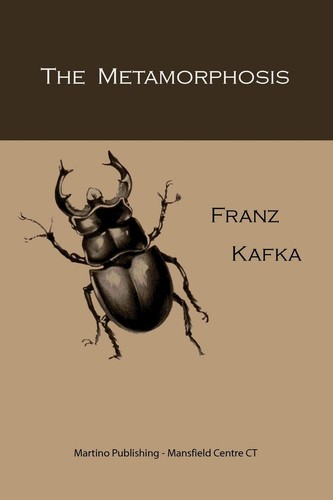
Metamorphosis
by Franz Kafka
Top 25
A traveling salesman wakes up transformed into an insect and watches his family's love change. A short, strange, and quietly devastating novella. Read the full description
Best for: Readers who want a short, strange classic
Metamorphosis is #25 on BookWard's Top 100 books for November 2026, with a BookWard Score of 74 out of 100. It slipped 1 place from #24 last month.
BookWard review of Metamorphosis
4 of 5 stars 4.1 out of 5, from 190 reader ratings
BookWard rates Metamorphosis 4.1 out of 5. That is the average of 190 reader ratings on Open Library (4.15), adjusted toward the typical book so that a small number of ratings cannot inflate it. Beyond the rating, it is #25 on BookWard's Top 100 books; 3,654 readers want to read it, 280 are reading it right now and 457 have finished it. Its adjusted rating is higher than 58% of the books on the Top 100.
How this rating works
BookWard’s rating is calculated, not hand-scored. We take the average rating readers have given the book on Open Library and adjust it toward the typical book: adjusted = (n × average + 25 × 3.8) ÷ (n + 25), where n is the number of ratings. A book needs at least 50 ratings to be rated. The rating reflects how readers received the book, not whether it is right for you. Your own ratings on your shelf are private and are not part of this number.
Metamorphosis: reading interest over the past 12 months
Sources: Open Library’s public reading-log and ratings data (dump of 2026-10-31), Wikipedia page views and Wikidata. Monthly counts are exact; they show relative interest among readers of these public sources, not total readership.
Ranked against the other books on this list, Metamorphosis’s reading interest has run from #7 to #43 over these 12 months. Interest rank blends shelf adds, Wikipedia page views and rating activity, each compared with the other 99 books that month.
Shelf adds by month
Metamorphosis was added to Open Library readers’ shelves 1,195 times in the past 12 months, peaking in October 2026 with 191 (92% above its monthly average of 100). Over the latest three months (Aug 2026 to Oct 2026) shelf adds were up 40% on the three months before. 78% of the adds were “want to read”, 8% “currently reading” and 14% “already read”.
Want to read Currently reading Already read
Wikipedia page views
Its Wikipedia article was viewed 778,518 times in the past 12 months, peaking in December 2025 with 80,218 views. The latest three months were up 3% on the three before.
Source: Wikimedia monthly page views for the article The Metamorphosis.
What the data says about Metamorphosis
- Moderate swings. Monthly shelf adds averaged 100 with some ups and downs.
- Busiest and quietest months. October 2026 was its busiest month (191 adds), about 2.8 times its quietest, December 2025 (69).
- A book people finish. Only 78% of its shelf adds are “want to read”, against 86% across the Top 100, so more of its activity comes from readers logging books they have read or are reading.
- Attention and shelf adds move independently. Its Wikipedia views and its shelf adds did not rise and fall together over these 12 months (correlation -0.28).
- Share of the list. It accounts for 1.2% of all shelf adds recorded for the Top 100 over these 12 months, #24 of 100.
- Its age. First published in 1915 (111 years ago), it is older than 95% of the books on the list.
Each finding is computed from the public data above and shown only when the numbers support it.
Metamorphosis on the Top 100: rank history
| Month | Rank | Score |
|---|---|---|
| November 2026 | #25 | 74 |
| October 2026 | #24 | 76 |
| September 2026 | #24 | 76 |
Is Metamorphosis rising or falling?
Holding steady Its weekly, monthly and yearly ranks are close together, so interest is steady rather than spiking.
On Open Library, Metamorphosis ranks #22 this week, #28 this month, and #26 over the past year. A longer bar means a higher position. Comparing the three windows shows whether readers are arriving faster than the book's long-term pace. Readings as of 2026-11-02.
Why Metamorphosis made the Top 100
Metamorphosis made the list mainly on momentum (+31.2 points) and being read right now (+17.5 points). Its smallest contribution is rising (+0). The BookWard Score blends five public signals, each scored from 0 to 100 and weighted as shown.
The reading-now, rating and rank signals come from Open Library’s public data, not from BookWard’s own readers. The score measures reading interest, not quality or sales. How the score works.
Open Library reader stats for Metamorphosis
Source: Open Library public reading logs, as of 2026-11-02. BookWard’s own monthly snapshots are added to the picture, and anonymous BookWard reader data will be layered in as the community grows.
More readers have Metamorphosis open right now than 44% of the other books on this list. These counts come from one public source, so they show relative interest rather than total readership.
Where it sits among Classics books
It is #4 of the 8 Classics books on this month’s list.
About Metamorphosis
What it’s about
Gregor Samsa is a traveling salesman who wakes one morning to find himself changed into an enormous insect. Kafka's German calls the creature ungeheueres Ungeziefer, roughly 'monstrous vermin', though adaptations often draw it as a cockroach. The story follows Gregor as he tries to cope with his strange new condition and with the people around him.
Published in 1915, this short novella of about 70 pages in three chapters is one of Kafka's best-known works and the longest story he considered finished and released in his lifetime. Readers have long argued over what it means. It touches on alienation, family duty, identity and the absurd, and its tone is bleak and darkly ironic. It suits readers who like strange, compact fiction that leaves room to form their own interpretation.
At a glance
- First published
- 1915-10
- Genre
- Classics
- Also described as
- epic literature, absurdist literature, body horror literature
- Length
- about 88 pages (the median across its editions)
- Original language
- German
- Languages
- editions in 10 languages listed on Open Library
- Editions
- 957 on Open Library
From Open Library and Wikidata public records. Missing rows mean the records do not list that fact.
Themes
- Alienation
- Family obligation
- Identity
What reading it is like
Short, strange and darkly comic.
At about 88 pages it is a short read: roughly 2 hours at an average reading pace (about 250 words a minute, 300 words a page). Audiobook and edition lengths vary.
Good to know
A novella, so it can be read in one sitting. The translation affects the tone.
The premise
Salesman Gregor Samsa wakes up one morning transformed into a giant insect. The story follows how his family reacts, and how they change as he can no longer support them.
What you’ll get
- A short, strange novella
- Themes of isolation and duty
- Endlessly discussed
You might skip it if you dislike unsettling, open-ended stories.
Pairs well with: The Stranger
Keep exploring the chart
Also on the chart at #24 and #26
Questions about Metamorphosis
What rank is Metamorphosis on the Top 100 books?
Metamorphosis is #25 on BookWard's Top 100 books for November 2026, with a BookWard Score of 74 out of 100. It slipped 1 place from #24 last month.
Is Metamorphosis rising or falling?
Holding steady. Its weekly, monthly and yearly ranks are close together, so interest is steady rather than spiking. On Open Library, Metamorphosis ranks #22 this week, #28 this month, and #26 over the past year.
Why is Metamorphosis on the Top 100?
Metamorphosis made the list mainly on momentum (+31.2 points) and being read right now (+17.5 points). Its smallest contribution is rising (+0).
How many people are reading Metamorphosis right now?
Open Library's reading logs show 280 readers currently reading Metamorphosis, 3,654 who want to read it and 457 who have logged it as read (as of 2026-11-02). These are counts from one public source, not all readers.
How much interest has Metamorphosis had over the past year?
1,195 Open Library shelf adds in the past 12 months (peak October 2026, 191); latest three months up 40% on the prior three; 778,518 Wikipedia views in the past 12 months (up 3% over the latest three months). Figures come from Open Library and Wikipedia public data.
Who is Metamorphosis best for?
Readers who want a short, strange classic.
Ask a question about Metamorphosis
Ask about this book's chart history, reading interest, or who it is for. Answers come from this page's data and can be wrong.
Answers are AI-written from BookWard’s own help content and can be wrong. Please do not share personal information: questions and answers may be saved and, if they are useful, shown on this site without your name.
How we know
This page is built from public data: Open Library’s dated reading-log and ratings dumps, Wikipedia page views, Wikidata, and BookWard’s own monthly Top 100 snapshots. The interest rank blends shelf adds (45%), Wikipedia page views (30%), rating activity (10%) and, for months where a snapshot exists, BookWard’s own score (15%), each as a percentile among the Top 100 books. Every month shown is real data; nothing is estimated. Rankings reflect reading interest, not quality or sales, and can be affected by data gaps. Last updated November 2026. Read the full methodology.
Suits mature teens and adults, and is a common choice for school reading because of its short length and plain language.
88 pages, about 1.5 to 2 hours.
A salesman wakes as an insect, and the logic never blinks. 68% taste match
 BookWard’s take
A salesman wakes as an insect, and the logic never blinks
Kafka's novella delivers its whole premise in the first sentence: Gregor Samsa wakes to find himself transformed into a huge insect. The hook could hardly be stronger, and the book never wastes the opening. At around 70 printed pages it is short, and it has no sagging middle to speak of, since three tight chapters keep tightening the same screw. The impossible event is treated with such flat, practical calm that the internal logic feels airtight even as the situation is plainly fantastical. It is strikingly original, still feeling unlike anything it was copied from. I tend to prefer shown scenes over explained ideas, and Kafka mostly obliges: the meaning lives in what happens at the breakfast table, not in commentary.
About 70 printed pages across three chapters, one of the shortest classics there is, which sits right where BookWard likes to be.
Scenes move briskly through a compact structure, though the mood is oppressive rather than thrilling, so it reads quick but not breathless.
A man turned into vermin and a household adjusting to it was nothing like what came before, and it still stands apart.
The sentences are clear and plain, with long but orderly constructions rather than ornament, so it sits on the plainer side.
Events are few and simple, and what matters is how Gregor and his family respond, giving a slight lean to character.
The mood is bleak and isolating, well below BookWard's mild lean toward hopeful books.
A straightforward three-part progression with no formal tricks, more conventional than experimental in shape.
There is a grim absurd comedy in the deadpan treatment, but the book is mainly serious.
The subject matter is bleak, centred on isolation, decline and rejection.
Feeling runs deep beneath a restrained surface, so it is affecting without being overwrought.
See all 50 dialsEvery position, side by side with this book
Where it lines up
- LengthBookWard 1 · book 1
- OpeningBookWard 10 · book 10
- EndingBookWard 8 · book 8
Where it pulls apart
- Story or ideasBookWard 3 · book 6
- OutlookBookWard 7 · book 2
- Shock for effectBookWard 9 · book 7
About 70 printed pages across three chapters, one of the shortest classics there is, which sits right where BookWard likes to be.
The transformation arrives in the opening sentence, so there is no warm-up at all, exactly the immediate grab BookWard rewards.
The central conceit and its deadpan treatment were strikingly fresh, and the story avoids the usual fantasy machinery entirely.
Once the impossible happens, every consequence follows with cold, practical consistency, which is what BookWard wants from a strange premise.
Scenes move briskly through a compact structure, though the mood is oppressive rather than thrilling, so it reads quick but not breathless.
A man turned into vermin and a household adjusting to it was nothing like what came before, and it still stands apart.
Gregor and his family are drawn through small, telling behaviours that reveal more than any stated backstory.
The story reaches a definite close for its central situation, closer to resolved than open, which BookWard appreciates.
Kafka refuses to coax tears; the tone stays cool and unsentimental even at painful moments, matching BookWard's taste for restraint.
The horror is earned by what it says about family, work and worth, not tacked on for effect.
This is fiction, so the rigor dial does not apply.
Kafka's flat, precise, bureaucratic calm is instantly recognizable and gave a word to an entire kind of experience.
Ideas about alienation and duty run strong, yet they are carried by a concrete domestic story, so it leans only slightly toward ideas.
Almost nothing is explained; the cause of the change is never given, and meaning emerges from scenes, which BookWard favours.
Three short chapters each raise the pressure, leaving no room for a slack stretch.
The sentences are clear and plain, with long but orderly constructions rather than ornament, so it sits on the plainer side.
Events are few and simple, and what matters is how Gregor and his family respond, giving a slight lean to character.
The mood is bleak and isolating, well below BookWard's mild lean toward hopeful books.
A straightforward three-part progression with no formal tricks, more conventional than experimental in shape.
There is a grim absurd comedy in the deadpan treatment, but the book is mainly serious.
The language is plain and the length short, but the meaning invites real thought, so it asks a moderate amount of the reader.
The narration stays close to Gregor and then widens only slightly to his household, so it is mostly a single viewpoint.
Events unfold in plain chronological order, which keeps the nightmare easy to follow.
One impossible fact, an insect transformation, sits inside an otherwise ordinary household, so it is fantastical at the core and grounded around it.
Gregor and a handful of family members and visitors make for a very small cast.
The action stays within one family and one apartment, as intimate as fiction gets.
Most of the weight falls on Gregor's perceptions and feelings about his new condition, with relatively little outward action.
Conversation is present, particularly among the family, but it is not the main vehicle of the story.
Romance plays no real role; the story is about family and work.
The setting is a familiar middle-class home and workplace, made strange only by the central event.
The setting is a period household and workplace rather than a contemporary one, though its concerns travel well.
More than a century on, it remains one of the most discussed and recognizable stories ever written.
The narration is steady and trustworthy, reporting the absurd with total composure.
The story offers no neat verdict, and the family's choices are understandable and troubling at once.
Description is economical, with a few sharp physical details rather than lush scene-setting.
This is fiction, so the nonfiction style dial does not apply.
This is fiction, so the perspective dial does not apply.
A self-contained novella with no sequels or companion volumes.
The big surprise comes at the start; after that the story unfolds with grim inevitability rather than reversals.
It confronts uncomfortable ideas about worth, dependence and family, and offers little comfort.
The subject matter is bleak, centred on isolation, decline and rejection.
Feeling runs deep beneath a restrained surface, so it is affecting without being overwrought.
Any humour is dry and deadpan, never broad or slapstick.
There is some physical harm on the page, but it is sparing and not the point of the story.
Sexual content is essentially absent.
Work and family obligation carry social implications, but there is no direct political agenda.
The language is plain and direct, with no heavy dialect or dense passages.
The narrator reports events evenly and refuses to editorialize.
The book looks inward and downward at a closing-in situation, more backward than forward.
The view of work and family duty is cynical, offering little faith in human generosity.
Review written by BookWard, dial version 1, November 2026.
Who is Metamorphosis right for?
Suits mature teens and adults, and is a common choice for school reading because of its short length and plain language. It deals with isolation, rejection and a bleak decline, which may be upsetting for some readers.
The language is plain and the length short, but the meaning invites real thought, so it asks a moderate amount of the reader.
The subject matter is bleak, centred on isolation, decline and rejection.
Feeling runs deep beneath a restrained surface, so it is affecting without being overwrought.
There is some physical harm on the page, but it is sparing and not the point of the story.
Book CompanionMetamorphosis: ideas, characters, themes
A man who has served his family as a provider is transformed into something they cannot accept, and the story watches what that reveals about them and about him.
- The impossible opening. Gregor Samsa wakes one morning to find himself changed into a huge insect, and the story begins from that fact without explanation.
- Work and obligation. Gregor is a salesman, and his first worries concern his job and his duties rather than his body.
- A household adjusts. The story follows how Gregor and his family respond to his new condition across three chapters.
- Compact form. At about 70 printed pages, it is the longest of the stories Kafka considered complete and published in his lifetime.
- Open to interpretation. The novella has been widely discussed, with differing interpretations offered about what it means.
Characters
Gregor Samsa
Protagonist
A salesman who wakes transformed into a huge insect and struggles to adjust to his new condition.
Themes
The sense of being cut off from the people and world around you.
How obligation to job and family can define a person's sense of self.
The ties, dependencies and limits of care within a household.
What changes, and what stays the same, when a person is no longer recognizable.
An ordinary world met with an event that has no explanation and no remedy.
Discussion questions
- Why do you think Kafka opens with the transformation already complete rather than showing it happen?
- How does Gregor's concern about work shape your sense of who he was before the change?
- What does the deadpan tone add that a more emotional telling would lose?
- Does the story invite sympathy for Gregor, his family, or both?
- Why might the cause of the transformation never be explained, and does that help or frustrate you?
Personalize your Book Companion
This is the general edition. In BookWard, the Companion is written for you: your reading profile, your notes, and spoiler-safe to the page you are on.
Buy, listen or borrow Metamorphosis
Each link opens a search for this book on that store, in a new tab.
Read on a device
Borrow
Reviews and community
If you liked Metamorphosis
A lean, lonely vampire plague story that still bites
The StrangerAlbert CamusA cold, short novella that still unsettles
ThinnerStephen KingA lean curse story where a man's own body becomes the clock
Bartleby, the ScrivenerHerman MelvilleFive words, a lawyer's unease, and a office that cannot cope
Track Metamorphosis and find your next favorite
Add it to your shelf, rate what you have read, and BookWard will recommend what fits you.
Free to start. No credit card needed.