Updated November 2, 2026 · reading data through October 2026
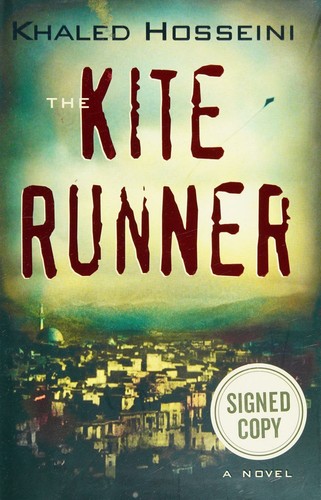
The Kite Runner
by Khaled Hosseini
★ Top 5 book of 2003 · #3 on Best Books of 2003
A man returns to Afghanistan to atone for a childhood betrayal. Moving, painful, and a landmark novel of friendship and guilt. Read the full description
Best for: Readers ready for a powerful, emotional story
The Kite Runner is #68 on BookWard's Top 100 books for November 2026, with a BookWard Score of 59 out of 100. It slipped 22 places from #46 last month.
BookWard review of The Kite Runner
4 of 5 stars 4.1 out of 5, from 150 reader ratings
BookWard rates The Kite Runner 4.1 out of 5. That is the average of 150 reader ratings on Open Library (4.11), adjusted toward the typical book so that a small number of ratings cannot inflate it. Beyond the rating, it is #68 on BookWard's Top 100 books; 2,585 readers want to read it, 234 are reading it right now and 272 have finished it.
How this rating works
BookWard’s rating is calculated, not hand-scored. We take the average rating readers have given the book on Open Library and adjust it toward the typical book: adjusted = (n × average + 25 × 3.8) ÷ (n + 25), where n is the number of ratings. A book needs at least 50 ratings to be rated. The rating reflects how readers received the book, not whether it is right for you. Your own ratings on your shelf are private and are not part of this number.
The Kite Runner: reading interest over the past 12 months
Sources: Open Library’s public reading-log and ratings data (dump of 2026-10-31), Wikipedia page views and Wikidata. Monthly counts are exact; they show relative interest among readers of these public sources, not total readership.
Ranked against the other books on this list, The Kite Runner’s reading interest has run from #34 to #67 over these 12 months. Interest rank blends shelf adds, Wikipedia page views and rating activity, each compared with the other 99 books that month.
Shelf adds by month
The Kite Runner was added to Open Library readers’ shelves 594 times in the past 12 months, peaking in October 2026 with 77 (56% above its monthly average of 50). Over the latest three months (Aug 2026 to Oct 2026) shelf adds were up 55% on the three months before. 80% of the adds were “want to read”, 11% “currently reading” and 9% “already read”.
Want to read Currently reading Already read
Wikipedia page views
Its Wikipedia article was viewed 431,049 times in the past 12 months, peaking in January 2026 with 41,746 views. The latest three months were down 11% on the three before.
Source: Wikimedia monthly page views for the article The Kite Runner.
Adaptations
- The Kite Runner (film), 2007
Adaptations are listed from Wikidata; a release date near a rise in the charts above is context, not proof of a cause.
What the data says about The Kite Runner
- Steady demand. Monthly shelf adds for The Kite Runner stayed within a narrow band around 50, which is what a book with a constant stream of new readers looks like.
- Busiest and quietest months. October 2026 was its busiest month (77 adds), about 2.2 times its quietest, July 2026 (35).
- A book people finish. Only 80% of its shelf adds are “want to read”, against 86% across the Top 100, so more of its activity comes from readers logging books they have read or are reading.
- Attention and shelf adds move independently. Its Wikipedia views and its shelf adds did not rise and fall together over these 12 months (correlation -0.34).
- Against its genre. It had 34% fewer shelf adds than the average Literary fiction book on this list.
- Share of the list. It accounts for 0.6% of all shelf adds recorded for the Top 100 over these 12 months, #62 of 100.
- Its age. First published in 2003 (23 years ago), it is older than 54% of the books on the list.
Each finding is computed from the public data above and shown only when the numbers support it.
The Kite Runner on the Top 100: rank history
| Month | Rank | Score |
|---|---|---|
| November 2026 | #68 | 59 |
| October 2026 | #46 | 66 |
| September 2026 | #41 | 68 |
Is The Kite Runner rising or falling?
Cooling It ranks lower this week than over the past year, so interest is softening from its recent level.
On Open Library, The Kite Runner ranks #120 this week, #112 this month, and #79 over the past year. A longer bar means a higher position. Comparing the three windows shows whether readers are arriving faster than the book's long-term pace. Readings as of 2026-11-02.
Why The Kite Runner made the Top 100
The Kite Runner made the list mainly on momentum (+20.2 points) and being read right now (+16.6 points). Its smallest contribution is rising (+0). The BookWard Score blends five public signals, each scored from 0 to 100 and weighted as shown.
The reading-now, rating and rank signals come from Open Library’s public data, not from BookWard’s own readers. The score measures reading interest, not quality or sales. How the score works.
Open Library reader stats for The Kite Runner
Source: Open Library public reading logs, as of 2026-11-02. BookWard’s own monthly snapshots are added to the picture, and anonymous BookWard reader data will be layered in as the community grows.
More readers have The Kite Runner open right now than 39% of the other books on this list. These counts come from one public source, so they show relative interest rather than total readership.
Where it sits among Literary fiction books
It is #4 of the 5 Literary fiction books on this month’s list.
About The Kite Runner
What it’s about
Amir and Hassan grow up in Kabul, Amir the son of a wealthy merchant and Hassan the son of that merchant's servant. They spend their days flying kites, and Hassan is a successful kite runner for Amir. Their friendship, though, is shaped by differences in class and ethnicity, and by a bully named Assef who sneers at Amir for keeping company with a Hazara boy.
A choice Amir makes out of fear leaves him carrying guilt. When the Soviet intervention drives him and his father, Baba, to Pakistan and then to California, Amir builds a new life as a writer. Years later, Rahim Khan, Baba's closest friend, calls him back, telling him there is a way to be good again. Set against Afghanistan's wars and the long exodus of its people, the novel looks closely at betrayal, loyalty between fathers and sons, and the hard work of making amends. It is a sorrowful, searing read.
At a glance
- First published
- 2003-05-29
- Genre
- Literary fiction
- Length
- about 371 pages (the median across its editions)
- Original language
- English
- Languages
- editions in 20 languages listed on Open Library
- Editions
- 126 on Open Library
- Setting
- Afghanistan
- Characters listed
- Amir, Hassan, Ali, Sanaubar, Baba
From Open Library and Wikidata public records. Missing rows mean the records do not list that fact.
Themes
- Guilt and redemption
- Friendship and betrayal
- Afghanistan's history
What reading it is like
Emotional and plain-spoken, moving between Kabul and California.
At about 371 pages it is a longer read: roughly 7 hours at an average reading pace (about 250 words a minute, 300 words a page). Audiobook and edition lengths vary.
Good to know
Contains sexual violence and other upsetting events.
The premise
Amir, a wealthy boy in Kabul, betrays his loyal friend Hassan. Years later, living in America, he returns to Afghanistan to try to make things right.
What you’ll get
- A powerful story of guilt and redemption
- A vivid portrait of Afghanistan
- A gripping, emotional plot
You might skip it if you are not ready for painful scenes of violence.
More by Khaled Hosseini on the Top 100: A Thousand Splendid Suns
Pairs well with: A Thousand Splendid Suns
Keep exploring the chart
Also on the chart at #67 and #69
The Kite Runner on the Best Books of 2003
The Kite Runner came out in 2003. Of the 52 books first published in 2003 that met BookWard's data bar, it ranks #3 on our Best Books of 2003 list.
Why it made the list: 3,087 readers have shelved it on Open Library; readers rate it 4.1 out of 5 (150 ratings); 234 are reading it right now. The list ranks each year’s books on how many readers have picked them up, how highly readers rate them, and how many are reading them right now.
It earns Being read right now.
Nearby on the 2003 list
- Harry Potter and the Order of the Phoenix J. K. Rowling, #1
- Into the Wild Erin Hunter, #2
- Don't Let the Pigeon Drive the Bus! Mo Willems, #4
- A Short History of Nearly Everything Bill Bryson, #5
See all Best Books of 2003 Best books by year
More years: Best Books of 2002 Best Books of 2004.
Questions about The Kite Runner
What rank is The Kite Runner on the Top 100 books?
The Kite Runner is #68 on BookWard's Top 100 books for November 2026, with a BookWard Score of 59 out of 100. It slipped 22 places from #46 last month.
Is The Kite Runner rising or falling?
Cooling. It ranks lower this week than over the past year, so interest is softening from its recent level. On Open Library, The Kite Runner ranks #120 this week, #112 this month, and #79 over the past year.
Why is The Kite Runner on the Top 100?
The Kite Runner made the list mainly on momentum (+20.2 points) and being read right now (+16.6 points). Its smallest contribution is rising (+0).
How many people are reading The Kite Runner right now?
Open Library's reading logs show 234 readers currently reading The Kite Runner, 2,585 who want to read it and 272 who have logged it as read (as of 2026-11-02). These are counts from one public source, not all readers.
How much interest has The Kite Runner had over the past year?
594 Open Library shelf adds in the past 12 months (peak October 2026, 77); latest three months up 55% on the prior three; 431,049 Wikipedia views in the past 12 months (down 11% over the latest three months); Adaptations on Wikidata: The Kite Runner (2007). Figures come from Open Library and Wikipedia public data.
Who is The Kite Runner best for?
Readers ready for a powerful, emotional story.
Ask a question about The Kite Runner
Ask about this book's chart history, reading interest, or who it is for. Answers come from this page's data and can be wrong.
Answers are AI-written from BookWard’s own help content and can be wrong. Please do not share personal information: questions and answers may be saved and, if they are useful, shown on this site without your name.
How we know
This page is built from public data: Open Library’s dated reading-log and ratings dumps, Wikipedia page views, Wikidata, and BookWard’s own monthly Top 100 snapshots. The interest rank blends shelf adds (45%), Wikipedia page views (30%), rating activity (10%) and, for months where a snapshot exists, BookWard’s own score (15%), each as a percentile among the Top 100 books. Every month shown is real data; nothing is estimated. Rankings reflect reading interest, not quality or sales, and can be affected by data gaps. Last updated November 2026. Read the full methodology.
Best suited to mature teens and adults.
371 pages, about 6 to 8.5 hours.
A boy's betrayal in Kabul, and the long road back. 57% taste match
 BookWard’s take
A boy's betrayal in Kabul, and the long road back
Hosseini's debut follows Amir, a well-off Kabul boy, and Hassan, the servant's son who runs his kites. It is a story-led book, and it earns that reputation: the kite tournament and what follows pull you in early, and the stakes stay personal rather than abstract. The pace is brisk for a book with this much history behind it, and the second half never loses its footing because a clear mission drives it. Character is the real strength, with guilt drawn from inside Amir. Where it tests a more restrained reader is in its sentiment: it reaches for the heartstring more than I would like, and its redemption arc is well worn, even when executed with force.
At 371 pages it is mid-length and moves steadily, though BookWard prefers tighter books.
Scenes move briskly and the story rarely stalls, close to BookWard's preferred speed.
The Kabul setting is fresh to many readers, but the redemption arc is a known one.
Plain, readable sentences with occasional lyrical touches, close to BookWard's slightly plain preference.
Plot matters, but the engine is Amir's conscience, so it leans character-driven like BookWard.
It ends on a measured note of hope after a great deal of pain, near BookWard's mildly hopeful outlook.
A first-person memoir structure told mostly in order, more conventional than experimental.
Humor is rare and light, so the book reads as firmly serious.
Sexual violence and cruelty are central and the content is heavy.
Guilt, grief and longing run high through the book, a touch above BookWard's usual mark.
See all 50 dialsEvery position, side by side with this book
Where it lines up
- Character depthBookWard 8 · book 8
- Story or ideasBookWard 3 · book 3
- PaceBookWard 8 · book 7
Where it pulls apart
- Familiar tropesBookWard 10 · book 5
- LengthBookWard 1 · book 5
- Internal logicBookWard 10 · book 7
At 371 pages it is mid-length and moves steadily, though BookWard prefers tighter books.
The childhood friendship and the kite tournament draw you in early, which BookWard rewards.
Guilt, atonement and fathers and sons are familiar ground, so it leans on known shapes more than BookWard likes.
Cause and effect hold together: one failure in childhood drives the choices that follow, in line with BookWard's taste.
Scenes move briskly and the story rarely stalls, close to BookWard's preferred speed.
The Kabul setting is fresh to many readers, but the redemption arc is a known one.
Amir's shame and envy are drawn from the inside, a real match for BookWard's love of deep characters.
The central question is answered, with consequences resolved rather than left hanging, fitting BookWard's taste.
It aims straight for the heart and does not hold back, which pulls against BookWard's restraint.
The darkest scene is central to the guilt that runs the book, though it is hard to read.
This is a novel, so the dial does not apply.
Amir's retrospective, confessional narration is clear and recognizable, though not strikingly singular.
The book is led by story and relationships, matching BookWard's lean toward narrative.
History and background are often explained by the narrator rather than fully dramatized.
The move from Kabul to exile to a return mission keeps a purpose in each part.
Plain, readable sentences with occasional lyrical touches, close to BookWard's slightly plain preference.
Plot matters, but the engine is Amir's conscience, so it leans character-driven like BookWard.
It ends on a measured note of hope after a great deal of pain, near BookWard's mildly hopeful outlook.
A first-person memoir structure told mostly in order, more conventional than experimental.
Humor is rare and light, so the book reads as firmly serious.
The prose and story are easy to follow, though the subject matter is heavy.
Amir narrates everything from a single point of view.
Mostly chronological with a retrospective frame and a jump of years, so only mildly shifting.
Fully grounded in real history and place.
A handful of central figures carry the story, a smaller cast than BookWard usually likes.
The story is personal but set against decades of upheaval in Afghanistan.
Most of the weight sits in Amir's thoughts and guilt rather than action.
Conversation carries key scenes but narration does much of the work.
Love appears in the background, while friendship and fatherhood are the core.
For many readers, prewar Kabul and Afghan exile life are unfamiliar, which BookWard enjoys.
Set across the late twentieth century, so a past-leaning story with later echoes.
Its themes of guilt, loyalty and fathers and sons travel well beyond its setting.
Amir tells his own story and is candid about his failings, so he reads as largely reliable.
The book is clear about what betrayal costs, though it grants Amir complexity.
Kabul, kite season and exile life are given vivid, concrete detail.
It stands alone as a complete novel.
A few reveals reshape earlier events, but the book is not built on constant surprises.
It confronts betrayal and cruelty directly rather than offering comfort.
Sexual violence and cruelty are central and the content is heavy.
Guilt, grief and longing run high through the book, a touch above BookWard's usual mark.
Whatever humor there is, it is gentle and dry.
Several scenes of brutality appear on the page, and one is deeply disturbing.
A sexual assault is central to the plot, though otherwise sexual content is modest.
War and regime change shape the characters' lives, though the focus stays personal.
Occasional Dari terms appear but the language is accessible.
Amir's narration is personal and reflective, coloring everything we see.
The story is built around looking back and making amends for the past.
It is mostly clear-eyed about cruelty but believes in the chance of redemption.
Review written by BookWard, dial version 1, November 2026.
Who is The Kite Runner right for?
Best suited to mature teens and adults. It includes a depiction of sexual assault of a child, other violence and scenes of cruelty that some readers will find very hard going.
The prose and story are easy to follow, though the subject matter is heavy.
Sexual violence and cruelty are central and the content is heavy.
Guilt, grief and longing run high through the book, a touch above BookWard's usual mark.
Several scenes of brutality appear on the page, and one is deeply disturbing.
Book CompanionThe Kite Runner: ideas, characters, themes
A man spends decades trying to make up for a childhood betrayal of the friend who was loyal to him.
- Two boys, unequal footing. Amir and Hassan share a household and a childhood, but class and ethnicity set them far apart.
- The kite tournament. Amir's triumph in the competition is the high point that turns into the root of his shame.
- Fathers and sons. Baba's expectations and Amir's longing for approval shape the choices that drive the story.
- Exile. The war pushes Amir and Baba to Pakistan and beyond, changing what home and identity mean.
- A chance to atone. Decades later, Amir is given the opportunity to act on what he failed to do as a boy.
Characters
Amir
Narrator and protagonist
A privileged Kabul boy who longs for his father's approval and carries guilt into adulthood.
Hassan
Amir's friend and servant's son
A loyal Hazara boy and gifted kite runner whose devotion to Amir is tested.
Baba
Amir's father
A wealthy, forceful merchant who loves both boys but expects Amir to be tougher.
Rahim Khan
Baba's close friend
A gentler father figure who understands Amir and encourages his writing.
Assef
Antagonist
An older boy with a cruel streak who mocks Amir for befriending a Hazara.
Themes
Whether a wrong can be made right by later action, and what it costs.
How a single failure of loyalty can define a life.
The way status and heritage separate people who share a home.
The pull of parental approval and the weight of expectation.
What is lost, and what is carried, when a country is left behind.
Discussion questions
- Why does Amir reject Hassan after the tournament, and does the book let him off too easily?
- How does the divide between Pashtun and Hazara shape the choices the characters make?
- What does the kite itself stand for at different points in the story?
- Is atonement possible, and does Amir's late effort count?
- How does telling the story in hindsight change the way you judge Amir?
Personalize your Book Companion
This is the general edition. In BookWard, the Companion is written for you: your reading profile, your notes, and spoiler-safe to the page you are on.
Buy, listen or borrow The Kite Runner
Each link opens a search for this book on that store, in a new tab.
Read on a device
Borrow
Reviews and community
If you liked The Kite Runner
A girl's drawings carry a family through Stalin's Siberian deportation
A Thousand Splendid SunsKhaled HosseiniTwo Afghan women, one marriage, and thirty years of war
The WomenKristin HannahA Vietnam nurse's war, and the homecoming that nearly breaks her
The Green MileStephen KingStephen King's death row serial, tender and terrible in turns
Track The Kite Runner and find your next favorite
Add it to your shelf, rate what you have read, and BookWard will recommend what fits you.
Free to start. No credit card needed.