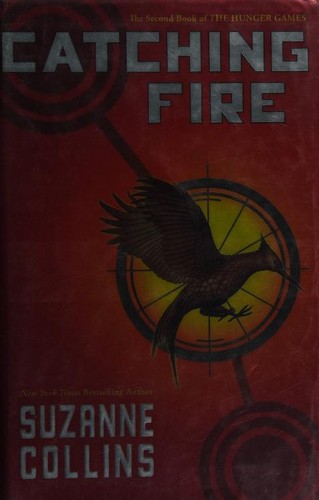
Catching Fire
by Suzanne Collins
★ Top 5 book of 2009 · #2 on Best Books of 2009
Katniss has survived the Hunger Games, yet life at home feels wrong, with friendships strained and whispers of rebellion growing. As a Victory Tour approaches, she must convince the Capitol of her love for Peeta or face terrible consequences.
Best for: Fans of the first Hunger Games book who want rebellion and high stakes
Catching Fire is #2 on BookWard's Best Books of 2009, out of 42 2009 books that cleared our data bar.
What Catching Fire is about
Katniss Everdeen has survived the Hunger Games, but winning has not bought her peace. Half a year later, she and Peeta Mellark are getting ready for the Victory Tour, and President Snow has a message for her: make the country believe her act of defiance was only love for Peeta, or her family and her friend Gale will pay. Meanwhile unrest is spreading through the districts.
Then comes a cruel twist in the rules of the next Games, which draws its players from earlier winners. Katniss finds herself in an arena built like a clock, each danger arriving at its own hour and place, and she has to decide whom she can trust. This is the second book in The Hunger Games series, tense and dark and quick, about fear, control and the cost of standing up to power.
Catching Fire on the Best Books of 2009
Catching Fire came out in 2009. Of the 42 books first published in 2009 that met BookWard's data bar, it ranks #2 on our Best Books of 2009 list.
Why it made the list: 2,260 readers have shelved it on Open Library; readers rate it 4.1 out of 5 (306 ratings); 110 are reading it right now. The list ranks each year’s books on how many readers have picked them up, how highly readers rate them, and how many are reading them right now.
It earns Being read right now.
Nearby on the 2009 list
- The Last Olympian Rick Riordan, #1
- The Maze Runner James Dashner, #3
- The Help Kathryn Stockett, #4
See all Best Books of 2009 Best books by year
More years: Best Books of 2008 Best Books of 2010.
The numbers behind it
- Readers: 1,547 want to read it, 110 are reading it now and 603 have read it, according to Open Library.
- Ratings: 4.1 out of 5 from 306 Open Library ratings.
| Signal | This book (0 to 100) | Weight |
|---|---|---|
| Reach | 98 | 55% |
| Reader love | 86 | 25% |
| Being read right now | 98 | 20% |
Questions about Catching Fire
When was Catching Fire published?
Catching Fire by Suzanne Collins was first published in 2009.
Was Catching Fire one of the best books of 2009?
Catching Fire is #2 on BookWard's Best Books of 2009, out of 42 2009 books that cleared our data bar. 2,260 readers have shelved it on Open Library; readers rate it 4.1 out of 5 (306 ratings); 110 are reading it right now.
Why is Catching Fire on the Best Books of 2009 list?
2,260 readers have shelved it on Open Library; readers rate it 4.1 out of 5 (306 ratings); 110 are reading it right now.
More of the best books of 2009
- The Last Olympian Rick Riordan, #1
- The Maze Runner James Dashner, #3
- The Help Kathryn Stockett, #4
- Dork Diaries Rachel Renée Russell, #5
- I Will Teach You to Be Rich Ramit Sethi, #6
- The 4-Hour Workweek Timothy Ferriss, #7
See the full Best Books of 2009, the Top 100, or new books on Rising.
How we know
This page uses public data: Open Library reader counts and ratings, and Wikipedia page views for recent years. The description is paraphrased from real source text. Rankings reflect reading interest, not quality or sales, and can be affected by data gaps. Lists update monthly.
Suits older teens and adults who are comfortable with a tense dystopian thriller.
Depends on the edition you pick.
A sequel that raises the stakes and widens the story. 56% taste match
 BookWard’s take
A sequel that raises the stakes and widens the story
Catching Fire opens with Katniss already home and already in trouble, so the hook lands fast. President Snow's threat sets the engine running, and the Victory Tour keeps the pressure on without much slack, which is exactly what a sustained middle should do. Collins builds a tight, logical dystopia where each Capitol move has a cost, and Katniss gains real depth as she is pulled between survival and rebellion. The prose stays plain and restrained rather than ornate, and the darkness is tied to the politics instead of thrown in for shock. Where it falters is in the familiar young adult machinery and the cliffhanger ending, which resolves less than I would like. It is also very much a middle volume of a series.
Events move steadily from the Victory Tour onward, close to the quick tempo BookWard favors.
The arena premise is established, so this sequel is inventive in its escalation but less fresh than the first book.
Collins writes in plain, direct sentences that favor momentum over ornament.
Plot drives the book, though Katniss's inner conflict gives it real emotional weight.
Hope exists mainly as a spark of rebellion against a mostly oppressive backdrop.
A conventional linear structure with a clear build toward the arena.
This is a serious, tense book with little room for levity.
Public executions, punishment and the threat of another arena make it quite dark.
Fear, loyalty and grief run high, giving the book real emotional intensity.
See all 50 dialsEvery position, side by side with this book
Where it lines up
- PaceBookWard 8 · book 8
- Character depthBookWard 8 · book 7
- Story or ideasBookWard 3 · book 4
Where it pulls apart
- Familiar tropesBookWard 10 · book 5
- EndingBookWard 8 · book 3
- LengthBookWard 1 · book 4
Katniss is home and already under threat, so the stakes arrive early, matching BookWard's love of a fast start.
It works within familiar young adult dystopia conventions, including a love triangle, which sits below BookWard's high bar.
Snow's threats and the Capitol's responses follow cause and effect closely, which BookWard rewards.
Events move steadily from the Victory Tour onward, close to the quick tempo BookWard favors.
The arena premise is established, so this sequel is inventive in its escalation but less fresh than the first book.
Katniss is shown wrestling with duty, fear and what she has become, which BookWard values.
It stops on a cliffhanger that leaves the story open, falling short of BookWard's taste for resolution.
Emotion is present but mostly kept in check by survival and political pressure.
Its harshest moments serve the oppression theme rather than existing for effect, which BookWard approves.
This is fiction, so the rigor dial does not apply.
Katniss's first-person narration is clear and recognizable, with a distinct guarded edge.
The book is led by story and plot, with its ideas about rebellion carried through events.
Information comes through scenes and consequences more than lectures, in line with BookWard's preference.
The tour, the return home and the build to the Games keep pressure on throughout.
Collins writes in plain, direct sentences that favor momentum over ornament.
Plot drives the book, though Katniss's inner conflict gives it real emotional weight.
Hope exists mainly as a spark of rebellion against a mostly oppressive backdrop.
A conventional linear structure with a clear build toward the arena.
This is a serious, tense book with little room for levity.
The writing is accessible and easy to follow, a little easier than BookWard's usual taste.
Everything is seen through Katniss alone, which is a single viewpoint.
Events unfold in straightforward chronological order.
A speculative future with a built world, though the characters and politics stay human.
A moderately sized cast of tributes, mentors and Capitol figures, none overwhelming.
It moves from personal fears to a nation on the edge of rebellion, so the scale grows large.
Katniss's thoughts matter, but outward action and danger carry most of the story.
Conversations carry key reveals, balanced with action and narration.
The Katniss, Peeta and Gale triangle matters, though it stays secondary to survival and rebellion.
Panem and its districts are an invented setting that feels unfamiliar but lived in.
Set in a future nation, so far from the present day in setting.
Its themes of authoritarianism and rebellion keep it relevant beyond its 2009 release.
Katniss narrates plainly and honestly, though she does not always read others correctly.
The Capitol is clearly oppressive, but Katniss's choices carry real moral complications.
Settings are sketched with enough detail to feel vivid without heavy description.
This is fiction, so the nonfiction style dial does not apply.
This is fiction, so the nonfiction perspective dial does not apply.
It is the second book in a trilogy and leans heavily on what came before.
Reversals and shifting loyalties keep turning the story in new directions.
It asks hard questions about power and complicity but stays gripping and accessible.
Public executions, punishment and the threat of another arena make it quite dark.
Fear, loyalty and grief run high, giving the book real emotional intensity.
Humor is rare and, when it appears, dry rather than broad.
Violence is a constant threat and appears in several harsh scenes, notably the arena.
Sexual content is minimal; romance stays chaste and emotional.
Oppression and rebellion sit at the heart of the plot and shape every major event.
The language is plain and easy to read throughout.
Katniss's narration carries a strong point of view without turning preachy.
The book looks forward as rebellion stirs, though the weight of past events still presses on it.
Rebellion offers some hope, but the world stays harsh and Katniss is wary of easy faith.
Review written by BookWard, dial version 1, November 2026.
Who is Catching Fire right for?
Suits older teens and adults who are comfortable with a tense dystopian thriller. It includes public executions, a whipping, and the threat of children forced to fight, so younger or more sensitive readers may want to wait.
The writing is accessible and easy to follow, a little easier than BookWard's usual taste.
Public executions, punishment and the threat of another arena make it quite dark.
Fear, loyalty and grief run high, giving the book real emotional intensity.
Violence is a constant threat and appears in several harsh scenes, notably the arena.
Book CompanionCatching Fire: ideas, characters, themes
Katniss's survival has turned her into a symbol of defiance, and the Capitol will go to any length to crush the hope she represents.
- Snow's threat. President Snow visits Katniss and demands she convince the country her defiance was really love, or her loved ones will suffer.
- The Victory Tour. Katniss and Peeta travel the districts in a performance that exposes how quickly public gestures turn dangerous.
- A spark in District 11. Katniss's heartfelt speech honoring fallen tributes is answered by a salute and a brutal reprisal.
- Pressure at home. Harsher Peacekeepers move into District 12 and punish even small acts of survival.
- Rumors of District 13. Refugees from a failed uprising hint that a place thought destroyed may still exist.
Characters
Katniss Everdeen
Narrator and protagonist
A Games victor who is now a reluctant symbol of rebellion and is forced to weigh survival against defiance.
Peeta Mellark
Fellow District 12 tribute
Katniss's partner in the public story of romance, whose loyalty and kindness shape her choices.
Gale Hawthorne
Katniss's closest friend
A hunting partner from District 12 who is drawn into the danger around her.
President Snow
Leader of the Capitol
The ruler who confronts Katniss and uses threats to control her.
Haymitch Abernathy
Mentor
A past victor who advises Katniss and steps in when those she loves are in danger.
Themes
How a regime uses fear, spectacle and punishment to control people.
How small acts of defiance can grow into a movement.
What a person will do, and what it costs, to stay alive and protect others.
How public appearances can be manipulated for political ends.
How people can depend on one another rather than standing alone.
Discussion questions
- Why does Snow see Katniss as more dangerous than a typical rebel?
- How does the Victory Tour reveal the limits of Katniss's control over her own image?
- What does Katniss's speech in District 11 show about how small gestures carry political weight?
- How do Katniss's feelings for Peeta and Gale complicate her choices?
- What does the discovery of hope in District 13 suggest about how rebellion spreads?
Personalize your Book Companion
This is the general edition. In BookWard, the Companion is written for you: your reading profile, your notes, and spoiler-safe to the page you are on.
Buy, listen or borrow Catching Fire
Each link opens a search for this book on that store, in a new tab.
Read on a device
Borrow
Reviews and community
If you liked Catching Fire
A fast YA dystopia with a hooked-in-chapter-one premise
InsurgentVeronica RothA fast, factional war story that trades hooks for sequel stakes
Red RisingPierce BrownA fast, brutal sci-fi revenge story that hooks from page one
MockingjaySuzanne CollinsCollins ends The Hunger Games with a darker, angrier war story
Find your own best books
Add what you have read, rate it, and BookWard will recommend what to read next.
Free to start. No credit card needed.