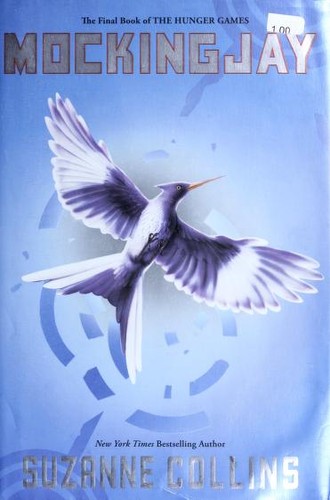
Mockingjay
by Suzanne Collins
★ Top 10 book of 2010 · #9 on Best Books of 2010
Mockingjay by Suzanne Collins is the final book in the Hunger Games series. Published in 2010, it delivers plenty of excitement and action as the ongoing war with the capital drives the story.
Best for: Fans of the Hunger Games who want an action-filled series finale
Mockingjay is #9 on BookWard's Best Books of 2010, out of 43 2010 books that cleared our data bar.
What Mockingjay is about
Mockingjay is the final book of The Hunger Games series, following The Hunger Games and Catching Fire, and it concludes the story of Katniss Everdeen. She now lives underground in District 13, the headquarters of a rebellion against the tyrannical Capitol. Katniss agrees to become the Mockingjay, the symbol that could unify the districts of Panem, but only if President Alma Coin grants immunity to the surviving tributes, including Peeta Mellark.
The cost of that choice is heavy. The Capitol captures Peeta and tortures him, brainwashing him to believe Katniss is evil. Katniss decides to infiltrate the Capitol to kill President Snow, and she begins to doubt Coin's motives. The tone is dark and grim, and the story looks closely at war, propaganda, and political manipulation. It is best read after the first two books, by readers ready for a heavier conclusion.
Mockingjay on the Best Books of 2010
Mockingjay came out in 2010. Of the 43 books first published in 2010 that met BookWard's data bar, it ranks #9 on our Best Books of 2010 list.
Why it made the list: 1,542 readers have shelved it on Open Library; readers rate it 3.8 out of 5 (282 ratings); 61 are reading it right now. The list ranks each year’s books on how many readers have picked them up, how highly readers rate them, and how many are reading them right now.
Nearby on the 2010 list
- The Immortals of Meluha Amish Tripathi, #7
- The Immortal Life of Henrietta Lacks Rebecca Skloot, #8
- The Compound Effect Darren Hardy, #10
- A Long Walk to Water( Linda Sue Park) Linda Sue Park, #11
See all Best Books of 2010 Best books by year
More years: Best Books of 2009 Best Books of 2011.
The numbers behind it
- Readers: 971 want to read it, 61 are reading it now and 510 have read it, according to Open Library.
- Ratings: 3.8 out of 5 from 282 Open Library ratings.
| Signal | This book (0 to 100) | Weight |
|---|---|---|
| Reach | 95 | 55% |
| Reader love | 16 | 25% |
| Being read right now | 88 | 20% |
Questions about Mockingjay
When was Mockingjay published?
Mockingjay by Suzanne Collins was first published in 2010.
Was Mockingjay one of the best books of 2010?
Mockingjay is #9 on BookWard's Best Books of 2010, out of 43 2010 books that cleared our data bar. 1,542 readers have shelved it on Open Library; readers rate it 3.8 out of 5 (282 ratings); 61 are reading it right now.
Why is Mockingjay on the Best Books of 2010 list?
1,542 readers have shelved it on Open Library; readers rate it 3.8 out of 5 (282 ratings); 61 are reading it right now.
More of the best books of 2010
- The Lost Hero Rick Riordan, #1
- The Way of Kings Brandon Sanderson, #2
- Divergent Veronica Roth, #3
- The Personal MBA Josh Kaufman, #4
- It's Not Summer Without You Jenny Han, #5
- The Red Pyramid Rick Riordan, #6
See the full Best Books of 2010, the Top 100, or new books on Rising.
How we know
This page uses public data: Open Library reader counts and ratings, and Wikipedia page views for recent years. The description is paraphrased from real source text. Rankings reflect reading interest, not quality or sales, and can be affected by data gaps. Lists update monthly.
It suits teens and adults who can handle sustained wartime violence.
Depends on the edition you pick.
Collins ends The Hunger Games with a darker, angrier war story. 59% taste match
 BookWard’s take
Collins ends The Hunger Games with a darker, angrier war story
Mockingjay, the 2010 finale of The Hunger Games trilogy, drops Katniss Everdeen into District 13 and the machinery of rebellion. It is the series at its most political and its least comforting. The opening picks up fast, since the trilogy has already earned your attention, and the pace stays brisk through propaganda shoots, air raids and a rescue mission. The characters are the draw: Katniss is reluctant, damaged and hard to love, and Peeta's arc is genuinely unsettling. The book earns trust in how it handles its shocks, because the darkness serves a point about war and manipulation rather than decoration. The outlook is bleak for long stretches, and the moral lines blur as the rebels' methods come under scrutiny. Start with book one, not here.
A mid-length young adult novel that moves briskly; it is not sprawling, though it runs longer than the tightest reads BookWard prefers.
Propaganda shoots, air raids and rescue missions keep events moving at a quick clip, close to BookWard's preference.
The central premise belongs to the series, and this installment's focus on propaganda and war's cost is fresh for YA.
Collins writes in plain, clipped sentences that serve speed, not ornament.
Plot events drive the book, yet Katniss's psychological state shapes nearly every turn.
The book is mostly grim and costly, with only a faint, hard-won light near the end.
The structure is conventional, a linear war narrative told in three parts.
Humor is nearly absent; the tone is serious and often harrowing.
Torture, mass death and psychological abuse make this the series' bleakest entry.
Loss and trauma land with real force, and the book rarely lets up.
See all 50 dialsEvery position, side by side with this book
Where it lines up
- PaceBookWard 8 · book 8
- Character depthBookWard 8 · book 8
- EndingBookWard 8 · book 7
Where it pulls apart
- Familiar tropesBookWard 10 · book 6
- LengthBookWard 1 · book 4
- Internal logicBookWard 10 · book 7
A mid-length young adult novel that moves briskly; it is not sprawling, though it runs longer than the tightest reads BookWard prefers.
It continues a trilogy already in motion, so it grabs quickly for returning readers, though a newcomer would be lost.
Dystopian and rebellion staples are present, but the book subverts the hero's-victory template, which BookWard appreciates.
The rebellion's strategy and the Capitol's tactics mostly hold together, with a few convenient turns along the way.
Propaganda shoots, air raids and rescue missions keep events moving at a quick clip, close to BookWard's preference.
The central premise belongs to the series, and this installment's focus on propaganda and war's cost is fresh for YA.
Katniss is traumatized and prickly, and Peeta's brainwashing recasts the relationships; BookWard likes this psychological weight.
The war's conflicts reach a conclusion and the story closes, though the aftermath is deliberately unsettled.
Grief and loss are handled with sharp edges rather than tearful cushioning, but moments of tenderness do appear.
The brutality is tied to the story's argument about war and propaganda, which fits BookWard's taste for earned darkness.
This is fiction, so the rigor dial does not apply.
Katniss's flat, guarded first-person narration is recognizable, though less singular than the best literary voices.
Ideas about spectacle and war run through the book, but the story itself leads the way.
Most of the world is revealed through events, though some political explanation is delivered in dialogue.
Middle sections dwell on District 13 and recovery, and the momentum dips a little before the assault on the Capitol.
Collins writes in plain, clipped sentences that serve speed, not ornament.
Plot events drive the book, yet Katniss's psychological state shapes nearly every turn.
The book is mostly grim and costly, with only a faint, hard-won light near the end.
The structure is conventional, a linear war narrative told in three parts.
Humor is nearly absent; the tone is serious and often harrowing.
The prose is accessible and the story clear, so it asks little of the reader beyond emotional stamina.
The whole story comes through Katniss alone, which keeps the focus tight but limits perspective.
Events unfold in straightforward chronological order.
The setting is a speculative future society, but it is largely grounded in recognizable politics and technology.
Many returning tributes, rebels and officials crowd the story, more than a casual reader can easily track.
An entire nation's war frames the story, a much larger canvas than the first book's arena.
Battles and missions dominate, but Katniss's inner turmoil is what gives them weight.
Strategy sessions and conflicts play out in conversation, though action and narration carry equal load.
Love triangle tension is present, but it stays secondary to the war and Katniss's recovery.
Panem's districts and the underground base of District 13 are invented settings, strange but easy to grasp.
The story is set in an imagined future, though its media-driven politics feel contemporary.
Themes of war, propaganda and trauma stay relevant, though the trilogy's popularity also ties it to its moment.
Katniss reports honestly, though trauma and manipulation cloud what she can perceive.
Both sides commit atrocities, and the book resists tidy lines between right and wrong.
Collins gives enough detail to orient the reader, but keeps description lean and functional.
This is fiction, so the nonfiction style dial does not apply.
This is fiction, so the nonfiction perspective dial does not apply.
It is the third and final book in The Hunger Games trilogy and depends on what came before.
Betrayals, hijacked loyalties and reversals recur, with several landing hard.
The book offers little comfort, forcing readers to face war's costs and manipulation.
Torture, mass death and psychological abuse make this the series' bleakest entry.
Loss and trauma land with real force, and the book rarely lets up.
Humor is nearly absent, and what exists is bitter and fleeting.
War scenes, bombings and torture are frequent and often graphic for a YA novel.
Sexual content is essentially absent, limited to some mild romantic tension.
Propaganda, revolution and the ethics of war are central, not backdrop.
The language is plain and accessible throughout.
Katniss's narration is guarded and not preachy, though the book's stance on war comes through.
It looks ahead to rebuilding, but spends much of its energy on what the past has cost.
Idealism is tested and largely punished, leaving a sober, wary view of power.
Review written by BookWard, dial version 1, November 2026.
Who is Mockingjay right for?
It suits teens and adults who can handle sustained wartime violence. It includes torture, mass death and heavy psychological trauma, so younger readers may find it intense.
The prose is accessible and the story clear, so it asks little of the reader beyond emotional stamina.
Torture, mass death and psychological abuse make this the series' bleakest entry.
Loss and trauma land with real force, and the book rarely lets up.
War scenes, bombings and torture are frequent and often graphic for a YA novel.
Book CompanionMockingjay: ideas, characters, themes
A reluctant symbol of rebellion discovers that war, even a justified one, treats people as tools.
- Katniss as the Mockingjay. She agrees to become the rebellion's face, but only if the captured tributes are granted immunity.
- Life in District 13. The rebellion's underground headquarters shelters refugees from District 12 and runs on strict order.
- The propaganda war. Staged studio shoots and live broadcasts become weapons as important as any battle.
- Peeta's captivity. The Capitol uses him to demoralize Katniss, and his rescue changes how the two relate.
- War on the front lines. Katniss is sent into the field, where she questions the rebels' methods and their indifference to suffering.
Characters
Katniss Everdeen
Protagonist and narrator
The reluctant face of the rebellion, struggling with trauma and with being used.
Peeta Mellark
Captured tribute
Held by the Capitol and tortured, then rescued in a changed state.
Gale Hawthorne
Katniss's friend and rebel fighter
Resettled in District 13, he joins the war effort alongside Katniss.
President Alma Coin
Leader of District 13
She directs the rebellion and bargains with Katniss over the Mockingjay role.
Haymitch Abernathy
Mentor
Katniss's former mentor, now among the refugees helping steer her through the war.
Themes
How images and broadcasts shape belief and win wars.
The lasting psychological damage of violence on survivors.
Both the Capitol and the rebels use people for their goals.
Even a just cause demands sacrifices that cannot be undone.
Katniss is pushed between the person she is and the symbol she must play.
Discussion questions
- Is Katniss a willing leader or a pawn, and does the difference matter?
- How does the rebellion's use of propaganda compare with the Capitol's?
- What does Peeta's brainwashing say about memory and trust?
- Did the rebels' methods justify their cause?
- Why might Collins have made this finale darker than the earlier books?
Personalize your Book Companion
This is the general edition. In BookWard, the Companion is written for you: your reading profile, your notes, and spoiler-safe to the page you are on.
Buy, listen or borrow Mockingjay
Each link opens a search for this book on that store, in a new tab.
Read on a device
Borrow
Reviews and community
If you liked Mockingjay
A sequel that raises the stakes and widens the story
UnwindNeal ShustermanA chilling dystopian chase built on a monstrous compromise
Red RisingPierce BrownA fast, brutal sci-fi revenge story that hooks from page one
Parable of the SowerOctavia E. ButlerA walled neighborhood burns, and one girl invents a religion
Find your own best books
Add what you have read, rate it, and BookWard will recommend what to read next.
Free to start. No credit card needed.