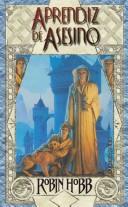
Assassin's Apprentice
by Robin Hobb
★ Top 25 book of 1995 · #11 on Best Books of 1995
Fitz, the unwanted bastard of a prince, grows up at the edges of the royal court. The scheming king secretly trains him as an assassin, and his Skill magic may prove vital as raiders threaten the coast.
Best for: Fantasy readers who enjoy court intrigue and a coming-of-age underdog
Assassin's Apprentice is #11 on BookWard's Best Books of 1995, out of 28 1995 books that cleared our data bar.
What Assassin's Apprentice is about
A six-year-old boy is brought to Moonseye by his maternal grandfather and named as the bastard son of King-in-Waiting Chivalry. Burrich, the royal stableman, takes him in, calls him Fitz and trains him at Buckkeep. Fitz has the Wit, a distrusted magic that lets him speak mind to mind with animals, and Burrich warns him never to use it. King Shrewd takes an interest in the boy, who swears loyalty to him and secretly learns the assassin's trade from Chade Fallstar. Not everyone at court is kind to him, and his uncle Prince Regal treats him with contempt. Meanwhile Red-Ship Raiders strike the coasts of the Six Duchies, turning hostages into emotionless Forged Ones, and Prince Verity fights back with the Skill, a Farseer magic. This is the first book of The Farseer Trilogy, a quiet, melancholic story of belonging and duty for readers who like immersive fantasy.
Assassin's Apprentice on the Best Books of 1995
Assassin's Apprentice came out in 1995. Of the 28 books first published in 1995 that met BookWard's data bar, it ranks #11 on our Best Books of 1995 list.
Why it made the list: 436 readers have shelved it on Open Library; readers rate it 3.9 out of 5 (61 ratings). The list ranks each year’s books on how many readers have picked them up, how highly readers rate them, and how many are reading them right now.
Nearby on the 1995 list
- The Diamond Age Neal Stephenson, #9
- Kiss the Girls James Patterson, #10
- Sabriel Garth Nix, #12
- Poppy Avi, #13
See all Best Books of 1995 Best books by year
More years: Best Books of 1994 Best Books of 1996.
The numbers behind it
- Readers: 321 want to read it, 13 are reading it now and 102 have read it, according to Open Library.
- Ratings: 3.9 out of 5 from 61 Open Library ratings.
| Signal | This book (0 to 100) | Weight |
|---|---|---|
| Reach | 71 | 55% |
| Reader love | 43 | 25% |
| Being read right now | 46 | 20% |
Questions about Assassin's Apprentice
When was Assassin's Apprentice published?
Assassin's Apprentice by Robin Hobb was first published in 1995.
Was Assassin's Apprentice one of the best books of 1995?
Assassin's Apprentice is #11 on BookWard's Best Books of 1995, out of 28 1995 books that cleared our data bar. 436 readers have shelved it on Open Library; readers rate it 3.9 out of 5 (61 ratings).
Why is Assassin's Apprentice on the Best Books of 1995 list?
436 readers have shelved it on Open Library; readers rate it 3.9 out of 5 (61 ratings).
More of the best books of 1995
- The Lost World Michael Crichton, #1
- Emotional Intelligence Daniel Goleman, #2
- Northern Lights Philip Pullman, #3
- Rose Madder Stephen King, #4
- Mindhunter John E. Douglas, #5
- Wicked Gregory Maguire, #6
See the full Best Books of 1995, the Top 100, or new books on Rising.
How we know
This page uses public data: Open Library reader counts and ratings, and Wikipedia page views for recent years. The description is paraphrased from real source text. Rankings reflect reading interest, not quality or sales, and can be affected by data gaps. Lists update monthly.
Suits teens and adults who enjoy fantasy with a slow, character-focused build.
Depends on the edition you pick.
A royal bastard learns the quiet trade of killing. 49% taste match
 BookWard’s take
A royal bastard learns the quiet trade of killing
Assassin's Apprentice is a slow, patient fantasy that puts a lonely boy at the center and trusts you to care. The characters are the draw: Fitz, raised among stable hounds and shunned by most of the court, feels fully drawn. The setup leans on familiar tropes, a hidden royal bastard and a king with plans for him, but the Wit and the Skill and the coldly intimate craft of the assassin keep it fresh enough to hold your interest. The opening builds gently rather than grabbing you at once, so readers who want a fast start may find the early chapters unhurried. The emotion stays mostly restrained, and the book is driven by its story rather than by big ideas. It is the first of a trilogy, with the wider world opened up in later series.
A full-length epic fantasy novel that takes its time, longer than BookWard's tight preference.
It unfolds deliberately across Fitz's childhood and youth, slower than BookWard likes.
The Wit, the Skill and the intimate take on assassin training lift it above stock fantasy.
Clear and readable with some richness, neither plain nor ornate.
What happens flows from who Fitz is and how he is treated.
Fitz is shunned and used, and the tone leans melancholy more than hopeful.
A conventional narrated life story told in order.
Serious throughout, with only small touches of warmth.
It deals with a mistreated child and the training of a killer.
Fitz's isolation and attachments give it a strong emotional pull.
See all 50 dialsEvery position, side by side with this book
Where it lines up
- Character depthBookWard 8 · book 9
- Shock for effectBookWard 9 · book 8
- Authorial voiceBookWard 9 · book 8
Where it pulls apart
- LengthBookWard 1 · book 7
- OpeningBookWard 10 · book 4
- Familiar tropesBookWard 10 · book 5
A full-length epic fantasy novel that takes its time, longer than BookWard's tight preference.
It opens with a six-year-old handed over at an army outpost, an intriguing start but a quiet one.
The royal bastard and secret training are familiar shapes, though handled with fresh specificity.
The Wit, the Skill and court politics follow consistent rules that hold together well.
It unfolds deliberately across Fitz's childhood and youth, slower than BookWard likes.
The Wit, the Skill and the intimate take on assassin training lift it above stock fantasy.
Fitz's loneliness and divided loyalties are drawn with real depth, squarely in BookWard's taste.
The main threat is resolved, though the book clearly points on toward the rest of the trilogy.
Emotion runs high around Fitz's isolation, but it stops short of syrup.
Darkness comes from cruelty and consequence inside the story rather than gratuitous effect.
Fitz's reflective first-person telling gives it a distinct, recognizable voice.
This is firmly story-led, built on one boy's life rather than a thesis.
Court and magic are mostly shown through Fitz's lived experience, with some explaining along the way.
The long growing-up stretch has quiet patches, though tension in the court keeps pulling forward.
Clear and readable with some richness, neither plain nor ornate.
What happens flows from who Fitz is and how he is treated.
Fitz is shunned and used, and the tone leans melancholy more than hopeful.
A conventional narrated life story told in order.
Serious throughout, with only small touches of warmth.
Accessible to follow, though the court intrigue rewards attention.
We stay with Fitz's single perspective throughout.
Events move forward in order from his childhood onward.
Magic is real and central, set in an invented realm of Six Duchies.
A sizable court of royals, servants and townsfolk surrounds Fitz.
It stays close to one boy's life, though the kingdom's fate hangs behind it.
Much of the weight sits in Fitz's thoughts and feelings.
Conversation carries a fair share, balanced with narration.
Romance is a minor thread beside loyalty and survival.
The Six Duchies, Buckkeep and its magic are an unfamiliar invented world.
A secondary-world setting reads as the past rather than the present day.
Classic-style fantasy of this kind tends to hold up well across years.
Fitz tells his own story honestly, with only the limits of his own view.
Duty, loyalty and killing for the crown leave real room for doubt.
The castle, stables and surrounding places are rendered in rich detail.
It opens The Farseer Trilogy and links to further trilogies in the same world.
Court scheming brings turns, though not relentlessly.
Cruelty and loneliness make it more testing than comforting.
It deals with a mistreated child and the training of a killer.
Fitz's isolation and attachments give it a strong emotional pull.
Humor is sparse and understated.
Assassination and danger appear, but not as constant spectacle.
Little sexual content in a story centered on Fitz's youth.
Royal rivalry and the succession drive much of the plot.
Language is readable, with invented names and terms to learn.
Fitz's own reflections color the telling without lecturing.
Rooted in the past, with the shadow of coming raids ahead.
Loyalty is tested in a world that is often harsh to the vulnerable.
Review written by BookWard, dial version 1, November 2026.
Who is Assassin's Apprentice right for?
Suits teens and adults who enjoy fantasy with a slow, character-focused build. It touches on a mistreated child, loneliness and the training of a killer, so sensitive younger readers may want to wait.
Accessible to follow, though the court intrigue rewards attention.
It deals with a mistreated child and the training of a killer.
Fitz's isolation and attachments give it a strong emotional pull.
Assassination and danger appear, but not as constant spectacle.
Book CompanionAssassin's Apprentice: ideas, characters, themes
A royal bastard raised in the stables is quietly trained as an assassin to serve the crown that barely acknowledges him.
- A boy without a name. Fitz arrives at Buckkeep as a child who does not even know his own name, taken in by the stableman Burrich.
- The Wit. Fitz can bond with animals through an ancient magic widely distrusted, and Burrich warns him to hide it.
- A lonely childhood. Fitz is treated poorly for being a bastard and finds friendship with a dog and with children from the town.
- The king's interest. King Shrewd sees a bastard as either a threat or an asset and draws Fitz into service.
- The wider world. This is the first of The Farseer Trilogy, with later series set in the same world.
Characters
FitzChivalry
Narrator and protagonist
A royal bastard raised in Buckkeep, trained for secret work.
Burrich
Stableman and guardian
Chivalry's right-hand man, who raises Fitz and warns him against the Wit.
King Shrewd
The king
Sees how Fitz might serve the royal line and brings him into its service.
Prince Regal
Fitz's uncle
Despises Fitz and treats him badly.
Molly
Friend from the town
A girl from Buckkeep town who becomes one of Fitz's few companions.
Themes
What it costs to grow up unwanted by the family you share blood with.
Fitz's duty to the crown set against his own needs.
The suspicion aimed at the Wit and at a bastard child.
The moral weight of being trained to kill for the throne.
How rivalry among royals shapes everyone beneath them.
Discussion questions
- Why does Burrich react as he does to Fitz's bond with Nosy?
- What makes King Shrewd see Fitz as an asset rather than a threat?
- How does Fitz's loneliness shape his choices?
- Is serving a crown that barely acknowledges you loyalty or exploitation?
- How does the slow build affect the story, and does it work for you?
Personalize your Book Companion
This is the general edition. In BookWard, the Companion is written for you: your reading profile, your notes, and spoiler-safe to the page you are on.
Buy, listen or borrow Assassin's Apprentice
Each link opens a search for this book on that store, in a new tab.
Read on a device
Borrow
Reviews and community
If you liked Assassin's Apprentice
Merlin's boyhood told with historical weight and quiet magic
Gathering BlueLois LowryA quiet dystopia where art and truth collide
The Cruel PrinceHolly BlackA sharp, scheming faerie court story with a mortal girl at its center
Siege and StormLeigh BardugoAlina's hidden power meets a bigger, hungrier world in book two
Find your own best books
Add what you have read, rate it, and BookWard will recommend what to read next.
Free to start. No credit card needed.