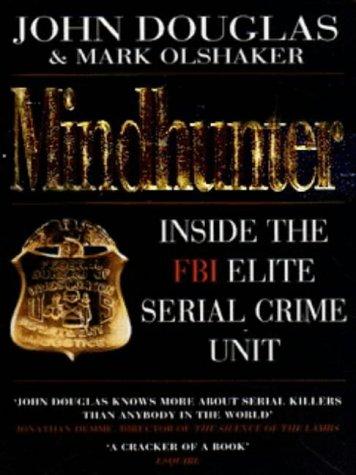
Mindhunter
by John E. Douglas
★ Top 5 book of 1995 · #5 on Best Books of 1995
A veteran FBI agent recounts twenty-five years spent profiling serial killers, from famous interviews to cases that tested him to his limits. He explains how he imagined himself in both killer and victim to anticipate what came next.
Best for: True crime readers fascinated by psychological profiling and the minds of killers
Mindhunter is #5 on BookWard's Best Books of 1995, out of 28 1995 books that cleared our data bar.
What Mindhunter is about
John E. Douglas spent twenty-five years in the FBI's Investigative Support Unit, and this memoir recounts that career. His method was to study the minds of violent offenders and build psychological profiles that could help investigators narrow a search. To do it, he sat down with some of the most notorious killers and assassins, among them Charles Manson, Ted Bundy, and Ed Gein.
He also walks through cases he worked, including a man who hunted prostitutes in the Alaska woods, the Atlanta child murders, and the Green River killer, a pursuit that nearly cost him his life. Douglas was the inspiration for Jack Crawford in The Silence of the Lambs, and the book later became the basis for a Netflix series. Readers of true crime who want the view from inside the work will find it here.
Mindhunter on the Best Books of 1995
Mindhunter came out in 1995. Of the 28 books first published in 1995 that met BookWard's data bar, it ranks #5 on our Best Books of 1995 list.
Why it made the list: 562 readers have shelved it on Open Library; readers rate it 4.1 out of 5 (19 ratings); 41 are reading it right now. The list ranks each year’s books on how many readers have picked them up, how highly readers rate them, and how many are reading them right now.
It earns Being read right now.
Nearby on the 1995 list
- Northern Lights Philip Pullman, #3
- Rose Madder Stephen King, #4
- Wicked Gregory Maguire, #6
- The Demon-Haunted World Carl Sagan, #7
See all Best Books of 1995 Best books by year
More years: Best Books of 1994 Best Books of 1996.
The numbers behind it
- Readers: 489 want to read it, 41 are reading it now and 32 have read it, according to Open Library.
- Ratings: 4.1 out of 5 from 19 Open Library ratings.
| Signal | This book (0 to 100) | Weight |
|---|---|---|
| Reach | 86 | 55% |
| Reader love | 75 | 25% |
| Being read right now | 93 | 20% |
Questions about Mindhunter
When was Mindhunter published?
Mindhunter by John E. Douglas was first published in 1995.
Was Mindhunter one of the best books of 1995?
Mindhunter is #5 on BookWard's Best Books of 1995, out of 28 1995 books that cleared our data bar. 562 readers have shelved it on Open Library; readers rate it 4.1 out of 5 (19 ratings); 41 are reading it right now.
Why is Mindhunter on the Best Books of 1995 list?
562 readers have shelved it on Open Library; readers rate it 4.1 out of 5 (19 ratings); 41 are reading it right now.
More of the best books of 1995
- The Lost World Michael Crichton, #1
- Emotional Intelligence Daniel Goleman, #2
- Northern Lights Philip Pullman, #3
- Rose Madder Stephen King, #4
- Wicked Gregory Maguire, #6
- The Demon-Haunted World Carl Sagan, #7
See the full Best Books of 1995, the Top 100, or new books on Rising.
How we know
This page uses public data: Open Library reader counts and ratings, and Wikipedia page views for recent years. The description is paraphrased from real source text. Rankings reflect reading interest, not quality or sales, and can be affected by data gaps. Lists update monthly.
Best suited to mature teens and adults interested in true crime and psychology.
Depends on the edition you pick.
A profiler's firsthand tour through the minds of killers. 54% taste match
 BookWard’s take
A profiler's firsthand tour through the minds of killers
John Douglas spent twenty-five years in the FBI's Investigative Support Unit, and this is his own account of it, told through the cases that defined his career. The memoir gets its force from direct access: he interviewed and studied killers, and he walks you through how he read a crime scene to build a profile. The voice is distinctive, confident and blunt, with Douglas firmly at the center. The subject grabs you from the first pages. It is a practitioner's account rather than a controlled study, so it leans anecdotal, and the book is candid about the human cost to the man doing the work. Expect it to be dark, because the cases are described in chilling detail. It is more story-led than idea-led, and its pull comes from watching a method form in real time.
A career memoir covering twenty-five years of cases runs long, which sits well away from BookWard's taste for tight books.
Case follows case with momentum, though the retelling of procedure can slow it in places.
Few books at the time took readers inside the profiling work, though later imitators have made the ground familiar.
The writing is plain and direct, built for clarity rather than ornament.
Cases supply the forward motion, balanced by Douglas's own presence as the guiding personality.
The subject is human cruelty and the toll of confronting it, with little consolation offered.
It follows a conventional case-by-case memoir structure.
The material is grave, with little room for humor.
Gruesome crimes and disturbing killers are the subject from start to finish.
The weight of the cases and personal cost give the book real feeling without melodrama.
See all 50 dialsEvery position, side by side with this book
Where it lines up
- Authorial voiceBookWard 9 · book 9
- OpeningBookWard 10 · book 9
- PaceBookWard 8 · book 7
Where it pulls apart
- LengthBookWard 1 · book 6
- Familiar tropesBookWard 10 · book 6
- Rigor (nonfiction)BookWard 9 · book 4
A career memoir covering twenty-five years of cases runs long, which sits well away from BookWard's taste for tight books.
The premise of a lawman studying notorious killers pulls you in immediately, matching BookWard's love of a fast start.
True-crime and procedural conventions shape the telling, though the profiling method itself feels fresh, a mixed fit for BookWard.
Douglas reasons from crime scene to offender in clear steps, which suits BookWard's preference for airtight thinking.
Case follows case with momentum, though the retelling of procedure can slow it in places.
Few books at the time took readers inside the profiling work, though later imitators have made the ground familiar.
Douglas and the killers he studies are sketched vividly, but many figures appear briefly, so depth is uneven.
A career account closes on reflection and cost rather than a single neat resolution.
The tone is tough and professional with only occasional emotion, which BookWard tends to like.
The grim details serve the work of understanding offenders, though some readers may feel the lurid pull.
This is a practitioner's firsthand account rather than controlled research, so evidence is largely anecdotal.
Douglas writes in a blunt, confident, unmistakable first-person voice, a strong match for BookWard.
Cases drive the narrative, with the ideas about profiling emerging through the stories rather than leading them.
Douglas often explains his reasoning and method outright, which is clear but more telling than BookWard prefers.
Episodes keep the energy up across the book, with only the occasional procedural stretch.
The writing is plain and direct, built for clarity rather than ornament.
Cases supply the forward motion, balanced by Douglas's own presence as the guiding personality.
The subject is human cruelty and the toll of confronting it, with little consolation offered.
It follows a conventional case-by-case memoir structure.
The material is grave, with little room for humor.
The prose is accessible, though the disturbing content takes some stamina.
Douglas narrates throughout, with offenders and victims seen through his reconstruction.
The account moves along his career in broad order, with some case-driven jumps.
Everything is real-world crime and investigation.
Many victims, suspects, colleagues and killers move through the cases.
The focus stays on individual cases and one man's work, though they span a long career.
Douglas's psychological reading of offenders is balanced against the physical work of investigation.
Interview exchanges appear regularly but do not dominate the book.
Romance is not part of this story.
The Behavioral Science world of the FBI and its killers will be unfamiliar to most readers.
The cases come from earlier decades, though the publication carries a mid-nineties date.
The profiling method and its human questions keep the book relevant beyond its moment.
Douglas speaks as a direct, self-assured witness, so reliability is not the question the book raises.
The darkest figures are plainly condemned, though the book engages the gray areas of understanding them.
Crime scenes and offenders are rendered in strong, detailed images.
Storytelling drives the book more than analysis does, with lessons embedded in the cases.
Douglas puts himself and his career at the center throughout.
This is a self-contained memoir that happens to anchor a wider franchise.
Cases carry some reveals, but the book leans on revelation of method over plot twists.
The subject matter pushes readers into uncomfortable psychological territory.
Gruesome crimes and disturbing killers are the subject from start to finish.
The weight of the cases and personal cost give the book real feeling without melodrama.
Any humor is rare and dry.
Violent crimes are described in chilling detail throughout.
Sexual violence appears in some offender profiles, handled in clinical terms.
The book touches law enforcement institutions and bureaucracy but is not political in focus.
The language is plain and easy to follow.
Douglas states his views and judgments openly and often.
The book looks back on a completed career and a developing method.
The outlook is hard-eyed and realistic, tempered by his commitment to catching offenders.
Review written by BookWard, dial version 1, November 2026.
Who is Mindhunter right for?
Best suited to mature teens and adults interested in true crime and psychology. It contains graphic descriptions of murder, sexual violence and disturbing offender behavior.
The prose is accessible, though the disturbing content takes some stamina.
Gruesome crimes and disturbing killers are the subject from start to finish.
The weight of the cases and personal cost give the book real feeling without melodrama.
Violent crimes are described in chilling detail throughout.
Book CompanionMindhunter: ideas, characters, themes
Studying how violent offenders think can help investigators understand and anticipate their behavior.
- A career told through cases. Douglas organizes his twenty-five years in the FBI's Investigative Support Unit around the investigations that defined them.
- Entering the killer's mind. He describes reliving both offender's and victim's actions at a crime scene to build a profile.
- Learning from offenders. The book draws on his interviews with and study of notorious killers.
- High-profile investigations. It covers some of the most notorious serial cases of its era, including a Seattle case that nearly cost him his life.
- The personal cost. Immersion in the worst of human behavior takes a toll on the man doing it.
Characters
John E. Douglas
Author and FBI agent
A legendary figure in the Investigative Support Unit, who tells the story in his own voice.
Charles Manson
Interview subject
One of the notorious criminals Douglas confronted and studied.
Ted Bundy
Interview subject
Another infamous offender among those Douglas interviewed.
Ed Gein
Interview subject
A killer Douglas studied, known for dressing himself in his victims' peeled skin.
Themes
The effort to explain how violent offenders think without excusing them.
Douglas's method of imagining both killer and victim to read a crime.
What constant exposure to violence does to an investigator.
How trained pattern recognition meets human intuition in profiling.
Discussion questions
- Does understanding a killer's mind make it easier or harder to condemn him?
- How much weight should we give a profile built from one investigator's experience?
- What does Douglas's willingness to imagine the victim reveal about his method?
- How does the book handle the line between insight and sensationalism?
- What toll does this kind of work take, and who should bear it?
Personalize your Book Companion
This is the general edition. In BookWard, the Companion is written for you: your reading profile, your notes, and spoiler-safe to the page you are on.
Buy, listen or borrow Mindhunter
Each link opens a search for this book on that store, in a new tab.
Read on a device
Borrow
Reviews and community
If you liked Mindhunter
Four King novellas, one for each season, with horror held back
The Innocent ManJohn GrishamGrisham's true-crime exposé of a small-town wrongful conviction in Oklahoma
The Kite RunnerKhaled HosseiniA boy's betrayal in Kabul, and the long road back
Into Thin AirJon KrakauerA first-person Everest disaster account that grips from page one
Find your own best books
Add what you have read, rate it, and BookWard will recommend what to read next.
Free to start. No credit card needed.