Updated November 2, 2026 · reading data through October 2026
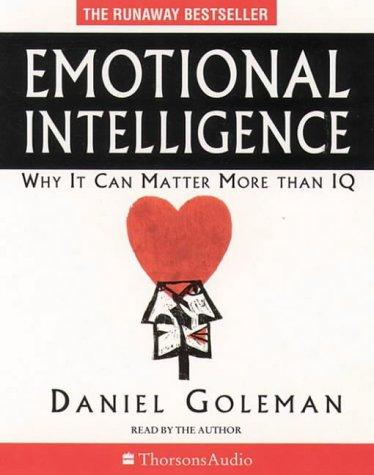
Emotional Intelligence
by Daniel Goleman
★ Top 5 book of 1995 · #2 on Best Books of 1995
A science journalist explains why emotional skills such as empathy and self-control can matter as much as IQ. A landmark in popular psychology. Read the full description
Best for: Managers, parents, and teachers
Emotional Intelligence is #76 on BookWard's Top 100 books for November 2026, with a BookWard Score of 54 out of 100. It climbed 16 places from #92 last month.
BookWard review of Emotional Intelligence
4 of 5 stars 3.9 out of 5, from 70 reader ratings
BookWard rates Emotional Intelligence 3.9 out of 5. That is the average of 70 reader ratings on Open Library (3.94), adjusted toward the typical book so that a small number of ratings cannot inflate it. Beyond the rating, it is #76 on BookWard's Top 100 books; 2,493 readers want to read it, 212 are reading it right now and 108 have finished it.
How this rating works
BookWard’s rating is calculated, not hand-scored. We take the average rating readers have given the book on Open Library and adjust it toward the typical book: adjusted = (n × average + 25 × 3.8) ÷ (n + 25), where n is the number of ratings. A book needs at least 50 ratings to be rated. The rating reflects how readers received the book, not whether it is right for you. Your own ratings on your shelf are private and are not part of this number.
Emotional Intelligence: reading interest over the past 12 months
Sources: Open Library’s public reading-log and ratings data (dump of 2026-10-31), Wikipedia page views and Wikidata. Monthly counts are exact; they show relative interest among readers of these public sources, not total readership.
Ranked against the other books on this list, Emotional Intelligence’s reading interest has run from #58 to #95 over these 12 months. Interest rank blends shelf adds, Wikipedia page views and rating activity, each compared with the other 99 books that month.
Shelf adds by month
Emotional Intelligence was added to Open Library readers’ shelves 543 times in the past 12 months, peaking in October 2026 with 106 (134% above its monthly average of 45). Over the latest three months (Aug 2026 to Oct 2026) shelf adds were up 86% on the three months before. 89% of the adds were “want to read”, 8% “currently reading” and 3% “already read”.
Want to read Currently reading Already read
Wikipedia page views
Its Wikipedia article was viewed 43,320 times in the past 12 months, peaking in November 2025 with 4,487 views. The latest three months were up 8% on the three before.
Source: Wikimedia monthly page views for the article Emotional Intelligence.
What the data says about Emotional Intelligence
- Moderate swings. Monthly shelf adds averaged 45 with some ups and downs.
- Busiest and quietest months. October 2026 was its busiest month (106 adds), about 3.8 times its quietest, June 2026 (28).
- Attention and shelf adds move independently. Its Wikipedia views and its shelf adds did not rise and fall together over these 12 months (correlation -0.05).
- Against its genre. It had 37% fewer shelf adds than the average Psychology book on this list.
- Share of the list. It accounts for 0.5% of all shelf adds recorded for the Top 100 over these 12 months, #69 of 100.
- Its age. First published in 1995 (31 years ago), it is older than 67% of the books on the list.
Each finding is computed from the public data above and shown only when the numbers support it.
Emotional Intelligence on the Top 100: rank history
| Month | Rank | Score |
|---|---|---|
| November 2026 | #76 | 54 |
| October 2026 | #92 | 49 |
| September 2026 | #88 | 51 |
Is Emotional Intelligence rising or falling?
Cooling It ranks lower this week than over the past year, so interest is softening from its recent level.
On Open Library, Emotional Intelligence ranks #78 this week, #78 this month, and #90 over the past year. A longer bar means a higher position. Comparing the three windows shows whether readers are arriving faster than the book's long-term pace. Readings as of 2026-11-02.
Why Emotional Intelligence made the Top 100
Emotional Intelligence made the list mainly on momentum (+24.8 points) and being read right now (+15.6 points). Its smallest contribution is rising (+0.4). The BookWard Score blends five public signals, each scored from 0 to 100 and weighted as shown.
The reading-now, rating and rank signals come from Open Library’s public data, not from BookWard’s own readers. The score measures reading interest, not quality or sales. How the score works.
Open Library reader stats for Emotional Intelligence
Source: Open Library public reading logs, as of 2026-11-02. BookWard’s own monthly snapshots are added to the picture, and anonymous BookWard reader data will be layered in as the community grows.
More readers have Emotional Intelligence open right now than 31% of the other books on this list. These counts come from one public source, so they show relative interest rather than total readership.
Where it sits among Psychology books
It is #4 of the 7 Psychology books on this month’s list.
About Emotional Intelligence
What it’s about
Why doesn't the smartest student in the class always become the most successful? Daniel Goleman argues that raw intelligence is only part of the answer. In his view, emotional intelligence matters as much as IQ for doing well at school, at work, and in relationships. It means being aware of your own feelings, understanding other people's, handling pressure and frustration, working well in a team, and approaching others with empathy.
Crucially, he says these abilities are skills that can be taught and cultivated, not fixed traits, and he outlines how schools could build emotional training into their curriculum. He also shows how a lack of these skills can undermine intellect or even ruin a career. Parents, teachers, managers, and anyone wanting to understand their own reactions better will find it useful.
At a glance
- First published
- 1995-01-01
- Genre
- Psychology
- Also described as
- non-fiction
- Length
- about 376 pages (the median across its editions)
- Original language
- English
- Languages
- editions in 5 languages listed on Open Library
- Editions
- 40 on Open Library
From Open Library and Wikidata public records. Missing rows mean the records do not list that fact.
Themes
- Self-awareness
- Empathy
- Emotional skills
What reading it is like
Research-driven and broad.
At about 376 pages it is a longer read: roughly 8 hours at an average reading pace (about 250 words a minute, 300 words a page). Audiobook and edition lengths vary.
Good to know
Helped popularize the term emotional intelligence. Some of its claims have been questioned.
The premise
Daniel Goleman argues that emotional skills such as self-awareness, empathy, and self-control matter as much as IQ, and shows how to build them.
What you’ll get
- A landmark in popular psychology
- Research and real stories
- Ideas for work and parenting
You might skip it if you want a short, modern take.
Pairs well with: Influence
Keep exploring the chart
Also on the chart at #75 and #77
Emotional Intelligence on the Best Books of 1995
Emotional Intelligence came out in 1995. Of the 28 books first published in 1995 that met BookWard's data bar, it ranks #2 on our Best Books of 1995 list.
Why it made the list: 2,811 readers have shelved it on Open Library; readers rate it 3.9 out of 5 (70 ratings); 212 are reading it right now. The list ranks each year’s books on how many readers have picked them up, how highly readers rate them, and how many are reading them right now.
It earns Being read right now.
Nearby on the 1995 list
- The Lost World Michael Crichton, #1
- Northern Lights Philip Pullman, #3
- Rose Madder Stephen King, #4
See all Best Books of 1995 Best books by year
More years: Best Books of 1994 Best Books of 1996.
Questions about Emotional Intelligence
What rank is Emotional Intelligence on the Top 100 books?
Emotional Intelligence is #76 on BookWard's Top 100 books for November 2026, with a BookWard Score of 54 out of 100. It climbed 16 places from #92 last month.
Is Emotional Intelligence rising or falling?
Cooling. It ranks lower this week than over the past year, so interest is softening from its recent level. On Open Library, Emotional Intelligence ranks #78 this week, #78 this month, and #90 over the past year.
Why is Emotional Intelligence on the Top 100?
Emotional Intelligence made the list mainly on momentum (+24.8 points) and being read right now (+15.6 points). Its smallest contribution is rising (+0.4).
How many people are reading Emotional Intelligence right now?
Open Library's reading logs show 212 readers currently reading Emotional Intelligence, 2,493 who want to read it and 108 who have logged it as read (as of 2026-11-02). These are counts from one public source, not all readers.
How much interest has Emotional Intelligence had over the past year?
543 Open Library shelf adds in the past 12 months (peak October 2026, 106); latest three months up 86% on the prior three; 43,320 Wikipedia views in the past 12 months (up 8% over the latest three months). Figures come from Open Library and Wikipedia public data.
Who is Emotional Intelligence best for?
Managers, parents, and teachers.
Ask a question about Emotional Intelligence
Ask about this book's chart history, reading interest, or who it is for. Answers come from this page's data and can be wrong.
Answers are AI-written from BookWard’s own help content and can be wrong. Please do not share personal information: questions and answers may be saved and, if they are useful, shown on this site without your name.
How we know
This page is built from public data: Open Library’s dated reading-log and ratings dumps, Wikipedia page views, Wikidata, and BookWard’s own monthly Top 100 snapshots. The interest rank blends shelf adds (45%), Wikipedia page views (30%), rating activity (10%) and, for months where a snapshot exists, BookWard’s own score (15%), each as a percentile among the Top 100 books. Every month shown is real data; nothing is estimated. Rankings reflect reading interest, not quality or sales, and can be affected by data gaps. Last updated November 2026. Read the full methodology.
Suited to adults and older teenagers interested in psychology, work and relationships, and readable without a science background.
376 pages, about 6 to 9 hours.
Goleman's case that emotional skill can outweigh IQ, and can be taught. 38% taste match
 BookWard’s take
Goleman's case that emotional skill can outweigh IQ, and can be taught
Daniel Goleman's 1995 bestseller argues that emotional intelligence matters as much as IQ for success in school, work and relationships, and that it is a skill anyone can build. That makes it strongly idea-led rather than story-led, which is the opposite of BookWard's lean toward story. On exposition it explains its points outright, where BookWard prefers things shown in scene. On originality it was a fresh framing in its day, though its ideas have since spread so widely that they now read as familiar. On rigor, it leans on research but also on anecdote and popular summary, so it sits a notch below BookWard's high bar. At 376 pages it is far from tight. Read it for the argument and its lasting influence, not for pace.
At 376 pages it runs long for a popular psychology title, well away from BookWard's preference for tight and short.
This is a considered, explanatory read that moves at the speed of an argument, slower than BookWard's brisk preference.
The idea that emotional skill rivals IQ was a notable reframing in 1995, though it has since become widely absorbed.
The language is plain and functional, built to explain rather than to decorate, which suits BookWard's lean toward the less ornate.
With no plot or characters in the novelistic sense, this is neither plot-led nor character-led, so it sits near the middle.
Its central message that emotional skills can be learned and improved is optimistic, leaning hopeful where BookWard also does.
It follows a conventional nonfiction arc of premise, evidence and application, a little more traditional than BookWard's middle ground.
It is a serious, earnest treatment of its subject with little humor, a good bit gloomier in tone than BookWard likes.
The subject is human feeling and skill, treated in a mostly gentle register that is lighter than BookWard's midpoint.
It is about emotion but delivered analytically, so it informs more than it moves, sitting below BookWard's intensity.
See all 50 dialsEvery position, side by side with this book
Where it lines up
- Shock for effectBookWard 9 · book 9
- SentimentBookWard 8 · book 6
- OriginalityBookWard 9 · book 6
Where it pulls apart
- LengthBookWard 1 · book 6
- Familiar tropesBookWard 10 · book 5
- ExpositionBookWard 2 · book 9
At 376 pages it runs long for a popular psychology title, well away from BookWard's preference for tight and short.
Its core claims have since become staple self-improvement wisdom, so it now sits in familiar territory, not the fresh ground BookWard favors.
The argument builds step by step from a clear premise, though popular framing leaves some links looser than BookWard likes.
This is a considered, explanatory read that moves at the speed of an argument, slower than BookWard's brisk preference.
The idea that emotional skill rivals IQ was a notable reframing in 1995, though it has since become widely absorbed.
As nonfiction it has no characters to draw deeply, so it falls well short of BookWard's appetite for rich people on the page.
It argues warmly for feeling and empathy while staying mostly practical, a middle path on BookWard's restraint dial.
It makes its case without shock tactics, which sits comfortably with BookWard's liking for books that earn their weight.
It draws on research and sustained argument but also leans on illustrative stories, a good deal looser than BookWard's high bar.
Goleman writes in a clear, accessible, professional register that serves the ideas rather than standing out as a distinct voice.
This is firmly an argument about ideas, not a story, so it sits far from BookWard's story-led lean.
Concepts are explained outright rather than dramatized, the reverse of BookWard's preference for showing things in scene.
A single thesis stretched across a long book can thin in places, though the structure keeps it moving overall.
The language is plain and functional, built to explain rather than to decorate, which suits BookWard's lean toward the less ornate.
With no plot or characters in the novelistic sense, this is neither plot-led nor character-led, so it sits near the middle.
Its central message that emotional skills can be learned and improved is optimistic, leaning hopeful where BookWard also does.
It follows a conventional nonfiction arc of premise, evidence and application, a little more traditional than BookWard's middle ground.
It is a serious, earnest treatment of its subject with little humor, a good bit gloomier in tone than BookWard likes.
Accessible to a general reader and not technical, it is easier going than BookWard's slightly demanding tilt.
One authorial perspective carries the whole argument, so it is narrower than BookWard's taste for many viewpoints.
The argument unfolds in a straightforward order rather than shifting through time, a more linear path than BookWard favors.
It deals entirely with real human psychology and everyday life, firmly grounded as BookWard's middle setting rarely is.
There is no real cast, only the author and examples he cites, so it sits at the small end of BookWard's range.
It looks at the individual, the classroom and the workplace, which keeps it fairly intimate rather than epic.
Its focus is on inner emotional life and self-awareness, leaning strongly inward compared with BookWard's midpoint.
As an expository work it contains little conversation, far lighter than BookWard's liking for dialogue-rich books.
Romance is not a subject here; relationships appear only as part of the wider argument about emotional skill.
It describes ordinary, recognizable settings like homes, schools and offices, so it feels familiar rather than unfamiliar.
Published in 1995, it reads as a slightly earlier-era work rather than a present-day one, short of BookWard's contemporary lean.
Its core idea has endured and shaped later thinking, though some research and examples reflect their moment.
The author speaks directly and plainly as himself, a reliable guide with nothing unreliable about the telling.
It takes a clear position on the value of emotional skill, so it is far less ambiguous than BookWard's leaning.
It explains concepts more than it paints scenes, so descriptive richness is modest and below BookWard's midpoint.
It mixes anecdote with analysis but leans toward narrative-style explanation, a touch more storytelling than BookWard's midpoint.
Goleman writes as a science-trained guide who largely keeps himself out of it, a bit more personal than detached.
This is a standalone work that can be read on its own, matching BookWard's lean toward self-contained books.
As an argument it builds toward conclusions rather than surprises, so it offers few twists compared with BookWard's taste.
It encourages gentle self-reflection and change without being confrontational, somewhat more comforting than challenging.
The subject is human feeling and skill, treated in a mostly gentle register that is lighter than BookWard's midpoint.
It is about emotion but delivered analytically, so it informs more than it moves, sitting below BookWard's intensity.
Humor is largely absent, and what little there is stays dry, short of BookWard's middle position.
Violence is not a focus, appearing only in passing as part of discussing what happens when emotional control fails.
Sexual content is essentially absent, a subject outside the book's concerns.
It touches on education and society but is not a political book, so politics stays in the background.
The language is plain and accessible throughout, well below BookWard's tolerance for dense or dialect-heavy writing.
Goleman argues a clear case and takes sides, so the narration is opinionated, in line with BookWard's lean.
It looks ahead to teaching emotional skills in schools and improving futures, leaning forward more than BookWard's midpoint.
It believes people and schools can grow better through emotional training, an idealistic outlook that matches BookWard's lean.
Review written by BookWard, dial version 1, November 2026.
Who is Emotional Intelligence right for?
Suited to adults and older teenagers interested in psychology, work and relationships, and readable without a science background. It deals with emotional difficulty and its consequences in general terms and contains no graphic content.
Accessible to a general reader and not technical, it is easier going than BookWard's slightly demanding tilt.
The subject is human feeling and skill, treated in a mostly gentle register that is lighter than BookWard's midpoint.
It is about emotion but delivered analytically, so it informs more than it moves, sitting below BookWard's intensity.
Violence is not a focus, appearing only in passing as part of discussing what happens when emotional control fails.
Book CompanionEmotional Intelligence: ideas, characters, themes
Goleman argues that emotional intelligence is as important as IQ for success in academic, professional and social life, and that it is a skill that can be taught and cultivated.
- Emotional skill rivals IQ. The book posits that emotional intelligence matters as much as IQ for success across school, work and relationships.
- It can be learned. Goleman holds that emotional intelligence is a skill that can be taught and cultivated, not a fixed trait.
- Beyond intellect alone. It asks why the smartest person does not always become the most successful, pointing to emotional capacities as part of the answer.
- Self and others. Emotional intelligence includes awareness of your own emotions and understanding of other people's feelings.
- Schools can teach it. The book outlines methods for building emotional skills training into school curricula.
Themes
Recognizing and understanding your own feelings as they happen.
Understanding and responding to the feelings of other people.
The idea that intellect alone does not determine how well a life goes.
The view that emotional abilities can be taught and strengthened.
Bringing emotional skills training into schools.
Discussion questions
- Why might someone with a high IQ struggle where someone else thrives?
- How much can emotional skills really be taught, and at what age?
- Which emotional skill described here would most change your daily life?
- What would emotional skills training look like in a school you know?
- How have the book's ideas shaped how people talk about intelligence since 1995?
Personalize your Book Companion
This is the general edition. In BookWard, the Companion is written for you: your reading profile, your notes, and spoiler-safe to the page you are on.
Buy, listen or borrow Emotional Intelligence
Each link opens a search for this book on that store, in a new tab.
Read on a device
Borrow
Reviews and community
If you liked Emotional Intelligence
One big idea, two mindsets, applied to work, love and parenting
The 7 Habits of Highly Effective PeopleStephen R. CoveySeven habits, laid out plainly, with ideas ahead of story
DriveDaniel H. PinkA lively case that autonomy, mastery and purpose beat carrots and sticks
Slow ProductivityCal NewportA calm, idea-led case against busyness as proof of work
Track Emotional Intelligence and find your next favorite
Add it to your shelf, rate what you have read, and BookWard will recommend what fits you.
Free to start. No credit card needed.