Updated November 2, 2026 · reading data through October 2026
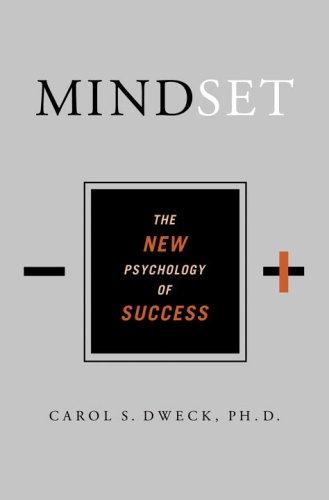
Mindset
by Carol S. Dweck
★ Top 10 book of 2006 · #6 on Best Books of 2006
A Stanford psychologist explains the difference between a fixed and a growth mindset and how it affects learning and success. Widely used in schools and workplaces. Read the full description
Best for: Teachers, parents, and managers
Mindset is #84 on BookWard's Top 100 books for November 2026, with a BookWard Score of 49 out of 100. It is new on the chart this month.
BookWard review of Mindset
4 of 5 stars 3.8 out of 5, from 62 reader ratings
BookWard rates Mindset 3.8 out of 5. That is the average of 62 reader ratings on Open Library (3.77), adjusted toward the typical book so that a small number of ratings cannot inflate it. Beyond the rating, it is #84 on BookWard's Top 100 books; 2,377 readers want to read it, 195 are reading it right now and 108 have finished it.
How this rating works
BookWard’s rating is calculated, not hand-scored. We take the average rating readers have given the book on Open Library and adjust it toward the typical book: adjusted = (n × average + 25 × 3.8) ÷ (n + 25), where n is the number of ratings. A book needs at least 50 ratings to be rated. The rating reflects how readers received the book, not whether it is right for you. Your own ratings on your shelf are private and are not part of this number.
Mindset: reading interest over the past 12 months
Sources: Open Library’s public reading-log and ratings data (dump of 2026-10-31), Wikipedia page views and Wikidata. Monthly counts are exact; they show relative interest among readers of these public sources, not total readership.
Ranked against the other books on this list, Mindset’s reading interest has run from #42 to #82 over these 12 months. Interest rank blends shelf adds, Wikipedia page views and rating activity, each compared with the other 99 books that month.
Shelf adds by month
Mindset was added to Open Library readers’ shelves 621 times in the past 12 months, peaking in October 2026 with 92 (78% above its monthly average of 52). Over the latest three months (Aug 2026 to Oct 2026) shelf adds were up 23% on the three months before. 89% of the adds were “want to read”, 7% “currently reading” and 3% “already read”.
Want to read Currently reading Already read
What the data says about Mindset
- Moderate swings. Monthly shelf adds averaged 52 with some ups and downs.
- Busiest and quietest months. October 2026 was its busiest month (92 adds), about 2.6 times its quietest, December 2025 (36).
- Against its genre. It had 28% fewer shelf adds than the average Psychology book on this list.
- Share of the list. It accounts for 0.6% of all shelf adds recorded for the Top 100 over these 12 months, #57 of 100.
- Its age. First published in 2006 (20 years ago), it is older than 48% of the books on the list.
Each finding is computed from the public data above and shown only when the numbers support it.
Mindset on the Top 100: rank history
First charted in November 2026. The chart gains a point with every monthly update, so its peak, climbs and falls will show here as they happen.
| Month | Rank | Score |
|---|---|---|
| November 2026 | #84 | 49 |
Is Mindset rising or falling?
Cooling It ranks lower this week than over the past year, so interest is softening from its recent level.
On Open Library, Mindset ranks #101 this week, #91 this month, and #75 over the past year. A longer bar means a higher position. Comparing the three windows shows whether readers are arriving faster than the book's long-term pace. Readings as of 2026-11-02.
Why Mindset made the Top 100
Mindset made the list mainly on momentum (+22.6 points) and being read right now (+14.9 points). Its smallest contribution is rising (+0). The BookWard Score blends five public signals, each scored from 0 to 100 and weighted as shown.
The reading-now, rating and rank signals come from Open Library’s public data, not from BookWard’s own readers. The score measures reading interest, not quality or sales. How the score works.
Open Library reader stats for Mindset
Source: Open Library public reading logs, as of 2026-11-02. BookWard’s own monthly snapshots are added to the picture, and anonymous BookWard reader data will be layered in as the community grows.
More readers have Mindset open right now than 28% of the other books on this list. These counts come from one public source, so they show relative interest rather than total readership.
Where it sits among Psychology books
It is #6 of the 7 Psychology books on this month’s list.
About Mindset
What it’s about
Carol S. Dweck, a leading researcher in motivation and personality, draws on more than twenty years of study to make one central argument: the beliefs we hold about our own abilities shape far more of our lives than we realise. She says everyone leans toward one of two mindsets. In the fixed mindset, talents are seen as set in stone, so every task becomes a test to pass. In the growth mindset, abilities are understood as things that can be built over time.
Dweck follows these ideas through work, sports, relationships and parenting, showing how they affect our goals and whether we tend toward optimism or pessimism. The tone is accessible and encouraging. It will help parents, teachers, managers and anyone who has ever talked themselves out of trying something difficult.
At a glance
- First published
- 2006
- Genre
- Psychology
- Length
- about 288 pages (the median across its editions)
- Languages
- editions in 5 languages listed on Open Library
- Editions
- 17 on Open Library
From Open Library and Wikidata public records. Missing rows mean the records do not list that fact.
What reading it is like
At about 288 pages it is a medium-length read: roughly 6 hours at an average reading pace (about 250 words a minute, 300 words a page). Audiobook and edition lengths vary.
The premise
A psychologist explores the difference between believing abilities are fixed and believing they can grow with effort. She shows how that outlook affects learning, work, and relationships.
What you’ll get
- A clear core idea
- Examples from school, sports, and business
- Practical ways to build resilience
You might skip it if you want a deep dive rather than one central concept repeated through examples.
Pairs well with: Atomic Habits · Emotional Intelligence
Keep exploring the chart
Also on the chart at #83 and #85
Mindset on the Best Books of 2006
Mindset came out in 2006. Of the 47 books first published in 2006 that met BookWard's data bar, it ranks #6 on our Best Books of 2006 list.
Why it made the list: 2,677 readers have shelved it on Open Library; readers rate it 3.8 out of 5 (62 ratings); 195 are reading it right now. The list ranks each year’s books on how many readers have picked them up, how highly readers rate them, and how many are reading them right now.
It earns Being read right now.
Nearby on the 2006 list
- The Boy in the Striped Pyjamas John Boyne, #4
- The Secret Rhonda Byrne, #5
- New Moon Stephenie Meyer, #7
- The Case of the Missing Marquess (Enola Holmes, #1) Nancy Springer, #8
See all Best Books of 2006 Best books by year
More years: Best Books of 2005 Best Books of 2007.
Questions about Mindset
What rank is Mindset on the Top 100 books?
Mindset is #84 on BookWard's Top 100 books for November 2026, with a BookWard Score of 49 out of 100. It is new on the chart this month.
Is Mindset rising or falling?
Cooling. It ranks lower this week than over the past year, so interest is softening from its recent level. On Open Library, Mindset ranks #101 this week, #91 this month, and #75 over the past year.
Why is Mindset on the Top 100?
Mindset made the list mainly on momentum (+22.6 points) and being read right now (+14.9 points). Its smallest contribution is rising (+0).
How many people are reading Mindset right now?
Open Library's reading logs show 195 readers currently reading Mindset, 2,377 who want to read it and 108 who have logged it as read (as of 2026-11-02). These are counts from one public source, not all readers.
How much interest has Mindset had over the past year?
621 Open Library shelf adds in the past 12 months (peak October 2026, 92); latest three months up 23% on the prior three. Figures come from Open Library and Wikipedia public data.
Who is Mindset best for?
Teachers, parents, and managers.
Ask a question about Mindset
Ask about this book's chart history, reading interest, or who it is for. Answers come from this page's data and can be wrong.
Answers are AI-written from BookWard’s own help content and can be wrong. Please do not share personal information: questions and answers may be saved and, if they are useful, shown on this site without your name.
How we know
This page is built from public data: Open Library’s dated reading-log and ratings dumps, Wikipedia page views, Wikidata, and BookWard’s own monthly Top 100 snapshots. The interest rank blends shelf adds (45%), Wikipedia page views (30%), rating activity (10%) and, for months where a snapshot exists, BookWard’s own score (15%), each as a percentile among the Top 100 books. Every month shown is real data; nothing is estimated. Rankings reflect reading interest, not quality or sales, and can be affected by data gaps. Last updated November 2026. Read the full methodology.
It suits adult readers and older teens interested in motivation, learning, work and parenting.
288 pages, about 4.5 to 6.5 hours.
One big idea, two mindsets, applied to work, love and parenting. 45% taste match
 BookWard’s take
One big idea, two mindsets, applied to work, love and parenting
Mindset builds a whole book on a single distinction: a fixed mindset treats talent as set in stone, a growth mindset treats it as something built over time. Dweck draws on more than twenty years of research and applies the idea to school, sport, business, relationships and raising children. It is idea-led rather than story-led, and the exposition is explained outright, with anecdotes standing in for scenes. The hook is immediate because the central claim arrives early and is easy to grasp. On rigor, it sits closer to accessible synthesis than to a technical paper, and the single framework gets repeated across many fields. At 288 pages it stays fairly tight, and the outlook is hopeful by design, since the argument is that mindset can change at any age.
At 288 pages it is compact for a popular psychology book, which suits BookWard's taste for tight reads.
It moves briskly from idea to example to application, which fits BookWard's preference for momentum.
The fixed versus growth framing is a distinctive lens, though its popularity has made it feel widely familiar.
The prose is plain and clear, built to carry the idea rather than to be admired, which is close to BookWard's taste.
With no plot, it is neither plot nor character driven; the people serve the argument, so it leans slightly toward character.
Its core message is that abilities can be developed at any stage of life, which makes it strongly hopeful.
A conventional run of chapters moving from the idea to its uses in work, sport, relationships and parenting.
It is earnest and instructive, with little humor, which sits apart from BookWard's lighter side.
The content is gentle throughout, focused on improvement rather than harm.
The feeling is mostly motivational encouragement rather than intense emotion.
See all 50 dialsEvery position, side by side with this book
Where it lines up
- Shock for effectBookWard 9 · book 9
- PaceBookWard 8 · book 7
- EndingBookWard 8 · book 7
Where it pulls apart
- Familiar tropesBookWard 10 · book 5
- ExpositionBookWard 2 · book 9
- Story or ideasBookWard 3 · book 9
At 288 pages it is compact for a popular psychology book, which suits BookWard's taste for tight reads.
The two-mindset premise is stated up front and is easy to grasp, so it grips quickly, which BookWard likes.
It sits in the crowded self-improvement shelf, so the framing feels familiar even though the research behind it is its own.
The argument follows one clear distinction applied consistently, though it can feel tidy where life is messier.
It moves briskly from idea to example to application, which fits BookWard's preference for momentum.
The fixed versus growth framing is a distinctive lens, though its popularity has made it feel widely familiar.
People appear as illustrations of a mindset rather than as drawn characters, which is thin for BookWard's liking.
The tone is encouraging and earnest without becoming syrupy, though it leans warm over restrained.
Nothing is there for effect; it makes its case through research and examples, which BookWard respects.
It draws on decades of research but presents it for general readers, so it is more accessible than exacting.
Dweck writes clearly and personally enough to be recognizable, though the style stays plain and functional.
A single concept drives the whole book, with anecdotes in service of the argument, far from BookWard's story-led lean.
The ideas are explained outright rather than dramatized, the opposite of BookWard's preference for showing in scene.
The core point is made early and then re-applied across fields, so the middle can feel repetitive.
The prose is plain and clear, built to carry the idea rather than to be admired, which is close to BookWard's taste.
With no plot, it is neither plot nor character driven; the people serve the argument, so it leans slightly toward character.
Its core message is that abilities can be developed at any stage of life, which makes it strongly hopeful.
A conventional run of chapters moving from the idea to its uses in work, sport, relationships and parenting.
It is earnest and instructive, with little humor, which sits apart from BookWard's lighter side.
It reads easily and asks little of the reader, which is comfortable for BookWard.
A single authorial perspective guides the whole argument, with outside cases as illustration only.
The argument unfolds in a straightforward order with no time shifting.
It stays entirely grounded in everyday life and research.
It focuses on individual lives, classrooms, teams and families, so the scale stays personal rather than epic.
The subject is how people think about themselves, so it leans toward inner belief over outward action.
Relationships are one area the mindset idea is applied to, but romance is a side topic.
The settings are everyday school, work and home, which are all familiar ground.
Published in 2006 and aimed at present-day concerns like work, school and parenting.
The question of how people grow is lasting, though the book's popularity ties it to a particular moment in self-help.
The author speaks plainly in her own voice with nothing hidden.
It presents a clear preferred outlook, with growth as the good path and fixed as the trap.
Description is minimal and functional, there to illustrate the argument.
It mixes stories of real people with explanation of research, landing near the middle but leaning analytical.
Dweck writes with an engaged, direct voice rather than staying detached.
It stands alone as a complete book.
It offers a few reframes but no real surprises, since the central idea is stated early.
It asks readers to rethink how they see ability, a mild challenge delivered in a comforting way.
The content is gentle throughout, focused on improvement rather than harm.
The feeling is mostly motivational encouragement rather than intense emotion.
There is no violence on the page.
There is no sexual content.
It deals with education and personal growth without taking political positions.
The language is plain and accessible throughout.
Dweck argues a clear thesis and champions one mindset over the other, so the narration is openly opinionated.
The emphasis is on change and future potential, so it looks forward.
It holds a strongly optimistic view that people can develop their abilities.
Review written by BookWard, dial version 1, November 2026.
Who is Mindset right for?
It suits adult readers and older teens interested in motivation, learning, work and parenting. The content is gentle, with nothing graphic or distressing.
It reads easily and asks little of the reader, which is comfortable for BookWard.
The content is gentle throughout, focused on improvement rather than harm.
The feeling is mostly motivational encouragement rather than intense emotion.
There is no violence on the page.
Book CompanionMindset: ideas, characters, themes
People hold either a fixed mindset, where abilities are set, or a growth mindset, where abilities can be developed, and that belief shapes how they live and succeed.
- Two basic mindsets. A fixed mindset treats talent as something you have or lack, while a growth mindset treats abilities as built over time.
- Proving versus improving. With a fixed mindset you feel you must keep proving yourself and looking talented, which leads to stagnation.
- Mindset shapes your world. Dweck argues mindset affects optimism, goals, attitudes toward work and relationships, and how people raise children.
- Across fields. The book looks at how people in music, literature, science, sport and business use the growth mindset to achieve results.
- Mindset can change. It argues you can shift your mindset at any stage of life, which is the basis for its practical advice.
Themes
Whether you see ability as something you can develop or as something you simply have.
How the way you think about yourself affects whether you fulfill what you are capable of.
The idea that great abilities are built gradually through work rather than handed out.
How adults pass mindsets on to children through the way they respond to them.
The claim that people can alter their own mindset at any age.
Discussion questions
- Do you recognize a fixed or growth mindset in yourself, and does it vary by area of life?
- How might the way adults praise children affect the mindset those children develop?
- What would it take to change a deeply held belief about your own abilities?
- Is the two-mindset split a useful lens, or does it oversimplify how people are?
- Where in your work or study could treating ability as something built over time change what you do?
Personalize your Book Companion
This is the general edition. In BookWard, the Companion is written for you: your reading profile, your notes, and spoiler-safe to the page you are on.
Buy, listen or borrow Mindset
Each link opens a search for this book on that store, in a new tab.
Read on a device
Borrow
Reviews and community
If you liked Mindset
A self-taught learner's practical blueprint for mastering hard skills fast
DriveDaniel H. PinkA lively case that autonomy, mastery and purpose beat carrots and sticks
Get Better at AnythingScott YoungA clear framework for why some learning sticks and some stalls
Start with WhySimon SinekOne big idea, built on Apple, King and Kennedy
Track Mindset and find your next favorite
Add it to your shelf, rate what you have read, and BookWard will recommend what fits you.
Free to start. No credit card needed.