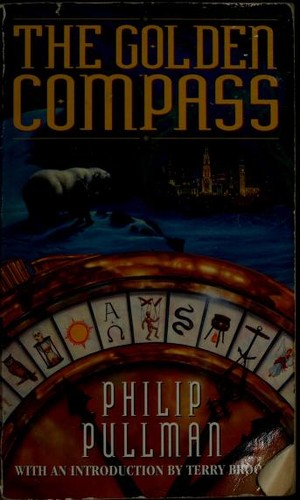
Northern Lights
by Philip Pullman
★ Top 5 book of 1995 · #3 on Best Books of 1995
Orphaned Lyra lives a sheltered life among Oxford scholars until her uncle's strange findings and a charming explorer upend everything. When children start vanishing, she travels north to rescue a friend, carrying a truth-telling compass.
Best for: Fans of Narnia or Earthsea who enjoy richly built fantasy worlds
Northern Lights is #3 on BookWard's Best Books of 1995, out of 28 1995 books that cleared our data bar.
What Northern Lights is about
Lyra Belacqua is twelve and lives half-wild among the scholars of Jordan College, Oxford, with her dæmon Pantalaimon, the animal form of her soul. When her friend Roger vanishes, taken by child-snatchers called the Gobblers, she is pulled into a hunt that reaches far beyond her college walls. Her uncle Lord Asriel has glimpsed something strange in the Northern Lights, and the charming Mrs Coulter runs a board with secret and disturbing aims.
Lyra is given an alethiometer, a device that tells the truth, and finds she can read it by instinct. With the Gyptians she travels north, where she meets an armoured bear named Iorek Byrnison and the aeronaut Lee Scoresby. Pullman's young-adult fantasy, the first of His Dark Materials, is an epic, dark adventure about friendship, loyalty and the price of growing up, for readers who like their fantasy with real moral weight.
Northern Lights on the Best Books of 1995
Northern Lights came out in 1995. Of the 28 books first published in 1995 that met BookWard's data bar, it ranks #3 on our Best Books of 1995 list.
Why it made the list: 1,177 readers have shelved it on Open Library; readers rate it 3.9 out of 5 (230 ratings); 44 are reading it right now. The list ranks each year’s books on how many readers have picked them up, how highly readers rate them, and how many are reading them right now.
It earns Being read right now.
Nearby on the 1995 list
- The Lost World Michael Crichton, #1
- Emotional Intelligence Daniel Goleman, #2
- Rose Madder Stephen King, #4
- Mindhunter John E. Douglas, #5
See all Best Books of 1995 Best books by year
More years: Best Books of 1994 Best Books of 1996.
The numbers behind it
- Readers: 807 want to read it, 44 are reading it now and 326 have read it, according to Open Library.
- Ratings: 3.9 out of 5 from 230 Open Library ratings.
| Signal | This book (0 to 100) | Weight |
|---|---|---|
| Reach | 96 | 55% |
| Reader love | 61 | 25% |
| Being read right now | 96 | 20% |
Questions about Northern Lights
When was Northern Lights published?
Northern Lights by Philip Pullman was first published in 1995.
Was Northern Lights one of the best books of 1995?
Northern Lights is #3 on BookWard's Best Books of 1995, out of 28 1995 books that cleared our data bar. 1,177 readers have shelved it on Open Library; readers rate it 3.9 out of 5 (230 ratings); 44 are reading it right now.
Why is Northern Lights on the Best Books of 1995 list?
1,177 readers have shelved it on Open Library; readers rate it 3.9 out of 5 (230 ratings); 44 are reading it right now.
More of the best books of 1995
- The Lost World Michael Crichton, #1
- Emotional Intelligence Daniel Goleman, #2
- Rose Madder Stephen King, #4
- Mindhunter John E. Douglas, #5
- Wicked Gregory Maguire, #6
- The Demon-Haunted World Carl Sagan, #7
See the full Best Books of 1995, the Top 100, or new books on Rising.
How we know
This page uses public data: Open Library reader counts and ratings, and Wikipedia page views for recent years. The description is paraphrased from real source text. Rankings reflect reading interest, not quality or sales, and can be affected by data gaps. Lists update monthly.
It suits confident younger readers and teens, and adults read it just as readily.
Depends on the edition you pick.
A girl, a truth-telling compass, and an Arctic rescue that earns its stakes. 64% taste match
 BookWard’s take
A girl, a truth-telling compass, and an Arctic rescue that earns its stakes
Northern Lights opens in a place Lyra knows by heart, Jordan College, Oxford, and it hooks almost at once: she witnesses a poisoning attempt in the first act, and the book never loosens its grip. Its originality is striking, built on dæmons, Dust and the alethiometer rather than borrowed furniture. The internal logic holds together, and the middle never sags because the journey north keeps changing shape. Pullman's voice is distinct and confident, and the worldbuilding arrives through scene and Lyra's eyes rather than through lectures. The characterization is strongest in Lyra herself, restless and stubborn. It is the first of a trilogy, so the ending points onward rather than closing the door.
A full-sized adventure rather than a tight one; BookWard prefers shorter, but the story uses its room well.
Brisk, with the journey north always moving, though it pauses to build its world.
Dæmons, Dust and armoured bears give it an invention BookWard rarely sees in young-adult fantasy.
Clear and unshowy, with occasional lyrical lift in the northern scenes.
Plot and character carry equal weight; Lyra's choices drive the quest.
The tone leans hopeful through Lyra's loyalty, even as the stakes darken.
A conventional, linear quest structure told in straightforward chapters.
Lyra's cheek brings flashes of lightness, but this is a serious book.
Child abduction and experiments give it real shadow, though never gratuitously.
Loyalty and fear for Roger hit hard without turning melodramatic.
See all 50 dialsEvery position, side by side with this book
Where it lines up
- OriginalityBookWard 9 · book 9
- Character depthBookWard 8 · book 8
- Authorial voiceBookWard 9 · book 9
Where it pulls apart
- LengthBookWard 1 · book 5
- Familiar tropesBookWard 10 · book 7
- Internal logicBookWard 10 · book 8
A full-sized adventure rather than a tight one; BookWard prefers shorter, but the story uses its room well.
A poisoned glass of wine in the opening chapters pulls you in fast, which suits BookWard's love of immediate hooks.
A parallel-world fantasy with a chosen-child shape, but dæmons and Dust keep it from feeling stock.
The rules of dæmons, Dust and the alethiometer stay consistent, which BookWard values highly.
Brisk, with the journey north always moving, though it pauses to build its world.
Dæmons, Dust and armoured bears give it an invention BookWard rarely sees in young-adult fantasy.
Lyra is vivid, flawed and stubborn, and the adults around her are more than types.
Resolves its central rescue but is clearly the first book of a trilogy.
Warm toward Lyra and Roger but not syrupy; feeling is allowed to sit under events.
The darkness, including children taken for experiments, serves the story rather than decorating it.
Pullman's narration is assured and unmistakable, which BookWard rates highly.
Big ideas about Dust and authority are carried by an adventure first.
The world is mostly revealed through what Lyra sees and does, in line with BookWard's taste.
The shift from Oxford to London to the Arctic keeps the middle moving.
Clear and unshowy, with occasional lyrical lift in the northern scenes.
Plot and character carry equal weight; Lyra's choices drive the quest.
The tone leans hopeful through Lyra's loyalty, even as the stakes darken.
A conventional, linear quest structure told in straightforward chapters.
Lyra's cheek brings flashes of lightness, but this is a serious book.
Accessible to young readers, though its ideas reward a closer read.
Told almost entirely through Lyra's perspective.
The story moves forward in order with no jumps.
Dæmons, witches and armoured bears put it firmly in a fantasy world.
A sizable supporting cast of scholars, Gyptians, witches and bears.
What starts at one college grows into an Arctic expedition with larger stakes behind it.
Mostly action and journey, with Lyra's inner life visible beneath.
Conversation carries plenty of the plot and character.
Romance is essentially absent; the bonds that matter are friendship and family.
A parallel Oxford, the Arctic and its peoples feel fresh and fully imagined.
A parallel world with its own era, closer to the past than to now.
Its status as the Carnegie of Carnegies points to lasting appeal.
A straightforward third-person narrator you can trust.
Authority and the Church are complicated, and right and wrong are not always cleanly drawn.
The Arctic and the college are vividly drawn without slowing the story.
The first book of the His Dark Materials trilogy.
Revelations about Lyra's family and the Gobblers keep landing.
Gentler in manner than in matter; its themes ask more than they first appear to.
Child abduction and experiments give it real shadow, though never gratuitously.
Loyalty and fear for Roger hit hard without turning melodramatic.
Humor is dry and incidental rather than broad.
Some real peril and fighting, handled with weight rather than relish.
No sexual content to speak of.
Power and institutional control run through the plot, though it stays an adventure.
Plain, readable language throughout.
The narration stays with Lyra and lets events speak.
Pushes toward what lies ahead rather than looking back.
Cynicism about institutions sits beside real faith in Lyra's courage and friendship.
Review written by BookWard, dial version 1, November 2026.
Who is Northern Lights right for?
It suits confident younger readers and teens, and adults read it just as readily. It includes child abduction, experiments on children and some violence, so it may be worth previewing for sensitive readers.
Accessible to young readers, though its ideas reward a closer read.
Child abduction and experiments give it real shadow, though never gratuitously.
Loyalty and fear for Roger hit hard without turning melodramatic.
Some real peril and fighting, handled with weight rather than relish.
Book CompanionNorthern Lights: ideas, characters, themes
A girl from Oxford sets out for the Arctic to rescue her friend and finds a larger conspiracy around the mysterious substance called Dust.
- Jordan College opening. Lyra lives wild among Oxford scholars and witnesses a poisoning attempt aimed at Lord Asriel.
- Dust. Asriel's lecture introduces mysterious particles that gather more around adults than children, and the Church treats his research as heresy.
- The alethiometer. Lyra is given a truth-telling instrument that she learns to read by instinct.
- The Gobblers. Children are vanishing, and Lyra's friend Roger is among them.
- The journey north. The Gyptians organise an expedition to the Arctic, and Lyra meets the armoured bear Iorek Byrnison along the way.
Characters
Lyra Belacqua
Protagonist
A twelve-year-old raised at Jordan College, restless and quick, bonded with her dæmon Pantalaimon.
Lord Asriel
Explorer and scholar
Lyra's reputed uncle, whose research into Dust drives the plot.
Mrs Coulter
Charming guardian
An enigmatic figure who takes Lyra in and is tied to the Gobblers.
Roger Parslow
Lyra's friend
The friend whose disappearance sends Lyra north.
Iorek Byrnison
Armoured bear
A dispossessed royal heir of the panserbjørne who allies with Lyra.
Themes
How institutions claim to protect people while controlling what they may know.
Dust gathers more around adults, tying growing up to knowledge and loss.
The alethiometer makes honesty and perception a central tool of the quest.
Lyra's risks come from her bond with Roger and the people who help her.
Dæmons make a person's inner nature visible and walking beside them.
Discussion questions
- Why might the book make a person's inner self into a separate creature, and what does that add?
- How does Lyra's habit of lying and storytelling help and hurt her?
- What does the story suggest about institutions that claim to act for the greater good?
- Which adults in Lyra's life can she trust, and how does she decide?
- How does the Arctic setting change the tone of the story from the Oxford chapters?
Personalize your Book Companion
This is the general edition. In BookWard, the Companion is written for you: your reading profile, your notes, and spoiler-safe to the page you are on.
Buy, listen or borrow Northern Lights
Each link opens a search for this book on that store, in a new tab.
Read on a device
Borrow
Reviews and community
If you liked Northern Lights
A fast, inventive middle book that opens on a killing
The Tainted CupRobert Jackson BennettA Holmes-and-Watson murder mystery inside a leviathan-haunted fantasy empire
ScytheNeal ShustermanA sharp, fast YA dystopia where death is a job
The High KingLloyd AlexanderA fantasy finale where the hero's growing up is the real quest
Find your own best books
Add what you have read, rate it, and BookWard will recommend what to read next.
Free to start. No credit card needed.