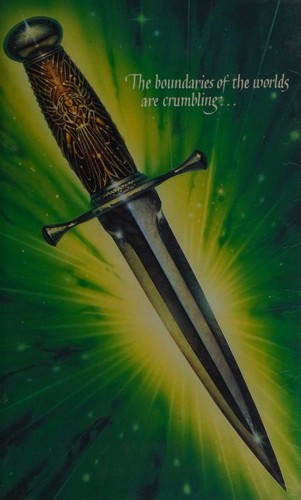
The Subtle Knife
by Philip Pullman
★ Top 10 book of 1997 · #10 on Best Books of 1997
As the barriers between worlds break down, Lyra and her daemon join Will Parry, who is hunting for his father and a powerful magical knife. Their journey through a haunted otherworld of soul-eating Spectres exposes a dangerous secret.
Best for: Young fantasy readers who enjoy parallel worlds, magic, and perilous journeys
The Subtle Knife is #10 on BookWard's Best Books of 1997, out of 28 1997 books that cleared our data bar.
What The Subtle Knife is about
Lyra Belacqua is still searching for the truth about Dust when she slips into a new world. In the haunted city of Cittàgazze she meets Will Parry, a boy from Oxford who is carrying the worry of looking after his ill mother. Together they learn that the city is haunted by soul-eating spectres that prey on grown-ups but leave children alone.
Will soon takes up a knife that can cut through anything, even the walls between worlds, and it costs him dearly. Meanwhile a scientist, Dr Mary Malone, is studying dark matter, and Lord Asriel is raising an army against an ancient power. The second part of His Dark Materials is adventurous and shadowed, with big questions about authority, destiny and growing up. It suits older children, teens and adults who have read Northern Lights.
The Subtle Knife on the Best Books of 1997
The Subtle Knife came out in 1997. Of the 28 books first published in 1997 that met BookWard's data bar, it ranks #10 on our Best Books of 1997 list.
Why it made the list: 500 readers have shelved it on Open Library; readers rate it 4 out of 5 (108 ratings). The list ranks each year’s books on how many readers have picked them up, how highly readers rate them, and how many are reading them right now.
Nearby on the 1997 list
- Wizard and Glass Stephen King, #8
- Memoirs of a Geisha Arthur Golden, #9
- Killing Floor Lee Child, #11
- The Spirit Catches You and You Fall Down Anne Fadiman, #12
See all Best Books of 1997 Best books by year
More years: Best Books of 1996 Best Books of 1998.
The numbers behind it
- Readers: 308 want to read it, 7 are reading it now and 185 have read it, according to Open Library.
- Ratings: 4 out of 5 from 108 Open Library ratings.
| Signal | This book (0 to 100) | Weight |
|---|---|---|
| Reach | 75 | 55% |
| Reader love | 68 | 25% |
| Being read right now | 32 | 20% |
Questions about The Subtle Knife
When was The Subtle Knife published?
The Subtle Knife by Philip Pullman was first published in 1997.
Was The Subtle Knife one of the best books of 1997?
The Subtle Knife is #10 on BookWard's Best Books of 1997, out of 28 1997 books that cleared our data bar. 500 readers have shelved it on Open Library; readers rate it 4 out of 5 (108 ratings).
Why is The Subtle Knife on the Best Books of 1997 list?
500 readers have shelved it on Open Library; readers rate it 4 out of 5 (108 ratings).
More of the best books of 1997
- Harry Potter and the Philosopher's Stone J. K. Rowling, #1
- Rich Dad, Poor Dad Robert T. Kiyosaki, #2
- Guns, Germs, and Steel Jared Diamond, #3
- The Adventures of Captain Underpants Dav Pilkey, #4
- The Power of Now Eckhart Tolle, #5
- Into Thin Air Jon Krakauer, #6
See the full Best Books of 1997, the Top 100, or new books on Rising.
How we know
This page uses public data: Open Library reader counts and ratings, and Wikipedia page views for recent years. The description is paraphrased from real source text. Rankings reflect reading interest, not quality or sales, and can be affected by data gaps. Lists update monthly.
It suits confident young readers and adults who enjoy ambitious fantasy.
Depends on the edition you pick.
A fast, inventive middle book that opens on a killing. 64% taste match
 BookWard’s take
A fast, inventive middle book that opens on a killing
The Subtle Knife drops you straight into Will's story: a boy fleeing after an accidental death, a window into another world, and Lyra waiting on the other side. That is a strong opening, and the book keeps pushing from there. The pace stays brisk, the worlds are unlike anything else in the genre, and the invention is striking, with Dust, dæmons and a knife that cuts between worlds. The characters have real depth too, especially Will, a young carer with genuine weight on him. Where it may frustrate is that this is the second volume and does not stand alone, so the ending leaves threads open on purpose. It also leans on big ideas more than most story-led books do. Still, the logic holds together as the rules of the knife and the worlds unfold.
A mid-length adventure that moves between worlds without feeling bloated, though it is bigger than BookWard's preference for tight.
Events move quickly from world to world and rarely stall, which matches BookWard's liking for momentum.
Cittàgazze, Spectres and the idea of Dust tied to consciousness are strikingly original for young-adult fantasy.
The writing is clear and readable with occasional lyrical moments, not ornate.
Plot and character carry roughly equal weight, with the quest driving events and the leads shaping them.
Hope and menace share the page, so the outlook is balanced rather than clearly cheerful or bleak.
The structure is a fairly conventional quest, though it weaves several storylines together.
The tone is serious and urgent, with only light touches of humor.
Killings, torture and the threat of soul-eating Spectres give it a darker edge than typical young-adult fantasy.
Fear, loyalty and loss run strongly through the story without turning melodramatic.
See all 50 dialsEvery position, side by side with this book
Where it lines up
- PaceBookWard 8 · book 8
- OriginalityBookWard 9 · book 9
- Character depthBookWard 8 · book 8
Where it pulls apart
- LengthBookWard 1 · book 5
- EndingBookWard 8 · book 3
- Familiar tropesBookWard 10 · book 8
A mid-length adventure that moves between worlds without feeling bloated, though it is bigger than BookWard's preference for tight.
It opens on Will fleeing after an accidental death, then finds a window to another world, which suits BookWard's love of an immediate start.
Dæmons, Dust and a knife that cuts between worlds feel fresh, though the chosen-child frame is familiar territory.
The knife's power and the rules of crossing between worlds are set out with care and stay consistent.
Events move quickly from world to world and rarely stall, which matches BookWard's liking for momentum.
Cittàgazze, Spectres and the idea of Dust tied to consciousness are strikingly original for young-adult fantasy.
Will and Lyra are drawn with real inner life, and Will's care for his mother gives him weight beyond the plot.
As the second of three books it leaves major questions open, which sits at odds with BookWard's wish for resolution.
Emotion is present but the book mostly avoids heavy sweetness, in line with BookWard's taste for restraint.
The darker moments serve the story and its themes rather than being there for effect.
This is a novel, so rigor does not apply.
Pullman's narration has a clear, confident identity that stands apart from generic fantasy.
Big questions about Dust and consciousness sit alongside a plot-driven quest, a balance that tilts a little toward ideas.
Most worldbuilding arrives through scenes and discovery, though some explanations are stated outright.
New worlds and new threats keep arriving, so the middle holds its energy.
The writing is clear and readable with occasional lyrical moments, not ornate.
Plot and character carry roughly equal weight, with the quest driving events and the leads shaping them.
Hope and menace share the page, so the outlook is balanced rather than clearly cheerful or bleak.
The structure is a fairly conventional quest, though it weaves several storylines together.
The tone is serious and urgent, with only light touches of humor.
It is accessible to young readers but asks for attention across several worlds and threads.
The story follows Will, Lyra, witches, aeronauts and others, giving it a many-threaded feel.
Events unfold in a straightforward forward line.
Parallel worlds, dæmons and soul-eating Spectres make this thoroughly fantastical.
Alongside the two leads there are witches, aeronauts, scholars and villains, making a wide cast.
Cosmic stakes about Dust and the worlds put this at the epic end, even with two children at its center.
Journeys and confrontations dominate, though Will and Lyra's inner struggles still matter.
Conversation drives much of the story, especially between the two leads and the many figures they meet.
Romance is not a main thread, with friendship and trust at the center.
Cittàgazze and the shifting worlds are unfamiliar, though the Oxford scenes ground it.
It blends a recognizable modern Oxford with invented worlds, so it feels partly present-day.
Its ideas and adventure have kept their appeal well past its 1997 publication.
The narration is a reliable, third-person account of events.
The book questions authority and sacrifice in ways that resist simple answers.
Settings are conjured vividly, from the haunted city to the shifting borders between worlds.
This is fiction, so nonfiction style does not apply.
This is fiction, so a nonfiction perspective does not apply.
This is the second book of the His Dark Materials trilogy and depends on the first.
New revelations about the knife, Dust and the characters' destinies keep arriving.
It raises weighty questions that push readers rather than just comfort them.
Killings, torture and the threat of soul-eating Spectres give it a darker edge than typical young-adult fantasy.
Fear, loyalty and loss run strongly through the story without turning melodramatic.
What humor there is stays dry and understated.
Fights, a lost pair of fingers and killings appear on the page, though not gratuitously.
Sexual content is essentially absent from this installment.
Questions of power and authority run through the plot and give it a political undertone.
The language is plain and approachable, with only invented names adding difficulty.
The narration stays mostly in the story, though its stance on authority and belief is clear.
The story is pushed forward by prophecy and what the children will do next.
A belief in curiosity, loyalty and choice runs through the book, even amid darkness.
Review written by BookWard, dial version 1, November 2026.
Who is The Subtle Knife right for?
It suits confident young readers and adults who enjoy ambitious fantasy. It contains killings, torture and frightening creatures, so younger or sensitive readers may want to know that in advance.
It is accessible to young readers but asks for attention across several worlds and threads.
Killings, torture and the threat of soul-eating Spectres give it a darker edge than typical young-adult fantasy.
Fear, loyalty and loss run strongly through the story without turning melodramatic.
Fights, a lost pair of fingers and killings appear on the page, though not gratuitously.
Book CompanionThe Subtle Knife: ideas, characters, themes
Two children from different worlds join forces to find answers about Dust, a missing father and a knife that can cut through anything.
- Will's introduction. The book brings in Will Parry, a twelve-year-old in Oxford who cares for his ailing mother, and gives the series a second lead.
- A door between worlds. Will flees after an accidental death and stumbles on a window into the city of Cittàgazze, where he meets Lyra.
- The question of Dust. Lyra's search to understand Dust leads her toward a physicist, Dr Mary Malone, whose computer can communicate with dark matter.
- The knife itself. The knife can cut through any material, and Will becomes its bearer after losing two fingers in a fight.
- Pursuit from many sides. Mrs Coulter, the witches and the aeronaut Lee Scoresby are all drawn into events surrounding Lyra and her destiny.
Characters
Will Parry
Co-lead
A twelve-year-old from Oxford who cares for his mother and is seeking his missing father.
Lyra Silvertongue
Co-lead
The heroine of Northern Lights, here investigating Dust with her dæmon Pantalaimon.
Mrs Coulter
Antagonist
Lyra's mother, who pursues the prophecy about her daughter.
Serafina Pekkala
Ally
A witch who sets out to find Lyra after realizing her importance.
Lee Scoresby
Ally
An aeronaut searching for Stanislaus Grumman, who may know of a powerful object.
Themes
The idea that mysterious particles are tied to thought and awareness.
Both leads are driven by their relationships with parents.
The knife's ability to cut through anything forces its bearer to choose carefully.
Moving between worlds raises questions of home, identity and belonging.
Characters seek answers that powerful institutions would prefer to keep hidden.
Discussion questions
- How does Will's role as a carer shape the way he acts compared with Lyra?
- What does the knife's power suggest about the cost of making difficult choices?
- Why might the author link Dust to consciousness rather than to something physical?
- How do the different groups pursuing Lyra reveal what each of them wants?
- Does a middle book work better as a bridge or as a story in its own right?
Personalize your Book Companion
This is the general edition. In BookWard, the Companion is written for you: your reading profile, your notes, and spoiler-safe to the page you are on.
Buy, listen or borrow The Subtle Knife
Each link opens a search for this book on that store, in a new tab.
Read on a device
Borrow
Reviews and community
If you liked The Subtle Knife
A girl, a truth-telling compass, and an Arctic rescue that earns its stakes
Blood of the Old KingsSung-Il KimAn empire that mines its dead sorcerers, seen through several fighters
UnwindNeal ShustermanA chilling dystopian chase built on a monstrous compromise
The Drawing of the ThreeStephen KingDoorways on a beach, and a gunslinger who needs allies
Find your own best books
Add what you have read, rate it, and BookWard will recommend what to read next.
Free to start. No credit card needed.