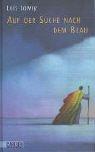
Gathering Blue
by Lois Lowry
★ Top 25 book of 2000 · #15 on Best Books of 2000
Kira is lame and newly orphaned when she is mysteriously taken from her wretched village to a grand Council Edifice. There, the powerful Guardians expect her talent as a weaver to serve their wishes.
Best for: Young readers who enjoy dystopian-style stories about talent, power, and control
Gathering Blue is #15 on BookWard's Best Books of 2000, out of 46 2000 books that cleared our data bar.
What Gathering Blue is about
Kira is an orphan with a twisted leg, living in a society that usually leaves weak or disabled people out in the fields to die. After her mother dies of an unknown sickness, Kira faces a council that could decide her fate. A council member speaks up for her, pointing to her remarkable gift for embroidery, and she is given the job of repairing the Singer's robe.
Kira begins to learn the craft of dyes, though no one knows how to make the color blue. She befriends a younger boy named Matt and a woodworker named Thomas, and slowly starts to ask what her new comfort really costs. Set in the same world as The Giver, this quiet, suspenseful novel looks at art, power and freedom, and suits teen readers who like thoughtful dystopian stories.
Gathering Blue on the Best Books of 2000
Gathering Blue came out in 2000. Of the 46 books first published in 2000 that met BookWard's data bar, it ranks #15 on our Best Books of 2000 list.
Why it made the list: 360 readers have shelved it on Open Library; readers rate it 3.7 out of 5 (40 ratings). The list ranks each year’s books on how many readers have picked them up, how highly readers rate them, and how many are reading them right now.
Nearby on the 2000 list
- Stargirl Jerry Spinelli, #13
- The Wide Window Lemony Snicket, #14
- Basic Economics Thomas Sowell, #16
- The Princess Diaries Meg Cabot, #17
See all Best Books of 2000 Best books by year
More years: Best Books of 1999 Best Books of 2001.
The numbers behind it
- Readers: 276 want to read it, 17 are reading it now and 67 have read it, according to Open Library.
- Ratings: 3.7 out of 5 from 40 Open Library ratings.
| Signal | This book (0 to 100) | Weight |
|---|---|---|
| Reach | 74 | 55% |
| Reader love | 24 | 25% |
| Being read right now | 61 | 20% |
Questions about Gathering Blue
When was Gathering Blue published?
Gathering Blue by Lois Lowry was first published in 2000.
Was Gathering Blue one of the best books of 2000?
Gathering Blue is #15 on BookWard's Best Books of 2000, out of 46 2000 books that cleared our data bar. 360 readers have shelved it on Open Library; readers rate it 3.7 out of 5 (40 ratings).
Why is Gathering Blue on the Best Books of 2000 list?
360 readers have shelved it on Open Library; readers rate it 3.7 out of 5 (40 ratings).
More of the best books of 2000
- Harry Potter and the Goblet of Fire J. K. Rowling, #1
- The 48 Laws of Power Robert Greene, #2
- Because of Winn-Dixie Kate DiCamillo, #3
- The Gruffalo Julia Donaldson, #4
- Life of Pi Yann Martel, #5
- Esperanza Rising Pam Muñoz Ryan, #6
See the full Best Books of 2000, the Top 100, or new books on Rising.
How we know
This page uses public data: Open Library reader counts and ratings, and Wikipedia page views for recent years. The description is paraphrased from real source text. Rankings reflect reading interest, not quality or sales, and can be affected by data gaps. Lists update monthly.
Suits middle-grade and young teen readers and works well for classroom discussion.
Depends on the edition you pick.
A quiet dystopia where art and truth collide. 57% taste match
 BookWard’s take
A quiet dystopia where art and truth collide
Gathering Blue is a companion to The Giver, set in the same future world, and it asks what a society does with the people it considers weak. Kira, orphaned and lame, is spared because of her gift for embroidery, and the book stays close to her as she learns what that safety costs. It's a short book, and its pace is deliberate rather than fast, so the opening works through quiet unease more than action. The internal logic is tight enough that the village's rules feel lived in. It earns its darkness without leaning on shock, and Kira is drawn with real depth. The ending is more resolved than ambiguous, though it leaves questions about the wider world.
A compact young adult novel that wastes little space, which matches BookWard's love of tight books.
Events unfold steadily and thoughtfully, slower than BookWard's taste for brisk momentum.
The idea of a society that preserves artists while discarding the weak is distinctive, even inside a familiar genre.
The language is simple and direct, with little ornament.
The story follows Kira's inner journey and choices more than any chain of external events.
The tone is shadowed by what the village hides, yet Kira's talent and friendships offer real light.
A straightforward, conventional telling that follows one character from start to finish.
The tone is serious throughout, with almost no humor.
See all 50 dialsEvery position, side by side with this book
Where it lines up
- LengthBookWard 1 · book 2
- Character depthBookWard 8 · book 7
- Shock for effectBookWard 9 · book 8
Where it pulls apart
- OpeningBookWard 10 · book 6
- Familiar tropesBookWard 10 · book 6
- Internal logicBookWard 10 · book 7
A compact young adult novel that wastes little space, which matches BookWard's love of tight books.
It opens on Kira's loss and her fight to stay in the village, but builds tension gradually rather than grabbing you at once.
Dystopian conventions are present, though the focus on art and disability gives it a fresher angle than most.
The village's customs and the Council's reasoning hang together well, though some world details stay deliberately unexplained.
Events unfold steadily and thoughtfully, slower than BookWard's taste for brisk momentum.
The idea of a society that preserves artists while discarding the weak is distinctive, even inside a familiar genre.
Kira's fears, talents and growing doubts are drawn with care, and the supporting cast adds texture.
The main thread comes to a clear point, though it leaves the larger world open for the rest of the series.
Warm moments exist, but the book mostly keeps its feeling controlled and avoids sugar.
The darker truths about the village are woven into the story's purpose rather than dropped in for effect.
Not applicable, since this is a novel.
Lowry's plain, clear telling has a recognizable calm, though it is less stylized than some of her peers.
Ideas about art, power and truth matter, but they are carried through Kira's story rather than argued outright.
Most of the world is revealed through Kira's experience, with only occasional explaining.
The middle holds together through Kira's work and friendships, with only a mild lull.
The language is simple and direct, with little ornament.
The story follows Kira's inner journey and choices more than any chain of external events.
The tone is shadowed by what the village hides, yet Kira's talent and friendships offer real light.
A straightforward, conventional telling that follows one character from start to finish.
The tone is serious throughout, with almost no humor.
Easy to read, with short chapters and clear language suited to young readers.
The story stays with Kira alone.
Events move forward in order with no jumps in time.
A grounded future society with almost no overt fantasy beyond the dread of the Beasts.
A handful of key figures surround Kira, so the cast stays small and easy to follow.
The story is confined to one village and a few relationships, so it feels intimate.
Kira's thoughts, doubts and discoveries drive the book more than physical action.
Conversations carry key reveals, but the book is not dialogue-heavy overall.
Friendship matters far more than romance here.
A strange future village with its own customs and a crafted social order feels unfamiliar.
Set in an imagined future, so it feels removed from the present day.
Its themes of art, difference and power read as fresh decades on.
The third-person telling follows Kira closely and can be trusted.
The book leans toward a clear stance on cruelty, though some characters sit in grey areas.
Colors, dyes and craft are described with care, but not lavishly.
Review written by BookWard, dial version 1, November 2026.
Who is Gathering Blue right for?
Suits middle-grade and young teen readers and works well for classroom discussion. It deals with death, abandonment and the threat of being left to die, which may need gentle handling for sensitive readers.
Easy to read, with short chapters and clear language suited to young readers.
Book CompanionGathering Blue: ideas, characters, themes
A gifted but disabled girl is protected by her village for her art, then starts to see what that protection hides.
- Kira's trial. Orphaned and lame, Kira faces the Council, which could send her to the Field, until a Guardian argues for her talent.
- The Singer's robe. Kira is given the task of repairing the Singer's robe, which places her at the center of the village's history.
- The missing blue. She learns dyeing but discovers no one knows how to make the color blue.
- Annabella's revelation. Her teacher hints that the Beasts do not really exist, unsettling Kira's sense of her world.
- Friends in the Edifice. Her bonds with Matt and Thomas, another gifted orphan, give her a reason to look closer at what she is told.
Characters
Kira
Protagonist
An orphan with a deformed leg and a gift for embroidery who must earn her place.
Jamison
Council Guardian
The Council member who defends Kira at her trial.
Annabella
Dye teacher
An older woman who teaches Kira and shares unsettling truths.
Matt
Young friend
A younger boy who becomes close to Kira.
Thomas
Woodworker
A gifted orphan who maintains the Singer's staff.
Themes
How creative talent can be protected, used and controlled by those in charge.
Whether a person's value depends on what they can offer.
What a community hides to keep its order intact.
How trust between young people becomes a source of courage.
Discussion questions
- Why does the village value Kira's gift but not Kira herself?
- What does the missing color blue stand for in the story?
- How does Kira's view of the Council change over the book?
- What do the Beasts represent, and who benefits from believing in them?
- How does this book compare to The Giver in tone and message?
Personalize your Book Companion
This is the general edition. In BookWard, the Companion is written for you: your reading profile, your notes, and spoiler-safe to the page you are on.
Buy, listen or borrow Gathering Blue
Each link opens a search for this book on that store, in a new tab.
Read on a device
Borrow
Reviews and community
If you liked Gathering Blue
A short, quiet dystopia that still lands decades on
The White Mountains (The Tripods #1)Sam YoudA short, tense escape story from a tripod-ruled Earth
Roll of Thunder, Hear My CryMildred D. TaylorA Newbery-winning Depression-era story of one Black family's pride
Among the HiddenMargaret Peterson HaddixA short, tense dystopia about a boy who has to hide
Find your own best books
Add what you have read, rate it, and BookWard will recommend what to read next.
Free to start. No credit card needed.