Updated November 2, 2026 · reading data through October 2026
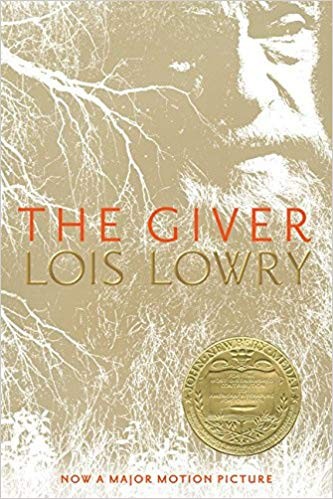
The Giver
by Lois Lowry
★ Most-read book of 1993 · #1 on Best Books of 1993
In a seemingly perfect society without pain or choice, a boy is chosen to receive the memories of the past. A short, thought-provoking dystopian classic for young readers. Read the full description
Best for: Ages ten and up, and parents to read along
The Giver is #98 on BookWard's Top 100 books for November 2026, with a BookWard Score of 45 out of 100. It slipped 11 places from #87 last month.
BookWard review of The Giver
4 of 5 stars 4.0 out of 5, from 327 reader ratings
BookWard rates The Giver 4.0 out of 5. That is the average of 327 reader ratings on Open Library (4.03), adjusted toward the typical book so that a small number of ratings cannot inflate it. Beyond the rating, it is #98 on BookWard's Top 100 books; 2,363 readers want to read it, 181 are reading it right now and 542 have finished it.
How this rating works
BookWard’s rating is calculated, not hand-scored. We take the average rating readers have given the book on Open Library and adjust it toward the typical book: adjusted = (n × average + 25 × 3.8) ÷ (n + 25), where n is the number of ratings. A book needs at least 50 ratings to be rated. The rating reflects how readers received the book, not whether it is right for you. Your own ratings on your shelf are private and are not part of this number.
The Giver: reading interest over the past 12 months
Sources: Open Library’s public reading-log and ratings data (dump of 2026-10-31), Wikipedia page views and Wikidata. Monthly counts are exact; they show relative interest among readers of these public sources, not total readership.
Ranked against the other books on this list, The Giver’s reading interest has run from #58 to #86 over these 12 months. Interest rank blends shelf adds, Wikipedia page views and rating activity, each compared with the other 99 books that month.
Shelf adds by month
The Giver was added to Open Library readers’ shelves 348 times in the past 12 months, peaking in October 2026 with 62 (114% above its monthly average of 29). Over the latest three months (Aug 2026 to Oct 2026) shelf adds were up 51% on the three months before. 79% of the adds were “want to read”, 6% “currently reading” and 16% “already read”.
Want to read Currently reading Already read
Wikipedia page views
Its Wikipedia article was viewed 446,604 times in the past 12 months, peaking in September 2026 with 42,866 views. The latest three months were up 14% on the three before.
Source: Wikimedia monthly page views for the article The Giver.
Adaptations
- The Giver (film), 2014
Adaptations are listed from Wikidata; a release date near a rise in the charts above is context, not proof of a cause.
Awards and honours listed on Wikidata: Newbery Medal, Hal Clement Award.
What the data says about The Giver
- Moderate swings. Monthly shelf adds averaged 29 with some ups and downs.
- Busiest and quietest months. October 2026 was its busiest month (62 adds), about 4.4 times its quietest, December 2025 (14).
- A book people finish. Only 79% of its shelf adds are “want to read”, against 86% across the Top 100, so more of its activity comes from readers logging books they have read or are reading.
- Attention and shelf adds move independently. Its Wikipedia views and its shelf adds did not rise and fall together over these 12 months (correlation 0.02).
- Against its genre. It had 45% fewer shelf adds than the average Young adult book on this list.
- Share of the list. It accounts for 0.3% of all shelf adds recorded for the Top 100 over these 12 months, #91 of 100.
- Its age. First published in 1993 (33 years ago), it is older than 68% of the books on the list.
Each finding is computed from the public data above and shown only when the numbers support it.
The Giver on the Top 100: rank history
| Month | Rank | Score |
|---|---|---|
| November 2026 | #98 | 45 |
| October 2026 | #87 | 50 |
| September 2026 | #85 | 52 |
Is The Giver rising or falling?
Cooling It ranks lower this week than over the past year, so interest is softening from its recent level.
On Open Library, The Giver ranks #158 this week, #180 this month, and #181 over the past year. A longer bar means a higher position. Comparing the three windows shows whether readers are arriving faster than the book's long-term pace. Readings as of 2026-11-02.
Why The Giver made the Top 100
The Giver made the list mainly on momentum (+14.2 points) and being read right now (+13.7 points). Its smallest contribution is rising (+0). The BookWard Score blends five public signals, each scored from 0 to 100 and weighted as shown.
The reading-now, rating and rank signals come from Open Library’s public data, not from BookWard’s own readers. The score measures reading interest, not quality or sales. How the score works.
Open Library reader stats for The Giver
Source: Open Library public reading logs, as of 2026-11-02. BookWard’s own monthly snapshots are added to the picture, and anonymous BookWard reader data will be layered in as the community grows.
More readers have The Giver open right now than 19% of the other books on this list. These counts come from one public source, so they show relative interest rather than total readership.
Where it sits among Young adult books
It is #12 of the 12 Young adult books on this month’s list.
About The Giver
What it’s about
Jonas is twelve, and he lives in a community that has traded away pain and strife for something called Sameness. The trade has also taken emotional depth and even color. At the Ceremony of Twelve, where children receive their adult assignments, Jonas is chosen for a rare one: Receiver of Memory. He begins to train with the old man who holds that role, who asks to be called the Giver and who passes on the memories of all of history, the lovely and the terrible.
What Jonas learns begins to change how he sees his family, his neighbors, and the tidy rules that keep everyone safe. The tone is quiet and reflective, and unsettling in the way it lets small details accumulate. It asks what a society gains and loses when it removes choice and feeling, and it suits readers who enjoy a short, thoughtful novel that lingers well after the last page.
At a glance
- First published
- 1993
- Genre
- Young adult
- Also described as
- soft science fiction, young adult fiction, dystopian fiction
- Series
- The Giver Quartet, book 1
- Length
- about 200 pages (the median across its editions)
- Original language
- English
- Languages
- editions in 15 languages listed on Open Library
- Editions
- 106 on Open Library
- Setting
- America
- Awards and honours
- Newbery Medal, Hal Clement Award
From Open Library and Wikidata public records. Missing rows mean the records do not list that fact.
Themes
- Memory and freedom
- Conformity
- Choice
What reading it is like
Quiet dystopia in simple prose.
At about 200 pages it is a medium-length read: roughly 4 hours at an average reading pace (about 250 words a minute, 300 words a page). Audiobook and edition lengths vary.
Good to know
First of a quartet, and often taught in schools.
The premise
Twelve-year-old Jonas lives in a community that has removed pain and choice, and is selected to receive the memories of the past. As he learns what was lost, he must decide what to do.
What you’ll get
- A thoughtful dystopia
- Short and accessible
- Great for discussion
You might skip it if you want an action-heavy story.
Pairs well with: The Hunger Games · Animal Farm
Keep exploring the chart
Also on the chart at #97 and #99
The Giver on the Best Books of 1993
The Giver came out in 1993. Of the 36 books first published in 1993 that met BookWard's data bar, it ranks #1 on our Best Books of 1993 list.
Why it made the list: 3,013 readers have shelved it on Open Library; readers rate it 4 out of 5 (322 ratings); 176 are reading it right now. The list ranks each year’s books on how many readers have picked them up, how highly readers rate them, and how many are reading them right now.
It earns Most-read of 1993 and being read right now.
Nearby on the 1993 list
- The Scam Debashis Basu, #2
- Along Came a Spider James Patterson, #3
See all Best Books of 1993 Best books by year
More years: Best Books of 1992 Best Books of 1994.
Questions about The Giver
What rank is The Giver on the Top 100 books?
The Giver is #98 on BookWard's Top 100 books for November 2026, with a BookWard Score of 45 out of 100. It slipped 11 places from #87 last month.
Is The Giver rising or falling?
Cooling. It ranks lower this week than over the past year, so interest is softening from its recent level. On Open Library, The Giver ranks #158 this week, #180 this month, and #181 over the past year.
Why is The Giver on the Top 100?
The Giver made the list mainly on momentum (+14.2 points) and being read right now (+13.7 points). Its smallest contribution is rising (+0).
How many people are reading The Giver right now?
Open Library's reading logs show 181 readers currently reading The Giver, 2,363 who want to read it and 542 who have logged it as read (as of 2026-11-02). These are counts from one public source, not all readers.
How much interest has The Giver had over the past year?
348 Open Library shelf adds in the past 12 months (peak October 2026, 62); latest three months up 51% on the prior three; 446,604 Wikipedia views in the past 12 months (up 14% over the latest three months); Adaptations on Wikidata: The Giver (2014). Figures come from Open Library and Wikipedia public data.
Who is The Giver best for?
Ages ten and up, and parents to read along.
Ask a question about The Giver
Ask about this book's chart history, reading interest, or who it is for. Answers come from this page's data and can be wrong.
Answers are AI-written from BookWard’s own help content and can be wrong. Please do not share personal information: questions and answers may be saved and, if they are useful, shown on this site without your name.
How we know
This page is built from public data: Open Library’s dated reading-log and ratings dumps, Wikipedia page views, Wikidata, and BookWard’s own monthly Top 100 snapshots. The interest rank blends shelf adds (45%), Wikipedia page views (30%), rating activity (10%) and, for months where a snapshot exists, BookWard’s own score (15%), each as a percentile among the Top 100 books. Every month shown is real data; nothing is estimated. Rankings reflect reading interest, not quality or sales, and can be affected by data gaps. Last updated November 2026. Read the full methodology.
It suits upper-elementary and middle school readers and is a common classroom choice, as well as adults who enjoy short, idea-led fiction.
200 pages, about 3 to 4.5 hours.
A short, quiet dystopia that still lands decades on. 56% taste match
 BookWard’s take
A short, quiet dystopia that still lands decades on
Lois Lowry's 1993 novel follows twelve-year-old Jonas, whose community has traded away pain, color and choice for Sameness, and who is chosen to hold the memories everyone else has lost. At 200 pages it is tight and short, and the hook is immediate: the Ceremony of Twelve puts the question of Jonas's future on the table almost at once. The ending feels fully resolved more than it is resolved in detail, which suits a reader who likes closure with a little room to think. The voice is plain and distinctive, and the prose stays spare, so the ideas carry the weight. It is gentler on violence on the page than most dystopias, yet it earns its darkness rather than leaning on shock. That makes it a sharp, fast read that rewards a second look.
At 200 pages it is lean and quick to finish, which matches BookWard's love of tight books.
Short chapters and steady revelations keep it moving, though it is measured rather than breakneck.
Trading away color and pain for Sameness was a distinctive premise for its time and still feels sharp.
The language is spare and clear, quieter than BookWard's lean toward richer sentences.
Jonas's inner change and the plot of his training move together, with a slight edge to character.
It carries real uncertainty about the Community but leaves a thread of possibility for Jonas.
The story moves straight ahead in a conventional arc, with no formal experiments.
It is solemn and reflective from start to finish, with little room for humor.
It carries heavy ideas but handles them with restraint for a young adult novel.
Memories of joy and pain land with real feeling, delivered in a restrained voice.
See all 50 dialsEvery position, side by side with this book
Where it lines up
- LengthBookWard 1 · book 1
- Sagging middleBookWard 8 · book 8
- Shock for effectBookWard 9 · book 8
Where it pulls apart
- Familiar tropesBookWard 10 · book 6
- Internal logicBookWard 10 · book 6
- OpeningBookWard 10 · book 7
At 200 pages it is lean and quick to finish, which matches BookWard's love of tight books.
The Ceremony of Twelve puts Jonas's fate in play early, a strong pull though not a cold-open jolt.
Dystopian society and chosen-one setups are familiar territory, though the take on Sameness gives them a fresh angle.
The rules of the Community and the role of the Receiver hold together well, a point in its favor.
Short chapters and steady revelations keep it moving, though it is measured rather than breakneck.
Trading away color and pain for Sameness was a distinctive premise for its time and still feels sharp.
Jonas is drawn with care as he grows apart from friends and family, while others are sketched lightly.
It closes on a decisive note without tying off every thread, less airtight than BookWard prefers.
It draws on tenderness and memory but keeps its emotion measured instead of syrupy.
Its darker moments serve the ideas about the Community rather than existing for effect, which BookWard values.
This is a novel, so the nonfiction rigor dial does not apply.
Lowry's calm, plain narration has a clear identity and suits the sterile world it describes.
Ideas about memory, choice and control drive it, though Jonas's story keeps it grounded.
The Giver explains a fair amount of the world outright, more than BookWard likes shown in scene.
It is short enough that the middle never sags, which BookWard rewards.
The language is spare and clear, quieter than BookWard's lean toward richer sentences.
Jonas's inner change and the plot of his training move together, with a slight edge to character.
It carries real uncertainty about the Community but leaves a thread of possibility for Jonas.
The story moves straight ahead in a conventional arc, with no formal experiments.
It is solemn and reflective from start to finish, with little room for humor.
Simple prose and short length make it easy to read, though its ideas invite thought.
It stays with Jonas throughout, so there is a single viewpoint.
Events unfold in order as Jonas moves through his training, apart from the memories he receives.
Set in an invented future community, it sits between grounded and fantastical.
The focus stays on Jonas, the Giver and his family, so the cast is small.
Told on the scale of one boy and one community, it feels intimate despite its large ideas.
Jonas's perceptions and feelings carry the story more than outward action.
Conversations with the Giver and with family carry a good share of the story.
Romance is a minor element at most, since the focus is on Jonas's role and memories.
The Community, with its assigned roles and absent color, feels unfamiliar and carefully built.
It is set in a future society, though first published in 1993.
Its themes of memory, choice and freedom have kept it in classrooms for decades.
The narration is straightforward and trustworthy, without games about what is true.
The book wrestles with good and evil but guides readers toward a fairly clear stance.
Descriptions are economical, with color and sensation emerging as Jonas discovers them.
This is fiction, so the nonfiction style dial does not apply.
This is fiction, so the nonfiction perspective dial does not apply.
It opens The Giver Quartet, though it works well enough as its own story.
It builds through gradual revelations rather than a string of sudden reversals.
It poses uncomfortable questions about sameness and freedom while staying accessible.
It carries heavy ideas but handles them with restraint for a young adult novel.
Memories of joy and pain land with real feeling, delivered in a restrained voice.
There is no real humor to place on this dial.
Violence is limited on the page and handled with restraint.
Sexual content is minimal.
It engages ideas about control and equality, but through story rather than overt argument.
The language is plain and easy to follow.
The narration stays neutral and lets Jonas's discoveries speak for themselves.
It looks at what the past holds for a future society, balancing both directions.
It tests a utopian ideal and finds it wanting, while holding some faith in individual feeling.
Review written by BookWard, dial version 1, November 2026.
Who is The Giver right for?
It suits upper-elementary and middle school readers and is a common classroom choice, as well as adults who enjoy short, idea-led fiction. It is frequently challenged, so some families may want to preview its treatment of control, loss and darker themes.
Simple prose and short length make it easy to read, though its ideas invite thought.
It carries heavy ideas but handles them with restraint for a young adult novel.
Memories of joy and pain land with real feeling, delivered in a restrained voice.
Violence is limited on the page and handled with restraint.
Book CompanionThe Giver: ideas, characters, themes
A society that erased pain and difference by choosing Sameness must rely on one boy to hold the memories it gave up.
- A chosen job. At the Ceremony of Twelve, Jonas is singled out and selected as the next Receiver of Memory instead of receiving an ordinary assignment.
- Growing apart. His new role sets him apart from classmates and friends and requires him to keep his training secret.
- Rules that bend. Jonas may lie and withhold his feelings from his family, which is otherwise not allowed in the Community.
- Holding the past. The Giver transfers the memories of all of history, which the rest of the Community knows nothing about.
- A first memory. The first memory Jonas receives is of sledding down a snowy hill, something entirely new to him.
Characters
Jonas
Protagonist
A twelve-year-old chosen to become the Receiver of Memory, who struggles with new feelings and ideas.
The Giver
Mentor
The current Receiver, who trains Jonas by passing on the memories of the past and shares his pale eyes.
Jonas's father
Family
A Nurturer who cares for the infants of the Community and reassures Jonas before the ceremony.
Jonas's mother
Family
A high-ranking official in the Department of Justice.
The Chief Elder
Community leader
Presides over the ceremony and announces Jonas's unusual selection.
Themes
What a community loses when it forgets its past, and who carries that burden.
The trade of difference, color and choice for order and safety.
Whether one can truly have good without the possibility of evil.
How a society shapes its members through rules, roles and secrecy.
What it means for one person to see and feel beyond what others can.
Discussion questions
- Would you give up pain and strife if it meant giving up emotional depth too?
- Why might the Community choose to keep the memories with only one person?
- How does Jonas's growing distance from his friends change how you see his selection?
- Is it possible to have good without evil, as Jonas wonders?
- What does this book suggest about the cost of safety and equality?
Personalize your Book Companion
This is the general edition. In BookWard, the Companion is written for you: your reading profile, your notes, and spoiler-safe to the page you are on.
Buy, listen or borrow The Giver
Each link opens a search for this book on that store, in a new tab.
Read on a device
Borrow
Reviews and community
If you liked The Giver
A quiet dystopia where art and truth collide
Among the HiddenMargaret Peterson HaddixA short, tense dystopia about a boy who has to hide
The White Mountains (The Tripods #1)Sam YoudA short, tense escape story from a tripod-ruled Earth
The ChrysalidsJohn WyndhamA short, sharp post-apocalyptic novel about hiding what makes you different
Track The Giver and find your next favorite
Add it to your shelf, rate what you have read, and BookWard will recommend what fits you.
Free to start. No credit card needed.