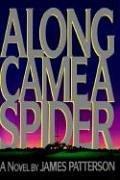
Along Came a Spider
by James Patterson
★ Top 5 book of 1993 · #3 on Best Books of 1993
Homicide detective and psychologist Alex Cross hunts Gary Soneji, a clever teacher turned kidnapper who snatches two children from under the noses of their Secret Service guards. The case grows ever more terrifying as authorities fail to outwit him.
Best for: Fans of serial-killer thrillers with a psychologist detective hero
Along Came a Spider is #3 on BookWard's Best Books of 1993, out of 36 1993 books that cleared our data bar.
What Along Came a Spider is about
Alex Cross is both a psychologist and a police detective in Washington, D.C., and in this first book of the series he takes on a kidnapping that has frightened the capital. Two children from wealthy, prominent families, Maggie-Rose Dunne and Michael Goldberg, are taken despite Secret Service protection. The man behind it, Gary Soneji, is a careful planner who had posed as a teacher at their private school. Alex, with his partner John Sampson and Secret Service supervisor Jezzie Flanagan, is pulled into a contest of nerve and cunning, where a suspect's claims about his own mind make it hard to know who is telling the truth. Fast, chilling and built on deception, it suits readers who like a crime story that keeps moving and a detective with a real stake in the case.
Along Came a Spider on the Best Books of 1993
Along Came a Spider came out in 1993. Of the 36 books first published in 1993 that met BookWard's data bar, it ranks #3 on our Best Books of 1993 list.
Why it made the list: 684 readers have shelved it on Open Library; readers rate it 4 out of 5 (49 ratings); 46 are reading it right now. The list ranks each year’s books on how many readers have picked them up, how highly readers rate them, and how many are reading them right now.
It earns Being read right now.
Nearby on the 1993 list
- The Giver Lois Lowry, #1
- The Scam Debashis Basu, #2
- A Suitable Boy Vikram Seth, #4
- Girl, Interrupted Susanna Kaysen, #5
See all Best Books of 1993 Best books by year
More years: Best Books of 1992 Best Books of 1994.
The numbers behind it
- Readers: 533 want to read it, 46 are reading it now and 103 have read it, according to Open Library.
- Ratings: 4 out of 5 from 49 Open Library ratings.
| Signal | This book (0 to 100) | Weight |
|---|---|---|
| Reach | 97 | 55% |
| Reader love | 56 | 25% |
| Being read right now | 97 | 20% |
Questions about Along Came a Spider
When was Along Came a Spider published?
Along Came a Spider by James Patterson was first published in 1993.
Was Along Came a Spider one of the best books of 1993?
Along Came a Spider is #3 on BookWard's Best Books of 1993, out of 36 1993 books that cleared our data bar. 684 readers have shelved it on Open Library; readers rate it 4 out of 5 (49 ratings); 46 are reading it right now.
Why is Along Came a Spider on the Best Books of 1993 list?
684 readers have shelved it on Open Library; readers rate it 4 out of 5 (49 ratings); 46 are reading it right now.
More of the best books of 1993
- The Giver Lois Lowry, #1
- The Scam Debashis Basu, #2
- A Suitable Boy Vikram Seth, #4
- Girl, Interrupted Susanna Kaysen, #5
- Understanding Comics Scott McCloud, #6
- Trainspotting Irvine Welsh, #7
See the full Best Books of 1993, the Top 100, or new books on Rising.
How we know
This page uses public data: Open Library reader counts and ratings, and Wikipedia page views for recent years. The description is paraphrased from real source text. Rankings reflect reading interest, not quality or sales, and can be affected by data gaps. Lists update monthly.
Best suited to adult and mature teen readers who enjoy crime thrillers.
Depends on the edition you pick.
A fast, familiar kidnapping thriller that launched the Alex Cross series. 50% taste match
 BookWard’s take
A fast, familiar kidnapping thriller that launched the Alex Cross series
Along Came a Spider opens on a murder scene and moves straight into a high-profile kidnapping, so the hook is immediate and the pace rarely lets up. Short chapters and a clever, patient villain keep the middle from sagging. Where I part ways with it is on originality: the genius criminal, the brilliant detective with a piano and a tough neighborhood, and the Secret Service rivalry are well-worn thriller furniture, and the book leans on them heavily. Character depth is decent for the genre, with Alex Cross drawn warmly, but the plot does the driving and the prose stays plain. The darkness is real and the violence is on the page. It is a competent, propulsive start to a long series rather than a book that reinvents the form.
A mass-market thriller built from brisk chapters, so it reads lean for its genre, well within what BookWard likes.
Short chapters and escalating demands keep it moving fast, close to BookWard's own preference.
It follows the established serial-villain and gifted-detective template rather than breaking new ground.
The prose is plain and functional, built for speed rather than ornament.
Plot drives the book, with character present mostly to move the investigation along.
The tone is grim, with real loss, but Cross's decency gives it some steadiness.
A conventional investigation-and-pursuit structure told in short chapters.
This is a serious thriller with little room for comedy.
It opens with a murdered family and centers on kidnapped children, which makes it genuinely dark.
Fear for the children and Cross's own family keep the feeling fairly strong.
See all 50 dialsEvery position, side by side with this book
Where it lines up
- Sagging middleBookWard 8 · book 8
- OpeningBookWard 10 · book 9
- PaceBookWard 8 · book 9
Where it pulls apart
- Familiar tropesBookWard 10 · book 3
- Internal logicBookWard 10 · book 6
- OriginalityBookWard 9 · book 3
A mass-market thriller built from brisk chapters, so it reads lean for its genre, well within what BookWard likes.
It starts at a crime scene and swerves quickly into a kidnapping, a strong opening that matches BookWard's taste.
The genius kidnapper, the psychologist detective and the agency rivalry are familiar thriller types, which cuts against BookWard's preference.
The kidnapping plot holds together well enough to propel the story, though thriller conveniences keep it short of airtight.
Short chapters and escalating demands keep it moving fast, close to BookWard's own preference.
It follows the established serial-villain and gifted-detective template rather than breaking new ground.
Alex Cross is drawn with warmth and some texture, but the supporting figures lean toward genre types.
It builds toward a clear resolution of the central case, in line with BookWard's liking for closure.
Cross's family and community add some tenderness, but the book stays mostly in thriller register.
The violence serves the plot and the villain, though the darkness leans more on effect than BookWard prefers.
Fiction, so this dial does not apply.
The brisk, stripped-down style is recognizable, though more commercial than distinctive.
This is a story-first book, driven by the chase rather than any argument or idea.
Most of the information arrives through investigation and scene, with some explaining of the villain's mind.
The case keeps producing new demands and reversals, so momentum holds through the middle.
The prose is plain and functional, built for speed rather than ornament.
Plot drives the book, with character present mostly to move the investigation along.
The tone is grim, with real loss, but Cross's decency gives it some steadiness.
A conventional investigation-and-pursuit structure told in short chapters.
This is a serious thriller with little room for comedy.
It reads easily and asks little of the reader beyond keeping up with the case.
Chapters shift between the detective and the villain, giving a mix of perspectives.
The story moves forward in time without major structural games.
Entirely grounded in a realistic Washington setting.
A sizable group of detectives, agents, officials and families moves through the book.
A high-stakes case with national figures involved, though the story stays street-level in feel.
Action and investigation dominate, with limited stretches of inner reflection.
Plenty of exchanges between investigators and officials carry the story along.
A romantic thread exists alongside the case but stays secondary.
Washington policing and Secret Service work are fairly familiar thriller territory.
Published in 1993, it reads as a product of its time rather than the present day.
The formula still works, but details and style tie it to its era.
The narration is straightforward and trustworthy, not a source of doubt.
Good and evil are clearly drawn, with a villain who is plainly monstrous.
Description is kept sparse so the story can keep moving.
Fiction, so this dial does not apply.
Fiction, so this dial does not apply.
It is the first book in the long Alex Cross series.
Reversals and misdirection are central to how the case unfolds.
It entertains and unsettles without asking much intellectually or morally.
It opens with a murdered family and centers on kidnapped children, which makes it genuinely dark.
Fear for the children and Cross's own family keep the feeling fairly strong.
Humor is minimal and dry where it appears.
Murders and a kidnapper's crimes are central and shown with real force.
Sexual content is limited and not a focus.
Government figures and agencies are in the frame, but politics stays background.
The language is plain and easy to follow.
The narration mostly reports events, with only light editorializing.
It is concerned with solving a present crime rather than imagining the future.
Cross believes in the work, though the world around him is hard and corrupt.
Review written by BookWard, dial version 1, November 2026.
Who is Along Came a Spider right for?
Best suited to adult and mature teen readers who enjoy crime thrillers. It involves the murder of a family, harm to children and violent crime, which may be distressing.
It reads easily and asks little of the reader beyond keeping up with the case.
It opens with a murdered family and centers on kidnapped children, which makes it genuinely dark.
Fear for the children and Cross's own family keep the feeling fairly strong.
Murders and a kidnapper's crimes are central and shown with real force.
Book CompanionAlong Came a Spider: ideas, characters, themes
A gifted psychologist-detective races to outthink a calculating kidnapper who has taken two children from an elite Washington school.
- The opening case. Alex Cross and his partner John Sampson are called to a scene where a mother and her two children have been murdered.
- The kidnapping. Maggie-Rose Dunne and Michael Goldberg, children of prominent families, are taken despite Secret Service protection.
- The kidnapper. Gary Soneji is a mastermind who has been posing as a teacher at the children's private school.
- The investigation team. Cross joins a hostage rescue effort alongside police, FBI and Secret Service, including supervisor Jezzie Flanagan.
- The ransom chase. Demands lead the team to Florida, and Cross is chosen to deliver the ransom at Disney World.
Characters
Alex Cross
Detective and psychologist
A Washington homicide detective with a doctorate in psychology who lives in a tough part of the city and has two young children.
John Sampson
Cross's partner
A fellow detective who works the cases alongside Cross.
Gary Soneji
The kidnapper
A brilliant, patient criminal who passes as a beloved mathematics teacher at the children's school.
Jezzie Flanagan
Secret Service supervisor
Leads part of the hostage rescue effort and works closely with Cross.
Maggie-Rose Dunne
Kidnapped child
The young daughter of a famous actress, taken from her school.
Themes
The villain's belief that he is smarter than everyone drives both his plans and the contest with Cross.
Children and family sit at the center of the stakes, for victims and for the detective himself.
Police, FBI and Secret Service struggle to work together while a single mind outmaneuvers them.
The abducted children come from elite families while Cross works in a poorer part of the city.
Discussion questions
- What makes Soneji an effective villain, and where does the story lean on familiar genre ideas about the criminal mastermind?
- How does Alex Cross's psychology background shape the way he approaches the case?
- Why might the author open with a separate murder before introducing the kidnapping?
- How do the different agencies help or hinder the investigation?
- How well does the fast, short-chapter style serve the story's emotional weight?
Personalize your Book Companion
This is the general edition. In BookWard, the Companion is written for you: your reading profile, your notes, and spoiler-safe to the page you are on.
Buy, listen or borrow Along Came a Spider
Each link opens a search for this book on that store, in a new tab.
Read on a device
Borrow
Reviews and community
If you liked Along Came a Spider
Cross hunts a diplomat killer who fights back in court
Cat & MouseJames PattersonAlex Cross returns, hunted by Soneji and a second killer
2Nd ChanceJames PattersonA fast San Francisco thriller where short chapters do the heavy lifting
The SurgeonTess GerritsenA fast, grim Boston serial-killer thriller that opens the Rizzoli series
Find your own best books
Add what you have read, rate it, and BookWard will recommend what to read next.
Free to start. No credit card needed.