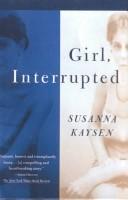
Girl, Interrupted
by Susanna Kaysen
★ Top 5 book of 1993 · #5 on Best Books of 1993
At eighteen, Susanna Kaysen was sent by taxi to McLean Hospital and stayed nearly two years on its teenage girls' ward. Her memoir offers sharp, unflinching portraits of patients and staff, and reconsiders what sanity, illness and recovery really mean.
Best for: Readers curious about psychiatric hospitals and how sanity and mental illness are defined
Girl, Interrupted is #5 on BookWard's Best Books of 1993, out of 36 1993 books that cleared our data bar.
What Girl, Interrupted is about
At eighteen, Susanna Kaysen is admitted to McLean Hospital in Massachusetts after a suicide attempt, expecting a stay of a couple of weeks. She remains for eighteen months. Her memoir recalls those months with a dry, spare, thoughtful voice, sketching the other young women on her ward and the staff who watched over them. She also questions the label of borderline personality disorder she was given, and asks what we really mean by sanity and by being well. Readers interested in mental health, adolescence and how institutions treat the people in their care will find a lot to think about.
Girl, Interrupted on the Best Books of 1993
Girl, Interrupted came out in 1993. Of the 36 books first published in 1993 that met BookWard's data bar, it ranks #5 on our Best Books of 1993 list.
Why it made the list: 461 readers have shelved it on Open Library; readers rate it 4 out of 5 (29 ratings); 21 are reading it right now. The list ranks each year’s books on how many readers have picked them up, how highly readers rate them, and how many are reading them right now.
It earns Being read right now.
Nearby on the 1993 list
- Along Came a Spider James Patterson, #3
- A Suitable Boy Vikram Seth, #4
- Understanding Comics Scott McCloud, #6
- Trainspotting Irvine Welsh, #7
See all Best Books of 1993 Best books by year
More years: Best Books of 1992 Best Books of 1994.
The numbers behind it
- Readers: 388 want to read it, 21 are reading it now and 52 have read it, according to Open Library.
- Ratings: 4 out of 5 from 29 Open Library ratings.
| Signal | This book (0 to 100) | Weight |
|---|---|---|
| Reach | 94 | 55% |
| Reader love | 42 | 25% |
| Being read right now | 92 | 20% |
Questions about Girl, Interrupted
When was Girl, Interrupted published?
Girl, Interrupted by Susanna Kaysen was first published in 1993.
Was Girl, Interrupted one of the best books of 1993?
Girl, Interrupted is #5 on BookWard's Best Books of 1993, out of 36 1993 books that cleared our data bar. 461 readers have shelved it on Open Library; readers rate it 4 out of 5 (29 ratings); 21 are reading it right now.
Why is Girl, Interrupted on the Best Books of 1993 list?
461 readers have shelved it on Open Library; readers rate it 4 out of 5 (29 ratings); 21 are reading it right now.
More of the best books of 1993
- The Giver Lois Lowry, #1
- The Scam Debashis Basu, #2
- Along Came a Spider James Patterson, #3
- A Suitable Boy Vikram Seth, #4
- Understanding Comics Scott McCloud, #6
- Trainspotting Irvine Welsh, #7
See the full Best Books of 1993, the Top 100, or new books on Rising.
How we know
This page uses public data: Open Library reader counts and ratings, and Wikipedia page views for recent years. The description is paraphrased from real source text. Rankings reflect reading interest, not quality or sales, and can be affected by data gaps. Lists update monthly.
Best suited to older teens and adults.
Depends on the edition you pick.
A short, sharp memoir that treats sanity as a question. 62% taste match
 BookWard’s take
A short, sharp memoir that treats sanity as a question
Kaysen's memoir of her time at McLean Hospital, where she was admitted at eighteen, is built from short, self-contained pieces rather than a march of events, which keeps the pace brisk and the book tight. The voice is the draw: cool, exact and unwilling to ask for pity, so the feeling stays restrained even when the subject turns painful. Fellow patients like Polly, Cynthia and Lisa are drawn in a few strokes that still land, and the book is carried by character far more than by plot. Its shape is looser than a standard memoir, and Kaysen deliberately blurs any easy moral line as she asks what separates the sane from the ill. It does not resolve into a tidy cure, so the ending is quieter than many readers will want, but it earns its darkness rather than using it for effect.
Told in brief, self-contained pieces, it is a short read that wastes nothing, which matches BookWard's taste for tight books.
Short chapters and episodic scenes move steadily, a touch gentler than BookWard's preferred speed.
Treating sanity itself as a question, with a Vermeer painting as a lens, feels fresh and fits BookWard's taste.
Clean, spare and exact, with flashes of figurative thinking but nothing ornate.
What holds it together is people and perception, not events, so it leans heavily on character.
It neither despairs nor promises recovery, landing in a clear-eyed middle that sits just under BookWard's mood.
Fragmentary vignettes and documents from her file make it more experimental than a standard memoir.
Dry flashes appear, but the book is overwhelmingly serious in tone.
Suicide attempts, self-harm and institutional life make it heavy, handled with restraint.
Feeling runs under the surface, felt strongly but never shouted.
See all 50 dialsEvery position, side by side with this book
Where it lines up
- Character depthBookWard 8 · book 8
- Shock for effectBookWard 9 · book 9
- LengthBookWard 1 · book 2
Where it pulls apart
- OpeningBookWard 10 · book 7
- Internal logicBookWard 10 · book 7
- Rigor (nonfiction)BookWard 9 · book 5
Told in brief, self-contained pieces, it is a short read that wastes nothing, which matches BookWard's taste for tight books.
It sidesteps the usual illness-memoir arc of suffering then triumph, and that freshness suits BookWard well.
The account holds together as a clear chronology of her stay, though its reflections stay deliberately exploratory rather than airtight.
Short chapters and episodic scenes move steadily, a touch gentler than BookWard's preferred speed.
Treating sanity itself as a question, with a Vermeer painting as a lens, feels fresh and fits BookWard's taste.
Fellow patients such as Polly, Cynthia and Lisa are sketched economically but with real individuality and weight.
It closes on reflection rather than a neat cure, a little more open than BookWard usually likes.
Kaysen keeps a cool, observational distance and never asks for tears, which BookWard rewards.
Hard moments, including a patient's death, arrive plainly and serve the argument instead of working as spectacle.
It is lived testimony backed by her hospital file, personal and honest rather than a systematic study.
The wry, precise, unsparing narration is unmistakably hers and is the main reason to read it.
It carries real ideas about sanity and diagnosis, but they come through lived scenes more than argument.
Ideas surface through scenes and observation instead of lectures, which BookWard prefers.
The episodic shape means few stretches drag, since each short piece does its own work.
Clean, spare and exact, with flashes of figurative thinking but nothing ornate.
What holds it together is people and perception, not events, so it leans heavily on character.
It neither despairs nor promises recovery, landing in a clear-eyed middle that sits just under BookWard's mood.
Fragmentary vignettes and documents from her file make it more experimental than a standard memoir.
Dry flashes appear, but the book is overwhelmingly serious in tone.
The writing is plain and short, though the subject and reflective passages ask some patience.
It is told from Kaysen's single first-person view throughout.
She moves around within her stay and reflects back, but it stays loosely chronological.
It is a grounded true account with nothing fantastical in it.
A handful of patients and staff recur, giving a compact, memorable ward.
The world is one ward, which keeps it intimate and focused.
Most of the action is perception and reflection, with the outer events kept modest.
Conversation appears, but narration and reflection carry far more of the book.
Romance is a minor thread against the main story of institutional life.
A 1960s psychiatric hospital is unfamiliar territory for most readers, and she makes it vivid.
It is set in 1967 and the years after, firmly in the past, though written decades later.
Its questions about diagnosis and sanity still feel current, which gives it lasting pull.
Kaysen openly questions her own perceptions and memory, giving some doubt without outright unreliability.
It resists easy verdicts on patients, doctors and the idea of illness itself.
Details of the ward, its routines and its people are rendered with care and specificity.
It reads as a personal story told through scenes rather than as analysis.
It is intimate first-person testimony from start to finish.
It stands entirely on its own.
It is not built on plot turns, so surprises are few and mostly emotional.
It unsettles assumptions about sanity and treatment more than it comforts.
Suicide attempts, self-harm and institutional life make it heavy, handled with restraint.
Feeling runs under the surface, felt strongly but never shouted.
Whatever humor there is, is dry and understated.
There is self-harm and distress on the page, but little graphic physical violence.
Sexual content is limited and handled briefly.
The late sixties form a backdrop, with institutional power a quiet theme rather than a focus.
The language is plain and clear, easy to follow.
Kaysen offers pointed views on diagnosis and treatment, though she mostly lets scenes speak.
It looks back on a past stay, though its questions stay relevant today.
It leans skeptical about institutions yet keeps faith in honest seeing.
Review written by BookWard, dial version 1, November 2026.
Who is Girl, Interrupted right for?
Best suited to older teens and adults. It deals openly with suicide, self-harm and the loss of a fellow patient, so it can be heavy for some readers.
The writing is plain and short, though the subject and reflective passages ask some patience.
Suicide attempts, self-harm and institutional life make it heavy, handled with restraint.
Feeling runs under the surface, felt strongly but never shouted.
There is self-harm and distress on the page, but little graphic physical violence.
Book CompanionGirl, Interrupted: ideas, characters, themes
Kaysen uses her eighteen months in a psychiatric hospital to ask who gets labeled ill and what that label does to a young person's life.
- A taxi to McLean. After a single session with a psychiatrist she had never met, eighteen-year-old Susanna is sent to McLean Hospital in 1967.
- A short stay that stretches. She is diagnosed with borderline personality disorder, and what was proposed as a brief rest runs to 18 months.
- The Vermeer connection. The title points to the painting Girl Interrupted at Her Music, linking a girl interrupted by music to adolescence interrupted by poor mental health.
- Portraits of other patients. Fellow patients like Polly, Cynthia and Lisa show a range of circumstances, setting Susanna against girls whose situations differ from hers.
- Questioning treatment. She doubts whether doctors are truly helping, asks whether they treat the brain or the mind, and suggests sanity may be a comfort the healthy construct.
Characters
Susanna Kaysen
Narrator and author
Eighteen when admitted to McLean, she observes her own illness and the ward with cool, questioning clarity.
Polly
Fellow patient
One of the girls whose personal struggles help shape Susanna's picture of life on the ward.
Cynthia
Fellow patient
Another of the patients whose story contributes to Susanna's portrait of the ward.
Lisa Rowe
Fellow patient
One of the other girls on the ward, who shapes Susanna's time there.
Daisy
Fellow patient
A patient whose release and later death deeply affect the other girls.
Themes
Who decides what counts as normal, and whether sanity is a construct meant to reassure the healthy.
How mental illness can halt or bend the ordinary growth of a young woman.
The limits of medicine and the doubt over whether care truly helps.
The specific pressures facing teenage girls, explored through the Vermeer parallel.
How reconstructing the past, including from a hospital file, shapes the story told.
Discussion questions
- Do you accept Kaysen's suggestion that sanity is partly a construct, and why or why not?
- How does the Vermeer painting change the way you read the title and the book?
- What do the other patients reveal that Susanna's own account could not?
- How reliable is a memoir built partly from memory and partly from a hospital file?
- Does the book's refusal to offer a neat recovery make it more or less honest?
Personalize your Book Companion
This is the general edition. In BookWard, the Companion is written for you: your reading profile, your notes, and spoiler-safe to the page you are on.
Buy, listen or borrow Girl, Interrupted
Each link opens a search for this book on that store, in a new tab.
Read on a device
Borrow
Reviews and community
If you liked Girl, Interrupted
Jack London's candid, argumentative memoir of drink and his long struggle
The Color of WaterJames McBrideA son's memoir, and his mother's own voice breaking through it
The Virgin SuicidesJeffrey EugenidesA haunting chorus of boys circles five sisters they never knew
Cat's EyeMargaret AtwoodA painter's return to Toronto, and the girlhood that made her
Find your own best books
Add what you have read, rate it, and BookWard will recommend what to read next.
Free to start. No credit card needed.