Updated November 2, 2026 · reading data through October 2026
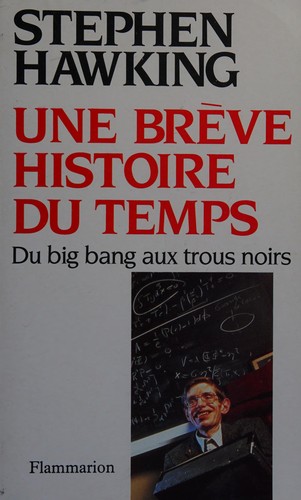
A Brief History of Time
by Stephen Hawking
A physicist explains the Big Bang, black holes, and the nature of time for general readers. Ambitious and famous, though it takes concentration. Read the full description
Best for: Curious readers interested in the universe
A Brief History of Time is #99 on BookWard's Top 100 books for November 2026, with a BookWard Score of 45 out of 100. It slipped 8 places from #91 last month.
BookWard review of A Brief History of Time
4 of 5 stars 4.1 out of 5, from 244 reader ratings
BookWard rates A Brief History of Time 4.1 out of 5. That is the average of 244 reader ratings on Open Library (4.15), adjusted toward the typical book so that a small number of ratings cannot inflate it. Beyond the rating, it is #99 on BookWard's Top 100 books; 2,488 readers want to read it, 221 are reading it right now and 271 have finished it. Its adjusted rating is higher than 60% of the books on the Top 100.
How this rating works
BookWard’s rating is calculated, not hand-scored. We take the average rating readers have given the book on Open Library and adjust it toward the typical book: adjusted = (n × average + 25 × 3.8) ÷ (n + 25), where n is the number of ratings. A book needs at least 50 ratings to be rated. The rating reflects how readers received the book, not whether it is right for you. Your own ratings on your shelf are private and are not part of this number.
A Brief History of Time: reading interest over the past 12 months
Sources: Open Library’s public reading-log and ratings data (dump of 2026-10-31), Wikipedia page views and Wikidata. Monthly counts are exact; they show relative interest among readers of these public sources, not total readership.
Ranked against the other books on this list, A Brief History of Time’s reading interest has run from #77 to #99 over these 12 months. Interest rank blends shelf adds, Wikipedia page views and rating activity, each compared with the other 99 books that month.
Shelf adds by month
A Brief History of Time was added to Open Library readers’ shelves 358 times in the past 12 months, peaking in January 2026 with 45 (51% above its monthly average of 30). Over the latest three months (Aug 2026 to Oct 2026) shelf adds were up 34% on the three months before. 84% of the adds were “want to read”, 8% “currently reading” and 8% “already read”.
Want to read Currently reading Already read
Wikipedia page views
Its Wikipedia article was viewed 112,194 times in the past 12 months, peaking in December 2025 with 11,178 views. The latest three months were up 4% on the three before.
Source: Wikimedia monthly page views for the article A Brief History of Time.
Adaptations
- A Brief History of Time (film), 1991
Adaptations are listed from Wikidata; a release date near a rise in the charts above is context, not proof of a cause.
What the data says about A Brief History of Time
- Moderate swings. Monthly shelf adds averaged 30 with some ups and downs.
- Busiest and quietest months. January 2026 was its busiest month (45 adds), about 3.5 times its quietest, June 2026 (13).
- Attention and shelf adds move independently. Its Wikipedia views and its shelf adds did not rise and fall together over these 12 months (correlation 0.03).
- Share of the list. It accounts for 0.3% of all shelf adds recorded for the Top 100 over these 12 months, #89 of 100.
- Its age. First published in 1988 (38 years ago), it is older than 70% of the books on the list.
Each finding is computed from the public data above and shown only when the numbers support it.
A Brief History of Time on the Top 100: rank history
| Month | Rank | Score |
|---|---|---|
| November 2026 | #99 | 45 |
| October 2026 | #91 | 50 |
| September 2026 | #77 | 54 |
Is A Brief History of Time rising or falling?
Cooling It ranks lower this week than over the past year, so interest is softening from its recent level.
On Open Library, A Brief History of Time ranks outside the top 200 this week, #249 this month, and #175 over the past year. A longer bar means a higher position. Comparing the three windows shows whether readers are arriving faster than the book's long-term pace. Readings as of 2026-11-02.
Why A Brief History of Time made the Top 100
A Brief History of Time made the list mainly on being read right now (+16.1 points) and reader love (+14.3 points). Its smallest contribution is rising (+0). The BookWard Score blends five public signals, each scored from 0 to 100 and weighted as shown.
The reading-now, rating and rank signals come from Open Library’s public data, not from BookWard’s own readers. The score measures reading interest, not quality or sales. How the score works.
Open Library reader stats for A Brief History of Time
Source: Open Library public reading logs, as of 2026-11-02. BookWard’s own monthly snapshots are added to the picture, and anonymous BookWard reader data will be layered in as the community grows.
More readers have A Brief History of Time open right now than 34% of the other books on this list. These counts come from one public source, so they show relative interest rather than total readership.
Where it sits among Science books
It is #1 of the 1 Science books on this month’s list.
About A Brief History of Time
What it’s about
Stephen Hawking sets out to explain the whole universe to readers who have no physics background: where it came from, how it has developed, and how it might end. He starts with the basics of space and time, then moves to quarks, the fundamental forces such as gravity, and the two great pillars of modern physics, general relativity and quantum mechanics, along with the long search for a theory that unites them.
Along the way he retraces the history of astronomy from Aristotle and Ptolemy through Copernicus, Galileo, Kepler, and Newton. He shows how old ideas gave way to new ones, and why the expanding universe points to a beginning in one extremely dense point. The tone is curious and accessible, with a dry sense of humor. It suits anyone who has looked at the night sky and wondered how it all works, and who wants the big ideas without the equations.
At a glance
- First published
- 1988
- Genre
- Science
- Also described as
- popularisation of science, essay
- Length
- about 241 pages (the median across its editions)
- Original language
- English
- Languages
- editions in 15 languages listed on Open Library
- Editions
- 120 on Open Library
From Open Library and Wikidata public records. Missing rows mean the records do not list that fact.
Themes
- The universe and black holes
- The Big Bang
- The nature of time
What reading it is like
Dense but written for general readers.
At about 241 pages it is a medium-length read: roughly 5 hours at an average reading pace (about 250 words a minute, 300 words a page). Audiobook and edition lengths vary.
Good to know
First published in 1988. Later editions were updated.
The premise
Stephen Hawking explains the Big Bang, black holes, and the nature of time for general readers, with minimal math.
What you’ll get
- Big questions about the universe
- A landmark of popular science
- A short read that rewards concentration
You might skip it if you find abstract physics hard to follow.
Keep exploring the chart
Also on the chart at #98 and #100
Questions about A Brief History of Time
What rank is A Brief History of Time on the Top 100 books?
A Brief History of Time is #99 on BookWard's Top 100 books for November 2026, with a BookWard Score of 45 out of 100. It slipped 8 places from #91 last month.
Is A Brief History of Time rising or falling?
Cooling. It ranks lower this week than over the past year, so interest is softening from its recent level. On Open Library, A Brief History of Time ranks outside the top 200 this week, #249 this month, and #175 over the past year.
Why is A Brief History of Time on the Top 100?
A Brief History of Time made the list mainly on being read right now (+16.1 points) and reader love (+14.3 points). Its smallest contribution is rising (+0).
How many people are reading A Brief History of Time right now?
Open Library's reading logs show 221 readers currently reading A Brief History of Time, 2,488 who want to read it and 271 who have logged it as read (as of 2026-11-02). These are counts from one public source, not all readers.
How much interest has A Brief History of Time had over the past year?
358 Open Library shelf adds in the past 12 months (peak January 2026, 45); latest three months up 34% on the prior three; 112,194 Wikipedia views in the past 12 months (up 4% over the latest three months); Adaptations on Wikidata: A Brief History of Time (1991). Figures come from Open Library and Wikipedia public data.
Who is A Brief History of Time best for?
Curious readers interested in the universe.
Ask a question about A Brief History of Time
Ask about this book's chart history, reading interest, or who it is for. Answers come from this page's data and can be wrong.
Answers are AI-written from BookWard’s own help content and can be wrong. Please do not share personal information: questions and answers may be saved and, if they are useful, shown on this site without your name.
How we know
This page is built from public data: Open Library’s dated reading-log and ratings dumps, Wikipedia page views, Wikidata, and BookWard’s own monthly Top 100 snapshots. The interest rank blends shelf adds (45%), Wikipedia page views (30%), rating activity (10%) and, for months where a snapshot exists, BookWard’s own score (15%), each as a percentile among the Top 100 books. Every month shown is real data; nothing is estimated. Rankings reflect reading interest, not quality or sales, and can be affected by data gaps. Last updated November 2026. Read the full methodology.
Suited to curious teens and adults who want big ideas without equations.
241 pages, about 4 to 5.5 hours.
Cosmology for the general reader, short and clear-eyed. 56% taste match
 BookWard’s take
Cosmology for the general reader, short and clear-eyed
At 241 pages, A Brief History of Time moves from ancient astronomy to the search for a unified theory without wasting a chapter, which suits a taste for tight, sustained books. It is driven by ideas rather than story, and the logic is its strength: each step builds on the last, from Aristotle and Newton to general relativity and quantum mechanics. Hawking explains outright instead of dramatizing, so anyone who prefers to watch ideas play out in scenes will find it far from that mode. The voice is distinctive, dry and quietly funny, opening with the turtles-all-the-way-down anecdote. The rigor is high for a popular book, though it trades depth for accessibility. It rewards curiosity more than patience, and the ideas, not the prose, carry the weight.
At 241 pages it covers the whole universe briefly, which suits BookWard's preference for tight books.
It moves steadily through big ideas, though some later chapters slow down as the physics gets denser.
Making cosmology and black holes accessible to a mass audience was itself a distinctive achievement.
The writing is clear and plain, built to explain rather than to ornament.
There is no plot or character arc to drive it, so the dial does not apply.
It ends on wonder and the human drive to understand, leaning mildly hopeful.
It follows a conventional, logical progression from past understanding to open questions.
Dry asides and the opening anecdote lighten a serious subject, though it stays mostly earnest.
Black holes and the universe's fate sound grim, but the tone stays curious rather than dark.
Wonder is the main feeling, delivered in measured rather than intense doses.
See all 50 dialsEvery position, side by side with this book
Where it lines up
- LengthBookWard 1 · book 2
- Internal logicBookWard 10 · book 9
- OriginalityBookWard 9 · book 8
Where it pulls apart
- ExpositionBookWard 2 · book 10
- Story or ideasBookWard 3 · book 10
- OpeningBookWard 10 · book 7
At 241 pages it covers the whole universe briefly, which suits BookWard's preference for tight books.
It opens with a vivid turtles-all-the-way-down anecdote, though the early history of astronomy then takes a little time to build.
Popular science has its conventions, but Hawking's framing of the big questions feels fresh rather than formulaic.
Each concept builds on the one before, from the history of astronomy through relativity and quantum mechanics, in a carefully laid chain.
It moves steadily through big ideas, though some later chapters slow down as the physics gets denser.
Making cosmology and black holes accessible to a mass audience was itself a distinctive achievement.
This is an exposition of ideas, not a character study, so the dial does not apply.
It closes on the search for a unified theory, resolved in argument if not in final answers.
Hawking keeps feeling at arm's length and lets the ideas carry the wonder, which fits BookWard's restraint.
Nothing here relies on shock; the strangeness comes from the physics itself, so the dial does not apply.
It is rigorous for a popular book, but simplifies heavily, which sits a little below BookWard's high bar.
Hawking's plain, wry, confident voice is unmistakably his own, matching BookWard's appetite for distinctive authors.
This is overwhelmingly about ideas, far more idea-led than BookWard's story-leaning taste.
Everything is explained outright, the opposite of BookWard's preference for showing in scene.
The argument stays engaging throughout, with only the densest physics sections testing momentum.
The writing is clear and plain, built to explain rather than to ornament.
There is no plot or character arc to drive it, so the dial does not apply.
It ends on wonder and the human drive to understand, leaning mildly hopeful.
It follows a conventional, logical progression from past understanding to open questions.
Dry asides and the opening anecdote lighten a serious subject, though it stays mostly earnest.
The prose is accessible but the concepts take real concentration, making it moderately demanding.
A single authorial voice guides the whole book.
The argument runs forward from early astronomy to modern theory, a largely linear march.
It deals with real physics, however strange, and stays firmly grounded in science.
Historical scientists appear briefly, but the book rests on Hawking and his ideas alone.
The subject is the entire universe, from the big bang to black holes, about as epic as it gets.
It is an exposition of ideas, not action or inner life, so the dial does not apply.
There is essentially no dialogue beyond the opening anecdote.
Romance plays no part in the book.
The reader is taken into black holes and the early universe, far from everyday experience.
Written in 1988, it is rooted in its time yet its questions remain current.
Some science has moved on, but the big questions and Hawking's framing keep it widely read.
Hawking is a direct, trustworthy guide who flags what is uncertain.
This is a book about science, not moral choices, so the dial does not apply.
Hawking explains concepts with analogies rather than lush description, keeping scenery minimal.
It is closer to a guided narrative of discovery, though it turns analytical when the physics demands.
Hawking stays mostly on the subject, with only the occasional personal aside.
It is a standalone work, though later abridged and illustrated editions exist.
The surprises are conceptual rather than plot-driven, with few in the usual sense.
It asks readers to stretch their grasp of space and time, which makes it a mild intellectual challenge.
Black holes and the universe's fate sound grim, but the tone stays curious rather than dark.
Wonder is the main feeling, delivered in measured rather than intense doses.
Humor is understated and dry, with the odd wry aside.
There is no violence on the page.
There is no sexual content.
Politics is essentially absent from the argument.
The language is plain, with difficulty coming only from technical concepts.
Hawking offers his scientific views openly but mostly lets the evidence speak.
It surveys the past to reach for a future unified theory, looking modestly forward.
It carries an idealistic faith in human reason to understand the universe.
Review written by BookWard, dial version 1, November 2026.
Who is A Brief History of Time right for?
Suited to curious teens and adults who want big ideas without equations. Nothing in it is graphic or sensitive, though the physics asks for sustained concentration.
The prose is accessible but the concepts take real concentration, making it moderately demanding.
Black holes and the universe's fate sound grim, but the tone stays curious rather than dark.
Wonder is the main feeling, delivered in measured rather than intense doses.
There is no violence on the page.
Book CompanionA Brief History of Time: ideas, characters, themes
Humanity can build up a coherent picture of the universe, from its beginning to its possible end, and may one day find a single theory that explains it all.
- The history of how we looked up. Hawking traces ideas from Aristotle and Ptolemy through Copernicus, Galileo, Kepler and Newton to show how our picture of the cosmos changed.
- An expanding universe. The discovery that the universe is expanding points to a beginning in an extremely dense state, where asking what came before stops making sense.
- Two pillars of physics. General relativity and quantum mechanics form the foundation of modern physics, yet they have not been fully reconciled.
- The building blocks and forces. The book introduces the particles that make up matter, such as quarks, and the fundamental forces that govern how they behave.
- The search for a unified theory. The aim is a single theory that consistently describes everything in the universe, which the book treats as the field's great goal.
Characters
Stephen Hawking
Author and guide
The physicist who narrates the book, explaining cosmology in non-technical terms.
Themes
The drive to understand the universe underlies the whole book.
The nature of these two basic concepts shapes every argument.
The book asks how the universe began and how it might end.
The hope that separate theories can merge into a single explanation.
Hawking shows both what science has learned and where it stops.
Discussion questions
- Why does Hawking open with the turtles-all-the-way-down anecdote, and what does it set up?
- Does the idea of a universe with a beginning change how you think about a creator?
- Which concept was hardest to grasp, and did Hawking's explanation help?
- How well do the ideas hold up now that decades of new observation have passed?
- Is a single unified theory a realistic goal, or a comforting idea?
Personalize your Book Companion
This is the general edition. In BookWard, the Companion is written for you: your reading profile, your notes, and spoiler-safe to the page you are on.
Buy, listen or borrow A Brief History of Time
Each link opens a search for this book on that store, in a new tab.
Read on a device
Borrow
Reviews and community
If you liked A Brief History of Time
String theory for general readers, built on clear analogies and real ideas
Discours de la méthodeRené DescartesDescartes reasons from doubt to certainty in a short, brisk essay
CodeCharles PetzoldFlashlights to microprocessors: how computers actually work, built from nothing
Guns, Germs, and SteelJared DiamondWhy some societies conquered others, argued from geography, not genes
Track A Brief History of Time and find your next favorite
Add it to your shelf, rate what you have read, and BookWard will recommend what fits you.
Free to start. No credit card needed.