Updated November 2, 2026 · reading data through October 2026
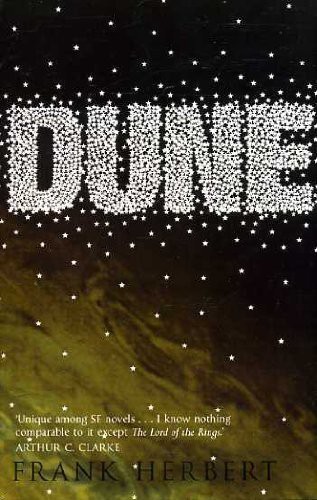
Dune
by Frank Herbert
On a desert planet that holds the most valuable substance in the universe, a young noble must survive politics, betrayal, and prophecy. A landmark of science fiction. Read the full description
Best for: Readers who like world-building
Dune is #35 on BookWard's Top 100 books for November 2026, with a BookWard Score of 71 out of 100. It climbed 13 places from #48 last month.
BookWard review of Dune
4 of 5 stars 4.3 out of 5, from 458 reader ratings
BookWard rates Dune 4.3 out of 5. That is the average of 458 reader ratings on Open Library (4.31), adjusted toward the typical book so that a small number of ratings cannot inflate it. Beyond the rating, it is #35 on BookWard's Top 100 books; 3,510 readers want to read it, 261 are reading it right now and 741 have finished it. Its adjusted rating is higher than 91% of the books on the Top 100.
How this rating works
BookWard’s rating is calculated, not hand-scored. We take the average rating readers have given the book on Open Library and adjust it toward the typical book: adjusted = (n × average + 25 × 3.8) ÷ (n + 25), where n is the number of ratings. A book needs at least 50 ratings to be rated. The rating reflects how readers received the book, not whether it is right for you. Your own ratings on your shelf are private and are not part of this number.
Dune: reading interest over the past 12 months
Sources: Open Library’s public reading-log and ratings data (dump of 2026-10-31), Wikipedia page views and Wikidata. Monthly counts are exact; they show relative interest among readers of these public sources, not total readership.
Ranked against the other books on this list, Dune’s reading interest has run from #21 to #59 over these 12 months. Interest rank blends shelf adds, Wikipedia page views and rating activity, each compared with the other 99 books that month.
Shelf adds by month
Dune was added to Open Library readers’ shelves 600 times in the past 12 months, peaking in October 2026 with 95 (90% above its monthly average of 50). Over the latest three months (Aug 2026 to Oct 2026) shelf adds were up 50% on the three months before. 78% of the adds were “want to read”, 5% “currently reading” and 16% “already read”.
Want to read Currently reading Already read
Wikipedia page views
Its Wikipedia article was viewed 1,267,922 times in the past 12 months, peaking in March 2026 with 241,946 views. The latest three months were down 4% on the three before.
Source: Wikimedia monthly page views for the article Dune (novel).
Adaptations
- Dune: Part Two (film), 2024
- Frank Herbert's Dune (miniseries), 2000
Adaptations are listed from Wikidata; a release date near a rise in the charts above is context, not proof of a cause.
Awards and honours listed on Wikidata: Hugo Award for Best Novel, Nebula Award for Best Novel, Seiun Award for Best Translated Long Work.
What the data says about Dune
- Moderate swings. Monthly shelf adds averaged 50 with some ups and downs.
- Busiest and quietest months. October 2026 was its busiest month (95 adds), about 4.5 times its quietest, June 2026 (21).
- A book people finish. Only 78% of its shelf adds are “want to read”, against 86% across the Top 100, so more of its activity comes from readers logging books they have read or are reading.
- Ratings above the list’s middle. Its Open Library average of 4.31 from 458 ratings is 0.19 higher than the middle book on the list (4.12).
- Share of the list. It accounts for 0.6% of all shelf adds recorded for the Top 100 over these 12 months, #60 of 100.
- Its age. First published in 1965 (61 years ago), it is older than 78% of the books on the list.
Each finding is computed from the public data above and shown only when the numbers support it.
Dune on the Top 100: rank history
| Month | Rank | Score |
|---|---|---|
| November 2026 | #35 | 71 |
| October 2026 | #48 | 65 |
| September 2026 | #51 | 64 |
Is Dune rising or falling?
Cooling It ranks lower this week than over the past year, so interest is softening from its recent level.
On Open Library, Dune ranks #56 this week, #88 this month, and #77 over the past year. A longer bar means a higher position. Comparing the three windows shows whether readers are arriving faster than the book's long-term pace. Readings as of 2026-11-02.
Why Dune made the Top 100
Dune made the list mainly on momentum (+25.8 points) and reader love (+18.5 points). Its smallest contribution is rising (+0). The BookWard Score blends five public signals, each scored from 0 to 100 and weighted as shown.
The reading-now, rating and rank signals come from Open Library’s public data, not from BookWard’s own readers. The score measures reading interest, not quality or sales. How the score works.
Open Library reader stats for Dune
Source: Open Library public reading logs, as of 2026-11-02. BookWard’s own monthly snapshots are added to the picture, and anonymous BookWard reader data will be layered in as the community grows.
More readers have Dune open right now than 41% of the other books on this list. These counts come from one public source, so they show relative interest rather than total readership.
Where it sits among Sci-fi books
It is #1 of the 3 Sci-fi books on this month’s list.
About Dune
What it’s about
Duke Leto Atreides is sent by the Emperor to govern Arrakis, a harsh desert planet that is the only source of melange, the spice that extends life and makes travel between stars possible. It looks like an honor. In fact the Emperor is jealous of Leto's popularity and is plotting with House Harkonnen to bring the Atreides down.
Leto's son Paul, born to Lady Jessica, a Bene Gesserit who defied her order's wishes in bearing a boy, is being trained in fighting, strategy and discipline. Early on he faces a terrible test of endurance set by a Reverend Mother. When treachery strikes the family, Paul and Jessica are forced into the desert, and Paul evolves into the mysterious man known as Muad'Dib.
First published in 1965 and the opening of the Dune Chronicles, this is an epic of politics, ecology, religion and fate.
At a glance
- First published
- 1965
- Genre
- Sci-fi
- Also described as
- soft science fiction, planetary romance, social science fiction
- Series
- Dune, book 1
- Length
- about 608 pages (the median across its editions)
- Original language
- English
- Languages
- editions in 13 languages listed on Open Library
- Editions
- 155 on Open Library
- Setting
- Arrakis
- Awards and honours
- Hugo Award for Best Novel, Nebula Award for Best Novel, Seiun Award for Best Translated Long Work
From Open Library and Wikidata public records. Missing rows mean the records do not list that fact.
Themes
- Ecology and power
- Religion and politics
- Destiny
What reading it is like
Dense, political science fiction with invented terms. Slow to start and then absorbing.
At about 608 pages it is a long read: roughly 12 hours at an average reading pace (about 250 words a minute, 300 words a page). Audiobook and edition lengths vary.
Good to know
First of six Frank Herbert novels about the same universe. Has a glossary.
The premise
On the desert planet Arrakis, the only source of the most valuable substance in the universe, young Paul Atreides must survive betrayal and discover his destiny.
What you’ll get
- Political intrigue and prophecy
- Ecology and religion themes
- One of science fiction's landmark books
You might skip it if you dislike dense world-building.
Pairs well with: The Hitchhiker's Guide to the Galaxy · Project Hail Mary
Keep exploring the chart
Also on the chart at #34 and #36
More Sci-fi on the Top 100
Questions about Dune
What rank is Dune on the Top 100 books?
Dune is #35 on BookWard's Top 100 books for November 2026, with a BookWard Score of 71 out of 100. It climbed 13 places from #48 last month.
Is Dune rising or falling?
Cooling. It ranks lower this week than over the past year, so interest is softening from its recent level. On Open Library, Dune ranks #56 this week, #88 this month, and #77 over the past year.
Why is Dune on the Top 100?
Dune made the list mainly on momentum (+25.8 points) and reader love (+18.5 points). Its smallest contribution is rising (+0).
How many people are reading Dune right now?
Open Library's reading logs show 261 readers currently reading Dune, 3,510 who want to read it and 741 who have logged it as read (as of 2026-11-02). These are counts from one public source, not all readers.
How much interest has Dune had over the past year?
600 Open Library shelf adds in the past 12 months (peak October 2026, 95); latest three months up 50% on the prior three; 1,267,922 Wikipedia views in the past 12 months (down 4% over the latest three months); Adaptations on Wikidata: Dune: Part Two (2024); Frank Herbert's Dune (2000). Figures come from Open Library and Wikipedia public data.
Who is Dune best for?
Readers who like world-building.
Ask a question about Dune
Ask about this book's chart history, reading interest, or who it is for. Answers come from this page's data and can be wrong.
Answers are AI-written from BookWard’s own help content and can be wrong. Please do not share personal information: questions and answers may be saved and, if they are useful, shown on this site without your name.
How we know
This page is built from public data: Open Library’s dated reading-log and ratings dumps, Wikipedia page views, Wikidata, and BookWard’s own monthly Top 100 snapshots. The interest rank blends shelf adds (45%), Wikipedia page views (30%), rating activity (10%) and, for months where a snapshot exists, BookWard’s own score (15%), each as a percentile among the Top 100 books. Every month shown is real data; nothing is estimated. Rankings reflect reading interest, not quality or sales, and can be affected by data gaps. Last updated November 2026. Read the full methodology.
It suits mature teens and adults who can handle dense political and philosophical material.
608 pages, about 9.5 to 14 hours.
A desert planet, a doomed duke, and a vast, patient epic. 51% taste match
 BookWard’s take
A desert planet, a doomed duke, and a vast, patient epic
Dune is long, and it earns the length. At 608 pages it runs well past what I usually enjoy, yet the world is built so tightly that the internal logic never slips: spice, sandworms, water, and noble houses all lock together. It does lean on exposition more than I like, with ideas about ecology, religion, and power explained outright alongside the action. Where it shines is originality, since a feudal interstellar empire resting on a single desert drug still feels distinctive decades on. Herbert sets a politically charged trap around House Atreides from the start, so the middle never sags. It is idea-led and demanding, but deeply drawn.
At 608 pages it is a big, immersive book; BookWard prefers tighter, though this one uses its space.
Political maneuvering and long stretches of preparation slow it at times, then it surges; steadier than fast.
A feudal space empire built on one desert drug was strikingly new in 1965 and still feels distinct.
The prose is formal and layered with invented terms, more ornate than plain without becoming purple.
Plot and character are balanced, but Paul's destiny and imperial scheming push events harder than interior growth.
Triumph arrives under heavy shadow, with prophecy, war, and manipulation leaving little room for optimism.
The structure is largely conventional, though the epigraphs and shifting point of view add texture.
This is a grave, serious book with almost no humor to speak of.
Conspiracy, assassination, and war give it a grim edge, but it is not relentlessly bleak.
Feeling runs beneath the surface, in loyalty and loss, without melodrama.
See all 50 dialsEvery position, side by side with this book
Where it lines up
- OriginalityBookWard 9 · book 9
- SentimentBookWard 8 · book 8
- Internal logicBookWard 10 · book 9
Where it pulls apart
- LengthBookWard 1 · book 9
- OpeningBookWard 10 · book 6
- Rigor (nonfiction)BookWard 9 · book 4
At 608 pages it is a big, immersive book; BookWard prefers tighter, though this one uses its space.
It opens by setting up an imperial assignment that is clearly a trap, though the full hook takes some patience.
Chosen-one echoes exist, but the desert ecology and spice economy feel fresh and mostly avoid stock fantasy habits.
Spice, water, worms, the Guild, and the noble houses all interlock; the world runs on rules that hold together.
Political maneuvering and long stretches of preparation slow it at times, then it surges; steadier than fast.
A feudal space empire built on one desert drug was strikingly new in 1965 and still feels distinct.
Paul, Jessica, and Leto are drawn with real inner conflict, though some figures work more as roles than people.
The central conflict reaches a decisive turn, while larger questions are left to carry into the sequels.
Herbert keeps feeling cool and controlled, favoring consequence and strategy over tearful moments, which suits BookWard.
Betrayal and loss land because the plot and politics set them up, not for cheap effect.
This is fiction, so rigor matters less, though its ecology and politics are worked out with unusual care.
Herbert's cold, aphoristic, many-layered style is easy to recognize and hard to confuse with anyone else.
The story carries you, but religion, power, ecology, and prescience are the real engine and drive the book.
Concepts are often explained outright, through epigraphs and characters laying out how things work, more than BookWard likes.
Tension from the Atreides trap keeps pulling forward, though some stretches of mysticism and scheming run slow.
The prose is formal and layered with invented terms, more ornate than plain without becoming purple.
Plot and character are balanced, but Paul's destiny and imperial scheming push events harder than interior growth.
Triumph arrives under heavy shadow, with prophecy, war, and manipulation leaving little room for optimism.
The structure is largely conventional, though the epigraphs and shifting point of view add texture.
This is a grave, serious book with almost no humor to speak of.
Invented terms, factions, and dense philosophy ask real effort from the reader, more than BookWard's usual taste.
Narration moves among many minds, from Paul and Jessica to rivals, giving a broad political picture.
Events run forward in order, with prophecy and foresight hinting ahead without disturbing the sequence.
Mind-bending abilities, giant sandworms, and a drug that enables space travel make it solidly speculative.
Noble houses, Fremen, and imperial agents produce a large cast that takes some effort to keep straight.
A single planet is the stage, but the stakes cover an entire empire and humanity's future.
Schemes and battles drive events, but long passages dwell in characters' thoughts and calculations.
Conversations carry much of the intrigue and exposition, so talk makes up a large share of the page.
Romance sits in the background, with family bonds and politics mattering far more.
Arrakis and its empire are deeply alien and richly built, as far from everyday life as fiction gets.
It is set in a distant future, far removed from the present day.
Its ideas about power, ecology, and prophecy have kept readers returning for decades.
The omniscient narrator is steady and trustworthy, even when characters deceive each other.
No one is simply good or evil; leaders and movements all carry costs and compromises.
The desert, the spice, and the great houses are described in vivid, sustained detail.
It starts the Dune Chronicles and plainly sets up a wider saga, though this book tells a full arc.
Betrayals, hidden loyalties, and prophetic turns keep surprising the reader across the story.
It asks you to question prophecy, charismatic leaders, and who really benefits from power.
Conspiracy, assassination, and war give it a grim edge, but it is not relentlessly bleak.
Feeling runs beneath the surface, in loyalty and loss, without melodrama.
Battles, assassinations, and plots are present and consequential, though not lingered over graphically.
Sexual content is minimal and mostly tied to breeding programs and political aims.
Empire, noble houses, and control of a scarce resource sit at the center of the plot.
Invented terms and layered, formal speech make the language denser than most.
The narration mostly observes, though epigraphs and asides tilt it toward a clear viewpoint on power.
It looks far ahead, using the future to examine where human choices and power may lead.
It is wary of saviors and systems, treating hope and prophecy with a skeptical eye.
Review written by BookWard, dial version 1, November 2026.
Who is Dune right for?
It suits mature teens and adults who can handle dense political and philosophical material. It includes war, assassination, and betrayal, with little sexual content.
Invented terms, factions, and dense philosophy ask real effort from the reader, more than BookWard's usual taste.
Conspiracy, assassination, and war give it a grim edge, but it is not relentlessly bleak.
Feeling runs beneath the surface, in loyalty and loss, without melodrama.
Battles, assassinations, and plots are present and consequential, though not lingered over graphically.
Book CompanionDune: ideas, characters, themes
Control of a single desert planet and its life-extending spice becomes a struggle over empire, faith, and survival.
- The assignment. Duke Leto Atreides is ordered by the Emperor to take over Arrakis, even though he suspects a trap.
- Why Arrakis matters. It is the only source of melange, a drug that extends life and makes space navigation possible.
- Paul's training. Paul is raised by his mother Lady Jessica and instructed by Duncan Idaho, Gurney Halleck, and Thufir Hawat.
- Rival houses. House Harkonnen, longtime enemies of the Atreides, are drawn into the Emperor's scheme.
- A planned saga. The novel opens the Dune Chronicles, followed by five sequels written by Herbert himself.
Characters
Paul Atreides
Young heir of House Atreides
A boy trained in politics and combat who becomes known as Muad'Dib.
Lady Jessica
Paul's mother, a Bene Gesserit acolyte
She bore a son out of love for Leto despite her order's instructions.
Duke Leto Atreides
Ruler assigned to Arrakis
He knows the posting is a trap but is compelled to obey the Emperor.
Thufir Hawat
The Duke's Mentat
A human computer who also taught Paul the ways of political intrigue.
Themes
How rulers use control of a vital resource to dominate others.
How a harsh environment shapes the people and economy that depend on it.
How belief and prediction can be built up, used, and manipulated.
What it costs to see the future and act on what you see.
How trust is tested when families and houses are set against each other.
Discussion questions
- Why does Herbert make a single resource the center of an entire empire?
- How does the Bene Gesserit breeding program complicate Jessica's choice to bear a son?
- Is Leto walking into a trap, and what does his obedience say about duty?
- How does the book treat prophecy: as destiny, as a tool, or as a danger?
- Which house or faction do you find most sympathetic, and why?
Personalize your Book Companion
This is the general edition. In BookWard, the Companion is written for you: your reading profile, your notes, and spoiler-safe to the page you are on.
Buy, listen or borrow Dune
Each link opens a search for this book on that store, in a new tab.
Read on a device
Borrow
Reviews and community
If you liked Dune
A murder mystery wrapped in an empire that devours its neighbors
Dune MessiahFrank HerbertA short, cold sequel that questions the hero it built
A Fire Upon the DeepVernor VingeVinge's space opera where the laws of thought bend with location
The Amber SpyglassPhilip PullmanA vast, daring finale that trades pace for ambition
Track Dune and find your next favorite
Add it to your shelf, rate what you have read, and BookWard will recommend what fits you.
Free to start. No credit card needed.