Updated November 2, 2026 · reading data through October 2026
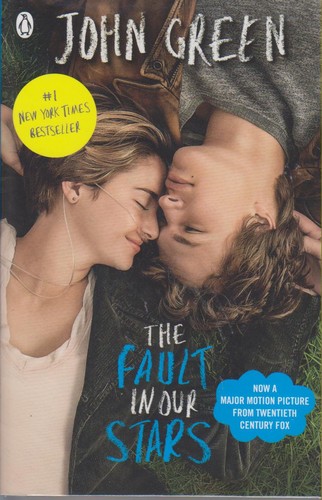
The Fault in Our Stars
by John Green
★ Top 5 book of 2012 · #2 on Best Books of 2012
Two teenagers who meet in a cancer support group fall in love and wrestle with what a short life can still mean. Funny, tender, and heartbreaking. Read the full description
Best for: Teens and adults who like emotional stories
The Fault in Our Stars is #71 on BookWard's Top 100 books for November 2026, with a BookWard Score of 57 out of 100. It slipped 29 places from #42 last month.
BookWard review of The Fault in Our Stars
4 of 5 stars 4.1 out of 5, from 229 reader ratings
BookWard rates The Fault in Our Stars 4.1 out of 5. That is the average of 229 reader ratings on Open Library (4.17), adjusted toward the typical book so that a small number of ratings cannot inflate it. Beyond the rating, it is #71 on BookWard's Top 100 books; 3,883 readers want to read it, 360 are reading it right now and 387 have finished it. Its adjusted rating is higher than 65% of the books on the Top 100.
How this rating works
BookWard’s rating is calculated, not hand-scored. We take the average rating readers have given the book on Open Library and adjust it toward the typical book: adjusted = (n × average + 25 × 3.8) ÷ (n + 25), where n is the number of ratings. A book needs at least 50 ratings to be rated. The rating reflects how readers received the book, not whether it is right for you. Your own ratings on your shelf are private and are not part of this number.
The Fault in Our Stars: reading interest over the past 12 months
Sources: Open Library’s public reading-log and ratings data (dump of 2026-10-31), Wikipedia page views and Wikidata. Monthly counts are exact; they show relative interest among readers of these public sources, not total readership.
Ranked against the other books on this list, The Fault in Our Stars’s reading interest has run from #41 to #78 over these 12 months. Interest rank blends shelf adds, Wikipedia page views and rating activity, each compared with the other 99 books that month.
Shelf adds by month
The Fault in Our Stars was added to Open Library readers’ shelves 581 times in the past 12 months, peaking in October 2026 with 75 (55% above its monthly average of 48). Over the latest three months (Aug 2026 to Oct 2026) shelf adds were down 8% on the three months before. 84% of the adds were “want to read”, 9% “currently reading” and 8% “already read”.
Want to read Currently reading Already read
Wikipedia page views
Its Wikipedia article was viewed 335,486 times in the past 12 months, peaking in June 2026 with 32,891 views. The latest three months were down 5% on the three before.
Source: Wikimedia monthly page views for the article The Fault in Our Stars.
Adaptations
- The Fault in Our Stars (film), 2014
Adaptations are listed from Wikidata; a release date near a rise in the charts above is context, not proof of a cause.
Awards and honours listed on Wikidata: Premio Bartolomé Hidalgo.
What the data says about The Fault in Our Stars
- Moderate swings. Monthly shelf adds averaged 48 with some ups and downs.
- Busiest and quietest months. October 2026 was its busiest month (75 adds), about 3.9 times its quietest, August 2026 (19).
- Attention and shelf adds move independently. Its Wikipedia views and its shelf adds did not rise and fall together over these 12 months (correlation -0.46).
- Share of the list. It accounts for 0.6% of all shelf adds recorded for the Top 100 over these 12 months, #65 of 100.
- Its age. First published in 2012 (14 years ago), it is older than 37% of the books on the list.
Each finding is computed from the public data above and shown only when the numbers support it.
The Fault in Our Stars on the Top 100: rank history
| Month | Rank | Score |
|---|---|---|
| November 2026 | #71 | 57 |
| October 2026 | #42 | 68 |
| September 2026 | #52 | 64 |
Is The Fault in Our Stars rising or falling?
Cooling It ranks lower this week than over the past year, so interest is softening from its recent level.
On Open Library, The Fault in Our Stars ranks outside the top 200 this week, #135 this month, and #83 over the past year. A longer bar means a higher position. Comparing the three windows shows whether readers are arriving faster than the book's long-term pace. Readings as of 2026-11-02.
Why The Fault in Our Stars made the Top 100
The Fault in Our Stars made the list mainly on being read right now (+19.4 points) and reader love (+14.9 points). Its smallest contribution is rising (+0). The BookWard Score blends five public signals, each scored from 0 to 100 and weighted as shown.
The reading-now, rating and rank signals come from Open Library’s public data, not from BookWard’s own readers. The score measures reading interest, not quality or sales. How the score works.
Open Library reader stats for The Fault in Our Stars
Source: Open Library public reading logs, as of 2026-11-02. BookWard’s own monthly snapshots are added to the picture, and anonymous BookWard reader data will be layered in as the community grows.
More readers have The Fault in Our Stars open right now than 57% of the other books on this list. These counts come from one public source, so they show relative interest rather than total readership.
Where it sits among Young adult books
It is #7 of the 12 Young adult books on this month’s list.
About The Fault in Our Stars
What it’s about
Hazel Grace Lancaster is sixteen, and her thyroid cancer has spread to her lungs. She tells her own story with a dry humor that keeps self-pity at a distance. At a cancer support group she meets Augustus Waters, seventeen, an osteosarcoma survivor who has lost a leg, and the two begin trading favorite novels. One of Hazel's is An Imperial Affliction, a book that stops mid-story and leaves her desperate for answers. Augustus sets out to get them, which leads to a trip to Amsterdam and a meeting with its reclusive author.
John Green drew on his time as a student chaplain in a children's hospital, and he dedicated the novel to Esther Earl. It is a love story that treats young people as fully formed, funny, and thoughtful about mortality. Readers who like bittersweet, witty fiction about first love will find a lot to hold onto.
At a glance
- First published
- 2012-01-10
- Genre
- Young adult
- Also described as
- young adult fiction, romantic fiction
- Length
- about 315 pages (the median across its editions)
- Original language
- English
- Languages
- editions in 13 languages listed on Open Library
- Editions
- 89 on Open Library
- Setting
- Amsterdam, Indianapolis
- Awards and honours
- Premio Bartolomé Hidalgo
From Open Library and Wikidata public records. Missing rows mean the records do not list that fact.
Themes
- Young love and illness
- Mortality
- Meaning
What reading it is like
Witty, bittersweet teen romance narrated by a sixteen-year-old with cancer.
At about 315 pages it is a longer read: roughly 6 hours at an average reading pace (about 250 words a minute, 300 words a page). Audiobook and edition lengths vary.
Good to know
Deals with terminal illness and death.
The premise
Hazel, a teenager living with cancer, meets Augustus at a support group. They fall in love and travel to Amsterdam to meet the author of Hazel's favorite book.
What you’ll get
- A witty, emotional love story
- Honest talk about illness
- A tearjerker
You might skip it if you find stories about illness too sad.
Pairs well with: Girl in Pieces · The Perks of Being a Wallflower
Keep exploring the chart
Also on the chart at #70 and #72
The Fault in Our Stars on the Best Books of 2012
The Fault in Our Stars came out in 2012. Of the 59 books first published in 2012 that met BookWard's data bar, it ranks #2 on our Best Books of 2012 list.
Why it made the list: 4,621 readers have shelved it on Open Library; readers rate it 4.2 out of 5 (228 ratings); 359 are reading it right now. The list ranks each year’s books on how many readers have picked them up, how highly readers rate them, and how many are reading them right now.
It earns Being read right now.
Nearby on the 2012 list
- Wonder R. J. Palacio, #1
- The Selection (the Selection #1) Kiera Cass, #3
- Drama Raina Telgemeier, #4
See all Best Books of 2012 Best books by year
More years: Best Books of 2011 Best Books of 2013.
Questions about The Fault in Our Stars
What rank is The Fault in Our Stars on the Top 100 books?
The Fault in Our Stars is #71 on BookWard's Top 100 books for November 2026, with a BookWard Score of 57 out of 100. It slipped 29 places from #42 last month.
Is The Fault in Our Stars rising or falling?
Cooling. It ranks lower this week than over the past year, so interest is softening from its recent level. On Open Library, The Fault in Our Stars ranks outside the top 200 this week, #135 this month, and #83 over the past year.
Why is The Fault in Our Stars on the Top 100?
The Fault in Our Stars made the list mainly on being read right now (+19.4 points) and reader love (+14.9 points). Its smallest contribution is rising (+0).
How many people are reading The Fault in Our Stars right now?
Open Library's reading logs show 360 readers currently reading The Fault in Our Stars, 3,883 who want to read it and 387 who have logged it as read (as of 2026-11-02). These are counts from one public source, not all readers.
How much interest has The Fault in Our Stars had over the past year?
581 Open Library shelf adds in the past 12 months (peak October 2026, 75); latest three months down 8% on the prior three; 335,486 Wikipedia views in the past 12 months (down 5% over the latest three months); Adaptations on Wikidata: The Fault in Our Stars (2014). Figures come from Open Library and Wikipedia public data.
Who is The Fault in Our Stars best for?
Teens and adults who like emotional stories.
Ask a question about The Fault in Our Stars
Ask about this book's chart history, reading interest, or who it is for. Answers come from this page's data and can be wrong.
Answers are AI-written from BookWard’s own help content and can be wrong. Please do not share personal information: questions and answers may be saved and, if they are useful, shown on this site without your name.
How we know
This page is built from public data: Open Library’s dated reading-log and ratings dumps, Wikipedia page views, Wikidata, and BookWard’s own monthly Top 100 snapshots. The interest rank blends shelf adds (45%), Wikipedia page views (30%), rating activity (10%) and, for months where a snapshot exists, BookWard’s own score (15%), each as a percentile among the Top 100 books. Every month shown is real data; nothing is estimated. Rankings reflect reading interest, not quality or sales, and can be affected by data gaps. Last updated November 2026. Read the full methodology.
It suits teens and adults who enjoy character-led romance with emotional depth.
315 pages, about 5 to 7.5 hours.
A funny, tender teen love story that refuses easy comfort. 56% taste match
 BookWard’s take
A funny, tender teen love story that refuses easy comfort
John Green's 2012 novel follows Hazel Grace Lancaster, sixteen and living with terminal thyroid cancer, who meets Augustus Waters at a support group she attends under protest. What lifts it is Hazel's voice: wry, quick, and allergic to pity. The humor is real, and so is the sadness, and Green keeps the sentiment from tipping over by letting his teenagers puncture their own melodrama. The tropes are the ones you'd expect from a sick-teen romance, yet the book plays against them, and Hazel and Gus read as fully drawn people rather than patients. At 315 pages it is lean, and the dialogue carries much of the work. I'd call it more heartfelt than tight, but the pace and the voice keep it moving.
At 315 pages it is compact and quick to get through, close to BookWard's taste for tight books.
The premise is well-worn, but the narrator's sharpness and the book-within-a-book thread give it its own flavor.
The language is clear and conversational, with a few lyrical flourishes rather than ornate writing.
What happens matters because of who it happens to; the relationship drives the book.
It stays honest about loss while finding warmth and meaning, landing mid-scale on outlook.
A straightforward linear telling with a recurring book-within-a-book device.
Banter and gallows humor run through even the saddest scenes, balancing a serious subject.
The subject is terminal illness, handled seriously but without graphic gloom.
It is built to move readers, and the feeling runs high throughout.
See all 50 dialsEvery position, side by side with this book
Where it lines up
- Character depthBookWard 8 · book 8
- Authorial voiceBookWard 9 · book 9
- PaceBookWard 8 · book 7
Where it pulls apart
- Familiar tropesBookWard 10 · book 5
- Internal logicBookWard 10 · book 7
- SentimentBookWard 8 · book 4
At 315 pages it is compact and quick to get through, close to BookWard's taste for tight books.
Hazel's support-group voice pulls you in from the first pages, a strong match for BookWard's love of immediate openings.
A teenage cancer romance sits on familiar ground, though the wit and self-awareness steer it away from the usual script.
The story follows a clear emotional and practical logic, with actions that grow naturally out of the characters' situations.
The premise is well-worn, but the narrator's sharpness and the book-within-a-book thread give it its own flavor.
Hazel and Augustus feel specific and fully thought, which BookWard values highly.
It aims straight for the heart, though Hazel's wry deflections keep it from turning syrupy.
Its heaviest moments come out of the illness at the center of the story rather than from cheap shocks.
Hazel's dry, observant narration is the book's biggest asset and exactly what BookWard rewards.
The story leads, but ideas about mortality and meaning keep surfacing in the characters' conversations.
Most information arrives through scenes and talk, though characters do reflect on ideas out loud.
Momentum holds from the support group through the Amsterdam trip without a noticeable lull.
The language is clear and conversational, with a few lyrical flourishes rather than ornate writing.
What happens matters because of who it happens to; the relationship drives the book.
It stays honest about loss while finding warmth and meaning, landing mid-scale on outlook.
A straightforward linear telling with a recurring book-within-a-book device.
Banter and gallows humor run through even the saddest scenes, balancing a serious subject.
Accessible and fast to read, with ideas that go deeper than the plain surface.
Everything comes through Hazel's first-person view alone.
The events move forward in order without jumping around.
Entirely realistic, grounded in hospitals, support groups and ordinary teenage life.
A small core of Hazel, Augustus, Isaac and a few family members and supporting figures.
It stays personal, focused on one relationship and a few family circles.
Hazel's thoughts and feelings carry the story more than external action does.
Conversation is the main engine, from witty banter to the book's emotional turns.
The Hazel and Augustus relationship is the beating center of the story.
It is set in recognizable contemporary places such as Indianapolis and Amsterdam.
Set in the book's own present day, with ordinary modern teenage life.
Its themes of love and loss endure, though the voice carries some of its moment.
Hazel tells her own story plainly and honestly, with no sign of deception.
The book wrestles with big questions but its sympathies are clear and its heart is in the open.
Scenes are sketched economically, with detail used when it serves a mood or joke.
A close, intimate first-person view from start to finish.
A standalone novel.
A few turns land, but the story is more about feeling than surprise.
It asks readers to sit with mortality, though it does so gently and with humor.
The subject is terminal illness, handled seriously but without graphic gloom.
It is built to move readers, and the feeling runs high throughout.
The humor leans dry and sardonic rather than slapstick.
Illness is present but physical violence is essentially absent.
Romance includes some intimacy, but it is brief and kept modest.
Politics sit well in the background of a personal story.
The language is plain and quick to read.
Hazel has strong views on cancer culture, books and life, and says so.
The book is rooted in the present and in looking back at what a life has meant.
It holds out for meaning and connection while never denying pain.
Review written by BookWard, dial version 1, November 2026.
Who is The Fault in Our Stars right for?
It suits teens and adults who enjoy character-led romance with emotional depth. It deals openly with terminal illness and grief, plus some mature teen themes, so readers sensitive to those subjects should go in prepared.
Accessible and fast to read, with ideas that go deeper than the plain surface.
The subject is terminal illness, handled seriously but without graphic gloom.
It is built to move readers, and the feeling runs high throughout.
Illness is present but physical violence is essentially absent.
Book CompanionThe Fault in Our Stars: ideas, characters, themes
Two teenagers facing cancer try to find meaning, love and a little joy in the time they have.
- The support group. Hazel attends at her parents' urging and meets Augustus Waters, which sets the story going.
- A shared book. Hazel and Augustus swap favorite novels, and her favorite, An Imperial Affliction, becomes a thread through the story.
- The Amsterdam trip. A wish arranged through the Genie Foundation sends them toward the author of the book Hazel loves.
- Voice over pity. Hazel narrates with irony and honesty, refusing to be treated as only a patient.
- The Julius Caesar title. The title draws on Shakespeare's line about fate and the stars, framing a question the book keeps asking.
Characters
Hazel Grace Lancaster
Narrator and protagonist
A sixteen-year-old with thyroid cancer that has affected her lungs, sharp-witted and wary of pity.
Augustus (Gus) Waters
Love interest
A seventeen-year-old survivor of osteosarcoma who lost a leg and has a flair for big gestures.
Isaac
Augustus's friend
A friend of Augustus's who has eye cancer and appears at the support group.
Philip
Hazel's oxygen concentrator
The name Hazel gives her oxygen machine, a small sign of her dry humor.
Themes
How people live and love knowing time is limited.
The title's question of whether our lives are set by the stars or by ourselves.
What it takes for a short life to still matter.
A first romance that carries real weight and risk.
How books shape the way these characters understand their own lives.
Discussion questions
- Why does Hazel resist being seen as a cancer patient first?
- What does the title's Julius Caesar line suggest about fate?
- How does the shared book change the way Hazel and Augustus relate?
- Does the humor soften the sadness or sharpen it?
- What do you want from a story about illness: comfort, honesty or both?
Personalize your Book Companion
This is the general edition. In BookWard, the Companion is written for you: your reading profile, your notes, and spoiler-safe to the page you are on.
Buy, listen or borrow The Fault in Our Stars
Each link opens a search for this book on that store, in a new tab.
Read on a device
Borrow
Reviews and community
If you liked The Fault in Our Stars
A midnight caper that turns into a search for a person
All the Bright PlacesJennifer NivenTwo teenagers meet on a ledge and change each other
Me Before YouJojo MoyesA big-hearted romance that earns its tears and its argument
Beach ReadEmily HenryA rom-com about two writers who swap genres for a summer
Track The Fault in Our Stars and find your next favorite
Add it to your shelf, rate what you have read, and BookWard will recommend what fits you.
Free to start. No credit card needed.