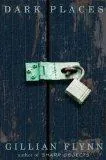
Dark Places
by Gillian Flynn · 2009
Suited to adult readers and mature older teens who are comfortable with dark crime fiction.
368 pages, about 6 to 8.5 hours.
A cold-case thriller where a child survivor must question her memory. 69% taste match
The story
Dark Places is a mystery thriller by Gillian Flynn, first published in 2009. It centers on Libby Day, who was seven years old when her mother and two sisters were murdered at their family farm. Her older brother Ben was convicted of the killings and sentenced to life in prison. Libby grew up isolated, without close relationships or steady work.
Twenty-four years later, a group of people who believe Ben did not commit the crime approach her, and she begins to revisit what she remembers from that night. The narrative moves between Libby's investigation in the present and the events surrounding the day of the murders. The novel is set in Missouri, with Kansas City among its locations, and draws on rural poverty, class tension, and the Satanic panic that spread across the United States in the 1980s. Its subjects include families, siblings, and the children of murder victims. A film adaptation starring Charlize Theron was released on August 7, 2015. The book runs about 368 pages and has appeared in 32 editions.
Setting
Kansas City (Mo.)Kansas CityMissouri
Themes
LiteratureFamiliesBrothers and sistersFamilyCrimes againstChildren of murder victimsThrillerHomicide
- Want to read 234
- Reading now 10
- Read 76
Most people shelving it are saving it for later.
Of 320 readers who put it on a shelf, 73% want to read it, 3% are reading it now, 24% have finished it and 0% stopped before the end.
By the numbers
- The median edition runs 368 pages. Counting about 275 words a page and an adult reading pace of 250 words a minute, that is about 6.7 hours of reading.
- Open Library tracks 32 editions from 32 publishers, the earliest dated 2009 and the latest 2019, across 6 languages.
- On reader demand it ranks in the top 2% of the modern books in our catalog (15,152 of them).
- Libraries shelve it under Dewey 813.6 and Library of Congress class PS-3606.00000000.L935 D37 2009eb.
 BookWard’s take
A cold-case thriller where a child survivor must question her memory
Gillian Flynn's 2009 novel follows Libby Day, who survived the murder of her mother and two sisters at seven and has spent twenty-four years living on the edge of her own life. When people who believe her brother Ben is innocent come to her, she has to test what she remembers. The book alternates between her search and the day of the killings, and that is where it earns its grip: it pulls you in at once and rarely lets go. Libby is drawn with real texture rather than as a detective type, which gives the story a human center. The moral picture is murky by design, and the novel leans hard into darkness while mostly earning it. Dark in tone and tightly engineered, it is set against rural poverty and the 1980s Satanic panic.
At 368 pages it runs medium-length rather than tight, longer than BookWard's taste for short books.
The alternating present-day search and flashbacks keep it moving briskly, close to BookWard's preference for pace.
The Satanic panic and rural poverty backdrop give a familiar mystery shape some distinctiveness, though it is not wholly new ground.
The prose is direct and edged rather than ornate, sitting near the plain side with some stylish bite.
The mystery drives events, but Libby's damaged interior carries much of the weight, so it leans slightly toward character.
The material is bleak, with trauma, poverty and violence, well below the hopeful outlook BookWard leans toward.
Cutting between Libby's present and the day of the murders is a notable device, a little more structured than BookWard usually likes.
Libby's dark, sardonic voice allows some dry humor, but the book stays serious overall.
Child murder and family ruin make this very dark, darker than BookWard's balanced middle.
The grief and anger run strong but are held tight, close to BookWard's moderate emotion.
See all 50 dialsEvery position, side by side with this book
Where it lines up
- Character depthBookWard 8 · book 8
- Authorial voiceBookWard 9 · book 9
- Story or ideasBookWard 3 · book 3
Where it pulls apart
- LengthBookWard 1 · book 4
- Familiar tropesBookWard 10 · book 7
- Internal logicBookWard 10 · book 8
At 368 pages it runs medium-length rather than tight, longer than BookWard's taste for short books.
The premise of a lone child survivor revisiting a family massacre grabs from the start, which suits BookWard's taste for immediate hooks.
The cold-case and unreliable-memory frame is well worn, though the setting and tone freshen it; BookWard prefers fewer familiar tropes.
The investigation and the flashbacks are built to interlock, so the puzzle feels deliberate and holds together, as BookWard likes.
The alternating present-day search and flashbacks keep it moving briskly, close to BookWard's preference for pace.
The Satanic panic and rural poverty backdrop give a familiar mystery shape some distinctiveness, though it is not wholly new ground.
Libby's isolation and damage are central to the story and drawn in detail, in line with BookWard's taste for deep characters.
The central question is built to be answered, so it resolves more than it leaves open, matching BookWard's preference.
Libby's grief is handled with a hard, unsoftened edge rather than tears, which fits BookWard's liking for restraint.
The subject is brutal, but the darkness feeds the investigation rather than serving as mere shock, though not every beat is wholly earned.
This is a novel, so the nonfiction rigor dial does not apply.
Flynn's narration has a sharp, caustic personality that reads as unmistakably hers, which BookWard values highly.
This is firmly story-led, driven by a mystery and its characters rather than by an argument, while BookWard also favors story.
Information comes through Libby's investigation and the flashback scenes rather than being explained outright, as BookWard prefers.
The two interleaved threads keep fresh information arriving, so the middle holds up, near BookWard's taste for sustained books.
The prose is direct and edged rather than ornate, sitting near the plain side with some stylish bite.
The mystery drives events, but Libby's damaged interior carries much of the weight, so it leans slightly toward character.
The material is bleak, with trauma, poverty and violence, well below the hopeful outlook BookWard leans toward.
Cutting between Libby's present and the day of the murders is a notable device, a little more structured than BookWard usually likes.
Libby's dark, sardonic voice allows some dry humor, but the book stays serious overall.
The prose is accessible and the plot clear, though tracking two timelines asks some attention, close to BookWard's middle ground.
Libby leads, with the past timeline following other family members, giving a few distinct viewpoints.
It alternates between the present and the day of the murders, a clearly shifting timeline, more than BookWard typically seeks.
The story is grounded in realistic crime and family life, leaning more grounded than BookWard's middle-ground taste.
The family, the investigators and the townspeople make a moderate cast, near BookWard's preference.
The story stays close to one family and one farm, an intimate scale in line with BookWard's taste.
Libby's inner state and the external investigation share space fairly evenly, near BookWard's balance.
Interviews and confrontations drive much of the investigation, giving a fair amount of dialogue.
Romance is a minor thread beside the family mystery, below BookWard's middle taste.
A Missouri farm and small-town poverty are less familiar than most settings, near BookWard's preference.
It spans the 1980s and the present day, so it is not squarely contemporary, below BookWard's lean.
The 1980s panic gives it a period flavor, but its themes of memory and family have lasting force.
Libby's memory is plainly unreliable and central to the mystery, which suits BookWard's taste.
Guilt, blame and who deserves sympathy stay murky across the book, ambiguous like BookWard prefers.
Setting and atmosphere are rendered with some richness, but the book favors voice over scenery, sitting near BookWard's taste.
It is a standalone novel with no series.
Its reveals reorder what you thought you knew, in line with BookWard's taste for surprises.
The disturbing subject and unresolved sympathy leave little comfort, meeting BookWard's appetite for challenge.
Child murder and family ruin make this very dark, darker than BookWard's balanced middle.
The grief and anger run strong but are held tight, close to BookWard's moderate emotion.
Where humor appears it is dry and bitter rather than broad, below BookWard's middle.
The killings and what led to them are shown with real brutality, above BookWard's middle.
Some sexual content features in the teenage storylines, but it is not a major focus, near BookWard's middle.
Class and poverty form the social backdrop, but the book is not overtly political, near BookWard's middle.
The language is plain and conversational with no heavy dialect, easier than BookWard's middle.
Libby's voice is bluntly opinionated, a bit above BookWard's slight lean toward opinionated narration.
The book is preoccupied with the past and what it left behind, looking back more than BookWard's forward lean.
Its worldview is cynical about families and communities, well below BookWard's mildly idealistic lean.
Review written by BookWard, dial version 1, November 2026.
Who is Dark Places right for?
Suited to adult readers and mature older teens who are comfortable with dark crime fiction. It deals with the murder of children and family violence, with graphic detail and disturbing themes.
The prose is accessible and the plot clear, though tracking two timelines asks some attention, close to BookWard's middle ground.
Child murder and family ruin make this very dark, darker than BookWard's balanced middle.
The grief and anger run strong but are held tight, close to BookWard's moderate emotion.
The killings and what led to them are shown with real brutality, above BookWard's middle.
Book CompanionDark Places: ideas, characters, themes
A woman who survived her family's murder as a child must question the memory and the testimony that put her brother in prison.
- The survivor. Libby was seven when her mother and two sisters were killed, and her account helped convict her brother Ben.
- A life on pause. She has grown up isolated, without close relationships or steady work, and the murders still define her.
- A new search. Twenty-four years later, a group convinced Ben is innocent approaches her, and she starts reexamining the night.
- Two threads. The book alternates between Libby's present investigation and the events surrounding the day of the murders.
- The backdrop. The story draws on rural poverty, class tension and the 1980s Satanic panic in the United States.
Characters
Libby Day
Narrator and survivor
The only family member to survive the murders, she has lived adrift ever since and now revisits what she remembers.
Ben Day
Libby's older brother
Convicted of the killings and sentenced to life in prison, though some believe he is innocent.
Themes
How unreliable recollection can be, especially a child's memory of trauma.
The stories people tell themselves in order to survive painful events.
How rural economic hardship shapes a family and a community.
How collective fear in the 1980s distorted judgment and blame.
The ties and fractures between relatives, and what loyalty costs.
Discussion questions
- How far can you trust Libby's memory of that night, and why?
- Why might a community be so ready to believe the worst of one person?
- How does the 1980s panic shape what people think happened?
- What does Libby's isolation say about the long cost of surviving a tragedy?
- Does the alternating structure help or hinder your guesses about the truth?
Personalize your Book Companion
This is the general edition. In BookWard, the Companion is written for you: your reading profile, your notes, and spoiler-safe to the page you are on.
Buy, listen or borrow Dark Places
Each link opens a search for this book on that store, in a new tab.
Read on a device
Borrow
Reviews and community
If you liked Dark Places
A journalist goes home to Wind Gap and her own wounds
Horror MoviePaul TremblayA cursed cult film, a lone survivor, and a narrator you can't trust
Full Dark, No StarsStephen KingFour tight novellas about retribution, with no comfort offered
The GhostwriterJulie ClarkA ghostwriter is hired to write her father's confession
Sources: Open Library.
Track Dark Places and find your next favorite
Add it to your shelf, rate what you have read, and BookWard will recommend what fits you.
Free to start. No credit card needed.