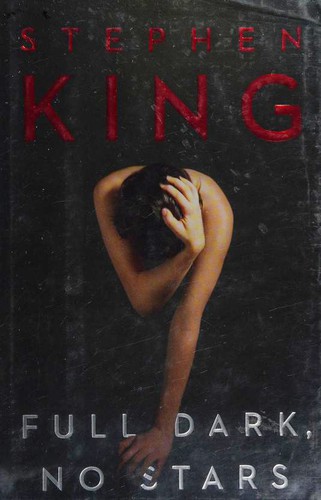
Full Dark, No Stars
by Stephen King
★ Top 25 book of 2010 · #13 on Best Books of 2010
Stephen King's Full Dark, No Stars gathers four novellas, all built around the theme of retribution. The collection won the 2011 Bram Stoker Award and British Fantasy Award for Best Collection, and includes 1922, A Good Marriage, Big Driver and Fair Execution.
Best for: Stephen King fans who like novellas about retribution
Full Dark, No Stars is #13 on BookWard's Best Books of 2010, out of 43 2010 books that cleared our data bar.
What Full Dark, No Stars is about
Four novellas, one shared preoccupation: what people do when they feel wronged, and what it costs them. Stephen King's collection takes retribution as its common thread and follows it into four very different situations, under the titles 1922, A Good Marriage, Big Driver and Fair Extension. The first is set in Hemingford Home, Nebraska, a town King readers may recall from The Stand and It.
The mood is grim and unsettling, built around secrets, trauma and the consequences of choices that cannot be taken back. These are shorter, tighter stories than a typical King novel, so the collection suits readers who like their dread concentrated. It won the 2011 Bram Stoker Award and the 2011 British Fantasy Award, both for Best Collection.
Full Dark, No Stars on the Best Books of 2010
Full Dark, No Stars came out in 2010. Of the 43 books first published in 2010 that met BookWard's data bar, it ranks #13 on our Best Books of 2010 list.
Why it made the list: 633 readers have shelved it on Open Library; readers rate it 4 out of 5 (46 ratings); 25 are reading it right now. The list ranks each year’s books on how many readers have picked them up, how highly readers rate them, and how many are reading them right now.
Nearby on the 2010 list
- A Long Walk to Water( Linda Sue Park) Linda Sue Park, #11
- Attached Amir Levine, #12
- No Excuses! Brian Tracy, #14
- A Dog's Purpose W. Bruce Cameron, #15
See all Best Books of 2010 Best books by year
More years: Best Books of 2009 Best Books of 2011.
The numbers behind it
- Readers: 533 want to read it, 25 are reading it now and 75 have read it, according to Open Library.
- Ratings: 4 out of 5 from 46 Open Library ratings.
| Signal | This book (0 to 100) | Weight |
|---|---|---|
| Reach | 72 | 55% |
| Reader love | 56 | 25% |
| Being read right now | 67 | 20% |
Questions about Full Dark, No Stars
When was Full Dark, No Stars published?
Full Dark, No Stars by Stephen King was first published in 2010.
Was Full Dark, No Stars one of the best books of 2010?
Full Dark, No Stars is #13 on BookWard's Best Books of 2010, out of 43 2010 books that cleared our data bar. 633 readers have shelved it on Open Library; readers rate it 4 out of 5 (46 ratings); 25 are reading it right now.
Why is Full Dark, No Stars on the Best Books of 2010 list?
633 readers have shelved it on Open Library; readers rate it 4 out of 5 (46 ratings); 25 are reading it right now.
More of the best books of 2010
- The Lost Hero Rick Riordan, #1
- The Way of Kings Brandon Sanderson, #2
- Divergent Veronica Roth, #3
- The Personal MBA Josh Kaufman, #4
- It's Not Summer Without You Jenny Han, #5
- The Red Pyramid Rick Riordan, #6
See the full Best Books of 2010, the Top 100, or new books on Rising.
How we know
This page uses public data: Open Library reader counts and ratings, and Wikipedia page views for recent years. The description is paraphrased from real source text. Rankings reflect reading interest, not quality or sales, and can be affected by data gaps. Lists update monthly.
This suits adult readers comfortable with dark, unsettling fiction.
Depends on the edition you pick.
Four tight novellas about retribution, with no comfort offered. 66% taste match
 BookWard’s take
Four tight novellas about retribution, with no comfort offered
Full Dark, No Stars gathers four novellas, 1922, A Good Marriage, Big Driver and Fair Execution, all circling the theme of retribution. Much of it works. Each novella commits to its premise almost at once, and the darkness is earned: it grows out of the characters' own choices rather than being tacked on. The tone stays restrained, with little consolation offered, and the characters have real depth for the form. Where it asks something of the reader is in its outlook, which runs bleak, and in its grounded realism, since these are mostly stories without the supernatural. The collection won the 2011 Bram Stoker Award for Best Collection and the 2011 British Fantasy Award for Best Collection. If you want King at his most stripped-down, this is a strong place to look.
Four novellas keep each story compact, though the collection as a whole is substantial; that suits BookWard's preference for tight storytelling.
The novella length forces momentum, so the stories move briskly without much padding, close to BookWard's preferred speed.
The retribution theme is familiar, but the collection's grim, unsoftened treatment gives it a distinct identity.
King writes in a direct, conversational style that favors clarity over ornament, close to BookWard's leaning.
Plot and character are tightly bound here, with events pushed along by the choices and guilt of the people involved.
The theme of retribution and the collection's title point toward a bleak outlook, more downbeat than BookWard's mildly hopeful lean.
Four self-contained novellas are a conventional way to build a collection, a little plainer than BookWard's slight taste for the unusual.
This is a serious, grim collection with essentially no comic relief, well away from BookWard's lean toward humor.
The title and theme announce it, and the stories deliver grim material throughout, darker than BookWard's middle position.
Fear, rage and remorse run high, making the emotional temperature more intense than BookWard's moderate lean.
See all 50 dialsEvery position, side by side with this book
Where it lines up
- Character depthBookWard 8 · book 8
- Authorial voiceBookWard 9 · book 9
- Sagging middleBookWard 8 · book 8
Where it pulls apart
- Familiar tropesBookWard 10 · book 6
- LengthBookWard 1 · book 3
- OpeningBookWard 10 · book 8
Four novellas keep each story compact, though the collection as a whole is substantial; that suits BookWard's preference for tight storytelling.
Each novella establishes its situation and stakes quickly, which matches BookWard's love of openings that grab at once.
Revenge and murder are well-worn ground, though King's handling keeps them from feeling stock; BookWard would want a fresher angle.
The stories follow their own consequences closely, with actions leading to outcomes you can trace, which BookWard values.
The novella length forces momentum, so the stories move briskly without much padding, close to BookWard's preferred speed.
The retribution theme is familiar, but the collection's grim, unsoftened treatment gives it a distinct identity.
Novella length leaves room to dig into motives and guilt, giving the central figures real weight, in line with BookWard's taste.
The stories tend toward firm, consequential conclusions instead of drifting off, which BookWard appreciates.
The collection offers little comfort or softening, which sits well with BookWard's liking for restraint.
The darkness follows from the characters' choices and the retribution theme instead of existing for its own sake, matching BookWard's standard.
This is fiction, so the nonfiction rigor dial does not apply.
King's plain, confiding narration is unmistakable and carries the whole collection, which BookWard rates highly.
These are story-first, driven by what people do and what it costs them, which fits BookWard's story-led lean.
King mostly lets events and behavior carry the meaning, matching BookWard's preference for showing in scene.
Short forms leave little room for a slump, so tension holds from start to finish, as BookWard likes.
King writes in a direct, conversational style that favors clarity over ornament, close to BookWard's leaning.
Plot and character are tightly bound here, with events pushed along by the choices and guilt of the people involved.
The theme of retribution and the collection's title point toward a bleak outlook, more downbeat than BookWard's mildly hopeful lean.
Four self-contained novellas are a conventional way to build a collection, a little plainer than BookWard's slight taste for the unusual.
This is a serious, grim collection with essentially no comic relief, well away from BookWard's lean toward humor.
The language is accessible and the stories are easy to follow, though the subject matter is heavy.
Each novella stays close to its central figure, so viewpoints stay narrow, fewer than BookWard tends to enjoy.
The stories largely unfold in a straightforward line, simpler than BookWard's mixed taste in time handling.
The collection leans on grounded, human-scale dread instead of the supernatural, keeping it earthy relative to BookWard's mid lean.
Each novella focuses on a small circle of people, a tighter cast than BookWard's middle position.
The stakes are personal and domestic, an intimate scale that is a touch smaller than BookWard's middle.
Guilt, fear and rationalization drive much of the drama, so the focus leans toward inner life over action.
Conversation matters, but the stories also depend on narration and interior reflection, so dialogue sits at a moderate level.
Relationships, including marriages, matter, but romance is not what the stories are about, so it stays minor.
The settings are ordinary American places, more familiar than the unfamiliar worlds BookWard leans toward.
The collection ranges across settings, including at least one period piece, so it sits further back than BookWard's present-day lean.
Guilt, revenge and moral consequence are durable subjects, giving the book lasting appeal, in line with BookWard.
Some narrators justify or soften their own actions, which puts reliability under pressure and nods toward BookWard's taste.
The collection explores wrongdoing, justice and revenge without tidy answers, leaning toward the ambiguity BookWard enjoys.
King gives enough detail to ground each setting without lingering, a middling richness near BookWard's own.
This is fiction, so the nonfiction style dial does not apply.
This is fiction, so the nonfiction perspective dial does not apply.
The stories stand alone, with only faint connections to King's wider fictional world, so there is no series to follow.
The stories turn on consequence and reversal, though not every turn is a surprise, a bit short of BookWard's appetite.
The book asks readers to sit with guilt and ugly human choices, which is more challenging than comforting, in line with BookWard.
The title and theme announce it, and the stories deliver grim material throughout, darker than BookWard's middle position.
Fear, rage and remorse run high, making the emotional temperature more intense than BookWard's moderate lean.
Humor is nearly absent, and what little appears is dry and incidental.
Retribution is the theme, so violence and its aftermath appear on the page, above BookWard's middle comfort.
Sexual content is present in places but is not a central feature, staying close to BookWard's middle.
The stories focus on personal conflict rather than political argument, so politics stays in the background.
The language is plain and readable with no heavy dialect, easier than BookWard's middle position.
King's narrators speak with strong personality and judgment, giving the narration a decided stance.
The stories dwell on past wrongs and their consequences, looking back more than forward.
The collection takes a hard, unsparing view of human behavior, far from BookWard's slightly idealistic lean.
Review written by BookWard, dial version 1, November 2026.
Who is Full Dark, No Stars right for?
This suits adult readers comfortable with dark, unsettling fiction. It contains violence and disturbing subject matter, including crime and its aftermath, so it is not suited to younger readers.
The language is accessible and the stories are easy to follow, though the subject matter is heavy.
The title and theme announce it, and the stories deliver grim material throughout, darker than BookWard's middle position.
Fear, rage and remorse run high, making the emotional temperature more intense than BookWard's moderate lean.
Retribution is the theme, so violence and its aftermath appear on the page, above BookWard's middle comfort.
Book CompanionFull Dark, No Stars: ideas, characters, themes
Four novellas explore retribution, asking what people do when wrongdoing demands payment and whether payment ever settles anything.
- Retribution as the thread. All four novellas deal with retribution, so the book reads as one sustained exploration of payback rather than four unrelated tales.
- Four novellas, four tones. The collection contains 1922, A Good Marriage, Big Driver and Fair Execution, each a self-contained story with its own situation.
- A Nebraska connection. 1922 is set in Hemingford Home, Nebraska, a town that also appears in several other King books, including The Stand and It.
- Recognized by genre awards. The collection won the 2011 Bram Stoker Award for Best Collection and the 2011 British Fantasy Award for Best Collection.
- A novella nomination. 1922 was also nominated for the 2011 British Fantasy Award for Best Novella.
Themes
The idea that wrongs demand repayment, and what that demand does to those who pursue it.
The weight of responsibility that lingers after a harmful choice.
The uneasy line between fair consequences and personal vengeance.
How ordinary people justify actions they once would have refused.
The way choices carry forward and shape what follows.
Discussion questions
- Do the four novellas treat retribution as justified, tragic, or both?
- Which story's central choice felt most believable, and why?
- How does the collection's title shape your expectations before you start?
- Where does justice end and revenge begin in these stories?
- Does the grim outlook make the stories more honest or more punishing?
Personalize your Book Companion
This is the general edition. In BookWard, the Companion is written for you: your reading profile, your notes, and spoiler-safe to the page you are on.
Buy, listen or borrow Full Dark, No Stars
Each link opens a search for this book on that store, in a new tab.
Read on a device
Borrow
Reviews and community
If you liked Full Dark, No Stars
Find your own best books
Add what you have read, rate it, and BookWard will recommend what to read next.
Free to start. No credit card needed.