Best for adult readers and mature teens who enjoy literary horror.
364 pages, about 6 to 8.5 hours.
A cursed cult film, a lone survivor, and a narrator you can't trust. 58% taste match
The story
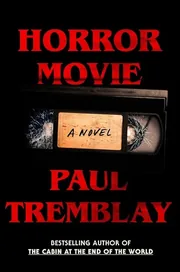
Horror Movie is a horror novel by Paul Tremblay, first published in 2024. It blends body horror with an unreliable narrator, and it takes the film world of the 1990s as its starting point. The book runs to roughly 364 pages.
In June 1993, a group of young guerrilla filmmakers spends four weeks shooting an art-house picture also called Horror Movie. Only three of its scenes ever reach an audience, yet the film attracts a devoted following over the years. Three decades on, a studio moves toward a big-budget reboot. The narrator is the man who played the Thin Kid and the sole living member of the original cast. As he is drawn into the remake, he must deal with producers, directors and fan conventions, while recollections of the original shoot and the tragedy connected to it return and the lines between film and life, then and now, begin to give way.
Themes
New York Times bestsellerHorrorBody horrorunreliable narrator
Of 12 readers who put it on a shelf, 50% want to read it, 0% are reading it now, 50% have finished it and 0% stopped before the end.
By the numbers
- The median edition runs 364 pages. Counting about 275 words a page and an adult reading pace of 250 words a minute, that is about 6.7 hours of reading.
- Open Library tracks 4 editions from 3 publishers, the earliest dated 2024 and the latest 2025.
- On reader demand it ranks in the top 55% of the recent releases books in our catalog (1,627 of them).
- Libraries shelve it under Library of Congress class PS-3620.00000000.R445H6 2024.
 BookWard’s take
A cursed cult film, a lone survivor, and a narrator you can't trust
Paul Tremblay builds Horror Movie around a notorious 1993 art-house film and the one cast member still alive to remember it, now pulled into a big-budget reboot. The narrator is deliberately unreliable, and the book never settles the moral questions it raises, which suits a reader who likes ambiguity over tidy verdicts. The structure is experimental, with the story shifting between 1993 and the present, so it asks for more effort than a standard horror paperback. Originality is the draw: the film-within-a-novel premise and the satire of the convention-floor fan scene feel fresh. Familiar horror conventions turn up, but they are used knowingly rather than leaned on. This is a slow-burning book of dread that rewards close attention more than speed.
At 364 pages it is mid-length for horror, longer than BookWard's tight preference but not sprawling.
Dread accumulates steadily, slower than BookWard's fast preference but without dead stretches.
A novel built around a notorious film and its reboot is a distinctive angle that BookWard rewards.
The mystery matters, but the narrator's guilt and memory carry the book, so character leads.
The subject is tragedy and its aftermath, so the outlook is largely bleak.
Fragmented memory and screenplay-style elements make it more experimental than conventional horror.
Satire of producers and fan conventions adds sharp moments, but the book stays serious overall.
Tragedy, body horror and dread make this a dark book throughout.
Feeling is present through guilt and loss but expressed with restraint more than outburst.
See all 50 dialsEvery position, side by side with this book
Where it lines up
- SentimentBookWard 8 · book 8
- OriginalityBookWard 9 · book 8
- Character depthBookWard 8 · book 7
Where it pulls apart
- LengthBookWard 1 · book 5
- Internal logicBookWard 10 · book 6
- OpeningBookWard 10 · book 7
At 364 pages it is mid-length for horror, longer than BookWard's tight preference but not sprawling.
The premise of a cursed film and its last survivor grabs fast, though the dread builds more than it explodes.
Cult-film horror is familiar territory, but the metafictional framing keeps it from reading as stock; this suits BookWard.
Reality and film blur on purpose, so the internal rules are intentionally slippery, short of BookWard's airtight ideal.
Dread accumulates steadily, slower than BookWard's fast preference but without dead stretches.
A novel built around a notorious film and its reboot is a distinctive angle that BookWard rewards.
The Thin Kid's memories and guilt anchor the book, giving the narrator real weight and interior life.
The tone is cold and unsparing, with little softness or consolation, which matches BookWard's restraint.
The darkness connects to a real tragedy on set, so the horror feels earned rather than gratuitous.
Tremblay's confessional, wary narration gives the book a distinct and recognizable personality.
Story leads, but ideas about fandom, memory and film culture run throughout, sitting near the middle.
Backstory surfaces through the narrator's memories and scenes, not through plain explaining.
The alternating past and present keep momentum, though the convention and producer stretches may soften tension.
The mystery matters, but the narrator's guilt and memory carry the book, so character leads.
The subject is tragedy and its aftermath, so the outlook is largely bleak.
Fragmented memory and screenplay-style elements make it more experimental than conventional horror.
Satire of producers and fan conventions adds sharp moments, but the book stays serious overall.
Shifting reality and a slippery narrator ask for attention, making it harder than an easy genre read.
The story is anchored in a single narrator, with little shifting of perspective.
It moves between the 1993 shoot and the present day, with memory bleeding across both.
This is a personal, haunted story rather than an epic, centered on one man's memories.
Most of the tension is interior, in memory and dread, with action secondary.
Scenes among filmmakers, producers and fans give dialogue a solid but not dominant share.
Film sets and fan conventions are a semi-familiar subculture that feels fresh and specific.
It spans 1993 and the present, so it feels contemporary even while looking back.
The film-fandom setting is specific to its era, though the dread of guilt travels well.
The narrator's reliability is the book's central tension, which fits BookWard's love of it.
Lines crossed on set and the narrator's role leave blame murky and morally unresolved.
Settings are evoked with enough detail to unsettle without becoming lush or ornate.
It is a standalone novel with no sequel structure.
It confronts guilt and unsettling material, offering little comfort to the reader.
Tragedy, body horror and dread make this a dark book throughout.
Feeling is present through guilt and loss but expressed with restraint more than outburst.
Humor, where it appears, is dry and satirical rather than broad.
Body horror and a tragic on-set event bring real violence, though it is not constant.
Industry cynicism appears as satire, but politics stay in the background.
The language is plain and contemporary, with no heavy dialect.
The narrator's bitterness and wry commentary give the narration a clear point of view.
Preoccupied with what happened in 1993, the book looks backward more than forward.
The film industry and the past are treated with a cynical, disillusioned eye.
Review written by BookWard, dial version 1, November 2026.
Who is Horror Movie right for?
Best for adult readers and mature teens who enjoy literary horror. It includes body horror, a tragic death connected to a film shoot, and disturbing themes.
Shifting reality and a slippery narrator ask for attention, making it harder than an easy genre read.
Tragedy, body horror and dread make this a dark book throughout.
Feeling is present through guilt and loss but expressed with restraint more than outburst.
Body horror and a tragic on-set event bring real violence, though it is not constant.
Book CompanionHorror Movie: ideas, characters, themes
A lone survivor of a notorious cult film is pulled into its reboot, and the line between memory, movie and reality begins to dissolve.
- The 1993 shoot. Young guerrilla filmmakers spend four weeks making an art-house horror picture that only partly reaches audiences.
- A cult grows from fragments. Only three scenes were ever released, yet the film builds a rabid fanbase over the decades.
- The reboot. Hollywood moves toward a big-budget remake, pulling the surviving cast member back in.
- The Thin Kid. The narrator is the only living cast member, carrying the secrets and guilt of the original production.
- Blurring lines. Past and present, film and reality, begin to bleed together as memories return.
Characters
The Thin Kid
Narrator and sole surviving cast member
He played the Thin Kid in the original film and is drawn into the remake despite what he remembers.
Themes
How a narrator's recollection of past events can be shaped, distorted or withheld.
How audiences build meaning and devotion around a work, sometimes beyond its makers' control.
The cost of making and remaking disturbing art, especially when real harm is involved.
The weight of a past tragedy and the lines crossed that led to it.
The way film and life blur, making it hard to tell what is real.
Discussion questions
- How far do you trust the narrator, and what made you doubt him?
- What does the book say about why audiences obsess over a mostly unseen film?
- Is remaking a cursed work an act of tribute, exploitation or something else?
- How does the blurring of film and reality shape the way dread builds?
- What responsibility do creators carry when their art is tied to real harm?
Personalize your Book Companion
This is the general edition. In BookWard, the Companion is written for you: your reading profile, your notes, and spoiler-safe to the page you are on.
Buy, listen or borrow Horror Movie
Each link opens a search for this book on that store, in a new tab.
Read on a device
Borrow
Reviews and community
If you liked Horror Movie
A cold-case thriller where a child survivor must question her memory
Alias GraceMargaret AtwoodA murder case retold through a woman who may not remember
SwitzyEmma ClineA dying executive's last journey, told from inside a failing mind
The End of EverythingM. John HarrisonA strange Kent tideline, and an object that won't hold still
Sources: Open Library.
Track Horror Movie and find your next favorite
Add it to your shelf, rate what you have read, and BookWard will recommend what fits you.
Free to start. No credit card needed.