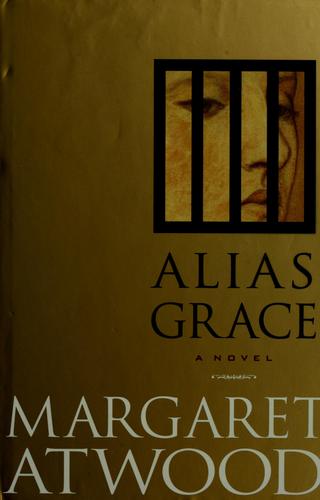
Alias Grace
by Margaret Atwood
★ Top 25 book of 1996 · #18 on Best Books of 1996
Margaret Atwood revisits a notorious nineteenth century case in which Grace Marks, serving life for two murders, says she cannot remember them. A doctor studying mental illness is brought in to draw out her story, leaving her guilt an open question.
Best for: Readers who enjoy dark, historical fiction built around an ambiguous, enigmatic central character
Alias Grace is #18 on BookWard's Best Books of 1996, out of 39 1996 books that cleared our data bar.
What Alias Grace is about
In 1843, a man and his housekeeper were killed in Canada West. Two servants, Grace Marks and James McDermott, were convicted. McDermott was hanged, while Grace was sentenced to life imprisonment. She says she remembers nothing of the killings, and opinion about her has never settled: some see an innocent young woman, others a evil or insane one.
Margaret Atwood builds a novel around that uncertainty. A fictional doctor, Simon Jordan, is hired by reformers and spiritualists who hope to win Grace a pardon. In a sewing room at the governor's mansion he listens as she recounts her life, from a hard childhood in Ireland and the loss of her mother on the voyage to Canada to the friendship with a fellow servant that shaped her. The more he hears, the more tangled in her story he becomes. It is a slow, brooding novel about memory, class and who gets believed. It rewards readers who like historical fiction that leaves the central question open.
Alias Grace on the Best Books of 1996
Alias Grace came out in 1996. Of the 39 books first published in 1996 that met BookWard's data bar, it ranks #18 on our Best Books of 1996 list.
Why it made the list: 277 readers have shelved it on Open Library; readers rate it 3.8 out of 5 (23 ratings). The list ranks each year’s books on how many readers have picked them up, how highly readers rate them, and how many are reading them right now.
Nearby on the 1996 list
- The Highly Sensitive Person Elaine N. Aron, #16
- Vampire Breath Robert Lawrence Stine, #17
- The Color of Water James McBride, #19
- Frindle Andrew Clements, #20
See all Best Books of 1996 Best books by year
More years: Best Books of 1995 Best Books of 1997.
The numbers behind it
- Readers: 230 want to read it, 10 are reading it now and 37 have read it, according to Open Library.
- Ratings: 3.8 out of 5 from 23 Open Library ratings.
| Signal | This book (0 to 100) | Weight |
|---|---|---|
| Reach | 62 | 55% |
| Reader love | 26 | 25% |
| Being read right now | 33 | 20% |
Questions about Alias Grace
When was Alias Grace published?
Alias Grace by Margaret Atwood was first published in 1996.
Was Alias Grace one of the best books of 1996?
Alias Grace is #18 on BookWard's Best Books of 1996, out of 39 1996 books that cleared our data bar. 277 readers have shelved it on Open Library; readers rate it 3.8 out of 5 (23 ratings).
Why is Alias Grace on the Best Books of 1996 list?
277 readers have shelved it on Open Library; readers rate it 3.8 out of 5 (23 ratings).
More of the best books of 1996
- A Game of Thrones George R. R. Martin, #1
- The Green Mile Stephen King, #2
- Forbidden Knowledge Roger Shattuck, #3
- Fight Club Chuck Palahniuk, #4
- Push Sapphire, #5
- Neverwhere Neil Gaiman, #6
See the full Best Books of 1996, the Top 100, or new books on Rising.
How we know
This page uses public data: Open Library reader counts and ratings, and Wikipedia page views for recent years. The description is paraphrased from real source text. Rankings reflect reading interest, not quality or sales, and can be affected by data gaps. Lists update monthly.
Best suited to adult and mature teen readers who are comfortable with slow, layered storytelling.
Depends on the edition you pick.
A murder case retold through a woman who may not remember. 59% taste match
 BookWard’s take
A murder case retold through a woman who may not remember
Margaret Atwood builds Alias Grace around the 1843 murders of Thomas Kinnear and Nancy Montgomery, but the real engine is a series of afternoon interviews. Grace Marks, convicted and imprisoned, tells her life to Dr. Simon Jordan, who is meant to judge what she remembers. Grace is the book's great strength: a distinctive, guarded narrator whose account never settles into easy sympathy or easy suspicion. The period detail and the psychology both hold together rigorously, and the characters have real depth. The book gives up some momentum in exchange for patience, and its narrator is plainly an unreliable one. Moral clarity stays deliberately murky. That suits a reader who prizes earned darkness over shock, though the ending is less tidy than many readers, this one included, would like.
A full-sized historical novel that takes its time over Grace's whole life, longer than BookWard's taste for tight books.
Told through interview sessions and recollection, it moves steadily rather than briskly, slower than BookWard prefers.
Reworking a real 1843 case through an unreliable memory and a probing doctor feels fresh rather than familiar.
Clear and measured with period flavour, polished without becoming overly ornate.
What drives it is Grace's inner life and the doctor's growing involvement more than any plot machinery.
A story of poverty, abuse and imprisonment leans bleak, with only small glimmers of relief.
Layered between present sessions and Grace's past, it is somewhat more structured than a straight chronicle.
The tone is serious throughout, with only faint dry flickers in Grace's observations.
Murder, abuse and hardship are central, handled with seriousness rather than relish.
Feeling runs beneath a controlled surface, affecting without becoming overwrought.
See all 50 dialsEvery position, side by side with this book
Where it lines up
- SentimentBookWard 8 · book 8
- Authorial voiceBookWard 9 · book 9
- OriginalityBookWard 9 · book 8
Where it pulls apart
- LengthBookWard 1 · book 6
- OpeningBookWard 10 · book 6
- PaceBookWard 8 · book 4
A full-sized historical novel that takes its time over Grace's whole life, longer than BookWard's taste for tight books.
The premise of a convicted murderess who cannot remember the day pulls you in, though the opening unfolds gradually.
It sidesteps the usual true-crime and period-drama moulds by keeping Grace's guilt in question, which BookWard rewards.
Period detail and Grace's account fit together carefully, so the story's world feels coherent and well grounded.
Told through interview sessions and recollection, it moves steadily rather than briskly, slower than BookWard prefers.
Reworking a real 1843 case through an unreliable memory and a probing doctor feels fresh rather than familiar.
Grace and Dr. Jordan are drawn with real psychological layering, exactly the depth BookWard values.
The central question of Grace's guilt is left open to interpretation, which is more ambiguous than BookWard usually likes.
It treats suffering and victimhood without melodrama, keeping an unsentimental, watchful tone that suits BookWard.
The darkness comes from the case and the era's conditions rather than being used for effect, so it feels earned.
This is a novel, so the nonfiction rigor dial does not apply.
Atwood gives Grace a controlled, distinctive way of telling that makes the whole book unmistakably hers.
Ideas about memory, guilt and class run through the plot, but the story of Grace's life stays in front.
Grace's history is revealed through her own telling and scene rather than lectured at the reader.
The interview structure sustains interest overall, though the long recollections can slow the middle.
Clear and measured with period flavour, polished without becoming overly ornate.
What drives it is Grace's inner life and the doctor's growing involvement more than any plot machinery.
A story of poverty, abuse and imprisonment leans bleak, with only small glimmers of relief.
Layered between present sessions and Grace's past, it is somewhat more structured than a straight chronicle.
The tone is serious throughout, with only faint dry flickers in Grace's observations.
It asks for patience and attention to what Grace does and does not say, a moderate reading effort.
Mostly anchored to Grace and Dr. Jordan, so the perspectives are limited rather than sprawling.
Grace's recollections move back through her life while the interviews move forward, so time shifts moderately.
It is firmly grounded in a real historical case and a recognizable nineteenth-century world.
A focused group of servants, officials and reformers surrounds the central pair without becoming unwieldy.
The focus stays on a single case and a handful of lives, not a sweeping canvas.
The book lives in memory, interpretation and what Grace chooses to reveal rather than in action.
Conversation, especially the interviews between Grace and the doctor, carries much of the book.
Romantic feeling is present at the edges but is not the heart of the story.
Mid-nineteenth-century Canada West, with its servants and prisons, feels distant and unfamiliar to most readers.
It is set in 1843 and its aftermath, firmly in the past despite its modern sensibility.
Questions of memory, guilt and how women are judged keep it feeling current long after its 1996 publication.
Grace's account cannot be fully trusted, and the book keeps you weighing what she tells against what she leaves out.
Whether Grace is guilty, victim or something in between is deliberately left unsettled.
Period settings, work and clothing are rendered with enough texture to make the era vivid.
It is a standalone novel.
Revelations arrive through shifting readings of Grace's account rather than big plot reversals.
It pushes you to sit with doubt and discomfort rather than offering a settled verdict.
Murder, abuse and hardship are central, handled with seriousness rather than relish.
Feeling runs beneath a controlled surface, affecting without becoming overwrought.
What humor there is stays dry and understated.
The murders and the abuse in Grace's past are present on the page, though not dwelled on gratuitously.
Sexual threat and desire appear in the story, handled without being the focus.
Class, gender and the treatment of poor women are woven through the story without becoming a lecture.
Period diction and Irish-inflected speech add some texture but stay readable.
Atwood lets Grace and the reader do the judging rather than pushing a verdict from the narration.
It looks back to a historical case, and its concerns rest in the past.
Reformers appear with good intentions, but the book keeps a skeptical eye on institutions and motives.
Review written by BookWard, dial version 1, November 2026.
Who is Alias Grace right for?
Best suited to adult and mature teen readers who are comfortable with slow, layered storytelling. It contains murder, abuse, an attempted rape and themes of poverty and mental illness.
It asks for patience and attention to what Grace does and does not say, a moderate reading effort.
Murder, abuse and hardship are central, handled with seriousness rather than relish.
Feeling runs beneath a controlled surface, affecting without becoming overwrought.
The murders and the abuse in Grace's past are present on the page, though not dwelled on gratuitously.
Book CompanionAlias Grace: ideas, characters, themes
A convicted servant tells her life story to a doctor who is meant to decide what she truly remembers about two murders.
- A real case as the base. The novel fictionalizes the 1843 murders of Thomas Kinnear and Nancy Montgomery in Canada West.
- Two convicted servants. Grace Marks and James McDermott were convicted; McDermott was hanged and Marks received a life sentence.
- The interview frame. Dr. Simon Jordan, a fictional psychiatrist, interviews Grace in the sewing room of the governor's mansion.
- Memory gap. Grace says she cannot remember the day of the murders, which drives the whole inquiry.
- Atwood's changed view. Atwood revisited a story first met in Susanna Moodie's account after learning Moodie had fabricated parts of it.
Characters
Grace Marks
Convicted servant and narrator
Imprisoned for the murders, she says she cannot recall the day they happened.
Dr. Simon Jordan
Psychiatrist
Hired to assess Grace, he grows personally drawn into her story.
Mary Whitney
Grace's friend and fellow servant
She teaches Grace how to play the servant's role and offers motherly advice.
Thomas Kinnear
Grace's employer
One of the two people killed in the case.
Nancy Montgomery
Housekeeper
Kinnear's housekeeper, murdered alongside him.
Themes
How much of the past can be recovered, and whether what is recalled can be trusted.
Whether a person can be judged when the truth of the act remains uncertain.
How a servant's life is shaped by those who employ and judge her.
How a woman convicted of a crime is read as victim, villain or case study.
How the telling of a life shapes what others believe about it.
Discussion questions
- Did you find Grace trustworthy, and what moments shaped your view?
- Why might Atwood keep Grace's guilt unresolved?
- How does Dr. Jordan's growing involvement change what he is able to see?
- What does Grace's account of her early life add to the murder case?
- How does the book treat the people who want Grace pardoned, and what do they want from her?
Personalize your Book Companion
This is the general edition. In BookWard, the Companion is written for you: your reading profile, your notes, and spoiler-safe to the page you are on.
Buy, listen or borrow Alias Grace
Each link opens a search for this book on that store, in a new tab.
Read on a device
Borrow
Reviews and community
If you liked Alias Grace
A family wrecked by one night on a breakwater
AtonementIan McEwanOne girl's mistake, and a novel about what writing owes the truth
Girl, InterruptedSusanna KaysenA short, sharp memoir that treats sanity as a question
The Secret HistoryDonna TarttA murder told up front, and why it still grips
Find your own best books
Add what you have read, rate it, and BookWard will recommend what to read next.
Free to start. No credit card needed.