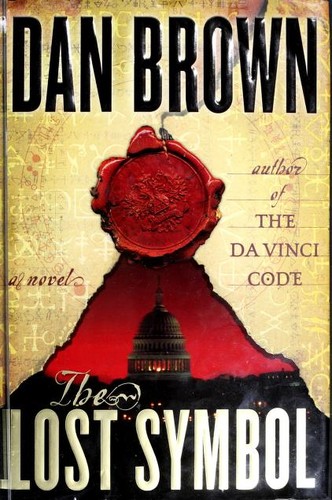
The Lost Symbol
by Dan Brown
★ Top 10 book of 2009 · #10 on Best Books of 2009
Set in Washington, D.C., this novel brings back Harvard symbologist Robert Langdon after the events of The Da Vinci Code. Freemasonry forms its central theme and supplies its major characters, making it the third Langdon adventure.
Best for: Fans of Robert Langdon who enjoy symbol-driven thrillers built around secret societies
The Lost Symbol is #10 on BookWard's Best Books of 2009, out of 42 2009 books that cleared our data bar.
What The Lost Symbol is about
Robert Langdon, the Harvard symbologist from Angels & Demons and The Da Vinci Code, is invited to give a lecture at the U.S. Capitol, supposedly by his mentor Peter Solomon, a high-ranking Freemason. The invitation is a trap. It came from Mal'akh, the man who has kidnapped Solomon, and he demands that Langdon find the Mason's Pyramid and the Lost Word, or Solomon will be killed.
Langdon is soon caught between competing agendas. The CIA's Inoue Sato cares more about catching Mal'akh than saving Peter, while Capitol architect Warren Bellamy offers help of his own. Set across Washington, D.C., the story draws on Freemasonry, secret societies and hidden knowledge, with a personal grudge behind the villain's plan. It moves quickly and keeps the tension high, a good fit for readers who like a code to crack and a clock to race.
The Lost Symbol on the Best Books of 2009
The Lost Symbol came out in 2009. Of the 42 books first published in 2009 that met BookWard's data bar, it ranks #10 on our Best Books of 2009 list.
Why it made the list: 977 readers have shelved it on Open Library; readers rate it 3.6 out of 5 (102 ratings); 56 are reading it right now. The list ranks each year’s books on how many readers have picked them up, how highly readers rate them, and how many are reading them right now.
Nearby on the 2009 list
- Wintergirls Laurie Halse Anderson, #8
- The Demigod Files Rick Riordan, #9
- Under the Dome Stephen King, #11
- Emotional Intelligence 2.0 Travis Bradberry, #12
See all Best Books of 2009 Best books by year
More years: Best Books of 2008 Best Books of 2010.
The numbers behind it
- Readers: 724 want to read it, 56 are reading it now and 197 have read it, according to Open Library.
- Ratings: 3.6 out of 5 from 102 Open Library ratings.
| Signal | This book (0 to 100) | Weight |
|---|---|---|
| Reach | 88 | 55% |
| Reader love | 10 | 25% |
| Being read right now | 88 | 20% |
Questions about The Lost Symbol
When was The Lost Symbol published?
The Lost Symbol by Dan Brown was first published in 2009.
Was The Lost Symbol one of the best books of 2009?
The Lost Symbol is #10 on BookWard's Best Books of 2009, out of 42 2009 books that cleared our data bar. 977 readers have shelved it on Open Library; readers rate it 3.6 out of 5 (102 ratings); 56 are reading it right now.
Why is The Lost Symbol on the Best Books of 2009 list?
977 readers have shelved it on Open Library; readers rate it 3.6 out of 5 (102 ratings); 56 are reading it right now.
More of the best books of 2009
- The Last Olympian Rick Riordan, #1
- Catching Fire Suzanne Collins, #2
- The Maze Runner James Dashner, #3
- The Help Kathryn Stockett, #4
- Dork Diaries Rachel Renée Russell, #5
- I Will Teach You to Be Rich Ramit Sethi, #6
See the full Best Books of 2009, the Top 100, or new books on Rising.
How we know
This page uses public data: Open Library reader counts and ratings, and Wikipedia page views for recent years. The description is paraphrased from real source text. Rankings reflect reading interest, not quality or sales, and can be affected by data gaps. Lists update monthly.
Suits adult and older teen readers who like mainstream thrillers.
Depends on the edition you pick.
Langdon's Washington race: fast, familiar, built to be devoured. 41% taste match
 BookWard’s take
Langdon's Washington race: fast, familiar, built to be devoured
The Lost Symbol drops Robert Langdon into a single frantic night in Washington, D.C., after a summons to the Capitol goes badly wrong. The hook is immediate: a lecture invitation turns into a kidnapping and a grim tableau in the Rotunda. An opening that grabs at once is exactly what I look for, and the pace stays brisk from there. Where it lost me is in the familiar tropes and the exposition: the formula is the Langdon formula, and the lectures on Masonic lore are explained outright rather than shown in scene. Character depth is thin, with figures serving the puzzle. Brown writes plain, propulsive prose and leans on cliffhangers, so the surprises are plentiful. It is a page-turner first, and a satisfying one if you accept the genre's machinery.
Short chapters, a single night and constant cliffhangers keep it moving fast, close to BookWard's own preference.
The Masonic Washington setting is fresh dressing, but the structure repeats earlier Langdon novels, so it sits low.
The prose is plain and functional, built for speed rather than ornament, close to BookWard's lean taste.
The chase and the puzzle drive everything; the people serve the plot.
The tone leans toward enlightenment and human potential despite the villainy, a mildly hopeful outlook.
A straightforward thriller structure with rotating chapter cliffhangers and nothing experimental.
Humor is sparse and incidental in a book that stays serious about its stakes.
Kidnapping, ritual violence and a menacing villain give it a dark edge within a mainstream thriller.
Tension is high, but emotional intensity stays modest beside the plotting.
See all 50 dialsEvery position, side by side with this book
Where it lines up
- EndingBookWard 8 · book 8
- OpeningBookWard 10 · book 9
- PaceBookWard 8 · book 9
Where it pulls apart
- Familiar tropesBookWard 10 · book 2
- LengthBookWard 1 · book 7
- Internal logicBookWard 10 · book 5
It opens with a false invitation and a shocking scene in the Capitol Rotunda, exactly the instant grab BookWard values.
It follows the established Langdon template of symbols, secret societies and a ticking clock, which BookWard finds too familiar.
The puzzle chain holds together well enough to propel the story, though coincidences and convenient leaps stretch it short of airtight.
Short chapters, a single night and constant cliffhangers keep it moving fast, close to BookWard's own preference.
The Masonic Washington setting is fresh dressing, but the structure repeats earlier Langdon novels, so it sits low.
Characters are defined by roles in the chase rather than inner lives, short of the depth BookWard wants.
The central mystery is answered and the threads are resolved, which sits well with BookWard's liking for closure.
Some earnest moments about knowledge and faith sit alongside thriller detachment, landing in the middle.
Violence and the severed hand are used for punch, but they serve the plot more than they simply shock.
This is a novel, so rigor is not the measure; the dial does not apply.
Brown's style is recognizable but built for broad appeal rather than a distinctive literary voice.
Plot leads, though the Masonic and noetic ideas carry more weight here than in most thrillers.
Characters stop to explain symbols and history outright, the opposite of BookWard's showing in scene.
The momentum mostly holds, with occasional lectures slowing the run between set pieces.
The prose is plain and functional, built for speed rather than ornament, close to BookWard's lean taste.
The chase and the puzzle drive everything; the people serve the plot.
The tone leans toward enlightenment and human potential despite the villainy, a mildly hopeful outlook.
A straightforward thriller structure with rotating chapter cliffhangers and nothing experimental.
Humor is sparse and incidental in a book that stays serious about its stakes.
It reads easily and quickly; the dense lore is explained for you.
The story cuts between Langdon, the antagonist and others, giving a moderate spread of perspectives.
Events unfold across one night in strict chronological order.
It is set in the real Washington, with only a speculative edge in its ideas about the mind.
A moderately sized cast of allies, officials and villains supports the central chase.
The action is confined to one city and one night, though the secrets are framed as momentous.
Action and pursuit dominate, with thought mostly spent on solving clues.
Conversations carry much of the plot and the exposition, making dialogue heavy.
There is little romance; the focus stays on the chase and the secret.
Masonic ritual and Washington's hidden corners feel exotic even in a familiar city.
Set in a contemporary Washington at publication in 2009.
Its appeal is tied to the post-Da Vinci Code moment and may fade with that fad.
A conventional third-person narrator who shares what the plot needs, with no unreliability.
Good and evil are clearly drawn, with a villain driven by obsession and a hero seeking truth.
Landmarks and symbols get steady description, adding atmosphere without becoming lush.
Reveals and reversals arrive chapter after chapter, a core pleasure of the book.
It entertains and offers comfortable answers rather than unsettling the reader.
Kidnapping, ritual violence and a menacing villain give it a dark edge within a mainstream thriller.
Tension is high, but emotional intensity stays modest beside the plotting.
What humor exists is light and incidental rather than a feature.
Mutilation and killings are present and sometimes graphic, though not constant.
Sexual content is minimal.
Government agencies and institutional secrecy figure in the plot, but politics is not the focus.
The language is plain, with only the specialized symbol lore adding density.
The narration stays mostly neutral, though it champions open inquiry and the unity of faiths.
It digs into hidden history while gesturing toward humanity's future potential.
Its worldview is optimistic about knowledge and human potential.
Review written by BookWard, dial version 1, November 2026.
Who is The Lost Symbol right for?
Suits adult and older teen readers who like mainstream thrillers. It contains kidnapping, mutilation and ritual violence, so squeamish readers should know that going in.
It reads easily and quickly; the dense lore is explained for you.
Kidnapping, ritual violence and a menacing villain give it a dark edge within a mainstream thriller.
Tension is high, but emotional intensity stays modest beside the plotting.
Mutilation and killings are present and sometimes graphic, though not constant.
Book CompanionThe Lost Symbol: ideas, characters, themes
A mentor's kidnapping forces symbologist Robert Langdon through a night of Masonic puzzles in Washington, where an ancient secret may hold great power.
- The false invitation. Langdon is lured to the Capitol on a pretext that hides a kidnapping and a chilling tableau.
- A competing agenda. A CIA security chief insists the kidnapper is a national threat and presses Langdon with her own priorities.
- The sealed package. A small package Langdon was asked to carry turns out to matter far more than he knew.
- The Masonic backdrop. Freemasonry supplies the book's recurring theme and many of its major characters.
- Puzzle after puzzle. Each clue leads to the next location, driving a race against the clock across the city.
Characters
Robert Langdon
Harvard symbologist and protagonist
He is drawn into the crisis by an invitation that turns out to be a trap.
Peter Solomon
Langdon's mentor, a 33rd degree Mason
His kidnapping sets the whole chase in motion.
Mal'akh
The kidnapper
He poses as Solomon's assistant and forces Langdon to search for the Mason's Pyramid and the Lost Word.
Inoue Sato
Head of the CIA's Office of Security
She treats the kidnapper as a national security threat and pressures Langdon.
Warren Bellamy
Architect of the Capitol
He intervenes when Sato tries to take Langdon into custody.
Themes
Hidden knowledge guarded by a society and the question of whether it should be shared.
How images, rituals and architecture encode ideas across time.
The tension between government agencies, private orders and the public.
Whether belief and inquiry can coexist rather than compete.
Discussion questions
- Does the Washington setting add anything a generic city would not?
- How does the book handle the line between history and invention?
- Is the villain's motive convincing, and what does he want?
- Why might Langdon trust or distrust the CIA's agenda?
- What makes a thriller formula satisfying or stale on a repeat visit?
Personalize your Book Companion
This is the general edition. In BookWard, the Companion is written for you: your reading profile, your notes, and spoiler-safe to the page you are on.
Buy, listen or borrow The Lost Symbol
Each link opens a search for this book on that store, in a new tab.
Read on a device
Borrow
Reviews and community
If you liked The Lost Symbol
Langdon in Prague, chasing consciousness science across 704 pages
Angels & DemonsDan BrownA one-day Vatican chase that runs on clues and speed
OriginDan BrownA fast, gadget-bright chase that trades depth for momentum
The Da Vinci CodeDan BrownA murder in the Louvre launches a relentless chase
Find your own best books
Add what you have read, rate it, and BookWard will recommend what to read next.
Free to start. No credit card needed.