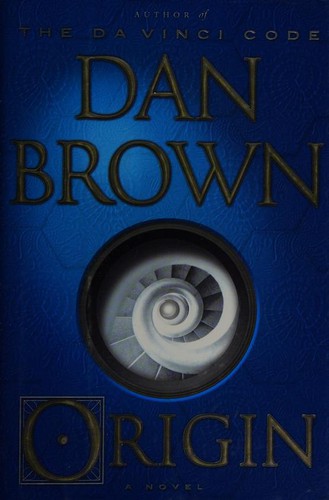
Origin
by Dan Brown
★ Top 25 book of 2017 · #18 on Best Books of 2017
Harvard symbologist Robert Langdon attends a tech magnate's promised scientific revelation in Bilbao, only to see the event shattered. Hunted, he and the museum director race to Barcelona, chasing symbols and a password that may expose a buried truth.
Best for: Readers who enjoy fast-paced puzzle chases through art, symbols, and hidden history
Origin is #18 on BookWard's Best Books of 2017, out of 73 2017 books that cleared our data bar.
What Origin is about
Robert Langdon, the symbologist from Dan Brown's earlier novels, is invited to a spectacular event in Bilbao by Edmond Kirsch, a former student who has grown into a billionaire futurist and outspoken atheist. Kirsch has told religious leaders that he has found something that could shake belief itself, and he plans to share it with a crowd at the Guggenheim Museum. Guests wear headsets connected to Winston, an artificial intelligence Kirsch built, and the evening is meant to answer two old questions: where we come from, and where we are going.
The night does not go to plan. Kirsch is shot before he can show his discovery, and Langdon teams up with Ambra Vidal, the museum's curator and the fiancée of Spain's future king. Their search leads to a 47-digit password hidden in a favorite line of poetry. The fifth Langdon story, following Inferno, it turns science against faith and asks who gets to control what we know.
Origin on the Best Books of 2017
Origin came out in 2017. Of the 73 books first published in 2017 that met BookWard's data bar, it ranks #18 on our Best Books of 2017 list.
Why it made the list: 666 readers have shelved it on Open Library; readers rate it 3.7 out of 5 (46 ratings); 46 are reading it right now. The list ranks each year’s books on how many readers have picked them up, how highly readers rate them, and how many are reading them right now.
It earns Being read right now.
Nearby on the 2017 list
- If We Were Villains M. L. Rio, #16
- Pachinko Min Jin Lee, #17
- Make Your Bed William H. McRaven, #19
- Behave Robert M. Sapolsky, #20
See all Best Books of 2017 Best books by year
More years: Best Books of 2016 Best Books of 2018.
The numbers behind it
- Readers: 544 want to read it, 46 are reading it now and 75 have read it, according to Open Library.
- Ratings: 3.7 out of 5 from 46 Open Library ratings.
| Signal | This book (0 to 100) | Weight |
|---|---|---|
| Reach | 88 | 55% |
| Reader love | 12 | 25% |
| Being read right now | 93 | 20% |
Questions about Origin
When was Origin published?
Origin by Dan Brown was first published in 2017.
Was Origin one of the best books of 2017?
Origin is #18 on BookWard's Best Books of 2017, out of 73 2017 books that cleared our data bar. 666 readers have shelved it on Open Library; readers rate it 3.7 out of 5 (46 ratings); 46 are reading it right now.
Why is Origin on the Best Books of 2017 list?
666 readers have shelved it on Open Library; readers rate it 3.7 out of 5 (46 ratings); 46 are reading it right now.
More of the best books of 2017
- The Hate U Give Angie Thomas, #1
- The Seven Husbands of Evelyn Hugo Taylor Jenkins Reid, #2
- A Court of Wings and Ruin Sarah J. Maas, #3
- One of Us Is Lying Karen M. McManus, #4
- Why We Sleep Matthew P. Walker, #5
- The Dark Prophecy Rick Riordan, #6
See the full Best Books of 2017, the Top 100, or new books on Rising.
How we know
This page uses public data: Open Library reader counts and ratings, and Wikipedia page views for recent years. The description is paraphrased from real source text. Rankings reflect reading interest, not quality or sales, and can be affected by data gaps. Lists update monthly.
Suits adult and older teen readers who enjoy fast thrillers and puzzle trails.
Depends on the edition you pick.
A fast, gadget-bright chase that trades depth for momentum. 40% taste match
 BookWard’s take
A fast, gadget-bright chase that trades depth for momentum
Origin opens at a glittering museum unveiling and wastes no time, which is where it earns its keep as a hook. The pace is quick, short chapters keep pushing Langdon and Ambra Vidal through Barcelona, and the twists come often. Where it slips is in how familiar it feels: it follows the series pattern of cryptic clues, art-history tours and a villain a step ahead, and the exposition is heavy, with characters often explaining history and science aloud rather than letting scenes carry it. Character depth stays modest, since people serve the puzzle. The big idea about religion and science is the real draw, and it leans more toward ideas than the typical thriller does. A confident, readable, undemanding page-turner with plenty of motion and less originality than its premise promises.
A long thriller built from many short chapters, so it runs past tight, though BookWard prefers leaner books.
Short chapters and constant pursuit keep it moving fast, which BookWard enjoys.
The science-versus-religion question is bold, but the structure and plot machinery follow a well-worn formula.
Plain, quick sentences built for speed rather than ornament, close to BookWard's mid-range preference.
Events and the hunt for the password lead; character growth takes a back seat.
It leans toward an optimistic view of science and humanity's future, which suits BookWard.
A straightforward chase told in short chapters with cliffhanger breaks, nothing experimental.
A serious, high-stakes tone with only light flashes of humor.
Murder and a menacing pursuer add edge, but the tone stays pulpy.
Stakes are high, but feeling stays at thriller level, not deeply moving.
See all 50 dialsEvery position, side by side with this book
Where it lines up
- EndingBookWard 8 · book 8
- OpeningBookWard 10 · book 9
- PaceBookWard 8 · book 9
Where it pulls apart
- Familiar tropesBookWard 10 · book 3
- LengthBookWard 1 · book 6
- Internal logicBookWard 10 · book 5
A long thriller built from many short chapters, so it runs past tight, though BookWard prefers leaner books.
A museum unveiling with a world-changing secret pulls you in within pages, matching BookWard's love of immediate openings.
Cryptic symbols, a trusty professor and a villain one step ahead are series staples, which BookWard finds too familiar.
The puzzle trail holds together as a chase, but coincidences and convenient clues keep it short of airtight.
Short chapters and constant pursuit keep it moving fast, which BookWard enjoys.
The science-versus-religion question is bold, but the structure and plot machinery follow a well-worn formula.
Langdon and Vidal serve the plot more than they reveal inner lives, which falls short of BookWard's taste.
The central mystery is answered and the threads resolved, which BookWard values.
Mostly brisk and plot-first, with a few sentimental touches around the characters' backstories.
Reveals and violence serve the thriller engine rather than any deeper darkness, so they feel more staged than earned.
Nonfiction rigor does not apply to this novel.
The prose is functional and brisk, recognizable by its cliffhangers more than by a distinct voice.
A big question about origins and the future drives the plot, tilting it toward idea-led for a thriller.
Characters frequently lecture on art, history and technology, which is the opposite of BookWard's show-it-in-scene preference.
The relentless chase keeps momentum high, though stretches of explaining the clues can slow the middle.
Plain, quick sentences built for speed rather than ornament, close to BookWard's mid-range preference.
Events and the hunt for the password lead; character growth takes a back seat.
It leans toward an optimistic view of science and humanity's future, which suits BookWard.
A straightforward chase told in short chapters with cliffhanger breaks, nothing experimental.
A serious, high-stakes tone with only light flashes of humor.
Easy to read, with simple language and clear forward drive.
Switches between several characters, including those pursuing the protagonists, though Langdon anchors the story.
The story runs in a tight, linear sequence over a short span.
Set in real places with an AI character, it stays grounded and plausible in tone.
A handful of leads plus religious leaders, royals and operatives gives a moderate cast.
A secret that could reshape belief gives it wide stakes, though the action is a local chase.
Action, pursuit and clue-hunting dominate over interior reflection.
Conversations carry much of the explaining and plotting, making it dialogue-heavy.
Langdon and Vidal's bond is a thread, but not a central romance.
Spanish landmarks, modern art and an AI companion make the setting vivid and somewhat new.
Set in the present day with contemporary technology and a tech-billionaire centerpiece.
Tied to specific technology and cultural debates, it feels rooted in its moment.
A reliable third-person narrator who tells you what is going on.
The clash of faith and science is framed with fairly clear sides, though it nods to both.
Locations and artworks get decent detail, but description serves the tour-guide pacing.
The fifth Robert Langdon novel, so familiarity with the series helps, though it stands fairly alone.
Reveals and reversals arrive constantly, a hallmark of the author's formula.
Raises a provocative question about belief but mostly entertains rather than unsettles.
Murder and a menacing pursuer add edge, but the tone stays pulpy.
Stakes are high, but feeling stays at thriller level, not deeply moving.
Humor is minimal and mostly dry when it appears.
Killings and threats occur but are handled without lingering gore.
Essentially absent, with the focus on the chase.
Church, monarchy and religious institutions feature, but as backdrop to the mystery.
Clear, plain language throughout, with only some technical or art terms.
The narration pushes a viewpoint about belief and technology, leaving little neutral ground.
Preoccupied with where humanity is going, so it faces toward the future.
It argues for wonder and progress, an idealistic stance toward humanity.
Review written by BookWard, dial version 1, November 2026.
Who is Origin right for?
Suits adult and older teen readers who enjoy fast thrillers and puzzle trails. It includes murder, threats and a sharp argument about religion that some readers may find provocative.
Easy to read, with simple language and clear forward drive.
Murder and a menacing pursuer add edge, but the tone stays pulpy.
Stakes are high, but feeling stays at thriller level, not deeply moving.
Killings and threats occur but are handled without lingering gore.
Book CompanionOrigin: ideas, characters, themes
A tech billionaire promises a discovery about humanity's origins and future, and Robert Langdon must unlock it after the unveiling is thrown into chaos.
- The unveiling. A glittering event at the Guggenheim in Bilbao sets the stakes and the mystery in motion.
- The promised discovery. Edmond Kirsch claims to answer where we come from and where we are going, a revelation said to shake religious belief.
- An AI guide. A voice named Winston, an artificial intelligence built by Kirsch, guides guests and Langdon through the museum.
- The chase to Barcelona. Langdon and Ambra Vidal flee together to find a password that will unlock the secret.
- Art and symbols as clues. The trail winds through modern art, hidden history and enigmatic symbols.
Characters
Robert Langdon
Harvard professor of symbology
The series hero, drawn in as a former teacher of Kirsch and forced into the chase.
Edmond Kirsch
Billionaire futurist and atheist
A tech magnate whose planned announcement sets everything off.
Ambra Vidal
Museum curator
The Guggenheim's curator and fiancée of the future King of Spain, who flees alongside Langdon.
Winston
Artificial intelligence
Kirsch's sophisticated AI, who speaks to guests through their headsets.
Bishop Antonio Valdespino
Catholic bishop
One of the religious leaders Kirsch warns, who demands he stop.
Themes
The tension between technological progress and faith drives the central conflict.
The book asks where humanity comes from and where it is headed.
Winston raises questions about what machines can know and do alongside us.
Powerful people struggle over who controls a world-changing discovery.
Paintings, architecture and symbols carry hidden meanings the heroes must read.
Discussion questions
- Does the book treat faith and science fairly, or does it favor one side?
- How believable is Winston as an artificial intelligence, and what does he add?
- Which clues felt clever, and which felt like convenient coincidences?
- Did the discovery live up to the buildup?
- How does Origin compare with other Langdon novels?
Personalize your Book Companion
This is the general edition. In BookWard, the Companion is written for you: your reading profile, your notes, and spoiler-safe to the page you are on.
Buy, listen or borrow Origin
Each link opens a search for this book on that store, in a new tab.
Read on a device
Borrow
Reviews and community
If you liked Origin
Langdon's Washington race: fast, familiar, built to be devoured
InfernoDan BrownLangdon wakes with no memory and a chase through Florence
The Secret of SecretsDan BrownLangdon in Prague, chasing consciousness science across 704 pages
The Da Vinci CodeDan BrownA murder in the Louvre launches a relentless chase
Find your own best books
Add what you have read, rate it, and BookWard will recommend what to read next.
Free to start. No credit card needed.