
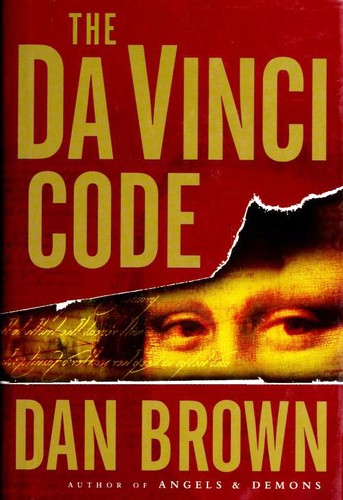
The Da Vinci Code
by Dan Brown
A symbologist races across Europe following clues hidden in art and history. A fast, cliffhanger-driven thriller that was a phenomenon. Read the full description
Best for: Readers who like puzzles and quick chapters
The Da Vinci Code is #69 on BookWard's Top 100 books for September 2026, with a BookWard Score of 58 out of 100.
The Da Vinci Code: reading interest over the past 12 months
Sources: Open Library’s public reading-log and ratings data (dump of 2026-08-31), Wikipedia page views and Wikidata. Monthly counts are exact; they show relative interest among readers of these public sources, not total readership.
Ranked against the other books on this list, The Da Vinci Code’s reading interest has run from #38 to #80 over these 12 months. Interest rank blends shelf adds, Wikipedia page views and rating activity, each compared with the other 99 books that month.
Shelf adds by month
The Da Vinci Code was added to Open Library readers’ shelves 467 times in the past 12 months, peaking in October 2025 with 58 (49% above its monthly average of 39). Over the latest three months (Jun 2026 to Aug 2026) shelf adds were down 16% on the three months before. 78% of the adds were “want to read”, 9% “currently reading” and 12% “already read”.
Want to read Currently reading Already read
Wikipedia page views
Its Wikipedia article was viewed 479,177 times in the past 12 months, peaking in October 2025 with 56,333 views. The latest three months were down 9% on the three before.
Source: Wikimedia monthly page views for the article The Da Vinci Code.
Adaptations
- The Da Vinci Code (film), 2006
Adaptations are listed from Wikidata; a release date near a rise in the charts above is context, not proof of a cause.
What the data says about The Da Vinci Code
- Moderate swings. Monthly shelf adds averaged 39 with some ups and downs.
- Busiest and quietest months. October 2025 was its busiest month (58 adds), about 2.5 times its quietest, February 2026 (23).
- A book people finish. Only 78% of its shelf adds are “want to read”, against 86% across the Top 100, so more of its activity comes from readers logging books they have read or are reading.
- Attention and shelf adds move together. Months with more Wikipedia views for The Da Vinci Code were also months with more shelf adds (correlation 0.65), which suggests the same events, such as new editions, adaptations or social media, drive both.
- Ratings below the list’s middle. Its Open Library average of 3.92 from 194 ratings is 0.20 lower than the middle book on the list (4.12).
- Against its genre. It had 37% fewer shelf adds than the average Thriller and mystery book on this list.
- Share of the list. It accounts for 0.4% of all shelf adds recorded for the Top 100 over these 12 months, #78 of 100.
- Its age. First published in 2003 (23 years ago), it is older than 51% of the books on the list.
Each finding is computed from the public data above and shown only when the numbers support it.
The Da Vinci Code on the Top 100: rank history
First charted in September 2026. The chart gains a point with every monthly update, so its peak, climbs and falls will show here as they happen.
| Month | Rank | Score |
|---|---|---|
| September 2026 | #69 | 58 |
Is The Da Vinci Code rising or falling?
Cooling It ranks lower this week than over the past year, so interest is softening from its recent level.
On Open Library, The Da Vinci Code ranks #73 this week, #76 this month, and #111 over the past year. A longer bar means a higher position. Comparing the three windows shows whether readers are arriving faster than the book's long-term pace. Readings as of 2026-09-30.
Why The Da Vinci Code made the Top 100
The Da Vinci Code made the list mainly on momentum (+25.3 points) and being read right now (+16.5 points). Its smallest contribution is rising (+1.2). The BookWard Score blends five public signals, each scored from 0 to 100 and weighted as shown.
The reading-now, rating and rank signals come from Open Library’s public data, not from BookWard’s own readers. The score measures reading interest, not quality or sales. How the score works.
Open Library reader stats for The Da Vinci Code
Source: Open Library public reading logs, as of 2026-09-30. BookWard’s own monthly snapshots are added to the picture, and anonymous BookWard reader data will be layered in as the community grows.
More readers have The Da Vinci Code open right now than 37% of the other books on this list. These counts come from one public source, so they show relative interest rather than total readership.
Where it sits among Thriller and mystery books
It is #4 of the 5 Thriller and mystery books on this month’s list.
About The Da Vinci Code
A symbologist races across Europe following clues hidden in art and history. A fast, cliffhanger-driven thriller that was a phenomenon.
Why it’s here: It is a page-turner that keeps finding new readers on vacation.
Best for: Readers who like puzzles and quick chapters
At a glance
- First published
- 2003-04-01
- Genre
- Thriller and mystery
- Also described as
- conspiracy fiction, esoteric novel, crime fiction
- Series
- Robert Langdon series, book 2
- Length
- about 489 pages (the median across its editions)
- Original language
- English
- Languages
- editions in 25 languages listed on Open Library
- Editions
- 203 on Open Library
- Setting
- Paris
- Characters listed
- Robert Langdon, Sophie Neveu, Isaac Newton, Botticelli, Victor Hugo
From Open Library and Wikidata public records. Missing rows mean the records do not list that fact.
Themes
- Secret societies
- Art and religion
- Puzzle-solving
What reading it is like
Fast, with cliffhanger chapters. A thriller built on puzzles.
At about 489 pages it is a longer read: roughly 10 hours at an average reading pace (about 250 words a minute, 300 words a page). Audiobook and edition lengths vary.
Good to know
Part of the Robert Langdon series. Its historical claims are fiction, and many are disputed.
The premise
Symbologist Robert Langdon is pulled into a murder mystery at the Louvre and races across Europe deciphering clues tied to art, history, and a secret society.
What you’ll get
- Short chapters with cliffhangers
- Puzzles and codes
- A quick, fun ride
You might skip it if you want accurate history; it is fiction.
Pairs well with: And Then There Were None · The Silent Patient
Keep exploring the chart
Also on the chart at #68 and #70
Questions about The Da Vinci Code
What rank is The Da Vinci Code on the Top 100 books?
The Da Vinci Code is #69 on BookWard's Top 100 books for September 2026, with a BookWard Score of 58 out of 100.
Is The Da Vinci Code rising or falling?
Cooling. It ranks lower this week than over the past year, so interest is softening from its recent level. On Open Library, The Da Vinci Code ranks #73 this week, #76 this month, and #111 over the past year.
Why is The Da Vinci Code on the Top 100?
The Da Vinci Code made the list mainly on momentum (+25.3 points) and being read right now (+16.5 points). Its smallest contribution is rising (+1.2).
How many people are reading The Da Vinci Code right now?
Open Library's reading logs show 220 readers currently reading The Da Vinci Code, 2,948 who want to read it and 378 who have logged it as read (as of 2026-09-30). These are counts from one public source, not all readers.
How much interest has The Da Vinci Code had over the past year?
467 Open Library shelf adds in the past 12 months (peak October 2025, 58); latest three months down 16% on the prior three; 479,177 Wikipedia views in the past 12 months (down 9% over the latest three months); Adaptations on Wikidata: The Da Vinci Code (2006). Figures come from Open Library and Wikipedia public data.
Who is The Da Vinci Code best for?
Readers who like puzzles and quick chapters.
Ask a question about The Da Vinci Code
Ask about this book's chart history, reading interest, or who it is for. Answers come from this page's data and can be wrong.
Answers are AI-written from BookWard’s own help content and can be wrong. Please do not share personal information: questions and answers may be saved and, if they are useful, shown on this site without your name.
How we know
This page is built from public data: Open Library’s dated reading-log and ratings dumps, Wikipedia page views, Wikidata, and BookWard’s own monthly Top 100 snapshots. The interest rank blends shelf adds (45%), Wikipedia page views (30%), rating activity (10%) and, for months where a snapshot exists, BookWard’s own score (15%), each as a percentile among the Top 100 books. Every month shown is real data; nothing is estimated. Rankings reflect reading interest, not quality or sales, and can be affected by data gaps. Last updated September 2026. Read the full methodology.
Track The Da Vinci Code and find your next favorite
Add it to your shelf, rate what you have read, and BookWard will recommend what fits you.
Free while in beta. No credit card needed.