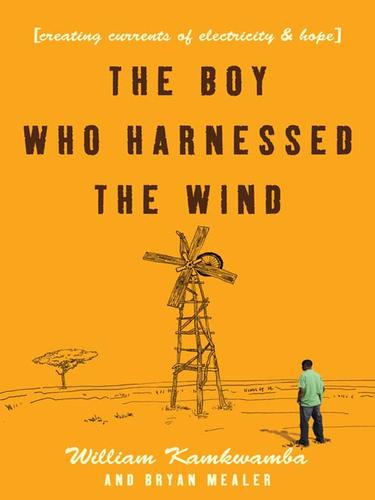
The Boy Who Harnessed the Wind
by William Kamkwamba
★ Top 25 book of 2009 · #15 on Best Books of 2009
During a devastating famine in Malawi, a boy who had to leave school taught himself from science books. Using scrap metal and spare parts, he built a windmill to bring electricity and water to his family.
Best for: Readers who want an uplifting true story of curiosity, determination and ingenuity
The Boy Who Harnessed the Wind is #15 on BookWard's Best Books of 2009, out of 42 2009 books that cleared our data bar.
What The Boy Who Harnessed the Wind is about
William Kamkwamba grew up in Malawi, a country worn down by drought and hunger, where science felt distant and opportunity was scarce. As a boy he was enchanted by electricity and hoped to study at one of the country's top boarding schools. Then, in 2002, a famine hit his family's farm and left his parents destitute. The tuition of eighty dollars a year was out of reach, so he left school and helped search for food.
He kept learning anyway. Using a small pile of forgotten science textbooks, and a book called Using Energy that introduced him to windmills, he set himself a goal: to build one that could bring electricity and water to his village. His neighbors mocked him and called him misala, meaning crazy. This memoir tells how curiosity and stubborn determination carried him on, and it will appeal to anyone who enjoys an earnest, hopeful story about learning against the odds.
The Boy Who Harnessed the Wind on the Best Books of 2009
The Boy Who Harnessed the Wind came out in 2009. Of the 42 books first published in 2009 that met BookWard's data bar, it ranks #15 on our Best Books of 2009 list.
Why it made the list: 282 readers have shelved it on Open Library; 23 are reading it right now. The list ranks each year’s books on how many readers have picked them up, how highly readers rate them, and how many are reading them right now.
Nearby on the 2009 list
- The Forty Rules of Love Elif Şafak, #13
- Wolf Hall Hilary Mantel, #14
- The 50Th Law Robert Greene, #16
- Drive Daniel H. Pink, #17
See all Best Books of 2009 Best books by year
More years: Best Books of 2008 Best Books of 2010.
The numbers behind it
- Readers: 250 want to read it, 23 are reading it now and 9 have read it, according to Open Library.
| Signal | This book (0 to 100) | Weight |
|---|---|---|
| Reach | 50 | 55% |
| Reader love | 71 | 25% |
| Being read right now | 74 | 20% |
Questions about The Boy Who Harnessed the Wind
When was The Boy Who Harnessed the Wind published?
The Boy Who Harnessed the Wind by William Kamkwamba was first published in 2009.
Was The Boy Who Harnessed the Wind one of the best books of 2009?
The Boy Who Harnessed the Wind is #15 on BookWard's Best Books of 2009, out of 42 2009 books that cleared our data bar. 282 readers have shelved it on Open Library; 23 are reading it right now.
Why is The Boy Who Harnessed the Wind on the Best Books of 2009 list?
282 readers have shelved it on Open Library; 23 are reading it right now.
More of the best books of 2009
- The Last Olympian Rick Riordan, #1
- Catching Fire Suzanne Collins, #2
- The Maze Runner James Dashner, #3
- The Help Kathryn Stockett, #4
- Dork Diaries Rachel Renée Russell, #5
- I Will Teach You to Be Rich Ramit Sethi, #6
See the full Best Books of 2009, the Top 100, or new books on Rising.
How we know
This page uses public data: Open Library reader counts and ratings, and Wikipedia page views for recent years. The description is paraphrased from real source text. Rankings reflect reading interest, not quality or sales, and can be affected by data gaps. Lists update monthly.
Suits older children, teens and adults, especially anyone interested in science, perseverance and life in another country.
Depends on the edition you pick.
A Malawian teenager builds a windmill from scrap and stubbornness. 61% taste match
 BookWard’s take
A Malawian teenager builds a windmill from scrap and stubbornness
This is William Kamkwamba's own account of growing up in Malawi, dropping out of school when the 2002 famine hit, and building a working windmill from scrap metal, tractor parts and bicycle halves. It hooks at once because the stakes are plain: a hungry family, a boy with a few science textbooks, and a neighbourhood that calls him crazy. The tone is hopeful without ever turning sentimental, since the hunger is described as it was. The setting will be unfamiliar to most readers, and the narration is personal in the fullest sense, the voice of the person who lived it. Story matters more than ideas here, and the build is easy to follow because it is shown step by step rather than explained from a distance.
A teenager making electricity from scrap in a famine is a story few readers have met, which BookWard rewards.
The writing is plain and accessible, a little plainer than BookWard's middle-leaning taste.
The project gives a plot spine but the book rests on William's own drive, a little less character-led than BookWard's lean.
Despite famine, the book's direction is toward ingenuity paying off, more hopeful than BookWard's already hopeful lean.
The tone is serious and earnest with only small touches of lightness, below BookWard's lean toward humor.
The 2002 famine brings real hunger and loss, but the book stays measured, around BookWard's middle.
Hunger, hope and ambition give it feeling that stays controlled rather than operatic, near BookWard.
See all 50 dialsEvery position, side by side with this book
Where it lines up
- EndingBookWard 8 · book 8
- PaceBookWard 8 · book 7
- OriginalityBookWard 9 · book 8
Where it pulls apart
- Familiar tropesBookWard 10 · book 6
- LengthBookWard 1 · book 4
- OpeningBookWard 10 · book 8
A famine, a dropped-out student and a scrap-metal dream are all in play from the start, which suits BookWard's taste for instant hooks.
The inspirational underdog frame is familiar, though the Malawian detail keeps it from feeling stock, a mild mismatch with BookWard.
A teenager making electricity from scrap in a famine is a story few readers have met, which BookWard rewards.
William is drawn from the inside with real texture, though the wider cast is lighter than BookWard's depth preference.
The windmill project resolves into a clear outcome, matching BookWard's liking for closure.
The inspiring arc invites feeling, though the plain telling of hardship keeps it fairly grounded, slightly warmer than BookWard prefers.
The famine is shown for what it was, not for effect, and the darkness earns its place, as BookWard wants.
It is a first-person memoir with practical engineering detail rather than a researched study, so rigor is moderate against BookWard's high bar.
William's personal, direct telling gives the book a distinct voice, which BookWard values.
This is story first, a life and a build, with the science serving the narrative, close to BookWard's story-led leaning.
Events are told through lived scenes with only light explanation, near BookWard's preference for showing.
The mix of famine, school and building keeps momentum through the middle, in line with BookWard.
The writing is plain and accessible, a little plainer than BookWard's middle-leaning taste.
The project gives a plot spine but the book rests on William's own drive, a little less character-led than BookWard's lean.
Despite famine, the book's direction is toward ingenuity paying off, more hopeful than BookWard's already hopeful lean.
The tone is serious and earnest with only small touches of lightness, below BookWard's lean toward humor.
Clear language and a simple through-line make this an easy read, easier than BookWard's usual.
The memoir stays with William alone, narrower than BookWard's preference for several viewpoints.
The story runs forward from boyhood through the famine, simpler than BookWard's mildly shifting timelines.
This is firmly grounded in real events, though magic and belief appear in the village setting, below BookWard's middle.
A family, classmates and neighbours fill the book, but it centres on one person, giving a modest cast.
One village and one family anchor the story, an intimate scale close to BookWard's modest lean.
The building, scavenging and school drive the page, tilting more toward action than BookWard's inner lean.
Romance is not part of this story, a minor presence that BookWard does not mind.
Rural Malawi and village life will be unfamiliar to most readers, which suits BookWard's taste for new settings.
Events from the early 2000s feel recent, close to BookWard's present-day lean.
The theme of a young person's ingenuity against odds keeps it relevant, matching BookWard's staying-power lean.
William tells his own story straight, a reliable narrator, unlike BookWard's unreliable lean.
The right and wrong of the story are clear: perseverance and curiosity win, less ambiguous than BookWard's lean.
Village life, fields and the build are rendered concretely but without heavy lyricism, near BookWard's middle.
It reads as memoir narrative rather than analysis, firmly on the narrative side, as BookWard favours.
The perspective is deeply personal, written by the subject himself, matching BookWard's personal lean.
A standalone memoir, which sits comfortably with BookWard.
The arc is driven by determination rather than plot surprises, fewer twists than BookWard likes.
It is encouraging overall, though the hunger and hardship are not softened, a gentler read than BookWard's challenge lean.
The 2002 famine brings real hunger and loss, but the book stays measured, around BookWard's middle.
Hunger, hope and ambition give it feeling that stays controlled rather than operatic, near BookWard.
Hardship and starvation are present but graphic violence is not, below BookWard's middle.
There is little to no sexual content here, below BookWard's middle.
The famine and its causes touch public life, but the book stays focused on the personal, a light political presence.
The language is plain and accessible, easier than BookWard's middle.
William's perspective colours everything, with the book telling his view openly, in line with BookWard's lean.
The book looks ahead toward what electricity and education could change, more forward-looking than BookWard's lean.
It argues that curiosity and effort can transform lives, more idealistic than BookWard's lean.
Review written by BookWard, dial version 1, November 2026.
Who is The Boy Who Harnessed the Wind right for?
Suits older children, teens and adults, especially anyone interested in science, perseverance and life in another country. Includes depictions of famine, hunger and death that may need some discussion with younger readers.
Clear language and a simple through-line make this an easy read, easier than BookWard's usual.
The 2002 famine brings real hunger and loss, but the book stays measured, around BookWard's middle.
Hunger, hope and ambition give it feeling that stays controlled rather than operatic, near BookWard.
Hardship and starvation are present but graphic violence is not, below BookWard's middle.
Book CompanionThe Boy Who Harnessed the Wind: ideas, characters, themes
A boy in famine-struck Malawi teaches himself from a few science books and builds a windmill from scrap to bring electricity to his family.
- A dream outside school. After the 2002 famine, William cannot pay his school fees and drops out, yet continues to study on his own.
- Books as a starting point. A few forgotten science textbooks, including one called Using Energy, give William the ideas he builds from.
- Building from scrap. Scrap metal, tractor parts and bicycle halves become the pieces of a crude but working windmill.
- Neighbours who doubt him. People in the village call him misala, meaning crazy, which makes his persistence harder.
- Electricity as a dividing line. The book notes that few Malawians have electricity and running water, which the West treats as a necessity.
Characters
William Kamkwamba
Narrator and builder
A curious young Malawian who refuses to give up on science despite hunger and being forced out of school.
Themes
Solving big problems with whatever materials are at hand.
Continuing to work toward a goal despite doubt and hardship.
How learning can be limited by money, and how people find ways around that.
The daily reality of hunger and what it does to a family and a community.
The pull between traditional ideas of magic and the explanations science offers.
Discussion questions
- Why do you think the neighbours called William misala, and how did that shape his choices?
- How does the book show the cost of not being able to pay school fees?
- What role do the textbooks play compared to William's own experimenting?
- How does the famine change what William and his family can attempt?
- What does the windmill mean for the village beyond the electricity it produces?
Personalize your Book Companion
This is the general edition. In BookWard, the Companion is written for you: your reading profile, your notes, and spoiler-safe to the page you are on.
Buy, listen or borrow The Boy Who Harnessed the Wind
Each link opens a search for this book on that store, in a new tab.
Read on a device
Borrow
Reviews and community
If you liked The Boy Who Harnessed the Wind
A girl's memoir of Swat, the Taliban, and a school bus
Born to RunChristopher McDougallA running quest through Copper Canyon that reads like an adventure
Never Split the DifferenceChris VossHostage-negotiation tactics, turned into a handbook for everyday deals
Roller GirlVictoria JamiesonA graphic novel where friendship strains harder than the skates
Find your own best books
Add what you have read, rate it, and BookWard will recommend what to read next.
Free to start. No credit card needed.