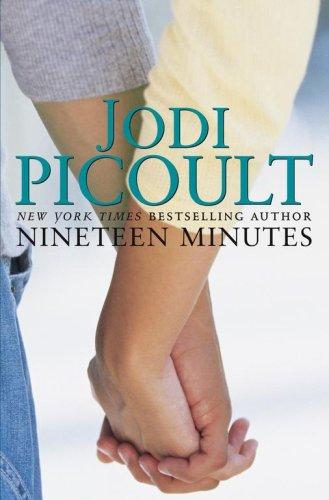
Nineteen Minutes
by Jodi Picoult
★ Top 25 book of 2007 · #17 on Best Books of 2007
A small town reels after a horrific school shooting in this emotionally charged novel by Jodi Picoult. A lawyer and a detective return, and a judge's daughter becomes key witness, as questions about justice, power and being different emerge.
Best for: Readers who like emotionally charged novels exploring justice after a school shooting
Nineteen Minutes is #17 on BookWard's Best Books of 2007, out of 53 2007 books that cleared our data bar.
What Nineteen Minutes is about
On a March morning in 2007, a small New Hampshire town learns that violence can arrive without warning. A bomb goes off in a car at Sterling High, gunshots follow, and ten people are dead. The student behind it is Peter Houghton, a boy who has been bullied for years and who once had a close friend in Josie Cormier, until she drifted into the popular crowd.
The story moves back and forth between the years leading up to that day and the long aftermath. Josie was found unhurt but cannot recall what happened. Readers who want a thoughtful, emotional look at bullying, family blame and what justice can mean will find plenty to think about.
Nineteen Minutes on the Best Books of 2007
Nineteen Minutes came out in 2007. Of the 53 books first published in 2007 that met BookWard's data bar, it ranks #17 on our Best Books of 2007 list.
Why it made the list: 320 readers have shelved it on Open Library. The list ranks each year’s books on how many readers have picked them up, how highly readers rate them, and how many are reading them right now.
Nearby on the 2007 list
- Burned Ellen Hopkins, #15
- The Absolutely True Diary of a Part-Time Indian Sherman Alexie, #16
- Schooled Gordon Korman, #18
- The Shock Doctrine Naomi Klein, #19
See all Best Books of 2007 Best books by year
More years: Best Books of 2006 Best Books of 2008.
The numbers behind it
- Readers: 276 want to read it, 12 are reading it now and 32 have read it, according to Open Library.
| Signal | This book (0 to 100) | Weight |
|---|---|---|
| Reach | 68 | 55% |
| Reader love | 47 | 25% |
| Being read right now | 58 | 20% |
Questions about Nineteen Minutes
When was Nineteen Minutes published?
Nineteen Minutes by Jodi Picoult was first published in 2007.
Was Nineteen Minutes one of the best books of 2007?
Nineteen Minutes is #17 on BookWard's Best Books of 2007, out of 53 2007 books that cleared our data bar. 320 readers have shelved it on Open Library.
Why is Nineteen Minutes on the Best Books of 2007 list?
320 readers have shelved it on Open Library.
More of the best books of 2007
- Dog Days Jeff Kinney, #1
- A Thousand Splendid Suns Khaled Hosseini, #2
- Harry Potter and the Deathly Hallows J. K. Rowling, #3
- The Titan's Curse Rick Riordan, #4
- The Name of the Wind Patrick Rothfuss, #5
- Rodrick Rules Jeff Kinney, #6
See the full Best Books of 2007, the Top 100, or new books on Rising.
How we know
This page uses public data: Open Library reader counts and ratings, and Wikipedia page views for recent years. The description is paraphrased from real source text. Rankings reflect reading interest, not quality or sales, and can be affected by data gaps. Lists update monthly.
Best for mature teens and adults, since it deals with a school shooting, bullying and its aftermath.
Depends on the edition you pick.
A school shooting told through the town left behind. 50% taste match
 BookWard’s take
A school shooting told through the town left behind
Nineteen Minutes opens on an ordinary March day in Sterling, New Hampshire, then moves between the weeks before the shooting and the aftermath. That shifting timeline is the book's engine, and it keeps the opening gripping from the first chapters. Many viewpoints share the load: a judge, her daughter Josie, the shooter's family, a detective. Picoult leans on courtroom drama and procedure, so the ending is built to resolve rather than hover. Where the book earns its place is in its moral clarity: it wants you uncomfortable about who is to blame, and it asks that of you at length. The prose is plain and propulsive, closer to a legal thriller than a literary novel. It is heavy going, and its darkness is the point rather than decoration.
Short chapters and cross-cutting keep it moving, close to the quick pace BookWard prefers.
The subject is well trodden in fiction; the before-and-after structure gives it some freshness but not much.
Clean and plain, built for momentum rather than ornament.
The plot is driven by the shooting and trial, but motive and relationships carry the weight.
The tone is grief-heavy with little relief, so it sits toward the bleak end.
Flashing between before and after is a mild departure from straight chronology.
Humor is almost absent in a book about a massacre and its fallout.
A school shooting and its fallout make this very dark material.
Grief, guilt and rage run high throughout.
See all 50 dialsEvery position, side by side with this book
Where it lines up
- PaceBookWard 8 · book 7
- Character depthBookWard 8 · book 7
- EndingBookWard 8 · book 7
Where it pulls apart
- Familiar tropesBookWard 10 · book 4
- LengthBookWard 1 · book 6
- Internal logicBookWard 10 · book 6
It starts on an ordinary day and moves quickly toward the shooting, which suits BookWard's liking for books that grab at once.
Courtroom-drama conventions and issue-novel beats are familiar, so it sits below BookWard's appetite for avoiding tropes.
The legal and investigative strands fit together soundly, though the plotting serves emotion over precision.
Short chapters and cross-cutting keep it moving, close to the quick pace BookWard prefers.
The subject is well trodden in fiction; the before-and-after structure gives it some freshness but not much.
Peter, Josie and the adults around them are given real inner lives, which BookWard values.
The trial drives toward a verdict and a finale meant to land hard, giving a mostly resolved close.
It aims straight for the heart and sometimes pushes the feeling, leaning more sentimental than BookWard likes.
The violence is central to the premise and the book works to explain it, though it also trades on impact.
Fiction, so this dial does not apply.
A recognizable, accessible commercial voice rather than a strikingly individual one.
Ideas about bullying and blame matter, but the story and courtroom plot lead.
Much is dramatized through scenes and testimony, with some explaining of motives along the way.
Alternating timelines and the trial keep tension up through most of the length.
Clean and plain, built for momentum rather than ornament.
The plot is driven by the shooting and trial, but motive and relationships carry the weight.
The tone is grief-heavy with little relief, so it sits toward the bleak end.
Flashing between before and after is a mild departure from straight chronology.
Humor is almost absent in a book about a massacre and its fallout.
Easy to follow and quick to read, even when the content is hard.
It moves among many characters, from the judge and her daughter to the shooter's family.
The story hops back and forth between the lead-up and the aftermath.
A fully grounded, realistic story.
A sizeable ensemble of students, parents, lawyers and police.
One small town and its families keep the focus intimate.
Balanced between characters' thoughts and the events of the shooting and trial.
Courtroom exchanges and family confrontations give it a lot of dialogue.
Teenage relationships appear but are not the center of the book.
A familiar American small town and high school.
Set in a recognizable contemporary setting, dated in the book to 2007.
The subject stays relevant, though the telling is tied to its period.
Third-person narration that tells its story straight rather than misleading.
The book deliberately muddies questions of blame and responsibility.
Setting and detail serve the story rather than dominate it.
Fiction, so this dial does not apply.
Fiction, so this dial does not apply.
Reuses characters from earlier Picoult novels but stands on its own.
Courtroom revelations and a pointed finale supply a good number of turns.
It confronts bullying, violence and blame without softening them.
A school shooting and its fallout make this very dark material.
Grief, guilt and rage run high throughout.
Little humor to speak of, and what exists is dry.
The shooting and its victims are central and not hidden.
Some teenage relationships are touched on, but sexual content is limited.
Questions of bullying, guns and justice are in the air without any party line.
Plain, everyday language throughout.
Largely neutral in tone, even as it pushes readers to reflect.
Looks back to understand how a tragedy happened and what remains.
Leans cynical about schools, cliques and adults who miss the signs.
Review written by BookWard, dial version 1, November 2026.
Who is Nineteen Minutes right for?
Best for mature teens and adults, since it deals with a school shooting, bullying and its aftermath. Readers sensitive to violence against young people may want to approach with care.
Easy to follow and quick to read, even when the content is hard.
A school shooting and its fallout make this very dark material.
Grief, guilt and rage run high throughout.
The shooting and its victims are central and not hidden.
Book CompanionNineteen Minutes: ideas, characters, themes
After a school shooting in a small New Hampshire town, the novel moves between the days before and the aftermath to ask who is responsible.
- An ordinary day. The book opens on a routine school day in Sterling before the shooting, so the reader meets people as they were.
- Two timelines. The story moves between the lead-up to the shooting and what follows, building understanding piece by piece.
- Peter and Josie. The two were once close friends who drifted apart as Peter was bullied and Josie moved toward the popular crowd.
- The investigation. Detective Patrick Ducharme searches the school and later pursues the case, with Josie as a key witness.
- The wider town. Parents, a judge and other families appear, showing how one event ripples outward.
Characters
Peter Houghton
The shooter
A bullied student at Sterling High whose story the book traces before and after the shooting.
Josie Cormier
Junior and witness
Peter's former friend, found at the scene unable to remember what happened.
Alex Cormier
Superior court judge
Josie's mother, whose work and family become entangled with the case.
Patrick Ducharme
Detective
The only detective on the Sterling police force, who arrives at the school and makes the arrest.
Themes
How repeated cruelty shapes a person and what responsibility others carry.
Whether one person, a family or a community is answerable for a tragedy.
How social pressure can pull apart people who once relied on each other.
What the legal system can and cannot do with an event like this.
How trauma affects what a witness can recall.
Discussion questions
- Who, if anyone, do you hold responsible for what happens, and why?
- How does moving between before and after change how you read Peter?
- Why does Josie's choice to leave her old friend matter so much?
- Does the book make you sympathize with Peter, and is that fair?
- What could the adults in the town have done differently?
Personalize your Book Companion
This is the general edition. In BookWard, the Companion is written for you: your reading profile, your notes, and spoiler-safe to the page you are on.
Buy, listen or borrow Nineteen Minutes
Each link opens a search for this book on that store, in a new tab.
Read on a device
Borrow
Reviews and community
If you liked Nineteen Minutes
A thirteen-year-old sues her parents over her own body
Thirteen Reasons WhyJay AsherA cassette-tape mystery that hooks fast and carries real weight
Then She Was GoneLisa JewellA missing-girl mystery that hooks fast and grips to the end
Tell Me What You DidCarter WilsonA podcast host's confession booth turns on its own host
Find your own best books
Add what you have read, rate it, and BookWard will recommend what to read next.
Free to start. No credit card needed.