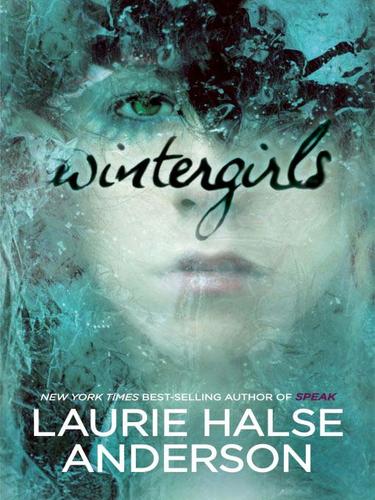
Wintergirls
by Laurie Halse Anderson
★ Top 10 book of 2009 · #8 on Best Books of 2009
Lia and her best friend Cassie are locked in a dangerous contest over who can become thinnest. After Cassie dies, Lia believes her friend's restless spirit is haunting her, in a story told in stark, poetic language.
Best for: Teen and adult readers wanting an intense, poetic story about friendship and body image
Wintergirls is #8 on BookWard's Best Books of 2009, out of 42 2009 books that cleared our data bar.
What Wintergirls is about
Lia Overbrook is eighteen, and she has a history of anorexia and hurts herself in secret. Then she hears that Cassie, the friend she once shared a bitter contest of who could get thinnest, has been found dead in a motel room. Cassie phoned Lia thirty-three times the night of her death. Lia let every call go unanswered.
The news sends Lia back into counting calories and self-harm, all of it hidden from her family, while Cassie's ghost begins to follow her. Around her are a tense mother, a stepmother she finds hard to read, a young stepsister who brings real warmth, and a boy named Elijah who meets her after she visits the motel. Anderson writes in a raw, lyrical voice about grief, guilt and illness. It is a painful read, suited to older teens and adults, and it treats its subject with honesty rather than comfort.
Wintergirls on the Best Books of 2009
Wintergirls came out in 2009. Of the 42 books first published in 2009 that met BookWard's data bar, it ranks #8 on our Best Books of 2009 list.
Why it made the list: 349 readers have shelved it on Open Library; readers rate it 4.7 out of 5 (15 ratings). The list ranks each year’s books on how many readers have picked them up, how highly readers rate them, and how many are reading them right now.
Nearby on the 2009 list
- I Will Teach You to Be Rich Ramit Sethi, #6
- The 4-Hour Workweek Timothy Ferriss, #7
- The Demigod Files Rick Riordan, #9
- The Lost Symbol Dan Brown, #10
See all Best Books of 2009 Best books by year
More years: Best Books of 2008 Best Books of 2010.
The numbers behind it
- Readers: 297 want to read it, 16 are reading it now and 36 have read it, according to Open Library.
- Ratings: 4.7 out of 5 from 15 Open Library ratings.
| Signal | This book (0 to 100) | Weight |
|---|---|---|
| Reach | 62 | 55% |
| Reader love | 98 | 25% |
| Being read right now | 67 | 20% |
Questions about Wintergirls
When was Wintergirls published?
Wintergirls by Laurie Halse Anderson was first published in 2009.
Was Wintergirls one of the best books of 2009?
Wintergirls is #8 on BookWard's Best Books of 2009, out of 42 2009 books that cleared our data bar. 349 readers have shelved it on Open Library; readers rate it 4.7 out of 5 (15 ratings).
Why is Wintergirls on the Best Books of 2009 list?
349 readers have shelved it on Open Library; readers rate it 4.7 out of 5 (15 ratings).
More of the best books of 2009
- The Last Olympian Rick Riordan, #1
- Catching Fire Suzanne Collins, #2
- The Maze Runner James Dashner, #3
- The Help Kathryn Stockett, #4
- Dork Diaries Rachel Renée Russell, #5
- I Will Teach You to Be Rich Ramit Sethi, #6
See the full Best Books of 2009, the Top 100, or new books on Rising.
How we know
This page uses public data: Open Library reader counts and ratings, and Wikipedia page views for recent years. The description is paraphrased from real source text. Rankings reflect reading interest, not quality or sales, and can be affected by data gaps. Lists update monthly.
Best suited to older teens and adults.
Depends on the edition you pick.
A short, raw novel of hunger and haunting. 63% taste match
 BookWard’s take
A short, raw novel of hunger and haunting
Wintergirls opens with Lia Overbrook learning that her former best friend Cassie has been found dead, and it never lets go from there. Laurie Halse Anderson keeps the book tight and fast, so the opening hooks at once and the pace barely slackens. The prose is the standout: Lia's anorexia comes through in a voice that is unmistakably Anderson's, built from counting, crossed-out lines and a ghost, and that gives the book real freshness on a subject often handled in familiar ways. The characterization runs deep, since Lia is drawn from the inside rather than as a case study. The ending resolves more than it leaves open, but the book earns its darkness rather than using it for shock.
A compact young adult novel that wastes little, which sits well with BookWard's liking for tight books.
Short chapters and a spiraling protagonist keep things moving, a little below BookWard's fast preference.
The haunting and the fragmented, self-erasing narration make a familiar subject feel fresh.
Spare and poetic, closer to plain than ornate but with deliberate flourishes, near BookWard's middle ground.
Events matter less than what they do inside Lia, a character-driven book that fits BookWard's lean.
Hope is faint and hard-won, below BookWard's mildly hopeful leaning.
Strike-throughs, lists and fragments give the page an experimental texture beyond BookWard's usual range.
Almost no humor; this is a heavy, serious book, well below BookWard's lightly funny preference.
Self-harm, eating disorders and death make it one of the darkest of YA novels.
Its feeling is raw and relentless, more intense than BookWard's middle range.
See all 50 dialsEvery position, side by side with this book
Where it lines up
- SentimentBookWard 8 · book 8
- Story or ideasBookWard 3 · book 3
- ExpositionBookWard 2 · book 2
Where it pulls apart
- Internal logicBookWard 10 · book 6
- Familiar tropesBookWard 10 · book 7
- ToneBookWard 7 · book 1
A compact young adult novel that wastes little, which sits well with BookWard's liking for tight books.
Cassie's death and the 33 unanswered calls set the story moving from the start, matching BookWard's taste for an immediate hook.
Illness fiction has well-worn beats, but the ghost and the inner voice keep most of them from feeling stock.
Lia's thinking is coherent on its own terms, though the haunting is felt rather than explained.
Short chapters and a spiraling protagonist keep things moving, a little below BookWard's fast preference.
The haunting and the fragmented, self-erasing narration make a familiar subject feel fresh.
Lia is drawn from the inside with her contradictions intact, which BookWard values highly.
The book moves toward a real resolution without tying everything up, close to BookWard's preference.
It avoids easy comfort and keeps its feeling sharp, in line with BookWard's taste for restraint.
The darkness serves Lia's psychology and is not used for effect, which BookWard rewards.
This is a novel, so the rigor dial does not apply.
Lia's narration, with its counting and strike-throughs, is unmistakable and a major strength.
It is firmly a story about one girl, though it carries a strong theme, as BookWard prefers.
Backstory comes out in scenes and memory, not in explanation, which suits BookWard well.
The intensity holds across the book, with few lulls, which fits BookWard's dislike of sagging middles.
Spare and poetic, closer to plain than ornate but with deliberate flourishes, near BookWard's middle ground.
Events matter less than what they do inside Lia, a character-driven book that fits BookWard's lean.
Hope is faint and hard-won, below BookWard's mildly hopeful leaning.
Strike-throughs, lists and fragments give the page an experimental texture beyond BookWard's usual range.
Almost no humor; this is a heavy, serious book, well below BookWard's lightly funny preference.
Short and readable, but the subject and fragmented style ask for emotional effort.
Everything is filtered through Lia alone, narrower than BookWard's taste for many viewpoints.
The story moves forward in time, with memory slipping in, so it reads as largely linear.
It is realistic fiction, with Cassie's ghost possibly a product of Lia's mind.
A small circle of family and friends surrounds Lia, a bit smaller than BookWard's middle.
The scope is intensely personal, centered on one girl's body and mind.
Nearly all the action is inside Lia's head, leaning strongly inward.
Conversation exists but narration carries the weight, lighter than BookWard's liking for dialogue.
Romance is not a focus; the central relationships are friendship and family.
The setting is an ordinary contemporary American life, a more familiar world than BookWard tends to favor.
Set in the present day of its publication, close to BookWard's modern leaning.
The subject stays relevant, though it carries some of its 2009 moment.
Lia's perception is distorted by illness, making her a notably unreliable narrator, in line with BookWard's taste.
Nobody is simply right or wrong, and guilt over Cassie never resolves cleanly, nearly matching BookWard's liking for ambiguity.
Imagery is vivid and selective, rich in body and food detail without lingering on scenery.
A standalone novel.
It builds through revelation and spiral more than shocks, fewer surprises than BookWard prefers.
A difficult, unsparing read that does not offer comfort, matching BookWard's taste.
Self-harm, eating disorders and death make it one of the darkest of YA novels.
Its feeling is raw and relentless, more intense than BookWard's middle range.
Humor is nearly absent, and what exists is bitter and dry.
The violence is self-directed and described with unsettling clarity, moderately present.
Sexual content is minimal and not a focus.
Politics is not a concern of the book.
The language is plain, with only fragments and wordplay adding any density.
Lia's narration is intensely subjective and judgmental, especially toward herself.
The book looks back at Cassie and the friendship, with recovery a hazy future.
A cynical, wounded world view that tempers into something less bleak, below BookWard's idealistic lean.
Review written by BookWard, dial version 1, November 2026.
Who is Wintergirls right for?
Best suited to older teens and adults. It contains detailed depictions of anorexia, calorie counting, self-harm and death that could be triggering for readers with similar experiences.
Short and readable, but the subject and fragmented style ask for emotional effort.
Self-harm, eating disorders and death make it one of the darkest of YA novels.
Its feeling is raw and relentless, more intense than BookWard's middle range.
The violence is self-directed and described with unsettling clarity, moderately present.
Book CompanionWintergirls: ideas, characters, themes
Wintergirls follows Lia Overbrook as her best friend's death pulls her deeper into anorexia, self-harm and guilt.
- The unanswered calls. Cassie called Lia 33 times before dying, and Lia never picked up, which fuels her guilt.
- A haunting. Cassie's ghost begins to appear to Lia, blurring memory, guilt and illness.
- A strained family. Lia's mother, father and stepmother disagree about how to handle her recovery.
- Hidden illness. Lia hides her restricting and self-harm from those around her as it worsens.
- Emma as an anchor. Her young stepsister is one of the few sources of happiness Lia has.
Characters
Lia Overbrook
Narrator and protagonist
An 18-year-old with a history of anorexia who spirals after her friend's death.
Cassie
Lia's former best friend
Found dead in a motel room, she returns as a ghost in Lia's life.
Jennifer
Lia's stepmother
Married Lia's father soon after the divorce, and their relationship is complicated.
Emma
Lia's stepsister
A nine-year-old who brings Lia moments of happiness.
Dr. Marrigan
Lia's mother
Holds high expectations and insists on a strict recovery regimen.
Themes
How illness takes over thought, routine and relationships.
The weight of not answering Cassie's calls.
A bond that turned into a dangerous competition.
Disagreement among parents about how to help and how much to push.
Loss that triggers a relapse instead of reflection.
Discussion questions
- How does the narration's style shape your sense of Lia's mind?
- What does Cassie's ghost represent, and does it matter if it is real?
- How do Lia's parents differ in handling her illness, and what do their choices cost her?
- Why might the author keep the book so short and the chapters so fragmented?
- Does the ending feel earned, and what kind of recovery does it suggest?
Personalize your Book Companion
This is the general edition. In BookWard, the Companion is written for you: your reading profile, your notes, and spoiler-safe to the page you are on.
Buy, listen or borrow Wintergirls
Each link opens a search for this book on that store, in a new tab.
Read on a device
Borrow
Reviews and community
If you liked Wintergirls
A kidnapping told twice, by captor and captive
I Do Know Some ThingsRichard SikenProse poems of loss, a stroke, and relearning how to speak
Gerald's GameStephen KingOne woman, one bed, and a mind that talks back
ArielSylvia PlathPlath's last poems, tight, startling, and impossible to mistake for anyone else
Find your own best books
Add what you have read, rate it, and BookWard will recommend what to read next.
Free to start. No credit card needed.