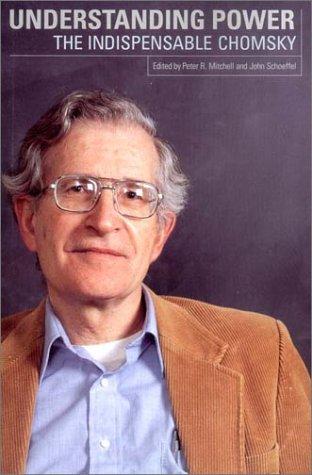
Understanding Power
by Noam Chomsky
★ Top 25 book of 2002 · #14 on Best Books of 2002
Edited from Chomsky's recent talks, this collection reexamines three decades of events, from foreign policy during Vietnam to cuts in welfare. It links imperial overseas policy to shrinking domestic services and points toward ways of pursuing social change.
Best for: Newcomers and longtime followers interested in politics, media and activism
Understanding Power is #14 on BookWard's Best Books of 2002, out of 32 2002 books that cleared our data bar.
What Understanding Power is about
This book gathers transcripts of seminars, talks and Q&A sessions given by Noam Chomsky to audiences across the United States and Canada from 1989 to 1999. Two public defenders from New York, Peter R. Mitchell and John Schoeffel, edited the material into ten chapters, with the opening ones drawn from a teach-in in Rowe, Massachusetts.
The spoken format keeps the explanations plain. Chomsky argues that American foreign policy and the decline of domestic social services are linked, and he looks at the role of the media and at how popular movements form and push for change. Chapters on community activists, intellectuals and movement organizing make it a useful starting point for anyone new to his thinking, and for activists weighing how to get involved.
Understanding Power on the Best Books of 2002
Understanding Power came out in 2002. Of the 32 books first published in 2002 that met BookWard's data bar, it ranks #14 on our Best Books of 2002 list.
Why it made the list: 196 readers have shelved it on Open Library; readers rate it 4.1 out of 5 (14 ratings). The list ranks each year’s books on how many readers have picked them up, how highly readers rate them, and how many are reading them right now.
Nearby on the 2002 list
- Middlesex Jeffrey Eugenides, #12
- Night Watch Terry Pratchett, #13
- Without Fail Lee Child, #15
- Prey Michael Crichton, #16
See all Best Books of 2002 Best books by year
More years: Best Books of 2001 Best Books of 2003.
The numbers behind it
- Readers: 169 want to read it, 10 are reading it now and 17 have read it, according to Open Library.
- Ratings: 4.1 out of 5 from 14 Open Library ratings.
| Signal | This book (0 to 100) | Weight |
|---|---|---|
| Reach | 38 | 55% |
| Reader love | 63 | 25% |
| Being read right now | 56 | 20% |
Questions about Understanding Power
When was Understanding Power published?
Understanding Power by Noam Chomsky was first published in 2002.
Was Understanding Power one of the best books of 2002?
Understanding Power is #14 on BookWard's Best Books of 2002, out of 32 2002 books that cleared our data bar. 196 readers have shelved it on Open Library; readers rate it 4.1 out of 5 (14 ratings).
Why is Understanding Power on the Best Books of 2002 list?
196 readers have shelved it on Open Library; readers rate it 4.1 out of 5 (14 ratings).
More of the best books of 2002
- Romancing Mister Bridgerton Julia Quinn, #1
- Coraline Neil Gaiman, #2
- Why Does He Do That? Lundy Bancroft, #3
- Room on the Broom Julia Donaldson, #4
- Stories of Your Life and Others Ted Chiang, #5
- Everything's Eventual. 14 Dark Tales Stephen King, #6
See the full Best Books of 2002, the Top 100, or new books on Rising.
How we know
This page uses public data: Open Library reader counts and ratings, and Wikipedia page views for recent years. The description is paraphrased from real source text. Rankings reflect reading interest, not quality or sales, and can be affected by data gaps. Lists update monthly.
Suits adult readers and mature teens comfortable with political argument.
Depends on the edition you pick.
Chomsky's decade of talks, edited into one sprawling argument about power. 46% taste match
 BookWard’s take
Chomsky's decade of talks, edited into one sprawling argument about power
Understanding Power gathers previously unpublished transcripts of Chomsky's seminars, talks and question-and-answer sessions from 1989 to 1999, edited by two New York public defenders. It is driven by ideas and heavily explanatory, laying out its arguments outright rather than dramatizing them in scene, which runs against the grain of this reader's usual preference for showing. The Q&A format keeps the pace brisk and the opening immediate, since each session starts mid-argument. It is analytical and packed with facts, though the spoken format loosens the rigor somewhat. Its strongest card is Chomsky's voice: plain, relentless, opinionated, and unmistakable. It is also long and far-ranging, and openly political throughout. Expect challenge more than comfort.
A collection of ten chapters drawn from a decade of talks, it runs long and wide, well past BookWard's preference for tight.
Q&A exchanges move quickly, but the sheer density of historical detail slows the overall read.
His reframing of postwar history and power is distinctive, though much of it recaps arguments from his other books.
The transcribed speech is plain and conversational, valuing clarity over ornament, close to BookWard's taste.
Chapters are stitched from talks across different places and years, an unusual composition within a familiar lecture format.
Wry asides appear, but the tone stays serious and the subject is rarely played for laughs.
The material covers war, repression and state violence, treated seriously but without graphic indulgence.
Delivery is cool and measured, with feeling held back in favor of analysis.
See all 50 dialsEvery position, side by side with this book
Where it lines up
- Authorial voiceBookWard 9 · book 9
- SentimentBookWard 8 · book 9
- Shock for effectBookWard 9 · book 8
Where it pulls apart
- LengthBookWard 1 · book 9
- ExpositionBookWard 2 · book 10
- Character depthBookWard 8 · book 1
A collection of ten chapters drawn from a decade of talks, it runs long and wide, well past BookWard's preference for tight.
It challenges standard media and political narratives, though some activist-circle framings will feel familiar to regular readers of the left.
Chomsky builds claims step by step from documented examples, though spoken answers sometimes skip links a written essay would supply.
Q&A exchanges move quickly, but the sheer density of historical detail slows the overall read.
His reframing of postwar history and power is distinctive, though much of it recaps arguments from his other books.
There are no characters; the material is argument and analysis, so this dial does not suit it.
Chomsky is unsentimental and clinical, presenting grim facts without softening or emotional appeals.
Its hard claims about state violence are backed by documentation, so the darkness is argued rather than staged for effect.
Chomsky's dry, patient, relentlessly argumentative delivery is instantly recognizable and carries the whole book.
This is argument from first page to last, with no narrative thread, which sits far from BookWard's story-first leaning.
Nearly everything is explained outright, as lecture and answer; nothing is dramatized, which cuts against BookWard's taste.
Most chapters hold interest, but a book this long and varied dips when the same themes recur across sessions.
The transcribed speech is plain and conversational, valuing clarity over ornament, close to BookWard's taste.
Chapters are stitched from talks across different places and years, an unusual composition within a familiar lecture format.
Wry asides appear, but the tone stays serious and the subject is rarely played for laughs.
Readable and conversational, but the density of historical and political reference asks for sustained attention.
Chomsky's voice dominates, though audience questions and varied settings bring in other angles.
It moves thematically across decades of history rather than in strict sequence, with the talks themselves dated 1989 to 1999.
Everything is grounded in documented political and historical events.
It addresses global power, empire and economic systems, one of the widest canvases a nonfiction book can take.
The focus is on institutions, policy and events in the world, not on inner reflection.
The book is almost entirely spoken exchange, speech and audience questions, which fits BookWard's fondness for dialogue.
The settings and subjects are mostly familiar political territory, though foreign policy detail can feel unfamiliar.
The talks are from 1989 to 1999, so it reads as a late twentieth century document, not a current one.
Its method of questioning power travels well, but many specifics are tied to the 1990s.
Chomsky speaks as himself, openly and directly, with no unreliability in the telling.
His moral stance is clear and stated, though he does not offer simple answers on strategy.
There is almost no scene-setting; the text is argument and evidence, not description.
It is analytical and argumentative throughout, with only light storytelling to illustrate points.
He argues as a speaker engaging an audience, so it feels personal despite the detached, analytical content.
It is a standalone collection, though it echoes themes from his many other books.
Arguments proceed predictably from premise to conclusion; surprises come from facts, not structure.
It directly contests mainstream accounts of American foreign and domestic policy, aiming to unsettle comfortable assumptions.
The material covers war, repression and state violence, treated seriously but without graphic indulgence.
Delivery is cool and measured, with feeling held back in favor of analysis.
Where humor appears it is dry and sardonic, not broad.
State violence is discussed frequently in analysis, but never depicted in scene.
Sexual content does not figure in the subject matter.
Politics is the entire subject, from foreign policy to welfare and organizing.
The language is plain and spoken, though political and economic terms add some density.
Chomsky argues openly and forcefully for his readings and rarely stays neutral.
It spends most of its time reinterpreting the past, while pointing toward activism ahead.
A critical, skeptical eye on power is balanced by real faith in organized popular action.
Review written by BookWard, dial version 1, November 2026.
Who is Understanding Power right for?
Suits adult readers and mature teens comfortable with political argument. It discusses war and state violence in analytical terms, with no graphic scenes.
Readable and conversational, but the density of historical and political reference asks for sustained attention.
The material covers war, repression and state violence, treated seriously but without graphic indulgence.
Delivery is cool and measured, with feeling held back in favor of analysis.
State violence is discussed frequently in analysis, but never depicted in scene.
Book CompanionUnderstanding Power: ideas, characters, themes
Chomsky argues that understanding how power operates in states, corporations and the media is the first step toward ordinary people changing it.
- A decade of talks. The book gathers seminars and Q&A sessions from 1989 to 1999, edited by Peter R. Mitchell and John Schoeffel.
- Foreign and domestic linked. It connects imperial foreign policy with the decline of domestic social services such as welfare.
- Reinterpreting recent history. Chomsky offers a different reading of events from the Vietnam era through the Clinton years.
- The media's role. Chapters examine how media and intellectuals shape public understanding and popular struggle.
- Toward action. Later chapters on community activists and movement organizing turn analysis into practical steps for social change.
Characters
Noam Chomsky
The speaker
The linguist and public intellectual whose talks and answers make up the book.
Peter R. Mitchell
Co-editor
A New York public defender who compiled and edited the transcripts.
John Schoeffel
Co-editor
A New York public defender who compiled and edited the transcripts alongside Mitchell.
Themes
How institutions hold and use control over people and policy.
The part they play in shaping what the public believes.
How U.S. conduct abroad connects to conditions at home.
Ordinary people organizing to change policy and institutions.
Practical paths from understanding to action.
Discussion questions
- Why does Chomsky link foreign policy to domestic social programs?
- What role does he assign the media and intellectuals in social change?
- How well does the 1990s material hold up today?
- Does the spoken format make the arguments easier or harder to trust?
- What does he suggest ordinary people can realistically do?
Personalize your Book Companion
This is the general edition. In BookWard, the Companion is written for you: your reading profile, your notes, and spoiler-safe to the page you are on.
Buy, listen or borrow Understanding Power
Each link opens a search for this book on that store, in a new tab.
Read on a device
Borrow
Reviews and community
If you liked Understanding Power
A sweeping, argumentative history of crisis as an economic opening
CollapseJared DiamondDiamond's sweeping case for why societies fail, and how some survive
NexusYuval Noah HarariA sweeping history of information, and why AI raises the stakes
Guns, Germs, and SteelJared DiamondWhy some societies conquered others, argued from geography, not genes
Find your own best books
Add what you have read, rate it, and BookWard will recommend what to read next.
Free to start. No credit card needed.