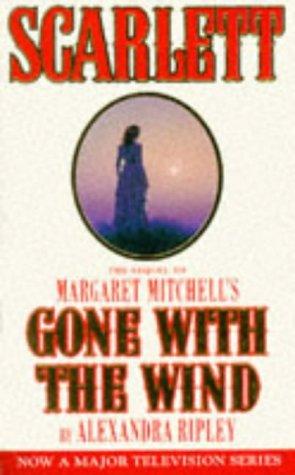
Scarlett
by Alexandra Ripley
★ Top 25 book of 1991 · #12 on Best Books of 1991
Set in the South after the Civil War, this sequel to a beloved classic picks up with Rhett, Scarlett and Ashley as they try to rebuild their lives. It continues the story readers wanted to see carried on.
Best for: Readers who loved the original Southern epic and want its story continued
Scarlett is #12 on BookWard's Best Books of 1991, out of 23 1991 books that cleared our data bar.
What Scarlett is about
Scarlett O'Hara's story picks up shortly after the funeral of Melanie Wilkes, a funeral Rhett Butler does not attend. In the Reconstruction-era South, Scarlett is left to work out what remains between her and Rhett, and what to do with a life that feels unfinished. Rhett leaves her a letter saying he will not see her again.
Heartbroken, Scarlett turns toward her family's past. She reaches out to her O'Hara relatives in Savannah and travels to Ireland with her cousin Colum, a priest. There she buys Ballyhara, land that once belonged to the O'Haras, and comes to be known as The O'Hara. Her future grows more tangled when she learns of Rhett's marriage to Anne Hampton and keeps a secret of her own.
A sequel to Margaret Mitchell's Gone with the Wind, this sweeping, romantic novel suits readers who want more time with Scarlett, her stubborn survival and her search for roots.
Scarlett on the Best Books of 1991
Scarlett came out in 1991. Of the 23 books first published in 1991 that met BookWard's data bar, it ranks #12 on our Best Books of 1991 list.
Why it made the list: 156 readers have shelved it on Open Library. The list ranks each year’s books on how many readers have picked them up, how highly readers rate them, and how many are reading them right now.
Nearby on the 1991 list
- On Directing Film David Mamet, #10
- The Sum of All Fears Tom Clancy, #11
- Muhammad Karen Armstrong, #13
- Women on Top Nancy Friday, #14
See all Best Books of 1991 Best books by year
More years: Best Books of 1990 Best Books of 1992.
The numbers behind it
- Readers: 127 want to read it, 16 are reading it now and 13 have read it, according to Open Library.
| Signal | This book (0 to 100) | Weight |
|---|---|---|
| Reach | 26 | 55% |
| Reader love | 70 | 25% |
| Being read right now | 74 | 20% |
Questions about Scarlett
When was Scarlett published?
Scarlett by Alexandra Ripley was first published in 1991.
Was Scarlett one of the best books of 1991?
Scarlett is #12 on BookWard's Best Books of 1991, out of 23 1991 books that cleared our data bar. 156 readers have shelved it on Open Library.
Why is Scarlett on the Best Books of 1991 list?
156 readers have shelved it on Open Library.
More of the best books of 1991
- Outlander Diana Gabaldon, #1
- Needful Things Stephen King, #2
- American Psycho Bret Easton Ellis, #3
- Shiloh Phyllis Reynolds Naylor, #4
- The Firm John Grisham, #5
- Reaper Man Terry Pratchett, #6
See the full Best Books of 1991, the Top 100, or new books on Rising.
How we know
This page uses public data: Open Library reader counts and ratings, and Wikipedia page views for recent years. The description is paraphrased from real source text. Rankings reflect reading interest, not quality or sales, and can be affected by data gaps. Lists update monthly.
Suited to adult and older teen readers comfortable with a long historical romance.
Depends on the edition you pick.
A big, soapy sequel that picks up where Gone with the Wind stopped. 40% taste match
 BookWard’s take
A big, soapy sequel that picks up where Gone with the Wind stopped
Scarlett opens at Melanie's funeral and sends its heroine straight after Rhett, which gives it a clear aim from the first chapters. The opening is strong, and the chase carries across Georgia, Charleston and Savannah, so the story moves briskly and the scenery keeps changing. The cost is how much it leans on familiar tropes: this is a romance of reconciliation and a sequel to a famous book, and it relies on convention more than I would like. It is also less original and less likely to last for the same reason, since the story trades on Mitchell's world. Romance is central, and the push and pull between Rhett and Scarlett drives the whole book. It is a series entry in spirit, best met as a continuation rather than a fresh start.
A sprawling sequel that ranges across several cities and a large stretch of story, far from the tight end BookWard prefers.
Travel between Tara, Charleston and Savannah keeps events moving, though not at the clip BookWard favors.
Built on another author's characters and world, it is familiar by design and falls short of BookWard's appetite for the original.
Period-flavored and descriptive without being showy, sitting in the middle of the range.
Plot and character are tied together, but Scarlett's campaign to win Rhett back gives events the steering role.
Scarlett's determination to win back Rhett keeps the mood pointed toward reconciliation rather than despair.
A straightforward continuation told in sequence, more conventional than BookWard's mild taste for variation.
Largely a serious melodrama, with only occasional lightness in Scarlett's scheming.
Death, near-drowning and heartbreak give it some weight, but the tone stays romantic.
Deathbed scenes, storms and reunions are written to stir strong feeling.
See all 50 dialsEvery position, side by side with this book
Where it lines up
- EndingBookWard 8 · book 7
- Story or ideasBookWard 3 · book 2
- OpeningBookWard 10 · book 8
Where it pulls apart
- LengthBookWard 1 · book 9
- Familiar tropesBookWard 10 · book 3
- Internal logicBookWard 10 · book 5
A sprawling sequel that ranges across several cities and a large stretch of story, far from the tight end BookWard prefers.
Starting at Melanie's funeral with Rhett gone gives it an immediate goal, close to how BookWard likes a book to open.
A reconciliation romance written as a sequel leans on established tropes, which sits poorly with BookWard's taste for the fresh.
Events follow from Scarlett's scheming, though the plot leans on coincidence and convenient storms, so it is not airtight.
Travel between Tara, Charleston and Savannah keeps events moving, though not at the clip BookWard favors.
Built on another author's characters and world, it is familiar by design and falls short of BookWard's appetite for the original.
Scarlett and Rhett arrive fully formed from the first book, giving real depth, though they are extended more than newly drawn.
Deathbed promises and grand romantic reunions make it lean sentimental, against BookWard's preference for restraint.
Storms, near-death and abrupt partings supply drama, but much of it feels staged for effect rather than earned.
It works in the shadow of Mitchell's style, so the voice is competent rather than distinctive.
This is storytelling first, driven by relationships and plot rather than any argument.
Mostly dramatized through scenes and family conflict, in keeping with BookWard's preference for showing.
A long book with several detours between Atlanta, Charleston and Savannah, so the energy likely varies from stretch to stretch.
Period-flavored and descriptive without being showy, sitting in the middle of the range.
Plot and character are tied together, but Scarlett's campaign to win Rhett back gives events the steering role.
Scarlett's determination to win back Rhett keeps the mood pointed toward reconciliation rather than despair.
A straightforward continuation told in sequence, more conventional than BookWard's mild taste for variation.
Largely a serious melodrama, with only occasional lightness in Scarlett's scheming.
Easy to follow for anyone who knows the first book, and rarely taxing in language or form.
A grounded historical setting with no fantasy element.
Family on several sides, from Charleston relatives to Savannah O'Haras, makes for a sizable cast.
Spans several cities and family branches in a post-war world, giving it a broad canvas.
Scarlett's travels and confrontations push the book toward outward action, with her feelings along for the ride.
Confrontations between Scarlett, Rhett and assorted relatives are carried largely in conversation.
The Scarlett and Rhett relationship is the engine of the entire story.
The Reconstruction-era South, Charleston and Savannah are distinctive, though familiar to fans of the original.
Set in the Reconstruction era, firmly in the past.
Its appeal rests largely on its connection to Gone with the Wind rather than standing alone.
A straightforward narration that lets the reader follow Scarlett's schemes without deception.
Scarlett's manipulations are rarely judged cleanly, leaving some room for debate about right and wrong.
Settings from Atlanta to the harbor and a cave on an island are described with period richness.
Written explicitly as a sequel to Gone with the Wind and best read after it.
Reversals, letters and burned notes keep the story shifting, though many follow familiar romantic patterns.
A comfort read for fans of the original, rather than a book that tests the reader.
Death, near-drowning and heartbreak give it some weight, but the tone stays romantic.
Deathbed scenes, storms and reunions are written to stir strong feeling.
Humor, where it appears, is broad and situational rather than dry.
A storm, illness and some period conflict, but violence is not a focus.
Love scenes, such as the cave on the island, are present but not dominant.
The post-war setting brings in politics at the edges, though the story stays personal.
Period speech and Southern voices add flavor without making the text hard going.
The narration mostly stays out of the way and lets Scarlett's drive speak.
Rooted in the past and a continuation of an older story.
Scarlett's stubborn faith that love can be won back leans idealistic, tempered by hard-edged scheming.
Review written by BookWard, dial version 1, November 2026.
Who is Scarlett right for?
Suited to adult and older teen readers comfortable with a long historical romance. It includes love scenes, illness and death, and a period setting that touches on the post-war South.
Easy to follow for anyone who knows the first book, and rarely taxing in language or form.
Death, near-drowning and heartbreak give it some weight, but the tone stays romantic.
Deathbed scenes, storms and reunions are written to stir strong feeling.
A storm, illness and some period conflict, but violence is not a focus.
Book CompanionScarlett: ideas, characters, themes
After Melanie's funeral, Scarlett sets out to win back her estranged husband Rhett Butler, chasing him from Tara to Charleston to Savannah.
- A funeral opens it. The story begins at Melanie's funeral, with Rhett absent and Scarlett heartbroken over his leaving.
- Mammy's death. At Tara, Scarlett learns Mammy is dying and tricks Rhett into coming by using Will Benteen's name.
- The Charleston campaign. Scarlett visits Rhett's family and tries to win his mother's affection to corner him.
- The storm and the cave. A sailing trip ends in a capsized boat, and the pair swim to an island where they make love.
- On to Savannah. Scarlett travels to her maternal grandfather's birthday celebration and connects with the Savannah O'Haras.
Characters
Scarlett O'Hara
Protagonist
Determined to win back her estranged husband Rhett.
Rhett Butler
Estranged husband
Scarlett's elusive love, who leaves after fights and swears to guard her only reluctantly.
Mammy
Scarlett's lifelong mainstay
Dying at Tara, she makes Rhett promise to look after Scarlett.
Pauline and Eulalie
Scarlett's aunts
They travel with her to Savannah for the birthday celebration.
Rosemary
Rhett's sister
She burns the note Scarlett leaves for Rhett's mother.
Themes
Scarlett's relentless effort to win back someone who has walked away.
The pull of the maternal and O'Hara families and what they offer her.
Funerals and deathbeds mark the end of an era for Scarlett.
Rhett admits his love but refuses to lose himself over her again.
Discussion questions
- Is Scarlett's persistence admirable or self-deceiving?
- Why does Rhett deny his love before admitting it?
- How does the sequel handle the legacy of Mitchell's original?
- What does Mammy's deathbed promise reveal about the people around Scarlett?
- Does a sequel by a different author change how you read familiar characters?
Personalize your Book Companion
This is the general edition. In BookWard, the Companion is written for you: your reading profile, your notes, and spoiler-safe to the page you are on.
Buy, listen or borrow Scarlett
Each link opens a search for this book on that store, in a new tab.
Read on a device
Borrow
Reviews and community
If you liked Scarlett
A kidnapped Highland heiress, an English duke, and a slow-burning war of wills
Almost HeavenJudith McNaughtA high-heat Regency romance of scandal, revenge and Highland secrets
Voice in the WindFrancine RiversFaith and slavery in Rome, with a romance at its center
Throne of GlassSarah J. MaasA prison-to-palace assassin contest that moves fast and trades on familiar bones
Find your own best books
Add what you have read, rate it, and BookWard will recommend what to read next.
Free to start. No credit card needed.