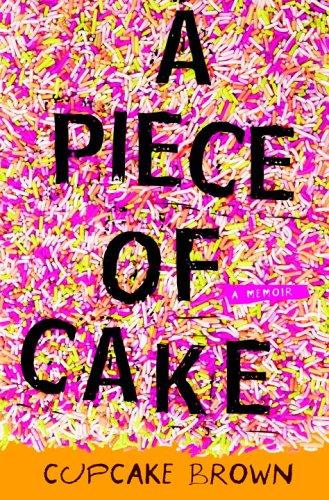
A Piece of Cake
by Cupcake Brown
★ Top 25 book of 2005 · #22 on Best Books of 2005
This memoir follows Cupcake Brown, orphaned young and placed with a cruel foster parent, as she survives drugs, gangs, hustling and homelessness before turning twenty. It is frank, funny and affecting, tracing her path from hardship to ordinary working life.
Best for: Memoir readers who like raw, funny survival stories of overcoming addiction and hardship
A Piece of Cake is #22 on BookWard's Best Books of 2005, out of 52 2005 books that cleared our data bar.
What A Piece of Cake is about
Cupcake Brown's memoir begins when her mother dies and she is left with a cruel foster parent. To get by, she turned to tricks, hard liquor, and every drug she could find. She hitchhiked up and down the California coast and drifted into gang life, dealing, hustling, prostitution, and theft. She had lived through all of this before she turned twenty.
She later took a string of 9-to-5 jobs, described as the best scam of all. A New York Times bestseller, the book is described by its publisher as moving in its frankness, startlingly funny, and genuinely affecting. It is a story of loss, addiction, and survival, and it may speak to readers drawn to honest accounts of hard lives and of finding a way through.
A Piece of Cake on the Best Books of 2005
A Piece of Cake came out in 2005. Of the 52 books first published in 2005 that met BookWard's data bar, it ranks #22 on our Best Books of 2005 list.
Why it made the list: 226 readers have shelved it on Open Library. The list ranks each year’s books on how many readers have picked them up, how highly readers rate them, and how many are reading them right now.
Nearby on the 2005 list
- It's in His Kiss Julia Quinn, #20
- Creating Black Americans Nell Irvin Painter, #21
- 1491 Charles C. Mann, #23
- Code Talker Joseph Bruchac, #24
See all Best Books of 2005 Best books by year
More years: Best Books of 2004 Best Books of 2006.
The numbers behind it
- Readers: 200 want to read it, 12 are reading it now and 14 have read it, according to Open Library.
| Signal | This book (0 to 100) | Weight |
|---|---|---|
| Reach | 42 | 55% |
| Reader love | 92 | 25% |
| Being read right now | 48 | 20% |
Questions about A Piece of Cake
When was A Piece of Cake published?
A Piece of Cake by Cupcake Brown was first published in 2005.
Was A Piece of Cake one of the best books of 2005?
A Piece of Cake is #22 on BookWard's Best Books of 2005, out of 52 2005 books that cleared our data bar. 226 readers have shelved it on Open Library.
Why is A Piece of Cake on the Best Books of 2005 list?
226 readers have shelved it on Open Library.
More of the best books of 2005
- The Lightning Thief Rick Riordan, #1
- Harry Potter and the Half-Blood Prince J. K. Rowling, #2
- The Glass Castle Jeannette Walls, #3
- Looking for Alaska John Green, #4
- Eldest Christopher Paolini, #5
- Freakonomics Steven D. Levitt, #6
See the full Best Books of 2005, the Top 100, or new books on Rising.
How we know
This page uses public data: Open Library reader counts and ratings, and Wikipedia page views for recent years. The description is paraphrased from real source text. Rankings reflect reading interest, not quality or sales, and can be affected by data gaps. Lists update monthly.
Best suited to mature teens and adults.
Depends on the edition you pick.
A survivor's memoir that earns its darkness and its laughs. 65% taste match
 BookWard’s take
A survivor's memoir that earns its darkness and its laughs
Cupcake Brown's memoir moves from childhood loss to addiction, street life and, eventually, ordinary 9-to-5 work, and it grabs you from the first pages. The premise alone pulls you in. Where the book really shines is the voice: Brown tells her story frankly, with real humor alongside the pain, so it comes across as funnier than you would expect from something this dark. The hard material is the life itself, told as it happened, not dressed up for effect. And the book leans hopeful, since it is ultimately about getting out. It is a long, sprawling life told in a personal, conversational register, which suits a reader who values distinctive voice and depth of character, even if the book runs longer than ideal.
One dramatic stretch follows another quickly, which suits BookWard's taste for momentum.
The overall arc is familiar from recovery memoirs, though this particular life and how it is told stand out.
The writing is plain and direct, built for storytelling more than ornament.
What happens matters, but it all runs through Brown's own character and choices.
Though it descends into hell, the book is about survival and a hopeful recovery.
It follows a conventional life-story sequence from childhood onward.
Humor runs through even the bleakest episodes, a notable feature of this memoir.
Abuse, addiction and homelessness make this among the darker kinds of memoir.
The pain and the triumph are both felt strongly throughout.
See all 50 dialsEvery position, side by side with this book
Where it lines up
- Character depthBookWard 8 · book 8
- EndingBookWard 8 · book 8
- Authorial voiceBookWard 9 · book 9
Where it pulls apart
- LengthBookWard 1 · book 6
- Familiar tropesBookWard 10 · book 6
- Rigor (nonfiction)BookWard 9 · book 4
The premise of orphanhood and a harrowing youth pulls you in at once, matching BookWard's love of immediate openings.
Addiction memoir has familiar beats, but Brown's specific life and voice keep it from feeling formulaic.
Events follow one another with clear cause and effect, as in a life told in order.
One dramatic stretch follows another quickly, which suits BookWard's taste for momentum.
The overall arc is familiar from recovery memoirs, though this particular life and how it is told stand out.
Brown is drawn from the inside across many years, which BookWard values highly.
The story ends in recovery and a settled life, a resolved close BookWard likes.
It is an emotional story with an uplifting turn, so it leans warmer than BookWard's restrained preference.
The extreme material is the author's real life, told to explain what happened, not for cheap effect.
It is a personal account, so it rests on lived experience, not documented research.
Brown's frank, funny, conversational voice is the book's main strength and matches BookWard's taste.
It is story-led throughout, following one woman's life from event to event.
Experience is shown in scene and told through lived moments, not explained as argument.
The escalating story keeps its energy, with little room for a slack stretch.
The writing is plain and direct, built for storytelling more than ornament.
What happens matters, but it all runs through Brown's own character and choices.
Though it descends into hell, the book is about survival and a hopeful recovery.
It follows a conventional life-story sequence from childhood onward.
Humor runs through even the bleakest episodes, a notable feature of this memoir.
The language is accessible and easy to follow, though the subject matter is heavy.
It is told entirely from Brown's own point of view.
The memoir moves forward through her life in roughly chronological order.
Everything is grounded in real events and real places.
Foster family, street figures and coworkers fill a moderately large cast across the years.
The story is intensely personal, centred on one life, though it covers a wide span of experience.
It balances events on the street with Brown's own reactions and reflections.
Scenes rely on conversation to bring people and moments to life.
Romance is a minor strand beside survival, addiction and recovery.
The California street, gang and drug scenes will feel unfamiliar to most readers.
It recounts a life lived in recent decades, close enough to feel contemporary.
The themes of survival and redemption last, though the specific milieu is of its time.
Brown narrates her own experience candidly, so the account is fairly reliable.
Brown judges herself and others clearly, though survival often blurs right and wrong.
Description serves the story and is not the focus, though settings come through vividly.
It reads as a narrative life story, not an analytical treatment.
It is intensely personal, told by the one who lived it.
It stands alone as a single memoir.
Her life keeps taking unexpected turns, so surprises come steadily.
The subject matter is hard to read, though the arc ends in uplift.
Abuse, addiction and homelessness make this among the darker kinds of memoir.
The pain and the triumph are both felt strongly throughout.
The humor is frank and sometimes broad, used to leaven the grimness.
Abuse, gang life and street violence appear on the page.
Prostitution and sexual abuse are part of the story, though it is not erotic.
It is not a political book, though poverty and neglect are always present.
The language is conversational and street-inflected but easy to read.
Brown's own views and attitudes come through strongly in the telling.
It recounts the past, but its direction is toward a better future.
It is clear-eyed about brutality yet ends on faith in change.
Review written by BookWard, dial version 1, November 2026.
Who is A Piece of Cake right for?
Best suited to mature teens and adults. It contains frank accounts of childhood abuse, rape, drug use, prostitution and violence.
The language is accessible and easy to follow, though the subject matter is heavy.
Abuse, addiction and homelessness make this among the darker kinds of memoir.
The pain and the triumph are both felt strongly throughout.
Abuse, gang life and street violence appear on the page.
Book CompanionA Piece of Cake: ideas, characters, themes
A woman who survived orphanhood, abuse, addiction and street life tells her own story, finding the humor and the way out.
- Loss early on. The death of her mother leaves Brown in the hands of a harsh foster parent.
- Surviving the streets. She turns to drugs, alcohol and hustling to cope while moving along the California coast.
- Gangs and dealing. Her path takes her into gangbanging, drug dealing, prostitution and theft.
- The 9-to-5 scam. She eventually works a series of regular jobs, which the book treats as the cleverest hustle of all.
- Humor and hope. Frank, funny storytelling runs beside the hardship, making the tale uplifting as well as harrowing.
Characters
Cupcake Brown
Author and narrator
The woman at the center of the story, who survives loss, abuse and addiction.
Themes
Getting through situations that should have broken her.
The pull of drugs and alcohol and the work of getting free.
How the death of a parent and a failed foster home shape a life.
The possibility of rebuilding after the worst.
Laughter as a way of coping and telling the truth.
Discussion questions
- How does Brown's humor change the way you take in the darkest parts of her story?
- What does the book suggest about how systems fail children without family?
- Why might ordinary 9-to-5 work be described as the best scam of all?
- What pulled her toward drugs and the streets, and what eventually pulled her out?
- How does a memoir like this differ from fiction about similar events?
Personalize your Book Companion
This is the general edition. In BookWard, the Companion is written for you: your reading profile, your notes, and spoiler-safe to the page you are on.
Buy, listen or borrow A Piece of Cake
Each link opens a search for this book on that store, in a new tab.
Read on a device
Borrow
Reviews and community
If you liked A Piece of Cake
A pop star's memoir in her own plain, wry words
TweakNic SheffA raw, first-person account of meth addiction and relapse
Born a CrimeTrevor NoahA funny, hard-edged childhood memoir from apartheid South Africa
Different SeasonsStephen KingFour King novellas, one for each season, with horror held back
Find your own best books
Add what you have read, rate it, and BookWard will recommend what to read next.
Free to start. No credit card needed.