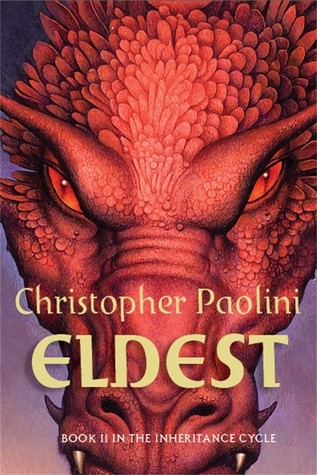
Eldest
by Christopher Paolini
★ Top 5 book of 2005 · #5 on Best Books of 2005
After helping save the rebels from the king's forces, Eragon and his dragon Saphira head to the elves' land for Dragon Rider training. Betrayal and doubt follow him, while his cousin Roran faces his own battle.
Best for: Young readers who love dragons, swordplay and epic quests, aged 12 and up
Eldest is #5 on BookWard's Best Books of 2005, out of 52 2005 books that cleared our data bar.
What Eldest is about
Eragon and his dragon Saphira have just rescued the rebel state from the forces of King Galbatorix, the cruel ruler of the Empire. Victory, though, brings little rest. Eragon must journey to Ellesmera, the land of the elves, to continue his training as a Dragon Rider, learning both magic and swordsmanship.
Trouble follows him there. Chaos and betrayal swirl around him, and he cannot be sure whom to trust. Meanwhile his cousin Roran faces a new battle of his own, one that could place Eragon in even greater danger. The story deals with loyalty, growing into power, and standing against tyranny. It suits readers aged twelve and up who enjoy an earnest, adventurous fantasy.
Eldest on the Best Books of 2005
Eldest came out in 2005. Of the 52 books first published in 2005 that met BookWard's data bar, it ranks #5 on our Best Books of 2005 list.
Why it made the list: 626 readers have shelved it on Open Library; readers rate it 4.1 out of 5 (81 ratings); 36 are reading it right now. The list ranks each year’s books on how many readers have picked them up, how highly readers rate them, and how many are reading them right now.
Nearby on the 2005 list
- The Glass Castle Jeannette Walls, #3
- Looking for Alaska John Green, #4
- Freakonomics Steven D. Levitt, #6
- A Feast for Crows George R. R. Martin, #7
See all Best Books of 2005 Best books by year
More years: Best Books of 2004 Best Books of 2006.
The numbers behind it
- Readers: 433 want to read it, 36 are reading it now and 157 have read it, according to Open Library.
- Ratings: 4.1 out of 5 from 81 Open Library ratings.
| Signal | This book (0 to 100) | Weight |
|---|---|---|
| Reach | 83 | 55% |
| Reader love | 77 | 25% |
| Being read right now | 87 | 20% |
Questions about Eldest
When was Eldest published?
Eldest by Christopher Paolini was first published in 2005.
Was Eldest one of the best books of 2005?
Eldest is #5 on BookWard's Best Books of 2005, out of 52 2005 books that cleared our data bar. 626 readers have shelved it on Open Library; readers rate it 4.1 out of 5 (81 ratings); 36 are reading it right now.
Why is Eldest on the Best Books of 2005 list?
626 readers have shelved it on Open Library; readers rate it 4.1 out of 5 (81 ratings); 36 are reading it right now.
More of the best books of 2005
- The Lightning Thief Rick Riordan, #1
- Harry Potter and the Half-Blood Prince J. K. Rowling, #2
- The Glass Castle Jeannette Walls, #3
- Looking for Alaska John Green, #4
- Freakonomics Steven D. Levitt, #6
- A Feast for Crows George R. R. Martin, #7
See the full Best Books of 2005, the Top 100, or new books on Rising.
How we know
This page uses public data: Open Library reader counts and ratings, and Wikipedia page views for recent years. The description is paraphrased from real source text. Rankings reflect reading interest, not quality or sales, and can be affected by data gaps. Lists update monthly.
Marketed to readers 12 and up, it suits teens and adults who enjoy epic fantasy.
Depends on the edition you pick.
A sprawling second Inheritance volume that trades momentum for worldbuilding. 38% taste match
 BookWard’s take
A sprawling second Inheritance volume that trades momentum for worldbuilding
Eldest picks up after Eragon and Saphira save the rebels and sends Eragon to Ellesmera, land of the elves, to train as a Dragon Rider. That is a big shift in rhythm. The opening hooks less sharply than a battle-scarred sequel promises, and the book is long and sprawling, with a middle that stretches while the training unfolds. Where it strains most is in its reliance on familiar tropes: the farm boy, the dragon, the evil king, the elf kingdom all sit in well-worn fantasy territory. It earns real credit for its structure, since Roran's separate fight runs alongside Eragon's, giving the story a second thread to follow, and for its open embrace of magic and elves, which it commits to without apology. Read it for scale and craft, not surprise.
A long, doorstop-sized fantasy sequel, far from the tight and short end BookWard favors.
Training and travel slow things compared with the brisk momentum BookWard prefers.
The premise draws heavily on established fantasy conventions, so it sits well below BookWard's taste for fresh ideas.
The prose is clear and somewhat formal, with descriptive flourishes that lean modestly ornate.
Plot events drive the book, though Eragon's growth is part of the draw.
Despair and betrayal darken the mood, though resistance and loyalty keep some light alive.
It follows a conventional quest structure, with Roran's separate thread adding mild variation.
The tone is earnest and serious, with only small flashes of lightness.
War, betrayal and a tyrant bring real darkness, tempered by its young-adult aim.
Loss, loyalty and fear give it solid emotional weight.
See all 50 dialsEvery position, side by side with this book
Where it lines up
- Story or ideasBookWard 3 · book 3
- Character depthBookWard 8 · book 6
- Internal logicBookWard 10 · book 7
Where it pulls apart
- LengthBookWard 1 · book 9
- Familiar tropesBookWard 10 · book 3
- OpeningBookWard 10 · book 6
A long, doorstop-sized fantasy sequel, far from the tight and short end BookWard favors.
It opens in the wake of a victory and a travel-and-training setup, a gentler start than BookWard likes.
Dragon Riders, elves, a cruel king and a chosen young hero lean on genre staples, which BookWard marks down.
Magic and its training follow rules that largely hold together, though not with airtight precision.
Training and travel slow things compared with the brisk momentum BookWard prefers.
The premise draws heavily on established fantasy conventions, so it sits well below BookWard's taste for fresh ideas.
Eragon and Roran carry real growth, though many characters stay close to familiar types.
The book resolves its main threads while clearly setting up the next volume, so closure is partial.
Loyalty and loss are played openly rather than held back, a bit warmer than BookWard prefers.
Betrayal and danger raise the stakes, but the darkness is moderate and mostly in service of plot.
The telling is competent and clear but follows classic fantasy cadence more than a distinct signature.
This is firmly story-led, built on quests, battles and training rather than argument.
Worldbuilding and lore are often explained directly, more than BookWard likes.
The training stretch in Ellesmera gives the middle a slower, wandering stretch that BookWard may feel.
The prose is clear and somewhat formal, with descriptive flourishes that lean modestly ornate.
Plot events drive the book, though Eragon's growth is part of the draw.
Despair and betrayal darken the mood, though resistance and loyalty keep some light alive.
It follows a conventional quest structure, with Roran's separate thread adding mild variation.
The tone is earnest and serious, with only small flashes of lightness.
The prose is accessible, but a large cast and invented names ask for some effort.
Eragon's story runs alongside his cousin Roran's, giving the book at least two main threads.
Events move forward in order without major time jumps.
Dragons, elves and magic make this fully fantastical, far from BookWard's grounded middle.
Many peoples and characters populate the world, making it a large cast.
A war between a rebel state and an empire gives it an epic, kingdom-wide scope.
Action, travel and training lead, with thought and doubt as a quieter thread.
Lessons, councils and tense conversations make for a fair amount of talk.
Romance is a side thread rather than the center of the book.
The elven realm and the wider Empire are invented settings that feel unfamiliar by design.
A secondary world with no link to the present day.
Its classic fantasy shape gives it some lasting appeal for its audience.
The narration is straightforward and reliable.
Good and evil are drawn fairly cleanly, with a cruel king set against the rebels.
New places and peoples, like Ellesmera, are described in generous, vivid detail.
It is the second book in the Inheritance series and depends on the first.
Betrayal and shifting trust keep surprises coming, as the description suggests.
It reads as an adventure to enjoy more than a book that pushes the reader.
War, betrayal and a tyrant bring real darkness, tempered by its young-adult aim.
Loss, loyalty and fear give it solid emotional weight.
Any humor is mild and understated.
Battles and a war setting mean regular fighting on the page.
Aimed at readers 12 and up, sexual content is minimal.
Rebellion against a tyrannical empire makes power and rule a central concern.
Invented names and some elven terms add density without dialect.
The narration stays fairly neutral, letting events and characters carry the story.
It builds toward the coming confrontation while resting on ancient lore.
Resistance and loyalty point toward idealism, even under the weight of despair.
Review written by BookWard, dial version 1, November 2026.
Who is Eldest right for?
Marketed to readers 12 and up, it suits teens and adults who enjoy epic fantasy. Expect battles, betrayal and a dark tyrant, handled at a young-adult level.
The prose is accessible, but a large cast and invented names ask for some effort.
War, betrayal and a tyrant bring real darkness, tempered by its young-adult aim.
Loss, loyalty and fear give it solid emotional weight.
Battles and a war setting mean regular fighting on the page.
Book CompanionEldest: ideas, characters, themes
After a hard-won victory, Eragon must grow into his role as a Dragon Rider while a new war and new betrayals close in.
- The training arc. Eragon travels to Ellesmera to learn magic and swordsmanship from the elves.
- A cousin's war. Roran fights a separate battle that could put Eragon in even graver danger.
- Trust under strain. Betrayal and chaos leave Eragon unsure whom he can rely on.
- A cruel empire. King Galbatorix remains the looming threat, with the rebel state at stake.
- New lands, new peoples. The elven homeland widens the world and opens Eragon's eyes to new customs.
Characters
Eragon
Young Dragon Rider
A hero in training who must master magic and swordsmanship while learning whom to trust.
Saphira
Eragon's dragon
His dragon partner, central to his role as a Rider.
Roran
Eragon's cousin
Fights his own battle, one that may endanger Eragon further.
King Galbatorix
Tyrant ruler
The cruel king of the Empire, whose reach threatens all resistance.
Themes
Becoming what others need you to be, and the cost of that change.
Learning who can truly be relied on when loyalties blur.
What resisting an absolute ruler demands of ordinary people.
How kinship pulls people into each other's dangers.
Mastering a craft and a culture that are not your own.
Discussion questions
- How does Eragon's training change the way he sees his own power?
- What makes trust so hard for Eragon in this book?
- How does Roran's separate fight shape the larger story?
- Which familiar fantasy elements work well here, and which feel worn?
- What would you want to see resolved in the next volume?
Personalize your Book Companion
This is the general edition. In BookWard, the Companion is written for you: your reading profile, your notes, and spoiler-safe to the page you are on.
Buy, listen or borrow Eldest
Each link opens a search for this book on that store, in a new tab.
Read on a device
Borrow
Reviews and community
If you liked Eldest
A big, familiar quest fantasy that opens with a village under attack
The Fires of HeavenRobert JordanBook five of the Wheel of Time: vast, uneven, undeniably ambitious
The Shadow RisingRobert JordanThe Wheel of Time's biggest installment, scattering its heroes in four directions
Horus RisingDan AbnettThe first Horus Heresy novel: golden-age dread before the fall
Find your own best books
Add what you have read, rate it, and BookWard will recommend what to read next.
Free to start. No credit card needed.