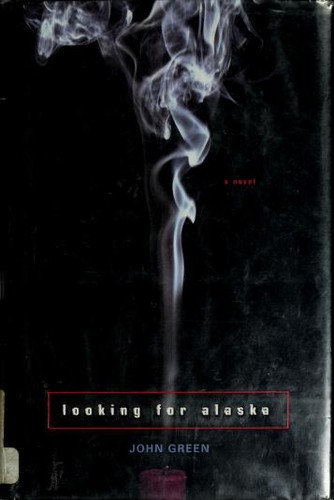
Looking for Alaska
by John Green
★ Top 5 book of 2005 · #4 on Best Books of 2005
Miles "Pudge" Halter leaves his safe life for Culver Creek Boarding School, where he is swept up by the magnetic and self-destructive Alaska Young. The story is split around an event that changes everything afterward.
Best for: Teen and young adult readers who like emotional coming-of-age stories about first love
Looking for Alaska is #4 on BookWard's Best Books of 2005, out of 52 2005 books that cleared our data bar.
What Looking for Alaska is about
Miles Halter, known as Pudge, is tired of a safe life at home that he describes as one big non-event. He collects famous last words, and he is hungry for what Rabelais called "the Great Perhaps." So he leaves for Culver Creek Boarding School, where the girl down the hall is Alaska Young: gorgeous, clever, funny, sexy, self-destructive and screwed up. She pulls Miles into her world and steals his heart. The story is divided into "Before" and "After," and nothing is ever the same once the dividing line is crossed. John Green's novel is a wry, emotional tale of first love and the pull between risk and safety. It suits teenagers and adult readers who enjoy a coming-of-age story with a melancholy edge.
Looking for Alaska on the Best Books of 2005
Looking for Alaska came out in 2005. Of the 52 books first published in 2005 that met BookWard's data bar, it ranks #4 on our Best Books of 2005 list.
Why it made the list: 1,799 readers have shelved it on Open Library; readers rate it 4 out of 5 (130 ratings); 68 are reading it right now. The list ranks each year’s books on how many readers have picked them up, how highly readers rate them, and how many are reading them right now.
It earns Being read right now.
Nearby on the 2005 list
- Harry Potter and the Half-Blood Prince J. K. Rowling, #2
- The Glass Castle Jeannette Walls, #3
- Eldest Christopher Paolini, #5
- Freakonomics Steven D. Levitt, #6
See all Best Books of 2005 Best books by year
More years: Best Books of 2004 Best Books of 2006.
The numbers behind it
- Readers: 1,517 want to read it, 68 are reading it now and 214 have read it, according to Open Library.
- Ratings: 4 out of 5 from 130 Open Library ratings.
| Signal | This book (0 to 100) | Weight |
|---|---|---|
| Reach | 94 | 55% |
| Reader love | 63 | 25% |
| Being read right now | 92 | 20% |
Questions about Looking for Alaska
When was Looking for Alaska published?
Looking for Alaska by John Green was first published in 2005.
Was Looking for Alaska one of the best books of 2005?
Looking for Alaska is #4 on BookWard's Best Books of 2005, out of 52 2005 books that cleared our data bar. 1,799 readers have shelved it on Open Library; readers rate it 4 out of 5 (130 ratings); 68 are reading it right now.
Why is Looking for Alaska on the Best Books of 2005 list?
1,799 readers have shelved it on Open Library; readers rate it 4 out of 5 (130 ratings); 68 are reading it right now.
More of the best books of 2005
- The Lightning Thief Rick Riordan, #1
- Harry Potter and the Half-Blood Prince J. K. Rowling, #2
- The Glass Castle Jeannette Walls, #3
- Eldest Christopher Paolini, #5
- Freakonomics Steven D. Levitt, #6
- A Feast for Crows George R. R. Martin, #7
See the full Best Books of 2005, the Top 100, or new books on Rising.
How we know
This page uses public data: Open Library reader counts and ratings, and Wikipedia page views for recent years. The description is paraphrased from real source text. Rankings reflect reading interest, not quality or sales, and can be affected by data gaps. Lists update monthly.
Best suited to older teens and adults who enjoy character-led stories about friendship and loss.
Depends on the edition you pick.
A boarding-school coming-of-age novel split by a single event. 58% taste match
 BookWard’s take
A boarding-school coming-of-age novel split by a single event
Looking for Alaska hooks at once: Miles "Pudge" Halter leaves his safe, uneventful life for Culver Creek Boarding School, chasing what he calls the Great Perhaps, and meets Alaska Young down the hall. BookWard prizes an opening that grabs, and this one does. The story is character-driven, with Pudge's obsession with famous last words giving it an unusual voice. Its familiar tropes are the weak point: the boarding-school setting and the magnetic, troubled girl are well-worn ground, and BookWard leans toward books that avoid them. The structure is the strongest choice, since the Before and After framing gives the book its shape, and its emotional intensity is high. Humor runs through the first half, which keeps the darkness from feeling heavy-handed early on. Quick, sharp and affecting, with a sentimental streak BookWard is warier of.
A compact young-adult novel that moves briskly, which suits BookWard's preference for tight books.
Scenes move quickly and the school-year setting keeps momentum up, close to BookWard's fast preference.
The premise is recognizable, though Pudge's fixation on famous last words gives it a distinct angle.
The writing is clear and conversational, with flashes of lyricism rather than ornament.
What happens is driven by who these students are and how they affect one another.
There is warmth and yearning for something bigger, but the story carries real sorrow.
The Before and After frame divides the book around one event, a more distinctive shape than most coming-of-age novels.
Banter and pranks among the students bring plenty of humor, especially early on.
Starts light and turns serious, dealing with loss and self-destruction.
Friendship, desire and grief are felt strongly and played at high volume.
See all 50 dialsEvery position, side by side with this book
Where it lines up
- PaceBookWard 8 · book 7
- Character depthBookWard 8 · book 7
- Authorial voiceBookWard 9 · book 8
Where it pulls apart
- Familiar tropesBookWard 10 · book 4
- Internal logicBookWard 10 · book 7
- OriginalityBookWard 9 · book 5
A compact young-adult novel that moves briskly, which suits BookWard's preference for tight books.
Pudge's departure for Culver Creek and the arrival of Alaska pull the reader in from the start, matching BookWard's love of fast openings.
A boarding school and a magnetic, troubled girl are familiar ground, which cuts against BookWard's taste for avoiding tropes.
The story follows a clear, cause-and-effect path, so it holds together well even if it is not airtight.
Scenes move quickly and the school-year setting keeps momentum up, close to BookWard's fast preference.
The premise is recognizable, though Pudge's fixation on famous last words gives it a distinct angle.
Pudge and Alaska are drawn with real texture, close to the depth BookWard values in characters.
The Before and After frame points toward a conclusion that resolves emotionally while leaving some questions open.
The book leans into feeling openly, which sits further toward sentimental than BookWard's restrained taste.
Its darker turn carries emotional weight rather than serving as spectacle, though it leans on impact more than BookWard prefers.
This is a novel, so rigor does not apply.
Pudge's wry, quote-collecting narration gives the book a recognizable personality that BookWard rewards.
Ideas about meaning and last words surface, but the narrative leads throughout.
Backstory and ideas are mostly delivered through scenes and talk, though Pudge explains his own thinking along the way.
The school-year rhythm keeps the middle moving, with few stretches that drift.
The writing is clear and conversational, with flashes of lyricism rather than ornament.
What happens is driven by who these students are and how they affect one another.
There is warmth and yearning for something bigger, but the story carries real sorrow.
The Before and After frame divides the book around one event, a more distinctive shape than most coming-of-age novels.
Banter and pranks among the students bring plenty of humor, especially early on.
Accessible and quick to read, with little that slows a casual reader.
The story is told through Pudge alone.
The Before and After framing reorders how the reader experiences time, though events move forward.
Entirely grounded in a realistic school setting.
A small circle of students at the center, with a few others around them.
The story stays close to one school and one tight group of friends.
Pudge's thoughts, longings and reflections drive the book more than outward action.
Conversation between the friends carries a large share of the story.
Pudge's feelings for Alaska are a major thread, though friendship and loss matter as much.
A boarding school is a familiar enough setting for most readers.
Set in a recognizable modern school world, if not tied to today.
Its themes of friendship, longing and loss travel well across readers and years.
Pudge narrates plainly and honestly, though his view of Alaska is limited by his own feelings.
The characters make flawed choices, and the book resists handing out tidy verdicts.
Setting and people are sketched with enough detail to feel real, without lingering.
This is a novel, so nonfiction style does not apply.
This is a novel, so nonfiction perspective does not apply.
A standalone novel.
The book is built around one major turn, with few other surprises.
It asks the reader to sit with grief and unanswered questions rather than offering comfort.
Starts light and turns serious, dealing with loss and self-destruction.
Friendship, desire and grief are felt strongly and played at high volume.
The humor is a mix of dry wit and schoolyard pranks.
Little physical violence appears on the page.
Teenage desire and some sexual themes appear, handled with moderate frankness.
The focus is personal rather than political.
The language is plain and conversational throughout.
Pudge's narration is full of his own opinions and enthusiasms.
The book looks backward through the Before and After frame as much as forward.
It holds out hope for meaning and connection while acknowledging pain.
Review written by BookWard, dial version 1, November 2026.
Who is Looking for Alaska right for?
Best suited to older teens and adults who enjoy character-led stories about friendship and loss. It includes teenage drinking, smoking, sexual themes and a serious treatment of death and grief, so some younger readers may want a guide.
Accessible and quick to read, with little that slows a casual reader.
Starts light and turns serious, dealing with loss and self-destruction.
Friendship, desire and grief are felt strongly and played at high volume.
Little physical violence appears on the page.
Book CompanionLooking for Alaska: ideas, characters, themes
A teenager searching for a bigger life finds it in a school friendship, then has to live with what that friendship leaves behind.
- The Great Perhaps. Pudge leaves home chasing an uncertain, more meaningful life, which sets the whole story in motion.
- Famous last words. Pudge collects dying statements, a habit that shapes how he sees people and mortality.
- Culver Creek. The boarding school is a self-contained world where friendships form quickly and intensely.
- Alaska Young. She draws Pudge into her world and becomes the center of his attention and affection.
- Before and After. The book's structure divides the story around a single event that changes everything.
Characters
Miles "Pudge" Halter
Narrator and protagonist
A restless teenager who leaves a safe life behind and wants something more.
Alaska Young
Pudge's neighbor and friend
Gorgeous, clever, funny and self-destructive, she pulls Pudge into her orbit.
Themes
The pull toward a larger, riskier life than the one you were handed.
How quickly a small group can become the center of someone's world.
What it is to carry a loss and the questions it leaves behind.
The intensity and confusion of caring deeply for someone you cannot fully know.
How charm and pain can coexist in the same person.
Discussion questions
- Why does Pudge collect famous last words, and what does it say about him?
- How does the Before and After structure change the way you read the first half?
- What draws Pudge to Alaska, and how well does he really know her?
- Is the Great Perhaps worth the risk Pudge takes to chase it?
- How does the book treat grief, and does it offer any comfort?
Personalize your Book Companion
This is the general edition. In BookWard, the Companion is written for you: your reading profile, your notes, and spoiler-safe to the page you are on.
Buy, listen or borrow Looking for Alaska
Each link opens a search for this book on that store, in a new tab.
Read on a device
Borrow
Reviews and community
If you liked Looking for Alaska
Letters from a quiet freshman, tender and unflinching
Heart the LoverLily KingA campus love triangle, revisited decades later by the one it shaped
Paper TownsJohn GreenA midnight caper that turns into a search for a person
SolitaireAlice OsemanA sharp, sad school mystery narrated by a cynic who won't admit she cares
Find your own best books
Add what you have read, rate it, and BookWard will recommend what to read next.
Free to start. No credit card needed.