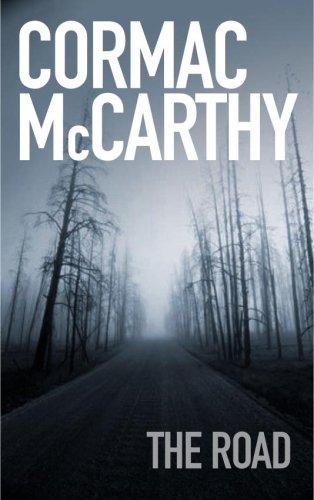
The Road
by Cormac McCarthy
★ Top 25 book of 2006 · #13 on Best Books of 2006
A catastrophe of unknown cause has reduced America to ash, with cannibal bands roaming the roads. A father and his young son push a shopping cart south along back roads, hoping to escape the winter and find a milder place.
Best for: Readers who can handle a bleak, harrowing post-apocalyptic story of survival
The Road is #13 on BookWard's Best Books of 2006, out of 47 2006 books that cleared our data bar.
What The Road is about
Something has destroyed industrial civilization and nearly all life, and the cause is never named. A father and his young son walk south along back roads toward the sea, hoping to escape the coming winter. They own very little, and the cold, the hunger and the bands of cannibals on the roads make every day dangerous. The father's cough is getting worse.
The boy's mother is gone, and what holds the two together is love and a private promise that they are the good guys, the ones carrying the fire. Cormac McCarthy writes in spare, bleak, haunting prose about survival, morality when everything has collapsed, and hope that persists in the dark. It won the 2007 Pulitzer Prize for Fiction and the 2006 James Tait Black Memorial Prize. It is a demanding read, best for those who can sit with sorrow and want fiction about what a parent will do for a child.
The Road on the Best Books of 2006
The Road came out in 2006. Of the 47 books first published in 2006 that met BookWard's data bar, it ranks #13 on our Best Books of 2006 list.
Why it made the list: 1,235 readers have shelved it on Open Library; readers rate it 3.9 out of 5 (176 ratings); 26 are reading it right now. The list ranks each year’s books on how many readers have picked them up, how highly readers rate them, and how many are reading them right now.
Nearby on the 2006 list
- World War Z Max Brooks, #11
- Horus Rising Dan Abnett, #12
- Sharp Objects Gillian Flynn, #14
- Cell Stephen King, #15
See all Best Books of 2006 Best books by year
More years: Best Books of 2005 Best Books of 2007.
The numbers behind it
- Readers: 960 want to read it, 26 are reading it now and 249 have read it, according to Open Library.
- Ratings: 3.9 out of 5 from 176 Open Library ratings.
| Signal | This book (0 to 100) | Weight |
|---|---|---|
| Reach | 87 | 55% |
| Reader love | 38 | 25% |
| Being read right now | 74 | 20% |
Questions about The Road
When was The Road published?
The Road by Cormac McCarthy was first published in 2006.
Was The Road one of the best books of 2006?
The Road is #13 on BookWard's Best Books of 2006, out of 47 2006 books that cleared our data bar. 1,235 readers have shelved it on Open Library; readers rate it 3.9 out of 5 (176 ratings); 26 are reading it right now.
Why is The Road on the Best Books of 2006 list?
1,235 readers have shelved it on Open Library; readers rate it 3.9 out of 5 (176 ratings); 26 are reading it right now.
More of the best books of 2006
- The Sea of Monsters Rick Riordan, #1
- The Book Thief Markus Zusak, #2
- Half of a Yellow Sun Chimamanda Ngozi Adichie, #3
- The Boy in the Striped Pyjamas John Boyne, #4
- The Secret Rhonda Byrne, #5
- Mindset Carol S. Dweck, #6
See the full Best Books of 2006, the Top 100, or new books on Rising.
How we know
This page uses public data: Open Library reader counts and ratings, and Wikipedia page views for recent years. The description is paraphrased from real source text. Rankings reflect reading interest, not quality or sales, and can be affected by data gaps. Lists update monthly.
It suits mature readers, and is widely taught to older teens and adults.
Depends on the edition you pick.
A father, a son, and a burnt world, told without mercy. 65% taste match
 BookWard’s take
A father, a son, and a burnt world, told without mercy
The Road earns its darkness, and that matters more than anything else about it. The cruelty is never decoration; it exists to test one small promise between a father and his son, that they are the good guys carrying the fire. It takes the post-apocalypse and strips away the usual machinery, leaving a bare road and a shopping cart. The voice is unmistakable, spare and strange, and the prose is more ornate than the plain story needs, in a way that works. The pace is steady rather than fast, but the opening grabs you and the middle never sags. Restraint is the point: grief is handled without sentiment, and the ending resolves without tying a bow.
It is a short novel that moves in brief, spare sections, which suits BookWard's love of tight books.
The journey is steady and relentless rather than fast, a little slower than BookWard usually likes.
The setting is familiar but the treatment, stripped and intimate, feels distinct, which BookWard values.
The language is sparse yet lyrical in places, more ornate than BookWard usually leans.
The plot is simple travel; what drives the book is the relationship between father and son.
The world offers almost no comfort, though the flicker of goodness between them keeps it from total despair.
It is a conventional journey told in short, fragmentary passages, with a few stylistic quirks.
There is almost no levity; the book holds a grave tone throughout.
Cannibalism, starvation and despair run throughout, making it among the darkest books around.
Feeling runs deep and hits hard, though it is expressed through restraint rather than outbursts.
See all 50 dialsEvery position, side by side with this book
Where it lines up
- Shock for effectBookWard 9 · book 9
- ExpositionBookWard 2 · book 2
- Sagging middleBookWard 8 · book 8
Where it pulls apart
- LengthBookWard 1 · book 3
- OpeningBookWard 10 · book 8
- Familiar tropesBookWard 10 · book 8
It is a short novel that moves in brief, spare sections, which suits BookWard's love of tight books.
The ash-covered road and the father's fierce protectiveness pull you in from the first pages, close to BookWard's taste.
It takes a well-worn setting and drops the usual heroics and spectacle, which BookWard rewards.
The survival rules hold: scarce food, one gun with two rounds, constant cold. Nothing feels convenient.
The journey is steady and relentless rather than fast, a little slower than BookWard usually likes.
The setting is familiar but the treatment, stripped and intimate, feels distinct, which BookWard values.
Two people carry the whole book, and their bond is drawn through small, repeated acts rather than backstory.
It resolves the journey with weight, if not with comfort, landing near BookWard's preference for closure.
Tenderness is shown through action and short exchanges, never milked, which fits BookWard's restraint.
The horrors are bleak but serve the central question of what is worth preserving, so the darkness is earned.
McCarthy's spare, biblical cadence is instantly recognizable, a clear match for BookWard's love of distinctive voice.
It is led by the journey, with the big ideas arriving through what the two characters do.
The catastrophe is never explained; the world is shown through what the pair find along the road.
The episodic road structure keeps tension up, and each encounter raises the stakes.
The language is sparse yet lyrical in places, more ornate than BookWard usually leans.
The plot is simple travel; what drives the book is the relationship between father and son.
The world offers almost no comfort, though the flicker of goodness between them keeps it from total despair.
It is a conventional journey told in short, fragmentary passages, with a few stylistic quirks.
There is almost no levity; the book holds a grave tone throughout.
The plot is easy to follow, but the bleakness and unusual style ask something of the reader.
The story stays close to the father, giving a single, tightly held viewpoint.
The journey moves forward in a straight line from start to finish.
The cataclysm is unexplained but the world feels grimly plausible and grounded.
Two main characters carry the story, with only a handful of others met along the way.
The world has ended, yet the story stays small and intimate, one pair on one road.
Survival action and the father's private fears sit side by side in equal measure.
The spare exchanges between father and son carry much of the emotional weight.
Romance plays no part beyond a bleak memory of the boy's mother.
A ruined, ash-covered America is deeply unfamiliar, even though the places are real.
It was published in 2006 but is set in an unspecified future after collapse.
Its stripped-down story of parental love in extremity feels likely to last well beyond its moment.
The narration is close and trustworthy, with no sense that it misleads the reader.
Good and evil are plainly marked, though survival forces painful compromises on the way.
The grey, ashen landscape is rendered in vivid, bleak detail throughout.
It is a standalone novel with no sequel.
The story follows a steady path with few reversals, so surprises are limited.
It is a demanding emotional read, bleak and unflinching, with little comfort on offer.
Cannibalism, starvation and despair run throughout, making it among the darkest books around.
Feeling runs deep and hits hard, though it is expressed through restraint rather than outbursts.
Violence and its aftermath are on the page, though often handled with grim economy.
Sexual content is minimal, limited to implied cruelty rather than anything explicit.
The book is concerned with survival and morality rather than any political argument.
The language is mostly plain, though the stripped punctuation takes some adjusting to.
The narration observes quietly rather than preaching or pushing a viewpoint.
The world's future is closed off, and the book looks to what is carried forward in a child.
The world is cruel, yet the book clings to a stubborn belief in decency.
Review written by BookWard, dial version 1, November 2026.
Who is The Road right for?
It suits mature readers, and is widely taught to older teens and adults. It contains cannibalism, graphic cruelty, suicide and sustained despair, so readers sensitive to these themes should proceed with care.
The plot is easy to follow, but the bleakness and unusual style ask something of the reader.
Cannibalism, starvation and despair run throughout, making it among the darkest books around.
Feeling runs deep and hits hard, though it is expressed through restraint rather than outbursts.
Violence and its aftermath are on the page, though often handled with grim economy.
Book CompanionThe Road: ideas, characters, themes
When everything is gone, what remains worth protecting is the thread of goodness passed from one person to another.
- A journey with a single goal. A father and son travel south on foot toward the sea, hoping to escape the coming winter.
- The fire they carry. The father tells his son they are the good guys carrying the fire, a phrase that anchors their moral stance.
- Scarcity as constant pressure. They have a shopping cart of supplies, a cough that worries the father, and a revolver with only two rounds.
- Danger on the road. Marauders and cannibals roam the land, forcing the pair into hiding and flight.
- Small mercies. Moments such as finding a stocked bunker and sharing food with a stranger show what the boy insists on keeping alive.
Characters
The Father
Protagonist
A haggard man determined to keep his son alive and to teach him how to survive.
The Boy
The father's young son
Born around the time of the disaster, he holds to kindness even when it is dangerous.
The Mother
The boy's mother
She died by suicide some time after the boy was born, a loss that haunts the father.
Themes
The lengths a parent will go to in order to protect a child.
Whether staying alive justifies abandoning your principles.
How people hold on to meaning when the world has none to give.
The idea that decency is something carried and handed on.
What is left of people once society and its comforts are gone.
Discussion questions
- Why does the father keep insisting they are the good guys, and does the book let him be right?
- How does the lack of any explanation for the catastrophe shape the way you read the story?
- What do the boy's choices to share and to show mercy say about him compared with his father?
- Did the spare, fragmentary style make the horrors hit harder or keep you at a distance?
- What does the title suggest about the journey beyond its physical route?
Personalize your Book Companion
This is the general edition. In BookWard, the Companion is written for you: your reading profile, your notes, and spoiler-safe to the page you are on.
Buy, listen or borrow The Road
Each link opens a search for this book on that store, in a new tab.
Read on a device
Borrow
Reviews and community
If you liked The Road
A child soldier's memoir, told plainly and painfully
Petit paysGaël FayeA Burundian childhood breaks apart as history reaches the street
Im Westen nichts NeuesErich Maria RemarqueA short, unsparing war novel that still lands hard
Black BoyRichard WrightA hungry boy in the Jim Crow South, told without flinching
Find your own best books
Add what you have read, rate it, and BookWard will recommend what to read next.
Free to start. No credit card needed.